Financial and Business News

Russia's Forex Market Hits Record $68B Volume, But it's a One-Player Show

Tuesday, 21/04/2026 | 13:06 GMT by Tanya Chepkova
  • Over 90% of trading volume in Russia’s regulated forex market is concentrated with a single firm, while most accounts remain inactive.
  • Regulatory changes pushed active retail traders offshore, leaving the domestic market small and highly concentrated.
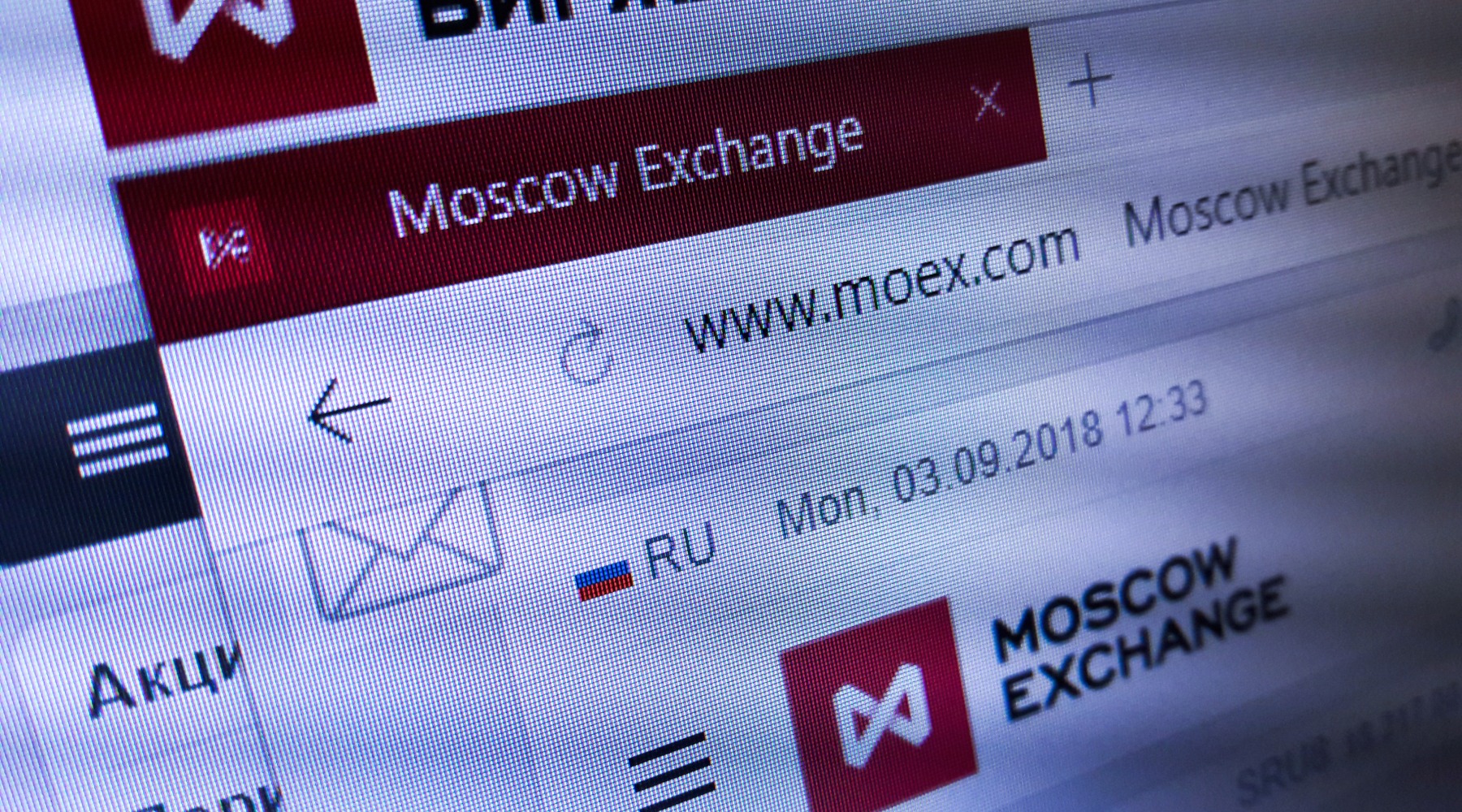
Russia, Moscow Exchange (MOEX), Shutterstock

Russia's regulated forex market posted a record quarterly trading volume of $68.6 billion in Q1 2026. The number tells a story of growth. The data behind it tells a different one.

Singapore Summit: Meet the largest APAC brokers you know (and those you still don't!)

The latest statistical report from the market's self-regulatory organization reveals a sector that is less a competitive market than a structured monopoly with a long tail of inactive accounts.

One Firm, 90% of Volume

Of the total quarterly volume, 90.6% came from clients of a single firm: Alfa-Forex. There are three licensed forex dealers in Russia. Two of them, combined, account for less than 10% of turnover.

Whatever the headline figure implies about market health, the competitive structure doesn't support it. Total registered client accounts grew 8% year-on-year to 183,023. Active accounts — those with actual trading activity — numbered 24,011. It means that 's 87% of all open accounts sitting dormant, with minimal or no funds, with 83,000 accounts have zero balance.

The gap is almost certainly a product of bank-run marketing campaigns that reward account opening with perks, without requiring any actual capital commitment. It creates a client count that looks like a mass market and functions like a waiting list.

The average balance across all 183,023 accounts is $444 — down from $975 at end-2022. Among active traders, the figure is $3,390. The divergence between those two numbers is the real structure of this market: a small, concentrated group of well-capitalized traders generating almost all of the volume, surrounded by a large pool of nominal accounts.

It reflects regulatory decisions made several years ago, when the central bank of Russia revoked licenses from a number of retail forex brokers, consolidating the domestic market around a small group of bank-affiliated dealers.

Much of the retail flow moved offshore as a result, leaving the regulated segment with a narrower and more concentrated client base

What This Means For the B2B Industry

The Russian forex market is not a mass-market opportunity waiting to be unlocked. The roughly 40 million retail investors often cited for Russia’s stock market have no equivalent in forex.

The real addressable market is the active segment — fewer than 25,000 traders with higher balances who generate the bulk of trading flow. That's where the volume is and where the competitive pressure actually plays out.

Record turnover alongside 90% concentration points to a market that remains structurally limited despite rising volumes.

Russia's regulated forex market posted a record quarterly trading volume of $68.6 billion in Q1 2026. The number tells a story of growth. The data behind it tells a different one.

Singapore Summit: Meet the largest APAC brokers you know (and those you still don't!)

The latest statistical report from the market's self-regulatory organization reveals a sector that is less a competitive market than a structured monopoly with a long tail of inactive accounts.

One Firm, 90% of Volume

Of the total quarterly volume, 90.6% came from clients of a single firm: Alfa-Forex. There are three licensed forex dealers in Russia. Two of them, combined, account for less than 10% of turnover.

Whatever the headline figure implies about market health, the competitive structure doesn't support it. Total registered client accounts grew 8% year-on-year to 183,023. Active accounts — those with actual trading activity — numbered 24,011. It means that 's 87% of all open accounts sitting dormant, with minimal or no funds, with 83,000 accounts have zero balance.

The gap is almost certainly a product of bank-run marketing campaigns that reward account opening with perks, without requiring any actual capital commitment. It creates a client count that looks like a mass market and functions like a waiting list.

The average balance across all 183,023 accounts is $444 — down from $975 at end-2022. Among active traders, the figure is $3,390. The divergence between those two numbers is the real structure of this market: a small, concentrated group of well-capitalized traders generating almost all of the volume, surrounded by a large pool of nominal accounts.

It reflects regulatory decisions made several years ago, when the central bank of Russia revoked licenses from a number of retail forex brokers, consolidating the domestic market around a small group of bank-affiliated dealers.

Much of the retail flow moved offshore as a result, leaving the regulated segment with a narrower and more concentrated client base

What This Means For the B2B Industry

The Russian forex market is not a mass-market opportunity waiting to be unlocked. The roughly 40 million retail investors often cited for Russia’s stock market have no equivalent in forex.

The real addressable market is the active segment — fewer than 25,000 traders with higher balances who generate the bulk of trading flow. That's where the volume is and where the competitive pressure actually plays out.

Record turnover alongside 90% concentration points to a market that remains structurally limited despite rising volumes.
About the Author: Tanya Chepkova
Tanya Chepkova
  • 176 Articles
Tanya Chepkova is a News Editor at Finance Magnates with more than 16 years of experience in financial journalism, covering forex, crypto, and digital asset markets. Her work spans daily industry reporting and data-driven, long-form explainers focused on market structure, trading models, and regulatory shifts. Before joining Finance Magnates, she led the editorial team of a cryptocurrency-focused media outlet for six years. Her reporting combines analytical depth with clear storytelling, with particular attention to how structural changes in trading, stablecoin infrastructure, and emerging products such as prediction markets reshape the broader financial ecosystem. She covers global developments and provides additional insight into CIS markets. Areas of Coverage: Crypto and digital asset markets Prediction markets Stablecoins and cross-border payments Industry analysis and long-form explainers

More from the Author

Retail FX