US Authorities Issue $300 Million Penalty against Standard Chartered Bank
Wednesday,20/08/2014|03:45GMTby
Adil Siddiqui
The New York State Department of Financial Services has reported that it has issued an Order against one of the world’s largest banking institutes for breaching a number of significant compliance principles.
One of Britain's largest international banking firms, Standard Chartered Bank (SCB), faces a major overhaul in activities it offers its Asian client base. The move comes after the New York State Department of Financial Services (DFS) found the bank guilty of compliance failures. As a result, the bank has suspended its dollar-denominated Clearing facilities for certain clients, in addition the bank is to pay a substantial financial penalty.
The case follows on from an earlier investigation two years ago, into SCB and its dealings with Iran, the New York State Department accused the bank of meddling in transactions worth $250 billion with the sanctioned nation.
In the current case, the state authority outlines the details of the Order, stating that SCB will suspend dollar-clearing through its New York Branch for high-risk retail business clients at its SCB Hong Kong subsidiary; exit high-risk client relationships within certain business lines at its branches in the United Arab Emirates. In addition, the bank will not accept new dollar-clearing clients or accounts across its operations without prior approval from DFS. Adding salt to the bank’s wounds, it has been ordered to pay a $300 million penalty.
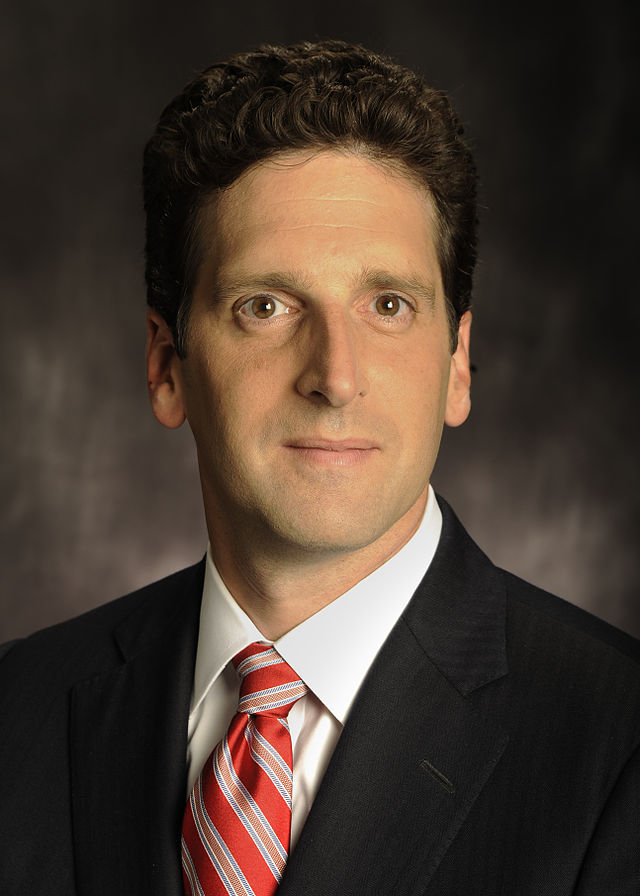
The case has been spearheaded by Superintendent Benjamin M. Lawsky, a qualified lawyer, who commented about the latest findings in a statement, "If a bank fails to live up to its commitments, there should be consequences. That is particularly true in an area as serious as anti-Money Laundering compliance, which is vital to helping prevent terrorism and vile human rights abuses."
The post-2012 investigation led the New York State Department of Financial Services to extend its initial investigation of the organization by installing a dedicated team at the bank. The unit's independent monitoring division uncovered the latest spree of breaches. The authority states in the Order that the SCB's compliance remediation failures were uncovered by DFS' independent monitor, which the Department installed at Standard Chartered as part of the 2012 agreement.
Benjamin Lawsky
The DFS monitor's review of Standard Chartered's transaction monitoring systems found that the bank had failed to detect a large number of potentially high-risk transactions for further review. A significant amount of the potentially high-risk transactions the system failed to detect originated from its Hong Kong subsidiary (SCB Hong Kong) and SCB's branches in the United Arab Emirates (SCB UAE), among others.
The UAE is home to over 600,000 people of Iranian origin, with significant business dealings between the two countries, despite Iran being under sanctions. The latest mishap by SCB adds to the negative and uncertain sentiment among global investors with the banking and financial markets structure.
Asia is a key market for the British origin bank and the current restrictions are expected to affect the bank's domestic client base.
SCB responded in a corporate statement issued on its website, saying: “The Group accepts responsibility for and regrets the deficiencies in the anti-money laundering transaction surveillance system at its New York branch. The Group has already begun extensive remediation efforts and is committed to completing these with utmost urgency. More broadly, the Group is committed to enhancing its effectiveness in the fight against financial crime, and in this context, has committed substantial resources to a multi-year Financial Crime Risk Mitigation Programme.”
One of Britain's largest international banking firms, Standard Chartered Bank (SCB), faces a major overhaul in activities it offers its Asian client base. The move comes after the New York State Department of Financial Services (DFS) found the bank guilty of compliance failures. As a result, the bank has suspended its dollar-denominated Clearing facilities for certain clients, in addition the bank is to pay a substantial financial penalty.
The case follows on from an earlier investigation two years ago, into SCB and its dealings with Iran, the New York State Department accused the bank of meddling in transactions worth $250 billion with the sanctioned nation.
In the current case, the state authority outlines the details of the Order, stating that SCB will suspend dollar-clearing through its New York Branch for high-risk retail business clients at its SCB Hong Kong subsidiary; exit high-risk client relationships within certain business lines at its branches in the United Arab Emirates. In addition, the bank will not accept new dollar-clearing clients or accounts across its operations without prior approval from DFS. Adding salt to the bank’s wounds, it has been ordered to pay a $300 million penalty.
The case has been spearheaded by Superintendent Benjamin M. Lawsky, a qualified lawyer, who commented about the latest findings in a statement, "If a bank fails to live up to its commitments, there should be consequences. That is particularly true in an area as serious as anti-Money Laundering compliance, which is vital to helping prevent terrorism and vile human rights abuses."
The post-2012 investigation led the New York State Department of Financial Services to extend its initial investigation of the organization by installing a dedicated team at the bank. The unit's independent monitoring division uncovered the latest spree of breaches. The authority states in the Order that the SCB's compliance remediation failures were uncovered by DFS' independent monitor, which the Department installed at Standard Chartered as part of the 2012 agreement.
Benjamin Lawsky
The DFS monitor's review of Standard Chartered's transaction monitoring systems found that the bank had failed to detect a large number of potentially high-risk transactions for further review. A significant amount of the potentially high-risk transactions the system failed to detect originated from its Hong Kong subsidiary (SCB Hong Kong) and SCB's branches in the United Arab Emirates (SCB UAE), among others.
The UAE is home to over 600,000 people of Iranian origin, with significant business dealings between the two countries, despite Iran being under sanctions. The latest mishap by SCB adds to the negative and uncertain sentiment among global investors with the banking and financial markets structure.
Asia is a key market for the British origin bank and the current restrictions are expected to affect the bank's domestic client base.
SCB responded in a corporate statement issued on its website, saying: “The Group accepts responsibility for and regrets the deficiencies in the anti-money laundering transaction surveillance system at its New York branch. The Group has already begun extensive remediation efforts and is committed to completing these with utmost urgency. More broadly, the Group is committed to enhancing its effectiveness in the fight against financial crime, and in this context, has committed substantial resources to a multi-year Financial Crime Risk Mitigation Programme.”
ViewTrade and IDS Fintech Link Kuwait Brokers to US Markets via FIX Protocol
CMC Markets’ Artur Delijergijevs on Metals Demand, Volatility, & Stable Execution
CMC Markets’ Artur Delijergijevs on Metals Demand, Volatility, & Stable Execution
In this exclusive Executive Interview, Finance Magnates speaks with Artur Delijergijevs, Head of Systematic Market Making at CMC Markets, about the current state of metals demand and market volatility.
Delijergijevs offers a desk-level view on:
- Metals Demand: Why metals are seeing the strongest demand from both retail and institutional clients right now.
- The Safe-Haven Debate: Questioning whether gold still fits the classic safe-haven definition given large daily price movements.
- Volatile Market Prep: How a market-making desk prepares its systems and pricing for stressed market conditions and high-impact economic events.
- Hybrid Execution: Why the best execution model combines electronic speed with human relationship support, especially during volatility.
- AI in Workflow: Where CMC Markets is integrating machine learning for risk management and pricing, and the limitations of AI during stressed markets.
- Dubai's Role: The strategic importance of Dubai’s location for covering global trading sessions across Asia, Europe, and the US.
Watch to understand how CMC Markets maintains stable pricing and reliable execution quality in high-volatility environments.
#CMCmarkets #forex #metals #gold #trading #volatility #MarketMaking #iFXDubai #FinanceMagnates #Finance #Fintech #Execution #AlgorithmicTrading #RiskManagement
In this exclusive Executive Interview, Finance Magnates speaks with Artur Delijergijevs, Head of Systematic Market Making at CMC Markets, about the current state of metals demand and market volatility.
Delijergijevs offers a desk-level view on:
- Metals Demand: Why metals are seeing the strongest demand from both retail and institutional clients right now.
- The Safe-Haven Debate: Questioning whether gold still fits the classic safe-haven definition given large daily price movements.
- Volatile Market Prep: How a market-making desk prepares its systems and pricing for stressed market conditions and high-impact economic events.
- Hybrid Execution: Why the best execution model combines electronic speed with human relationship support, especially during volatility.
- AI in Workflow: Where CMC Markets is integrating machine learning for risk management and pricing, and the limitations of AI during stressed markets.
- Dubai's Role: The strategic importance of Dubai’s location for covering global trading sessions across Asia, Europe, and the US.
Watch to understand how CMC Markets maintains stable pricing and reliable execution quality in high-volatility environments.
#CMCmarkets #forex #metals #gold #trading #volatility #MarketMaking #iFXDubai #FinanceMagnates #Finance #Fintech #Execution #AlgorithmicTrading #RiskManagement
Finance Magnates Awards 2026 – Nominations Now Open
Finance Magnates Awards 2026 – Nominations Now Open
The Finance Magnates Awards 2026 nominations are now open. 🏆
From fintech innovators to leading brokers, this is where the finance industry celebrates its biggest achievements.
Winners will be announced at the Cyprus Gala Dinner on November 6, 2026.
Nominate your brand now.
https://awards.financemagnates.com/?utm_source=linkedin&utm_medium=video&utm_campaign=nominations-open
#FMAwards #FinanceMagnates #FintechAwards #Fintech #FinanceIndustry
The Finance Magnates Awards 2026 nominations are now open. 🏆
From fintech innovators to leading brokers, this is where the finance industry celebrates its biggest achievements.
Winners will be announced at the Cyprus Gala Dinner on November 6, 2026.
Nominate your brand now.
https://awards.financemagnates.com/?utm_source=linkedin&utm_medium=video&utm_campaign=nominations-open
#FMAwards #FinanceMagnates #FintechAwards #Fintech #FinanceIndustry
Finance Magnates Awards 2026 | Nominations Now Open 🏆#Fintech #FMAwards #TradingIndustry
Finance Magnates Awards 2026 | Nominations Now Open 🏆#Fintech #FMAwards #TradingIndustry
Lights on. Cameras ready. 🎬
Finance Magnates Awards 2026 nominations are now open. 🏆
#FMAwards #FinanceMagnates #FintechAwards #Fintech
Lights on. Cameras ready. 🎬
Finance Magnates Awards 2026 nominations are now open. 🏆
#FMAwards #FinanceMagnates #FintechAwards #Fintech
Exness sees trust as the key theme for growth in MENA Trading Growth for 2026
Exness sees trust as the key theme for growth in MENA Trading Growth for 2026
Mohammad Amer, Regional Commercial Director at Exness, sits down to discuss the booming MENA financial trading market. Find out why Dubai is key to the company's growth strategy, how a mobile-first generation is changing expectations, and why trust will be the defining theme for traders in 2026.
In this interview, you'll learn:
* Why Dubai and the MENA region are critical growth markets for fintech and online trading.
* How Exness is addressing the demands of mobile-first, younger traders through engineering, platform stability, and transparent conditions.
* The essential role local talent plays in providing a culturally relevant and compliant user experience.
* Mohammad Amer's outlook on the future of the online trading industry and why stronger controls and systems are necessary.
* Why "trust" isn't just a brand value, but has commercial value—and why he predicts 2026 will be the "Year of Trust."
Key Takeaways:
➡️ The MENA region is rapidly shaping global financial markets.
➡️ New traders expect stability, precise execution, and transparency.
➡️ Local expertise is key to regulatory compliance and user experience.
➡️ Future success belongs to firms capable of meeting rising standards across regulation and platform consistency.
Read the full article at: https://www.financemagnates.com/thought-leadership/exness-sees-trust-as-the-key-theme-for-growth-in-mena-trading-growth-for-2026/
#Exness #MENA #Trading #FinTech #Dubai #OnlineTrading #FinanceMagnates #MohammadAmer #Trust #MobileTrading
Mohammad Amer, Regional Commercial Director at Exness, sits down to discuss the booming MENA financial trading market. Find out why Dubai is key to the company's growth strategy, how a mobile-first generation is changing expectations, and why trust will be the defining theme for traders in 2026.
In this interview, you'll learn:
* Why Dubai and the MENA region are critical growth markets for fintech and online trading.
* How Exness is addressing the demands of mobile-first, younger traders through engineering, platform stability, and transparent conditions.
* The essential role local talent plays in providing a culturally relevant and compliant user experience.
* Mohammad Amer's outlook on the future of the online trading industry and why stronger controls and systems are necessary.
* Why "trust" isn't just a brand value, but has commercial value—and why he predicts 2026 will be the "Year of Trust."
Key Takeaways:
➡️ The MENA region is rapidly shaping global financial markets.
➡️ New traders expect stability, precise execution, and transparency.
➡️ Local expertise is key to regulatory compliance and user experience.
➡️ Future success belongs to firms capable of meeting rising standards across regulation and platform consistency.
Read the full article at: https://www.financemagnates.com/thought-leadership/exness-sees-trust-as-the-key-theme-for-growth-in-mena-trading-growth-for-2026/
#Exness #MENA #Trading #FinTech #Dubai #OnlineTrading #FinanceMagnates #MohammadAmer #Trust #MobileTrading
Paytiko CEO Razi Salih on Why Payment Orchestration is a MUST-HAVE for Brokers in 2026
Paytiko CEO Razi Salih on Why Payment Orchestration is a MUST-HAVE for Brokers in 2026
At iFX Expo Dubai, Finance Magnates spoke with Razi Salih, CEO at Paytiko, about the evolution of the payments ecosystem and why payment orchestration has shifted from an option to a necessity for brokers, prop firms, and exchanges.
Mr. Salih explains how global expansion, the need for deep localisation, and the sheer number of new payment methods, from instant banking to stablecoins, are driving this critical infrastructure shift.
#PaymentOrchestration #Fintech #Brokerage #TradingPayments #RaziSalih #Paytiko #iFXExpoDubai #Stablecoins #AIinFintech
At iFX Expo Dubai, Finance Magnates spoke with Razi Salih, CEO at Paytiko, about the evolution of the payments ecosystem and why payment orchestration has shifted from an option to a necessity for brokers, prop firms, and exchanges.
Mr. Salih explains how global expansion, the need for deep localisation, and the sheer number of new payment methods, from instant banking to stablecoins, are driving this critical infrastructure shift.
#PaymentOrchestration #Fintech #Brokerage #TradingPayments #RaziSalih #Paytiko #iFXExpoDubai #Stablecoins #AIinFintech