FMA Pushing Forward with Plans to Raise Regulatory Standards and Shed Soft-Touch Reputation
Tuesday,04/11/2014|10:46GMTby
George Tchetvertakov
As the FMA prepares to initiate Phase Two of its sweeping financial markets reform later this year, the touchy subject of regulatory arbitrage comes into focus once more.
The Consumer Affairs Minister in New Zealand [Paul Goldsmith] today confirmed the approval and imminent implementation of the second phase of sweeping financial markets regulatory changes in New Zealand.
As reported by Forex Magnates in April, the NZ Financial Market Authority (FMA) embarked on implementing wholesale changes to its prime piece of legislation in 2013, the Financial Markets Conduct Act (FMCA). The proposed legislation delivers the most statutory reform in the country's financial markets in over 30 years.
One Step at a Time
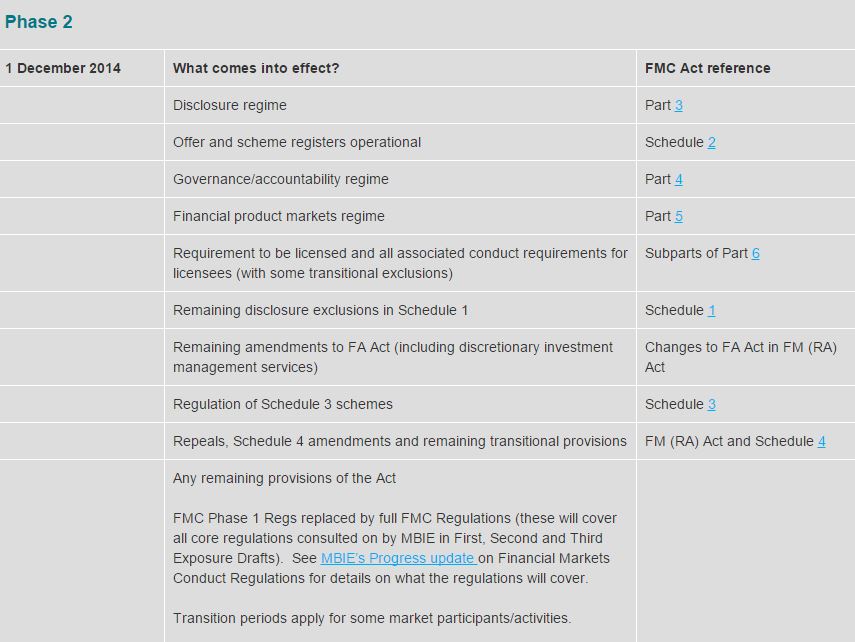
The first phase of the new FMCA came into force on April 1st this year while the second phase has been set to commence on December 1st 2014.
Phase one of the FMC Act took effect on April 1,2014. That included the fair-dealing provisions and regulations that provided for the licensing of peer-to peer lending and equity Crowdfunding.
Paul Goldsmith, NZ Consumer Affairs Minister
The second phase covers new disclosure requirements, online registers, the governance of financial products and further details supporting the remainder of the FMC Act. The mandate for the FMA has increased substantially with several hundred businesses expected to apply for licenses in the new regime.
"One of the key changes in these regulations is the introduction of a new disclosure regime that will mean shorter, clearer documents that are much more tailored to investors' needs," Mr. Goldsmith said.
Clearer disclosure rules will come into effect on December 1st. According to Mr. Goldsmith, "A new online register for offers of financial products will ensure that information on financial products and managed investment schemes is easily accessible and comparable." Adding, "This will also be up and running from December 1st."
A key factoid that will likely influence where retail brokers exactly base their operations in the APAC region is that market participants will have up to 24 months from December 1st to comply with the new disclosure and governance requirements. The two year grace period gives companies time to adjust to the new regulatory landscape, but conversely, could trigger a mass exodus in 2016-17.
Raising the Bar
The gradual, all-encompassing changes being crafted by the FMA is a testament to the regulator's admitted goal of reaching par with global leaders such as the FCA, CFTC, ASIC, FINMA, BaFIN and the Japanese FCA. New Zealand as a territory wants to make a case for being a commercially attractive, yet financially secure and responsible part of the world to conduct financial services.
Whether the new rules have a positive effect on the financial services sector is as yet unclear, because although stricter rules will likely improve the quality of retail brokers operating in New Zealand, they also will reduce their quantity. Already, the higher capital requirements have encouraged several brokers to leave the region and operate from neighbouring territories such as Australia or Singapore.
As operating in the country becomes tougher, only the better capitalised firms remain in operation. And those firms that can raise the capital to remain regulated could potentially be attracted by Malta and Cyprus as alternative territories to base operations because they offer access to the Euro-zone, a much more lucrative region than New Zealand.
Another aspect highlighted by the FMA's regulatory changes is that of 'regulatory Arbitrage'. Retail brokerages in particular are very partial to choosing their base of operations on the basis of where regulatory hurdles are lowest in relation to the perceived glamour of the host country. New Zealand obtained a reputation of being relatively lax on regulatory matters, which in the first place has attracted the high influx of foreign broker participation. Now, with the bar moving higher swathes of brokers are looking for regions with lower bars.
The Consumer Affairs Minister in New Zealand [Paul Goldsmith] today confirmed the approval and imminent implementation of the second phase of sweeping financial markets regulatory changes in New Zealand.
As reported by Forex Magnates in April, the NZ Financial Market Authority (FMA) embarked on implementing wholesale changes to its prime piece of legislation in 2013, the Financial Markets Conduct Act (FMCA). The proposed legislation delivers the most statutory reform in the country's financial markets in over 30 years.
One Step at a Time
The first phase of the new FMCA came into force on April 1st this year while the second phase has been set to commence on December 1st 2014.
Phase one of the FMC Act took effect on April 1,2014. That included the fair-dealing provisions and regulations that provided for the licensing of peer-to peer lending and equity Crowdfunding.
Paul Goldsmith, NZ Consumer Affairs Minister
The second phase covers new disclosure requirements, online registers, the governance of financial products and further details supporting the remainder of the FMC Act. The mandate for the FMA has increased substantially with several hundred businesses expected to apply for licenses in the new regime.
"One of the key changes in these regulations is the introduction of a new disclosure regime that will mean shorter, clearer documents that are much more tailored to investors' needs," Mr. Goldsmith said.
Clearer disclosure rules will come into effect on December 1st. According to Mr. Goldsmith, "A new online register for offers of financial products will ensure that information on financial products and managed investment schemes is easily accessible and comparable." Adding, "This will also be up and running from December 1st."
A key factoid that will likely influence where retail brokers exactly base their operations in the APAC region is that market participants will have up to 24 months from December 1st to comply with the new disclosure and governance requirements. The two year grace period gives companies time to adjust to the new regulatory landscape, but conversely, could trigger a mass exodus in 2016-17.
Raising the Bar
The gradual, all-encompassing changes being crafted by the FMA is a testament to the regulator's admitted goal of reaching par with global leaders such as the FCA, CFTC, ASIC, FINMA, BaFIN and the Japanese FCA. New Zealand as a territory wants to make a case for being a commercially attractive, yet financially secure and responsible part of the world to conduct financial services.
Whether the new rules have a positive effect on the financial services sector is as yet unclear, because although stricter rules will likely improve the quality of retail brokers operating in New Zealand, they also will reduce their quantity. Already, the higher capital requirements have encouraged several brokers to leave the region and operate from neighbouring territories such as Australia or Singapore.
As operating in the country becomes tougher, only the better capitalised firms remain in operation. And those firms that can raise the capital to remain regulated could potentially be attracted by Malta and Cyprus as alternative territories to base operations because they offer access to the Euro-zone, a much more lucrative region than New Zealand.
Another aspect highlighted by the FMA's regulatory changes is that of 'regulatory Arbitrage'. Retail brokerages in particular are very partial to choosing their base of operations on the basis of where regulatory hurdles are lowest in relation to the perceived glamour of the host country. New Zealand obtained a reputation of being relatively lax on regulatory matters, which in the first place has attracted the high influx of foreign broker participation. Now, with the bar moving higher swathes of brokers are looking for regions with lower bars.
Retail Traders Can Now Access Prediction Markets Through Binance Wallet
FP Markets Winner Spotlight 🏆 | Global Broker of the Year 2025 #Trading #Broker #Innovation #Shorts
FP Markets Winner Spotlight 🏆 | Global Broker of the Year 2025 #Trading #Broker #Innovation #Shorts
FP Markets takes the spotlight as Global Broker of the Year 2025 at the Finance Magnates Awards.
Martin Stoilov, Head of Client Experience, shares that trust, innovation, and people played a key role in the company’s success, supported by a strong foundation of integrity and client-centricity.
Following this milestone, FP Markets continues to focus on growth, technology investment, and its core values of transparency and excellence.
👉 Be part of FM Awards 2026: https://awards.financemagnates.com/#nominate
FP Markets takes the spotlight as Global Broker of the Year 2025 at the Finance Magnates Awards.
Martin Stoilov, Head of Client Experience, shares that trust, innovation, and people played a key role in the company’s success, supported by a strong foundation of integrity and client-centricity.
Following this milestone, FP Markets continues to focus on growth, technology investment, and its core values of transparency and excellence.
👉 Be part of FM Awards 2026: https://awards.financemagnates.com/#nominate
In this video, we review @HolaPrimeMarketsOfficial, a multi-asset forex and CFDs broker offering different account types, trading platforms, and flexible trading conditions.
We cover the broker’s overall offering, including account options, trading environment, platforms like MT4 and MT5, and additional services such as managed accounts and fast withdrawals.
Watch the full video to see if Hola Prime Markets fits your trading needs.
📣 Stay up to date with the latest in finance and trading. Follow Finance Magnates for industry news, insights, and global event coverage.
Connect with us:
🔗 LinkedIn: /financemagnates
👍 Facebook: /financemagnates
📸 Instagram: https://www.instagram.com/financemagnates
🐦 X: https://x.com/financemagnates
🎥 TikTok: https://www.tiktok.com/tag/financemagnates
▶️ YouTube: /@financemagnates_official
#HolaPrime #ForexBroker #CFDTrading #FinanceMagnates #Trading #Forex #BrokerReview
In this video, we review @HolaPrimeMarketsOfficial, a multi-asset forex and CFDs broker offering different account types, trading platforms, and flexible trading conditions.
We cover the broker’s overall offering, including account options, trading environment, platforms like MT4 and MT5, and additional services such as managed accounts and fast withdrawals.
Watch the full video to see if Hola Prime Markets fits your trading needs.
📣 Stay up to date with the latest in finance and trading. Follow Finance Magnates for industry news, insights, and global event coverage.
Connect with us:
🔗 LinkedIn: /financemagnates
👍 Facebook: /financemagnates
📸 Instagram: https://www.instagram.com/financemagnates
🐦 X: https://x.com/financemagnates
🎥 TikTok: https://www.tiktok.com/tag/financemagnates
▶️ YouTube: /@financemagnates_official
#HolaPrime #ForexBroker #CFDTrading #FinanceMagnates #Trading #Forex #BrokerReview
Hola Prime Review: What You Need to Know | Full Breakdown by Finance Magnates
Hola Prime Review: What You Need to Know | Full Breakdown by Finance Magnates
In this video, we review @HolaPrime_Global, a proprietary trading firm offering evaluation programs and performance-based payouts in simulated market environments.
We cover how the challenge model works, including account types, profit splits (up to 95%), trading rules, and what it takes to reach a funded account. You’ll also learn about available platforms like MT4, MT5, cTrader, and more, along with insights into payouts, support, and trading conditions.
Watch the full video to see if Hola Prime fits your trading style.
📣 Stay up to date with the latest in finance and trading. Follow Finance Magnates for industry news, insights, and global event coverage.
Connect with us:
🔗 LinkedIn: /financemagnates
👍 Facebook: /financemagnates
📸 Instagram: https://www.instagram.com/financemagnates
🐦 X: https://x.com/financemagnates
🎥 TikTok: https://www.tiktok.com/tag/financemagnates
▶️ YouTube: /@financemagnates_official
#HolaPrime #PropFirm #Trading #FinanceMagnates #Forex #FuturesTrading #TradingReview #PropFirmReview
In this video, we review @HolaPrime_Global, a proprietary trading firm offering evaluation programs and performance-based payouts in simulated market environments.
We cover how the challenge model works, including account types, profit splits (up to 95%), trading rules, and what it takes to reach a funded account. You’ll also learn about available platforms like MT4, MT5, cTrader, and more, along with insights into payouts, support, and trading conditions.
Watch the full video to see if Hola Prime fits your trading style.
📣 Stay up to date with the latest in finance and trading. Follow Finance Magnates for industry news, insights, and global event coverage.
Connect with us:
🔗 LinkedIn: /financemagnates
👍 Facebook: /financemagnates
📸 Instagram: https://www.instagram.com/financemagnates
🐦 X: https://x.com/financemagnates
🎥 TikTok: https://www.tiktok.com/tag/financemagnates
▶️ YouTube: /@financemagnates_official
#HolaPrime #PropFirm #Trading #FinanceMagnates #Forex #FuturesTrading #TradingReview #PropFirmReview
Axi Winner Spotlight 🏆 | Global Most Innovative Broker 2025 #Innovation #Trading #Fintech #Broker
Axi Winner Spotlight 🏆 | Global Most Innovative Broker 2025 #Innovation #Trading #Fintech #Broker
Axi takes the spotlight at the Finance Magnates Awards, winning Global Most Innovative Broker 2025.
Olivia Xenofontos and Ivanna Openko share how the team will feel: proud, motivated, and ready to keep delivering.
They also describe the night as well-organized, focused, and enjoyable for all.
👉 Be part of FM Awards 2026.
Axi takes the spotlight at the Finance Magnates Awards, winning Global Most Innovative Broker 2025.
Olivia Xenofontos and Ivanna Openko share how the team will feel: proud, motivated, and ready to keep delivering.
They also describe the night as well-organized, focused, and enjoyable for all.
👉 Be part of FM Awards 2026.
Recognition that matters.
Built on transparency.
Driven by the industry.
The Finance Magnates Awards 2026.
Nominations are now open.
🔗 https://awards.financemagnates.com/?utm_source=SM&utm_medium=social&utm_campaign=recognition-matters
Recognition that matters.
Built on transparency.
Driven by the industry.
The Finance Magnates Awards 2026.
Nominations are now open.
🔗 https://awards.financemagnates.com/?utm_source=SM&utm_medium=social&utm_campaign=recognition-matters