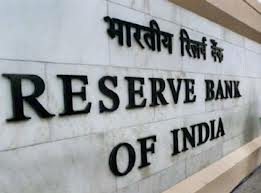
India’s top three private banks, HDFC, Axis bank and ICICI have been charged by the country’s central bank for breaches in relation to Know Your Customer (KYC) and Anti Money Laundering (AML) procedures.
India’s banking supervisor has fined three heavy weight private institutions for failing to have adequate KYC and AML procedures. The trio came under the radar after media firm cobra post highlighted shortfalls in the banks systems and controls.
All three private banks, who serve a combined customer base of 50 million plus, were handed out a financial penalty. Axis bank was fined 50 million rupees (US $861,000), HDFC 45 million rupees ($780,000) and ICICI bank which was fined 10 million rupees ($173,000).
Reminders
In the RBI's findings, the order states that although there were no clear hindrances of money laundering the banks had violated the following:
non-observance of certain safeguards in respect of arrangement of “at par” payment of cheques drawn by cooperative banks,
non-adherence to certain aspects of Know Your Customer (KYC)) norms and anti-money laundering (AML) guidelines like risk categorisation and periodical review of risk profiling of account holders,
non-adherence of KYC for walk in customers including for sale of third party products, omission in filing of cash transaction reports (CTRs) in respect of some cash transactions, sale of gold coins for cash beyond Rs. 50000, (US $865)
not-obtaining of permanent account number (PAN) card details or form 60/61 as required,
non-verification of source of funds credited to a few non-resident ordinary (NRO) accounts,
failure to re-designate a few accounts as NRO accounts though required, non-submission of proper information called for by the reserve Bank, etc.
As per the central banks procedures in dealing with breaches it wrote to all banks to investigate why there were systemic shortfalls. After considering the facts of each case and the individual bank’s reply the Reserve Bank came to the conclusion that some of the violations were substantiated and warranted imposition of monetary penalty.
All three banks were not available for comment.
India's banking sector has been undertaking a transition where private banks are taking advantage of economic growth and the changing needs of consumers. Banks offer a wide range of banking and investment products from savings account, to bonds and mutual funds.
RBI has been battling with banks in relation to their systems and controls, the central bank fined ING Bank and ICICI bank in October 2012 after issuing several verbal and written notices to both firms in regards to KYC & AML procedures.
Other fines
2012 was a tough year for global banking giants as regulators were distributing fines against money laundering and know your customer (KYC) breaches, like hot candy.
Fines relating to KYC, AML sanctioned countries - over the last 18 months
HSBC $2 billion
Standard Chartered $340 million
ING $619 million
Nordea $4.7 million
Firms operating in the financial services sector are obliged to adhere to the strict guidelines set by regulatory authorities. UK based Alpari was fined by the FSA for $200,000.
Know your customer by..
Firms providing brokerage services under the UK categorise clients according to parameters set by the authorities such as the Financial Action Task Force (FATF), the intergovernmental body was formed in 1989 by members of the G7 countries, the purpose was to develop and promote an international response to combat money laundering with coherent procedures for all nations to follow and benchmark.
A simple rule of thumb
Non FATF - high risk
FATF - medium risk
EA EU - low risk
Fraudsters try to use the banking system to cover the source of illicit funds, in the case of Liberty Reserve, a payment provider that was recently apprehended for an estimated $6 billion for money laundering. The proceeds of crime were thought to be related to; drug trafficking, identity theft and child pornography.
The RBI penalty puts a further blow to India’s position as a preferred destination for overseas investment as investors look for safe and secure destinations. In the midst of intense Volatility in the rupee foreign investors sold $151 million worth of equities according to data supplied by the exchange on Tuesday.
FX in India
Margin FX has been outlawed by the central bank in the world’s largest democracy, in disclaimers issued by the central bank over the last six years, margin products have discouraged. The RBI made its formal stance on the asset class on February 2011 where it referenced online FX trading and discouraged investors to co-operate with online firms.
Average daily trade volume on the country’s main equities exchange, NSE, is $17.3 billion; there is an estimated 24 million retail shareholding accounts in the country. In its 2012 annual report HDFC bank’s securities division, HDFC Securities stated that it held 1.6 million investment accounts.
India’s banking supervisor has fined three heavy weight private institutions for failing to have adequate KYC and AML procedures. The trio came under the radar after media firm cobra post highlighted shortfalls in the banks systems and controls.
All three private banks, who serve a combined customer base of 50 million plus, were handed out a financial penalty. Axis bank was fined 50 million rupees (US $861,000), HDFC 45 million rupees ($780,000) and ICICI bank which was fined 10 million rupees ($173,000).
Reminders
In the RBI's findings, the order states that although there were no clear hindrances of money laundering the banks had violated the following:
non-observance of certain safeguards in respect of arrangement of “at par” payment of cheques drawn by cooperative banks,
non-adherence to certain aspects of Know Your Customer (KYC)) norms and anti-money laundering (AML) guidelines like risk categorisation and periodical review of risk profiling of account holders,
non-adherence of KYC for walk in customers including for sale of third party products, omission in filing of cash transaction reports (CTRs) in respect of some cash transactions, sale of gold coins for cash beyond Rs. 50000, (US $865)
not-obtaining of permanent account number (PAN) card details or form 60/61 as required,
non-verification of source of funds credited to a few non-resident ordinary (NRO) accounts,
failure to re-designate a few accounts as NRO accounts though required, non-submission of proper information called for by the reserve Bank, etc.
As per the central banks procedures in dealing with breaches it wrote to all banks to investigate why there were systemic shortfalls. After considering the facts of each case and the individual bank’s reply the Reserve Bank came to the conclusion that some of the violations were substantiated and warranted imposition of monetary penalty.
All three banks were not available for comment.
India's banking sector has been undertaking a transition where private banks are taking advantage of economic growth and the changing needs of consumers. Banks offer a wide range of banking and investment products from savings account, to bonds and mutual funds.
RBI has been battling with banks in relation to their systems and controls, the central bank fined ING Bank and ICICI bank in October 2012 after issuing several verbal and written notices to both firms in regards to KYC & AML procedures.
Other fines
2012 was a tough year for global banking giants as regulators were distributing fines against money laundering and know your customer (KYC) breaches, like hot candy.
Fines relating to KYC, AML sanctioned countries - over the last 18 months
HSBC $2 billion
Standard Chartered $340 million
ING $619 million
Nordea $4.7 million
Firms operating in the financial services sector are obliged to adhere to the strict guidelines set by regulatory authorities. UK based Alpari was fined by the FSA for $200,000.
Know your customer by..
Firms providing brokerage services under the UK categorise clients according to parameters set by the authorities such as the Financial Action Task Force (FATF), the intergovernmental body was formed in 1989 by members of the G7 countries, the purpose was to develop and promote an international response to combat money laundering with coherent procedures for all nations to follow and benchmark.
A simple rule of thumb
Non FATF - high risk
FATF - medium risk
EA EU - low risk
Fraudsters try to use the banking system to cover the source of illicit funds, in the case of Liberty Reserve, a payment provider that was recently apprehended for an estimated $6 billion for money laundering. The proceeds of crime were thought to be related to; drug trafficking, identity theft and child pornography.
The RBI penalty puts a further blow to India’s position as a preferred destination for overseas investment as investors look for safe and secure destinations. In the midst of intense Volatility in the rupee foreign investors sold $151 million worth of equities according to data supplied by the exchange on Tuesday.
FX in India
Margin FX has been outlawed by the central bank in the world’s largest democracy, in disclaimers issued by the central bank over the last six years, margin products have discouraged. The RBI made its formal stance on the asset class on February 2011 where it referenced online FX trading and discouraged investors to co-operate with online firms.
Average daily trade volume on the country’s main equities exchange, NSE, is $17.3 billion; there is an estimated 24 million retail shareholding accounts in the country. In its 2012 annual report HDFC bank’s securities division, HDFC Securities stated that it held 1.6 million investment accounts.
Italy’s Consob Tightens Net on AI-Fueled Scams With Fresh Website Bans
FP Markets Winner Spotlight 🏆 | Global Broker of the Year 2025 #Trading #Broker #Innovation #Shorts
FP Markets Winner Spotlight 🏆 | Global Broker of the Year 2025 #Trading #Broker #Innovation #Shorts
FP Markets takes the spotlight as Global Broker of the Year 2025 at the Finance Magnates Awards.
Martin Stoilov, Head of Client Experience, shares that trust, innovation, and people played a key role in the company’s success, supported by a strong foundation of integrity and client-centricity.
Following this milestone, FP Markets continues to focus on growth, technology investment, and its core values of transparency and excellence.
👉 Be part of FM Awards 2026: https://awards.financemagnates.com/#nominate
FP Markets takes the spotlight as Global Broker of the Year 2025 at the Finance Magnates Awards.
Martin Stoilov, Head of Client Experience, shares that trust, innovation, and people played a key role in the company’s success, supported by a strong foundation of integrity and client-centricity.
Following this milestone, FP Markets continues to focus on growth, technology investment, and its core values of transparency and excellence.
👉 Be part of FM Awards 2026: https://awards.financemagnates.com/#nominate
In this video, we review @HolaPrimeMarketsOfficial, a multi-asset forex and CFDs broker offering different account types, trading platforms, and flexible trading conditions.
We cover the broker’s overall offering, including account options, trading environment, platforms like MT4 and MT5, and additional services such as managed accounts and fast withdrawals.
Watch the full video to see if Hola Prime Markets fits your trading needs.
📣 Stay up to date with the latest in finance and trading. Follow Finance Magnates for industry news, insights, and global event coverage.
Connect with us:
🔗 LinkedIn: /financemagnates
👍 Facebook: /financemagnates
📸 Instagram: https://www.instagram.com/financemagnates
🐦 X: https://x.com/financemagnates
🎥 TikTok: https://www.tiktok.com/tag/financemagnates
▶️ YouTube: /@financemagnates_official
#HolaPrime #ForexBroker #CFDTrading #FinanceMagnates #Trading #Forex #BrokerReview
In this video, we review @HolaPrimeMarketsOfficial, a multi-asset forex and CFDs broker offering different account types, trading platforms, and flexible trading conditions.
We cover the broker’s overall offering, including account options, trading environment, platforms like MT4 and MT5, and additional services such as managed accounts and fast withdrawals.
Watch the full video to see if Hola Prime Markets fits your trading needs.
📣 Stay up to date with the latest in finance and trading. Follow Finance Magnates for industry news, insights, and global event coverage.
Connect with us:
🔗 LinkedIn: /financemagnates
👍 Facebook: /financemagnates
📸 Instagram: https://www.instagram.com/financemagnates
🐦 X: https://x.com/financemagnates
🎥 TikTok: https://www.tiktok.com/tag/financemagnates
▶️ YouTube: /@financemagnates_official
#HolaPrime #ForexBroker #CFDTrading #FinanceMagnates #Trading #Forex #BrokerReview
Hola Prime Review: What You Need to Know | Full Breakdown by Finance Magnates
Hola Prime Review: What You Need to Know | Full Breakdown by Finance Magnates
In this video, we review @HolaPrime_Global, a proprietary trading firm offering evaluation programs and performance-based payouts in simulated market environments.
We cover how the challenge model works, including account types, profit splits (up to 95%), trading rules, and what it takes to reach a funded account. You’ll also learn about available platforms like MT4, MT5, cTrader, and more, along with insights into payouts, support, and trading conditions.
Watch the full video to see if Hola Prime fits your trading style.
📣 Stay up to date with the latest in finance and trading. Follow Finance Magnates for industry news, insights, and global event coverage.
Connect with us:
🔗 LinkedIn: /financemagnates
👍 Facebook: /financemagnates
📸 Instagram: https://www.instagram.com/financemagnates
🐦 X: https://x.com/financemagnates
🎥 TikTok: https://www.tiktok.com/tag/financemagnates
▶️ YouTube: /@financemagnates_official
#HolaPrime #PropFirm #Trading #FinanceMagnates #Forex #FuturesTrading #TradingReview #PropFirmReview
In this video, we review @HolaPrime_Global, a proprietary trading firm offering evaluation programs and performance-based payouts in simulated market environments.
We cover how the challenge model works, including account types, profit splits (up to 95%), trading rules, and what it takes to reach a funded account. You’ll also learn about available platforms like MT4, MT5, cTrader, and more, along with insights into payouts, support, and trading conditions.
Watch the full video to see if Hola Prime fits your trading style.
📣 Stay up to date with the latest in finance and trading. Follow Finance Magnates for industry news, insights, and global event coverage.
Connect with us:
🔗 LinkedIn: /financemagnates
👍 Facebook: /financemagnates
📸 Instagram: https://www.instagram.com/financemagnates
🐦 X: https://x.com/financemagnates
🎥 TikTok: https://www.tiktok.com/tag/financemagnates
▶️ YouTube: /@financemagnates_official
#HolaPrime #PropFirm #Trading #FinanceMagnates #Forex #FuturesTrading #TradingReview #PropFirmReview
Axi Winner Spotlight 🏆 | Global Most Innovative Broker 2025 #Innovation #Trading #Fintech #Broker
Axi Winner Spotlight 🏆 | Global Most Innovative Broker 2025 #Innovation #Trading #Fintech #Broker
Axi takes the spotlight at the Finance Magnates Awards, winning Global Most Innovative Broker 2025.
Olivia Xenofontos and Ivanna Openko share how the team will feel: proud, motivated, and ready to keep delivering.
They also describe the night as well-organized, focused, and enjoyable for all.
👉 Be part of FM Awards 2026.
Axi takes the spotlight at the Finance Magnates Awards, winning Global Most Innovative Broker 2025.
Olivia Xenofontos and Ivanna Openko share how the team will feel: proud, motivated, and ready to keep delivering.
They also describe the night as well-organized, focused, and enjoyable for all.
👉 Be part of FM Awards 2026.
Recognition that matters.
Built on transparency.
Driven by the industry.
The Finance Magnates Awards 2026.
Nominations are now open.
🔗 https://awards.financemagnates.com/?utm_source=SM&utm_medium=social&utm_campaign=recognition-matters
Recognition that matters.
Built on transparency.
Driven by the industry.
The Finance Magnates Awards 2026.
Nominations are now open.
🔗 https://awards.financemagnates.com/?utm_source=SM&utm_medium=social&utm_campaign=recognition-matters