Paid marketing campaigns are competitive and costly, but prop trading firms ads do not face as many restrictions as retail FX and CFD brokers.
And also: which social platforms have the best organic growth results?
Trader-funded firms (TFFs), popularly referred to as prop trading firms (although this is technically incorrect), are fortunate to have access to a rather wide array of marketing strategies and tools, primarily because they are incorporated as non-financial entities. Marketing, particularly paid marketing, is a highly accessible field for them, largely because there are very few advertising restrictions on major platforms such as Google Ads and Meta (Facebook and Instagram).
The legal and customer success teams at Google Ads generally have limited understanding of FX and CFD regulations. Every FX and CFD industry marketer I've spoken with (both B2B and B2C) has encountered problems with them at some point, often over trivial issues.
The surge in popularity of TFFs correlates directly with the decline of start-up brokerages due to legal and technological constraints. Therefore, it's no surprise that marketing for TFFs is often likened to the early, unruly days of binary options and FX.
The Tactics of Heavy Bot-Spamming
I firmly believe that every business should commit to a proper, long-term marketing strategy. However, many TFF founders lack patience, and concepts such as building awareness, capturing interest, establishing trust, and demonstrating strong performance records are frequently overlooked in favor of quick, spammy campaigns. These include bot-driven Facebook, Telegram, and WhatsApp campaigns, and fake groups that impersonate established TFF influencers and companies.
Does heavy bot-spamming work? I would be lying if I said no. It does work, but only for a maximum period of 1-2 months and in certain regions.
The biggest downside is the damaged reputation and the inability to sustain future growth, as these spammy techniques are short-lived. The same applies to large, short-term paid Google campaigns that are often discontinued within the same 1-2 months because they are not sustainable in the long term.
Overall, the lack of planning is very common among retail FX and CFDs brokers, and this issue is even more prominent with TFFs.
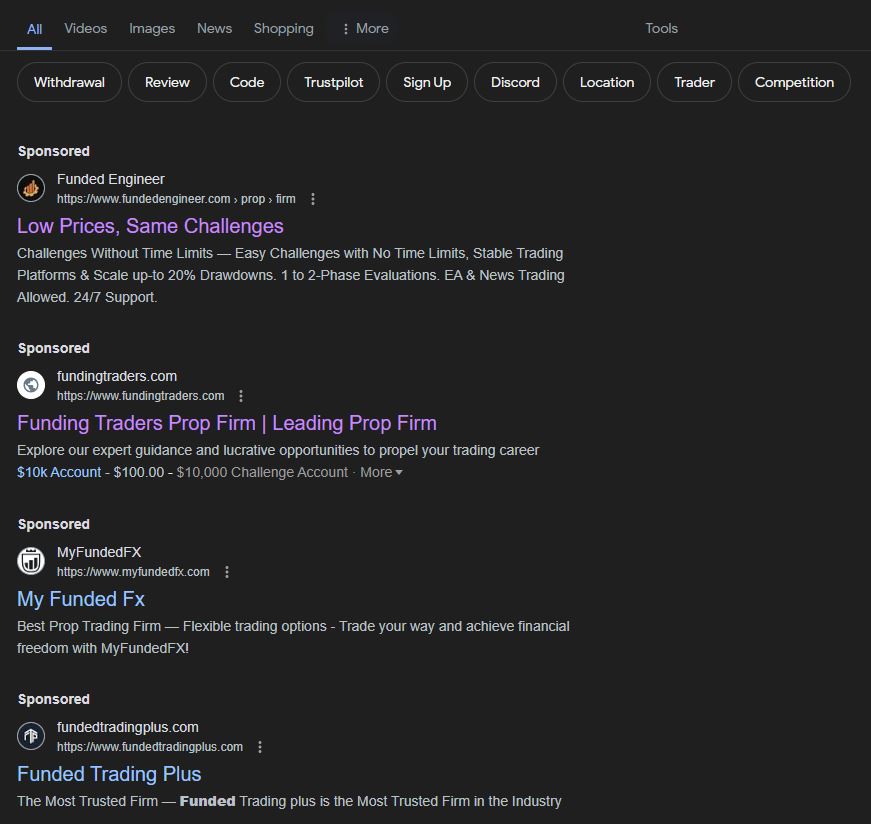
A screenshot of Goggle search Ads ran by TFFs
A Look into the Data
Even a simple domain overview of TFF websites can reveal a wealth of data about those companies' marketing tactics. Unfortunately, retail traders rarely conduct these checks.
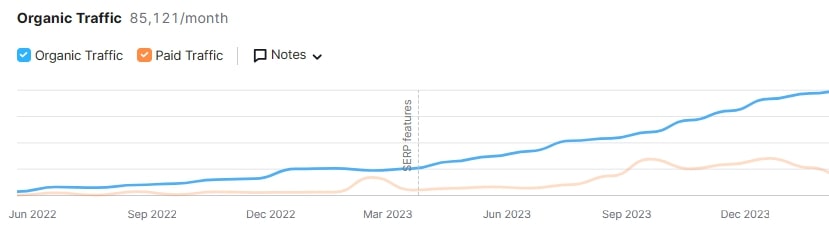
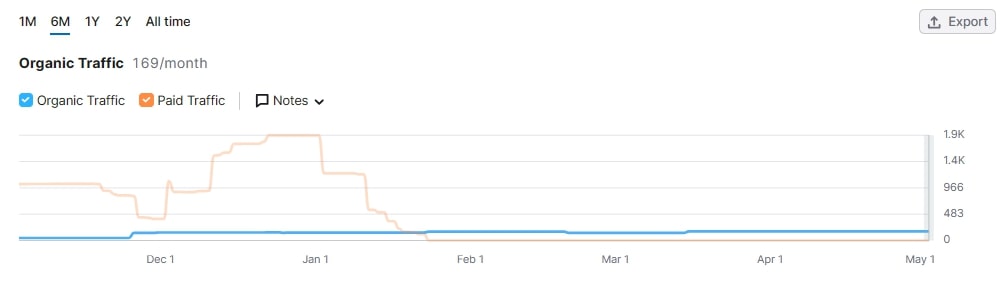
Here is an example of consistent organic growth of one established TFF.
Organic and paid traffic of an established TFF (Source: Semrush)
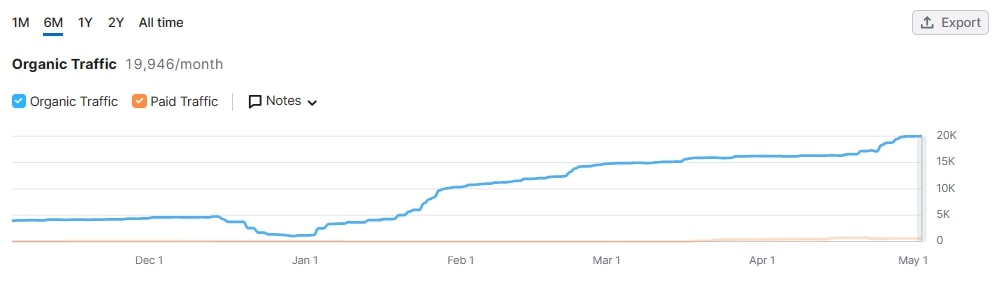
When it comes to newly-created TFFs, the paid efforts to grow the businesses are very clear. Most of them heavily invest in paid ads to trigger organic traffic.
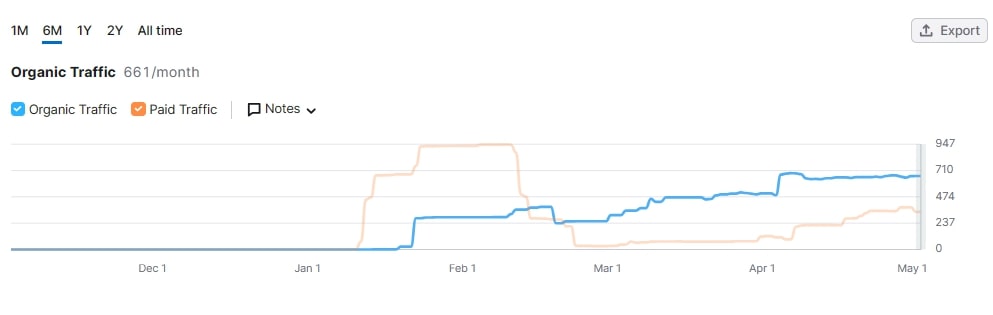
Newly-created TFF 1: There was a heavy
investment in paid ads for a couple of months that along with other marketing
campaigns triggered organic growth as well. This firm continues to invest in paid marketing at a more sustainable pace.
Organic and paid traffic of startup TFF 1 (Source: Semrush)
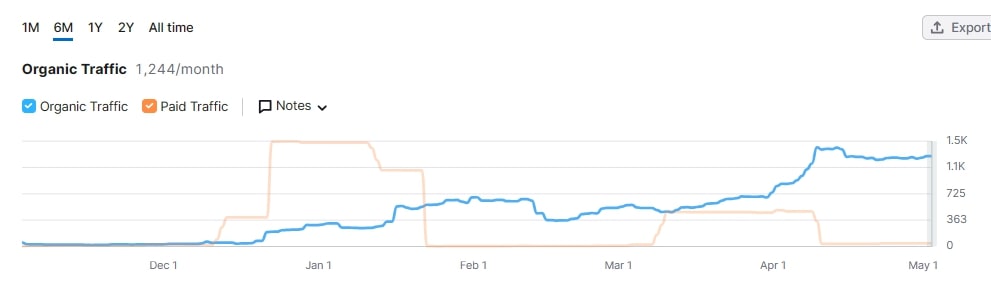
Newly-created TFF 2: This company had two sprints with paid advertisements, and both worked. The later was strategically timed when the organic growth was plateauing, which gave it a push higher.
Organic and paid traffic of startup TFF 2 (Source: Semrush)
Newly-created TFF 3: The paid marketing strategy of this TFF did not translate to organic growth. However, it is to be noted that this TFF was affected by the MetaQuotes' “grey-label cancelling spree.”
Organic and paid traffic of startup TFF 3 (Source: Semrush)
Newly-created TFF 4: Here is one of my favourites: this TFF is a one of few
firms that benefited from “prop firm crisis” as they have own MetaTrader5 license. They
also have socially active founders and a decent organically created community of traders that attributed to the growth.
Organic and paid traffic of startup TFF 4 (Source: Semrush)
The trends in these charts are so prominent that even a non-marketer can spot the differences.
The Right Way to Market TFFs
There is no doubt that the TFF industry is now somewhat crowded, bringing a challenge to organic growth for new players. Paid ads work as long as they are strategically planned and coordinated with organic growth.
Some of the basic marketing strategies a newly-created TFF must establish are:
Mobile-optimized website with live support
CRM
Mass emailing tool of any kind
Non-spammy content for Twitter and Discord (or Instagram; depends on the region)
Experienced and energetic community manager
Apart from the bare minimum basics, the TFFs must apply some other most common marketing strategies as well. Some of them are the following:
1. Video reviews have the highest conversion rates, especially
when the influencer gets the % from the sales (to be fair, there are fewer of
these in 2024). TFFs must produce YouTube Ads and organic
educational videos.
2. Influencer marketing is ideally structured around paid dedicated content, including short and long-form
videos, reels (Instagram, YouTube) and written posts. TFFs must consider such market avenues.
3. TFFs should explore traffic routing and
partnerships with FX-focused educational portals of all kinds.
4. TFFs must have strong referral programs: keep in mind the average
referral among 100 TFFs is 15%. Interestingly enough, while many TFFs
desire to onboard retail IBs as referral partners, it is often not possible as
rebates are not attractive enough compared to retail FX.
5. Community building/social selling is another key marketing channel.
For TFFs, these communities are often structured around socially active
Founders who are traders at heart.
However, no marketing efforts go without errors, and TFFs are no exception. From what I have seen, the most common mistakes TFFs make are:
Not running basic CAC analysis.
Not having an established trader community of some sort prior to the launch, hoping that paid ads will drive 500+ clients in the first month (in reality, they will not, not in 2024).
Not having retention programs in place. The average trader has at least 3 funded accounts at competing companies.
Not investing in quality educational content and, instead, actively using AI-generated blurbs, often entirely copied from established firms’ websites, along with the use of flashy laughable 80' style images, videos, and slogans.
Fully relying on one trading platform (a costly mistake many realised earlier this year).
From what I have seen, YouTube and TikTok probably have the best organic growth results. Further, quite a few TFFs have organically grown because of the active presence of their founders on Twitter and TikTok, who have decent trading experience and are capable of producing decent content.
Download the TFF Marketing Checklist along with the data insights on aggregated social stats of 100 trader-funded firms (it includes the top 6 social platforms, volumes, who takes on the majority of market share, 3 months organic traffic stats, and more).
Trader-funded firms (TFFs), popularly referred to as prop trading firms (although this is technically incorrect), are fortunate to have access to a rather wide array of marketing strategies and tools, primarily because they are incorporated as non-financial entities. Marketing, particularly paid marketing, is a highly accessible field for them, largely because there are very few advertising restrictions on major platforms such as Google Ads and Meta (Facebook and Instagram).
The legal and customer success teams at Google Ads generally have limited understanding of FX and CFD regulations. Every FX and CFD industry marketer I've spoken with (both B2B and B2C) has encountered problems with them at some point, often over trivial issues.
The surge in popularity of TFFs correlates directly with the decline of start-up brokerages due to legal and technological constraints. Therefore, it's no surprise that marketing for TFFs is often likened to the early, unruly days of binary options and FX.
The Tactics of Heavy Bot-Spamming
I firmly believe that every business should commit to a proper, long-term marketing strategy. However, many TFF founders lack patience, and concepts such as building awareness, capturing interest, establishing trust, and demonstrating strong performance records are frequently overlooked in favor of quick, spammy campaigns. These include bot-driven Facebook, Telegram, and WhatsApp campaigns, and fake groups that impersonate established TFF influencers and companies.
Does heavy bot-spamming work? I would be lying if I said no. It does work, but only for a maximum period of 1-2 months and in certain regions.
The biggest downside is the damaged reputation and the inability to sustain future growth, as these spammy techniques are short-lived. The same applies to large, short-term paid Google campaigns that are often discontinued within the same 1-2 months because they are not sustainable in the long term.
Overall, the lack of planning is very common among retail FX and CFDs brokers, and this issue is even more prominent with TFFs.
A screenshot of Goggle search Ads ran by TFFs
A Look into the Data
Even a simple domain overview of TFF websites can reveal a wealth of data about those companies' marketing tactics. Unfortunately, retail traders rarely conduct these checks.
Here is an example of consistent organic growth of one established TFF.
Organic and paid traffic of an established TFF (Source: Semrush)
When it comes to newly-created TFFs, the paid efforts to grow the businesses are very clear. Most of them heavily invest in paid ads to trigger organic traffic.
Newly-created TFF 1: There was a heavy
investment in paid ads for a couple of months that along with other marketing
campaigns triggered organic growth as well. This firm continues to invest in paid marketing at a more sustainable pace.
Organic and paid traffic of startup TFF 1 (Source: Semrush)
Newly-created TFF 2: This company had two sprints with paid advertisements, and both worked. The later was strategically timed when the organic growth was plateauing, which gave it a push higher.
Organic and paid traffic of startup TFF 2 (Source: Semrush)
Newly-created TFF 3: The paid marketing strategy of this TFF did not translate to organic growth. However, it is to be noted that this TFF was affected by the MetaQuotes' “grey-label cancelling spree.”
Organic and paid traffic of startup TFF 3 (Source: Semrush)
Newly-created TFF 4: Here is one of my favourites: this TFF is a one of few
firms that benefited from “prop firm crisis” as they have own MetaTrader5 license. They
also have socially active founders and a decent organically created community of traders that attributed to the growth.
Organic and paid traffic of startup TFF 4 (Source: Semrush)
The trends in these charts are so prominent that even a non-marketer can spot the differences.
The Right Way to Market TFFs
There is no doubt that the TFF industry is now somewhat crowded, bringing a challenge to organic growth for new players. Paid ads work as long as they are strategically planned and coordinated with organic growth.
Some of the basic marketing strategies a newly-created TFF must establish are:
Mobile-optimized website with live support
CRM
Mass emailing tool of any kind
Non-spammy content for Twitter and Discord (or Instagram; depends on the region)
Experienced and energetic community manager
Apart from the bare minimum basics, the TFFs must apply some other most common marketing strategies as well. Some of them are the following:
1. Video reviews have the highest conversion rates, especially
when the influencer gets the % from the sales (to be fair, there are fewer of
these in 2024). TFFs must produce YouTube Ads and organic
educational videos.
2. Influencer marketing is ideally structured around paid dedicated content, including short and long-form
videos, reels (Instagram, YouTube) and written posts. TFFs must consider such market avenues.
3. TFFs should explore traffic routing and
partnerships with FX-focused educational portals of all kinds.
4. TFFs must have strong referral programs: keep in mind the average
referral among 100 TFFs is 15%. Interestingly enough, while many TFFs
desire to onboard retail IBs as referral partners, it is often not possible as
rebates are not attractive enough compared to retail FX.
5. Community building/social selling is another key marketing channel.
For TFFs, these communities are often structured around socially active
Founders who are traders at heart.
However, no marketing efforts go without errors, and TFFs are no exception. From what I have seen, the most common mistakes TFFs make are:
Not running basic CAC analysis.
Not having an established trader community of some sort prior to the launch, hoping that paid ads will drive 500+ clients in the first month (in reality, they will not, not in 2024).
Not having retention programs in place. The average trader has at least 3 funded accounts at competing companies.
Not investing in quality educational content and, instead, actively using AI-generated blurbs, often entirely copied from established firms’ websites, along with the use of flashy laughable 80' style images, videos, and slogans.
Fully relying on one trading platform (a costly mistake many realised earlier this year).
From what I have seen, YouTube and TikTok probably have the best organic growth results. Further, quite a few TFFs have organically grown because of the active presence of their founders on Twitter and TikTok, who have decent trading experience and are capable of producing decent content.
Download the TFF Marketing Checklist along with the data insights on aggregated social stats of 100 trader-funded firms (it includes the top 6 social platforms, volumes, who takes on the majority of market share, 3 months organic traffic stats, and more).
Anya Aratovskaya is a freelance FX consultant with over 14 years of experience in the capital markets industry. She has held executive roles at leading financial and technology firms, including Advanced Markets, Fortex, and Boston Technologies. Anya has advised dozens of prop trading firms, FX brokers, and funds on everything from operational setup to strategic planning and market positioning. These days, she’s helping scale a non-financial startup and occasionally writes about the gray areas of the financial industry, marketing, platform incentives, and tech-driven business models.
42% of Swiss Financial Firms Have No Digital Fraud Policy, FINMA Finds
FP Markets Winner Spotlight 🏆 | Global Broker of the Year 2025 #Trading #Broker #Innovation #Shorts
FP Markets Winner Spotlight 🏆 | Global Broker of the Year 2025 #Trading #Broker #Innovation #Shorts
FP Markets takes the spotlight as Global Broker of the Year 2025 at the Finance Magnates Awards.
Martin Stoilov, Head of Client Experience, shares that trust, innovation, and people played a key role in the company’s success, supported by a strong foundation of integrity and client-centricity.
Following this milestone, FP Markets continues to focus on growth, technology investment, and its core values of transparency and excellence.
👉 Be part of FM Awards 2026: https://awards.financemagnates.com/#nominate
FP Markets takes the spotlight as Global Broker of the Year 2025 at the Finance Magnates Awards.
Martin Stoilov, Head of Client Experience, shares that trust, innovation, and people played a key role in the company’s success, supported by a strong foundation of integrity and client-centricity.
Following this milestone, FP Markets continues to focus on growth, technology investment, and its core values of transparency and excellence.
👉 Be part of FM Awards 2026: https://awards.financemagnates.com/#nominate
In this video, we review @HolaPrimeMarketsOfficial, a multi-asset forex and CFDs broker offering different account types, trading platforms, and flexible trading conditions.
We cover the broker’s overall offering, including account options, trading environment, platforms like MT4 and MT5, and additional services such as managed accounts and fast withdrawals.
Watch the full video to see if Hola Prime Markets fits your trading needs.
📣 Stay up to date with the latest in finance and trading. Follow Finance Magnates for industry news, insights, and global event coverage.
Connect with us:
🔗 LinkedIn: /financemagnates
👍 Facebook: /financemagnates
📸 Instagram: https://www.instagram.com/financemagnates
🐦 X: https://x.com/financemagnates
🎥 TikTok: https://www.tiktok.com/tag/financemagnates
▶️ YouTube: /@financemagnates_official
#HolaPrime #ForexBroker #CFDTrading #FinanceMagnates #Trading #Forex #BrokerReview
In this video, we review @HolaPrimeMarketsOfficial, a multi-asset forex and CFDs broker offering different account types, trading platforms, and flexible trading conditions.
We cover the broker’s overall offering, including account options, trading environment, platforms like MT4 and MT5, and additional services such as managed accounts and fast withdrawals.
Watch the full video to see if Hola Prime Markets fits your trading needs.
📣 Stay up to date with the latest in finance and trading. Follow Finance Magnates for industry news, insights, and global event coverage.
Connect with us:
🔗 LinkedIn: /financemagnates
👍 Facebook: /financemagnates
📸 Instagram: https://www.instagram.com/financemagnates
🐦 X: https://x.com/financemagnates
🎥 TikTok: https://www.tiktok.com/tag/financemagnates
▶️ YouTube: /@financemagnates_official
#HolaPrime #ForexBroker #CFDTrading #FinanceMagnates #Trading #Forex #BrokerReview
Hola Prime Review: What You Need to Know | Full Breakdown by Finance Magnates
Hola Prime Review: What You Need to Know | Full Breakdown by Finance Magnates
In this video, we review @HolaPrime_Global, a proprietary trading firm offering evaluation programs and performance-based payouts in simulated market environments.
We cover how the challenge model works, including account types, profit splits (up to 95%), trading rules, and what it takes to reach a funded account. You’ll also learn about available platforms like MT4, MT5, cTrader, and more, along with insights into payouts, support, and trading conditions.
Watch the full video to see if Hola Prime fits your trading style.
📣 Stay up to date with the latest in finance and trading. Follow Finance Magnates for industry news, insights, and global event coverage.
Connect with us:
🔗 LinkedIn: /financemagnates
👍 Facebook: /financemagnates
📸 Instagram: https://www.instagram.com/financemagnates
🐦 X: https://x.com/financemagnates
🎥 TikTok: https://www.tiktok.com/tag/financemagnates
▶️ YouTube: /@financemagnates_official
#HolaPrime #PropFirm #Trading #FinanceMagnates #Forex #FuturesTrading #TradingReview #PropFirmReview
In this video, we review @HolaPrime_Global, a proprietary trading firm offering evaluation programs and performance-based payouts in simulated market environments.
We cover how the challenge model works, including account types, profit splits (up to 95%), trading rules, and what it takes to reach a funded account. You’ll also learn about available platforms like MT4, MT5, cTrader, and more, along with insights into payouts, support, and trading conditions.
Watch the full video to see if Hola Prime fits your trading style.
📣 Stay up to date with the latest in finance and trading. Follow Finance Magnates for industry news, insights, and global event coverage.
Connect with us:
🔗 LinkedIn: /financemagnates
👍 Facebook: /financemagnates
📸 Instagram: https://www.instagram.com/financemagnates
🐦 X: https://x.com/financemagnates
🎥 TikTok: https://www.tiktok.com/tag/financemagnates
▶️ YouTube: /@financemagnates_official
#HolaPrime #PropFirm #Trading #FinanceMagnates #Forex #FuturesTrading #TradingReview #PropFirmReview
Axi Winner Spotlight 🏆 | Global Most Innovative Broker 2025 #Innovation #Trading #Fintech #Broker
Axi Winner Spotlight 🏆 | Global Most Innovative Broker 2025 #Innovation #Trading #Fintech #Broker
Axi takes the spotlight at the Finance Magnates Awards, winning Global Most Innovative Broker 2025.
Olivia Xenofontos and Ivanna Openko share how the team will feel: proud, motivated, and ready to keep delivering.
They also describe the night as well-organized, focused, and enjoyable for all.
👉 Be part of FM Awards 2026.
Axi takes the spotlight at the Finance Magnates Awards, winning Global Most Innovative Broker 2025.
Olivia Xenofontos and Ivanna Openko share how the team will feel: proud, motivated, and ready to keep delivering.
They also describe the night as well-organized, focused, and enjoyable for all.
👉 Be part of FM Awards 2026.
Recognition that matters.
Built on transparency.
Driven by the industry.
The Finance Magnates Awards 2026.
Nominations are now open.
🔗 https://awards.financemagnates.com/?utm_source=SM&utm_medium=social&utm_campaign=recognition-matters
Recognition that matters.
Built on transparency.
Driven by the industry.
The Finance Magnates Awards 2026.
Nominations are now open.
🔗 https://awards.financemagnates.com/?utm_source=SM&utm_medium=social&utm_campaign=recognition-matters