The total losses of retail Indian futures and options traders in FY25 amounted to US$12.37 billion, up 41 per cent.
Meanwhile, Plus500 bought an Indian broker earlier this year for $20 million.
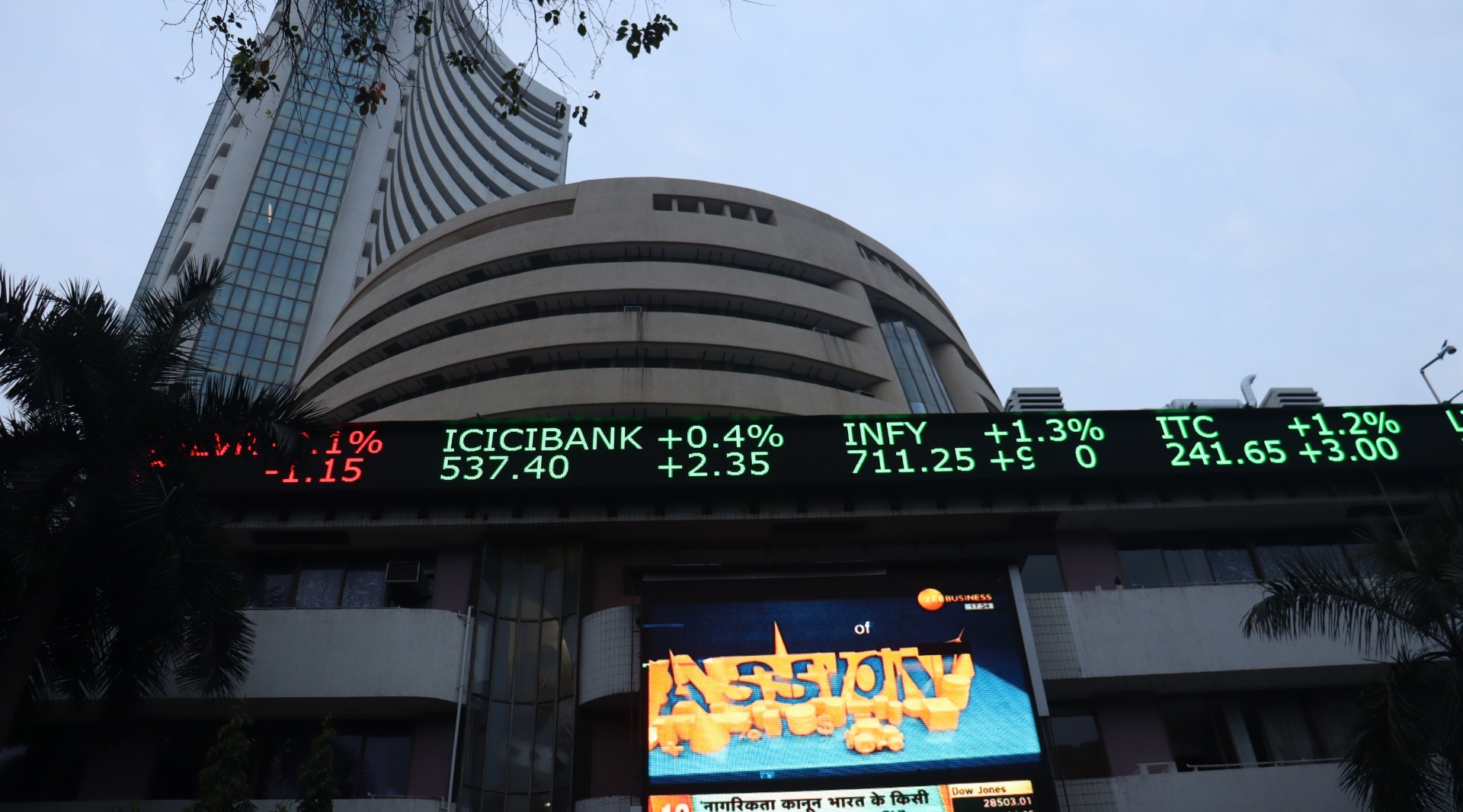
The iconic Bombay Stock Exchange building in Mumbai, India
Plus500 (LON:PLUS) earlier this year agreed to buy an Indian broker to enter the world’s largest futures and options market. However, nearly 91 per cent of individual Indian futures and options traders lost money in the financial year 2025, which ended on 31 March, according to the local regulator.
Indian Derivatives Traders Are Losing Money
A study by the Securities and Exchange Board of India (SEBI) revealed that the net loss of individual traders in the financial year widened by 41 per cent to around US$12.37 billion.
While the aggregate net loss of individual traders jumped in the first three quarters, the figure fell in the final quarter.
The losses widened despite a drop in the total number of individual investors in the Indian futures and options market, which declined by 20 per cent year-on-year between December 2024 and May 2025. However, the figure rose by 24 per cent over two years.
The number of individual investors in the market also fell from around 6.14 million in the first quarter of FY25 to about 4.27 million in the last quarter.
Despite the widespread losses, the Indian options market remains highly active. The country became the largest retail options market globally, with over 150 billion options contracts traded in FY24, up from 85.3 billion contracts the year before. In comparison, the US, which has the second-largest market, handled 12.3 billion options contracts in 2024.
Plus500’s Bet on India
The sheer volume of the Indian options market likely triggered Plus500’s interest, leading to its agreement to acquire Mehta Equities, a regulated Indian wealth manager and broker, for $20 million. The acquisition paved the way for the Israeli broker to enter the Indian market.
David Zruia, CEO of Plus500
London-listed Plus500’s interest in the Indian options market comes at a time when it is also expanding in the US retail futures space. According to the broker’s latest financials, around 13 per cent of its H1 revenue came from the futures and options markets.
However, futures and options are structurally different from contracts for differences (CFDs), which still remain Plus500’s primary revenue source.
Unlike CFDs, which are traded in the over-the-counter (OTC) market, futures and options contracts are exchange-listed.
According to Plus500’s European website, 80 per cent of the continent’s CFD traders on its platform lose money. Despite CFDs being considered very risky, the share of loss-making traders in India’s futures and options market is even higher.
Meanwhile, the popularity of CFD brokers in India is rising. According to Finance Magnates Intelligence, India’s share of CFD website visits climbed to 55 per cent of global traffic. However, the country does not regulate CFDs nor bans the instruments.
Plus500 (LON:PLUS) earlier this year agreed to buy an Indian broker to enter the world’s largest futures and options market. However, nearly 91 per cent of individual Indian futures and options traders lost money in the financial year 2025, which ended on 31 March, according to the local regulator.
Indian Derivatives Traders Are Losing Money
A study by the Securities and Exchange Board of India (SEBI) revealed that the net loss of individual traders in the financial year widened by 41 per cent to around US$12.37 billion.
While the aggregate net loss of individual traders jumped in the first three quarters, the figure fell in the final quarter.
The losses widened despite a drop in the total number of individual investors in the Indian futures and options market, which declined by 20 per cent year-on-year between December 2024 and May 2025. However, the figure rose by 24 per cent over two years.
The number of individual investors in the market also fell from around 6.14 million in the first quarter of FY25 to about 4.27 million in the last quarter.
Despite the widespread losses, the Indian options market remains highly active. The country became the largest retail options market globally, with over 150 billion options contracts traded in FY24, up from 85.3 billion contracts the year before. In comparison, the US, which has the second-largest market, handled 12.3 billion options contracts in 2024.
Plus500’s Bet on India
The sheer volume of the Indian options market likely triggered Plus500’s interest, leading to its agreement to acquire Mehta Equities, a regulated Indian wealth manager and broker, for $20 million. The acquisition paved the way for the Israeli broker to enter the Indian market.
David Zruia, CEO of Plus500
London-listed Plus500’s interest in the Indian options market comes at a time when it is also expanding in the US retail futures space. According to the broker’s latest financials, around 13 per cent of its H1 revenue came from the futures and options markets.
However, futures and options are structurally different from contracts for differences (CFDs), which still remain Plus500’s primary revenue source.
Unlike CFDs, which are traded in the over-the-counter (OTC) market, futures and options contracts are exchange-listed.
According to Plus500’s European website, 80 per cent of the continent’s CFD traders on its platform lose money. Despite CFDs being considered very risky, the share of loss-making traders in India’s futures and options market is even higher.
Meanwhile, the popularity of CFD brokers in India is rising. According to Finance Magnates Intelligence, India’s share of CFD website visits climbed to 55 per cent of global traffic. However, the country does not regulate CFDs nor bans the instruments.
Arnab Shome is an electronics engineer-turned-financial editor. He holds a Bachelor of Technology from the National Institute of Technology, Agartala. He entered the retail trading industry about a decade ago, covering the cryptocurrency market for Finance Magnates, and later expanded his coverage to include forex and CFDs as well.
His work at Finance Magnates includes C-level interviews, data-driven analysis, opinion pieces, and scoops of industry exclusives. He also contributes to Finance Magnates’ quarterly industry report.
Area of coverage:
1. CFD broker-related news
2. Industry-related Regulatory updates and developments
3. New retail trading trends
4. Prop trading industry updates
5. Executive interviews
Education:
Bachelor of Technology - National Institute of Technology, Agartala (India)
Webull Spent Big to Hit Record Revenue, and the Bill Is in the Fine Print
FP Markets Winner Spotlight 🏆 | Global Broker of the Year 2025 #Trading #Broker #Innovation #Shorts
FP Markets Winner Spotlight 🏆 | Global Broker of the Year 2025 #Trading #Broker #Innovation #Shorts
FP Markets takes the spotlight as Global Broker of the Year 2025 at the Finance Magnates Awards.
Martin Stoilov, Head of Client Experience, shares that trust, innovation, and people played a key role in the company’s success, supported by a strong foundation of integrity and client-centricity.
Following this milestone, FP Markets continues to focus on growth, technology investment, and its core values of transparency and excellence.
👉 Be part of FM Awards 2026: https://awards.financemagnates.com/#nominate
FP Markets takes the spotlight as Global Broker of the Year 2025 at the Finance Magnates Awards.
Martin Stoilov, Head of Client Experience, shares that trust, innovation, and people played a key role in the company’s success, supported by a strong foundation of integrity and client-centricity.
Following this milestone, FP Markets continues to focus on growth, technology investment, and its core values of transparency and excellence.
👉 Be part of FM Awards 2026: https://awards.financemagnates.com/#nominate
In this video, we review @HolaPrimeMarketsOfficial, a multi-asset forex and CFDs broker offering different account types, trading platforms, and flexible trading conditions.
We cover the broker’s overall offering, including account options, trading environment, platforms like MT4 and MT5, and additional services such as managed accounts and fast withdrawals.
Watch the full video to see if Hola Prime Markets fits your trading needs.
📣 Stay up to date with the latest in finance and trading. Follow Finance Magnates for industry news, insights, and global event coverage.
Connect with us:
🔗 LinkedIn: /financemagnates
👍 Facebook: /financemagnates
📸 Instagram: https://www.instagram.com/financemagnates
🐦 X: https://x.com/financemagnates
🎥 TikTok: https://www.tiktok.com/tag/financemagnates
▶️ YouTube: /@financemagnates_official
#HolaPrime #ForexBroker #CFDTrading #FinanceMagnates #Trading #Forex #BrokerReview
In this video, we review @HolaPrimeMarketsOfficial, a multi-asset forex and CFDs broker offering different account types, trading platforms, and flexible trading conditions.
We cover the broker’s overall offering, including account options, trading environment, platforms like MT4 and MT5, and additional services such as managed accounts and fast withdrawals.
Watch the full video to see if Hola Prime Markets fits your trading needs.
📣 Stay up to date with the latest in finance and trading. Follow Finance Magnates for industry news, insights, and global event coverage.
Connect with us:
🔗 LinkedIn: /financemagnates
👍 Facebook: /financemagnates
📸 Instagram: https://www.instagram.com/financemagnates
🐦 X: https://x.com/financemagnates
🎥 TikTok: https://www.tiktok.com/tag/financemagnates
▶️ YouTube: /@financemagnates_official
#HolaPrime #ForexBroker #CFDTrading #FinanceMagnates #Trading #Forex #BrokerReview
Hola Prime Review: What You Need to Know | Full Breakdown by Finance Magnates
Hola Prime Review: What You Need to Know | Full Breakdown by Finance Magnates
In this video, we review @HolaPrime_Global, a proprietary trading firm offering evaluation programs and performance-based payouts in simulated market environments.
We cover how the challenge model works, including account types, profit splits (up to 95%), trading rules, and what it takes to reach a funded account. You’ll also learn about available platforms like MT4, MT5, cTrader, and more, along with insights into payouts, support, and trading conditions.
Watch the full video to see if Hola Prime fits your trading style.
📣 Stay up to date with the latest in finance and trading. Follow Finance Magnates for industry news, insights, and global event coverage.
Connect with us:
🔗 LinkedIn: /financemagnates
👍 Facebook: /financemagnates
📸 Instagram: https://www.instagram.com/financemagnates
🐦 X: https://x.com/financemagnates
🎥 TikTok: https://www.tiktok.com/tag/financemagnates
▶️ YouTube: /@financemagnates_official
#HolaPrime #PropFirm #Trading #FinanceMagnates #Forex #FuturesTrading #TradingReview #PropFirmReview
In this video, we review @HolaPrime_Global, a proprietary trading firm offering evaluation programs and performance-based payouts in simulated market environments.
We cover how the challenge model works, including account types, profit splits (up to 95%), trading rules, and what it takes to reach a funded account. You’ll also learn about available platforms like MT4, MT5, cTrader, and more, along with insights into payouts, support, and trading conditions.
Watch the full video to see if Hola Prime fits your trading style.
📣 Stay up to date with the latest in finance and trading. Follow Finance Magnates for industry news, insights, and global event coverage.
Connect with us:
🔗 LinkedIn: /financemagnates
👍 Facebook: /financemagnates
📸 Instagram: https://www.instagram.com/financemagnates
🐦 X: https://x.com/financemagnates
🎥 TikTok: https://www.tiktok.com/tag/financemagnates
▶️ YouTube: /@financemagnates_official
#HolaPrime #PropFirm #Trading #FinanceMagnates #Forex #FuturesTrading #TradingReview #PropFirmReview
Axi Winner Spotlight 🏆 | Global Most Innovative Broker 2025 #Innovation #Trading #Fintech #Broker
Axi Winner Spotlight 🏆 | Global Most Innovative Broker 2025 #Innovation #Trading #Fintech #Broker
Axi takes the spotlight at the Finance Magnates Awards, winning Global Most Innovative Broker 2025.
Olivia Xenofontos and Ivanna Openko share how the team will feel: proud, motivated, and ready to keep delivering.
They also describe the night as well-organized, focused, and enjoyable for all.
👉 Be part of FM Awards 2026.
Axi takes the spotlight at the Finance Magnates Awards, winning Global Most Innovative Broker 2025.
Olivia Xenofontos and Ivanna Openko share how the team will feel: proud, motivated, and ready to keep delivering.
They also describe the night as well-organized, focused, and enjoyable for all.
👉 Be part of FM Awards 2026.
Recognition that matters.
Built on transparency.
Driven by the industry.
The Finance Magnates Awards 2026.
Nominations are now open.
🔗 https://awards.financemagnates.com/?utm_source=SM&utm_medium=social&utm_campaign=recognition-matters
Recognition that matters.
Built on transparency.
Driven by the industry.
The Finance Magnates Awards 2026.
Nominations are now open.
🔗 https://awards.financemagnates.com/?utm_source=SM&utm_medium=social&utm_campaign=recognition-matters