Industry insiders are expecting new regulations for CFDs, mainly in the EU.
Streamlining the tech stack will be another area of priority next year.
After an eventful 2023, the financial services industry is now looking ahead to the new year, 2024. Many things have shaped the industry this year: Spain’s CFDs marketing restriction, consumer duty and crypto ad rules in the UK, plus the adoption of artificial intelligence (AI), and the industry expects more next year.
Although it is tough to accurately predict the future of any industry, trends and historical evidence always leave room for calculated forecasts. Two key areas where industry experts are expecting developments are the adoption of modern technology infrastructure and the imposition of new regulations.
Tech Will Be a Priority for Brokers
The advancement of technology has already forced brokers to rethink their tech infrastructure. And, this might continue to be a priority next year. The rise in AI has already encouraged many brokers and their technology providers to develop new infrastructure and services.
David Nussbaum, Founder and CEO at Skale
“One of the biggest trends we will see over the next year is a greater move towards brokers consolidating their tech stacks. This ticks a number of boxes for brokers in terms of cost savings, increased efficiencies, and enhancing the trader experience,” David Nussbaum, the Founder and CEO at Skale, told Finance Magnates.
“It also ties in with a trend we are seeing from our larger clients and prospects whose legacy systems are coming to their end of life. Rather than replicating existing systems, these brokers want to consolidate more seamlessly, cutting the time it takes to use and merge disparate systems and benefit from the cost reductions of a more streamlined approach.”
Muinmos’ Chief Technology Officer, Emil Kongelys, agrees with the focus on tech but thinks the priority will be to streamline the back end and research.
Emil Kongelys, Chief Technology Officer at Muinmos
“For years, fintechs have invested mostly in the front office, cutting that extra microsecond, making sure the trader can get to the Alpha, and in return, giving the financial institution more volume. This is now changing, and more R&D goes into the arena of regtech, whether in onboarding, trade reporting, transactional monitoring, or market abuse monitoring,” Kongelys said.
“The focus for next year will continue to be on ease of use for traders,” Nussbaum added. “Making processes as simple and quick as possible for traders from the onboarding stage through to verification, deposits, and withdrawals will be key for client acquisition and retention. I believe we will see an increase in the use of Single Sign-Ons for traders so that they can access their trading platforms, traders’ area, and deposit funds, for example, all with a single set of credentials.”
More Regulations Are Expected
This year, many regulatory moves have disrupted the operations of the brokers offering CFDs, specifically marketing. South Korea, too, imposed restrictions on CFDs after evidence of market manipulation using the complex derivatives surfaced.
“More regulators may follow the footsteps of the Spanish regulator and impose further restrictions on the marketing of CFDs, inflicting another ‘blow’ to this line of financial products,” said Kongelys.
“The regulatory divergence inside the EU is growing; the Spanish CFDs measures are just the last measures taken by EU-based regulators, continuing a trend cemented by BaFIN, AMF, and AFM. Regulators are moving away from passporting rights and leaning towards the 'place of business' test. This regulatory divergence is, in essence, a crack in the European Union and its idea of unified financial markets. Despite the EU’s best efforts, we see this trend only intensifying and possibly causing conflicts between regulators.”
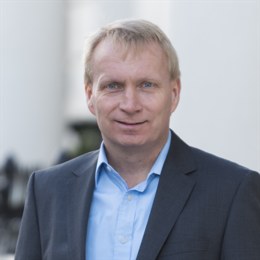
Lars Holst, Founder & CEO, GCEX
Lars Holst, the Founder and CEO at GCEX Group, believes that “the financial landscape is set to witness a significant surge in regulatory measures” next year. He added: “Globally, I expect regulatory frameworks to tighten across CFDs and crypto aimed at enhancing transparency and safeguarding investors.”
Crypto Approaches Mainstream
Crypto will be another area of focus across the industry, whether it be regulators, brokers, or retail and institutional investors. Europe is already set to adopt the Markets in Crypto-Assets Regulation (MiCA) rules next year. With the ongoing optimism, significant developments can be around crypto exchange-traded funds in the US and growing institutional adoption.
“Institutional adoption of the main cryptocurrencies, such as BTC and ETH, will continue at a pace. The collapse of FTX and the disgrace of CZ from Binance has confirmed the need for separation of responsibilities that the institutional world has always believed in,” said Tom Higgins, Founder and CEO at Gold-i. “Stablecoins will grow as people realize their massive potential in removing monetary friction.”
Tom Higgins, Founder & CEO of Gold-i
“CBDCs will start taking shape, and as they operate like a 200% guaranteed stablecoin, will follow the same path as stablecoins,” he said, adding: “Global regulation will start to coalesce in crypto-friendly regions, and other, not-so-friendly, regions will, effectively, ban cryptos.”
Higgins further predicts that “the FX Prime of Prime model will be replicated in the crypto world, with new 24x7 POPS offering liquidity to smaller entities downstream. This liquidity will not be sourced from a single exchange but aggregated from OTC and exchange liquidity to give the best price, order book depth, reliability, and security.”
Meanwhile, Holst is also betting on a surge in demand for security token offerings next year, expecting “meaningful volume outside exchange tokens with investors looking for a more stable environment.”
After an eventful 2023, the financial services industry is now looking ahead to the new year, 2024. Many things have shaped the industry this year: Spain’s CFDs marketing restriction, consumer duty and crypto ad rules in the UK, plus the adoption of artificial intelligence (AI), and the industry expects more next year.
Although it is tough to accurately predict the future of any industry, trends and historical evidence always leave room for calculated forecasts. Two key areas where industry experts are expecting developments are the adoption of modern technology infrastructure and the imposition of new regulations.
Tech Will Be a Priority for Brokers
The advancement of technology has already forced brokers to rethink their tech infrastructure. And, this might continue to be a priority next year. The rise in AI has already encouraged many brokers and their technology providers to develop new infrastructure and services.
David Nussbaum, Founder and CEO at Skale
“One of the biggest trends we will see over the next year is a greater move towards brokers consolidating their tech stacks. This ticks a number of boxes for brokers in terms of cost savings, increased efficiencies, and enhancing the trader experience,” David Nussbaum, the Founder and CEO at Skale, told Finance Magnates.
“It also ties in with a trend we are seeing from our larger clients and prospects whose legacy systems are coming to their end of life. Rather than replicating existing systems, these brokers want to consolidate more seamlessly, cutting the time it takes to use and merge disparate systems and benefit from the cost reductions of a more streamlined approach.”
Muinmos’ Chief Technology Officer, Emil Kongelys, agrees with the focus on tech but thinks the priority will be to streamline the back end and research.
Emil Kongelys, Chief Technology Officer at Muinmos
“For years, fintechs have invested mostly in the front office, cutting that extra microsecond, making sure the trader can get to the Alpha, and in return, giving the financial institution more volume. This is now changing, and more R&D goes into the arena of regtech, whether in onboarding, trade reporting, transactional monitoring, or market abuse monitoring,” Kongelys said.
“The focus for next year will continue to be on ease of use for traders,” Nussbaum added. “Making processes as simple and quick as possible for traders from the onboarding stage through to verification, deposits, and withdrawals will be key for client acquisition and retention. I believe we will see an increase in the use of Single Sign-Ons for traders so that they can access their trading platforms, traders’ area, and deposit funds, for example, all with a single set of credentials.”
More Regulations Are Expected
This year, many regulatory moves have disrupted the operations of the brokers offering CFDs, specifically marketing. South Korea, too, imposed restrictions on CFDs after evidence of market manipulation using the complex derivatives surfaced.
“More regulators may follow the footsteps of the Spanish regulator and impose further restrictions on the marketing of CFDs, inflicting another ‘blow’ to this line of financial products,” said Kongelys.
“The regulatory divergence inside the EU is growing; the Spanish CFDs measures are just the last measures taken by EU-based regulators, continuing a trend cemented by BaFIN, AMF, and AFM. Regulators are moving away from passporting rights and leaning towards the 'place of business' test. This regulatory divergence is, in essence, a crack in the European Union and its idea of unified financial markets. Despite the EU’s best efforts, we see this trend only intensifying and possibly causing conflicts between regulators.”
Lars Holst, Founder & CEO, GCEX
Lars Holst, the Founder and CEO at GCEX Group, believes that “the financial landscape is set to witness a significant surge in regulatory measures” next year. He added: “Globally, I expect regulatory frameworks to tighten across CFDs and crypto aimed at enhancing transparency and safeguarding investors.”
Crypto Approaches Mainstream
Crypto will be another area of focus across the industry, whether it be regulators, brokers, or retail and institutional investors. Europe is already set to adopt the Markets in Crypto-Assets Regulation (MiCA) rules next year. With the ongoing optimism, significant developments can be around crypto exchange-traded funds in the US and growing institutional adoption.
“Institutional adoption of the main cryptocurrencies, such as BTC and ETH, will continue at a pace. The collapse of FTX and the disgrace of CZ from Binance has confirmed the need for separation of responsibilities that the institutional world has always believed in,” said Tom Higgins, Founder and CEO at Gold-i. “Stablecoins will grow as people realize their massive potential in removing monetary friction.”
Tom Higgins, Founder & CEO of Gold-i
“CBDCs will start taking shape, and as they operate like a 200% guaranteed stablecoin, will follow the same path as stablecoins,” he said, adding: “Global regulation will start to coalesce in crypto-friendly regions, and other, not-so-friendly, regions will, effectively, ban cryptos.”
Higgins further predicts that “the FX Prime of Prime model will be replicated in the crypto world, with new 24x7 POPS offering liquidity to smaller entities downstream. This liquidity will not be sourced from a single exchange but aggregated from OTC and exchange liquidity to give the best price, order book depth, reliability, and security.”
Meanwhile, Holst is also betting on a surge in demand for security token offerings next year, expecting “meaningful volume outside exchange tokens with investors looking for a more stable environment.”
Arnab Shome is an electronics engineer-turned-financial editor. He holds a Bachelor of Technology from the National Institute of Technology, Agartala. He entered the retail trading industry about a decade ago, covering the cryptocurrency market for Finance Magnates, and later expanded his coverage to include forex and CFDs as well.
His work at Finance Magnates includes C-level interviews, data-driven analysis, opinion pieces, and scoops of industry exclusives. He also contributes to Finance Magnates’ quarterly industry report.
Area of coverage:
1. CFD broker-related news
2. Industry-related Regulatory updates and developments
3. New retail trading trends
4. Prop trading industry updates
5. Executive interviews
Education:
Bachelor of Technology - National Institute of Technology, Agartala (India)
In this video, we review @HolaPrimeMarketsOfficial, a multi-asset forex and CFDs broker offering different account types, trading platforms, and flexible trading conditions.
We cover the broker’s overall offering, including account options, trading environment, platforms like MT4 and MT5, and additional services such as managed accounts and fast withdrawals.
Watch the full video to see if Hola Prime Markets fits your trading needs.
📣 Stay up to date with the latest in finance and trading. Follow Finance Magnates for industry news, insights, and global event coverage.
Connect with us:
🔗 LinkedIn: /financemagnates
👍 Facebook: /financemagnates
📸 Instagram: https://www.instagram.com/financemagnates
🐦 X: https://x.com/financemagnates
🎥 TikTok: https://www.tiktok.com/tag/financemagnates
▶️ YouTube: /@financemagnates_official
#HolaPrime #ForexBroker #CFDTrading #FinanceMagnates #Trading #Forex #BrokerReview
In this video, we review @HolaPrimeMarketsOfficial, a multi-asset forex and CFDs broker offering different account types, trading platforms, and flexible trading conditions.
We cover the broker’s overall offering, including account options, trading environment, platforms like MT4 and MT5, and additional services such as managed accounts and fast withdrawals.
Watch the full video to see if Hola Prime Markets fits your trading needs.
📣 Stay up to date with the latest in finance and trading. Follow Finance Magnates for industry news, insights, and global event coverage.
Connect with us:
🔗 LinkedIn: /financemagnates
👍 Facebook: /financemagnates
📸 Instagram: https://www.instagram.com/financemagnates
🐦 X: https://x.com/financemagnates
🎥 TikTok: https://www.tiktok.com/tag/financemagnates
▶️ YouTube: /@financemagnates_official
#HolaPrime #ForexBroker #CFDTrading #FinanceMagnates #Trading #Forex #BrokerReview
Hola Prime Review: What You Need to Know | Full Breakdown by Finance Magnates
Hola Prime Review: What You Need to Know | Full Breakdown by Finance Magnates
In this video, we review @HolaPrime_Global, a proprietary trading firm offering evaluation programs and performance-based payouts in simulated market environments.
We cover how the challenge model works, including account types, profit splits (up to 95%), trading rules, and what it takes to reach a funded account. You’ll also learn about available platforms like MT4, MT5, cTrader, and more, along with insights into payouts, support, and trading conditions.
Watch the full video to see if Hola Prime fits your trading style.
📣 Stay up to date with the latest in finance and trading. Follow Finance Magnates for industry news, insights, and global event coverage.
Connect with us:
🔗 LinkedIn: /financemagnates
👍 Facebook: /financemagnates
📸 Instagram: https://www.instagram.com/financemagnates
🐦 X: https://x.com/financemagnates
🎥 TikTok: https://www.tiktok.com/tag/financemagnates
▶️ YouTube: /@financemagnates_official
#HolaPrime #PropFirm #Trading #FinanceMagnates #Forex #FuturesTrading #TradingReview #PropFirmReview
In this video, we review @HolaPrime_Global, a proprietary trading firm offering evaluation programs and performance-based payouts in simulated market environments.
We cover how the challenge model works, including account types, profit splits (up to 95%), trading rules, and what it takes to reach a funded account. You’ll also learn about available platforms like MT4, MT5, cTrader, and more, along with insights into payouts, support, and trading conditions.
Watch the full video to see if Hola Prime fits your trading style.
📣 Stay up to date with the latest in finance and trading. Follow Finance Magnates for industry news, insights, and global event coverage.
Connect with us:
🔗 LinkedIn: /financemagnates
👍 Facebook: /financemagnates
📸 Instagram: https://www.instagram.com/financemagnates
🐦 X: https://x.com/financemagnates
🎥 TikTok: https://www.tiktok.com/tag/financemagnates
▶️ YouTube: /@financemagnates_official
#HolaPrime #PropFirm #Trading #FinanceMagnates #Forex #FuturesTrading #TradingReview #PropFirmReview
Axi Winner Spotlight 🏆 | Global Most Innovative Broker 2025 #Innovation #Trading #Fintech #Broker
Axi Winner Spotlight 🏆 | Global Most Innovative Broker 2025 #Innovation #Trading #Fintech #Broker
Axi takes the spotlight at the Finance Magnates Awards, winning Global Most Innovative Broker 2025.
Olivia Xenofontos and Ivanna Openko share how the team will feel: proud, motivated, and ready to keep delivering.
They also describe the night as well-organized, focused, and enjoyable for all.
👉 Be part of FM Awards 2026.
Axi takes the spotlight at the Finance Magnates Awards, winning Global Most Innovative Broker 2025.
Olivia Xenofontos and Ivanna Openko share how the team will feel: proud, motivated, and ready to keep delivering.
They also describe the night as well-organized, focused, and enjoyable for all.
👉 Be part of FM Awards 2026.
Recognition that matters.
Built on transparency.
Driven by the industry.
The Finance Magnates Awards 2026.
Nominations are now open.
🔗 https://awards.financemagnates.com/?utm_source=SM&utm_medium=social&utm_campaign=recognition-matters
Recognition that matters.
Built on transparency.
Driven by the industry.
The Finance Magnates Awards 2026.
Nominations are now open.
🔗 https://awards.financemagnates.com/?utm_source=SM&utm_medium=social&utm_campaign=recognition-matters
Tickmill Winner Spotlight | Broker of the Year 2025 (LATAM) 🏆 | Finance Magnates Awards #Trading
Tickmill Winner Spotlight | Broker of the Year 2025 (LATAM) 🏆 | Finance Magnates Awards #Trading
What helped Tickmill stand out this year?
In this Winner Spotlight, Johnny Khalil, Executive Director at Tickmill Europe, shares how listening closely to clients and delivering strong trading conditions made the difference.
A big thank you to the community whose support continues to drive progress every day.
👉 Think your brand has what it takes? Nominate for the 2026 Finance Magnates Awards: https://awards.financemagnates.com/#nominate
What helped Tickmill stand out this year?
In this Winner Spotlight, Johnny Khalil, Executive Director at Tickmill Europe, shares how listening closely to clients and delivering strong trading conditions made the difference.
A big thank you to the community whose support continues to drive progress every day.
👉 Think your brand has what it takes? Nominate for the 2026 Finance Magnates Awards: https://awards.financemagnates.com/#nominate