

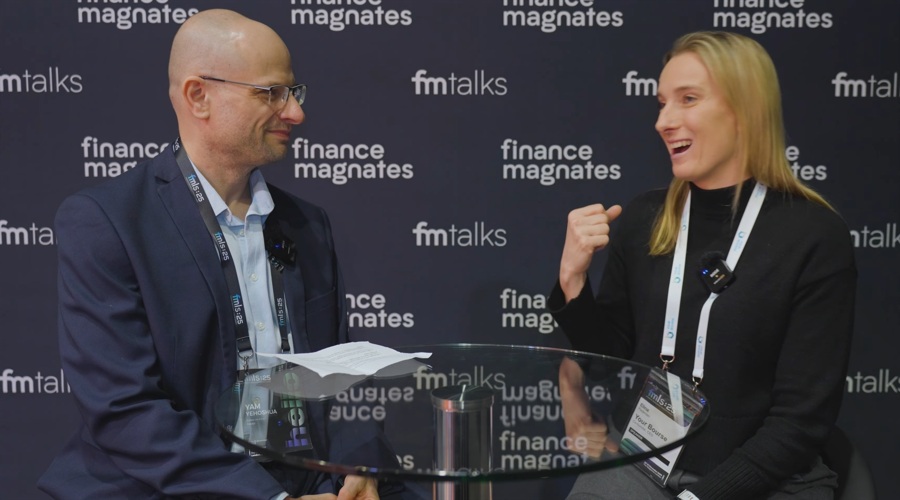
“People like to talk about what’s new, but in our business, what matters is whether the system holds when things go wrong.” That understated remark from Elina Pedersen, Co-Founder & CEO of Your Bourse, set the tone at the Finance Magnates London Summit 2025, where a conversation that could have been dominated by artificial intelligence instead turned to a more basic concern: reliability.
Speaking with Finance Magnates Editor-in-Chief Yam Yehoshua, Pedersen framed the past year as one in which brokers quietly reassessed their technology stacks and, in many cases, their assumptions.
- Lionel Messi’s Argentina Football Team Gains ATFX as Regional Sponsor
- Retail Traders Could See Crypto Perps from TMGM as Firm Moves to Hire Quant Trader
- IG Joins Other Brokers to Offer Cash Interest and Remove Inactivity Fees for UK Traders
FMLS, she noted, remains her “home event,” less a marketplace for hype than a reunion of long-standing industry relationships built over “15, 20 years.” That perspective shaped her view of recent growth. Larger brokers, she said, have been moving away from platforms that struggled with “stability issues,” prompting a wave of migrations driven less by price and more by operational risk.
Trust, Not Features, Shapes Broker Technology Choices
For Pedersen, the shift is about “trust rather than features.” A technology provider , she argued, should not dictate terms but assess fit. “It’s a bit like marriage,” she said. “Do we fit together? Can we work together?”
That thinking informed the firm’s latest product launch: a trade server that functions as a full trading engine without a front end. The design allows brokers to integrate third-party interfaces, such as TradingView or proprietary systems, while relying on a stable execution core. The focus, Pedersen stressed, is not on breadth but on robustness.
Speed Claims Questioned as Brokers Expand Globally
In a competitive market, she rejected the idea that growth must come from offering everything. While many providers expand into CRMs or portfolio tools, her firm has stayed focused on “ultra low latency trading and execution technology.” Claims of speed, she warned, are often unsupported. “A lot of companies use buzzwords, but they don’t really back it with data.”
The risks of misplaced priorities become sharper when brokers expand globally. Pedersen described a common mistake as “building a skyscraper on the foundation of a garden shed,” particularly when firms choose the cheapest infrastructure to accelerate early growth.
Regulatory environments, she added, often force discipline, but offshore models can allow weaknesses to persist until failure becomes unavoidable.
"Inside High-Frequency Trading Systems: The Race to Zero Latency" https://t.co/EfHLIlOD6B pic.twitter.com/cifkRQP2Lb
— Ralph Sueppel (@macro_synergy) November 11, 2025
Technical Knowledge Gaps Drive Dealer Training
A lack of technical understanding within broker management only deepens the problem. “People who start brokers might be good in marketing,” she said, “but they don’t really understand the dealing side.” That gap has led to the creation of a dealers’ academy, aimed at training risk managers and dealers rather than traders.
The goal is to improve risk awareness and infrastructure knowledge in an industry where, she argued, learning often happens only through staff turnover.
Development Strategy Prioritises Stability Over Trends
Despite its prominence elsewhere at the event, artificial intelligence played a limited role in the discussion. Pedersen acknowledged its use in internal processes but cautioned against overstatement. Effective deployment, she said, depends on reliable data and clear objectives, adding that much of what is branded as AI is closer to established machine learning.
Looking ahead, Pedersen signaled continuity rather than reinvention. Development efforts will remain centered on execution engines, resilience, and latency. New initiatives, she suggested, will extend existing strengths rather than chase trends.


