Financial and Business News

“It’s All the Questions About Our Future”: IBKR Founder Notes 49.5% Make Money in Prediction Markets

Friday, 09/01/2026 | 16:40 GMT by Tareq Sikder
  • Thomas Peterffy said, “options can go to zero too,” arguing prediction markets are not just betting tools.
  • Regulation is needed to prevent manipulation and prohibit war or military-related questions.
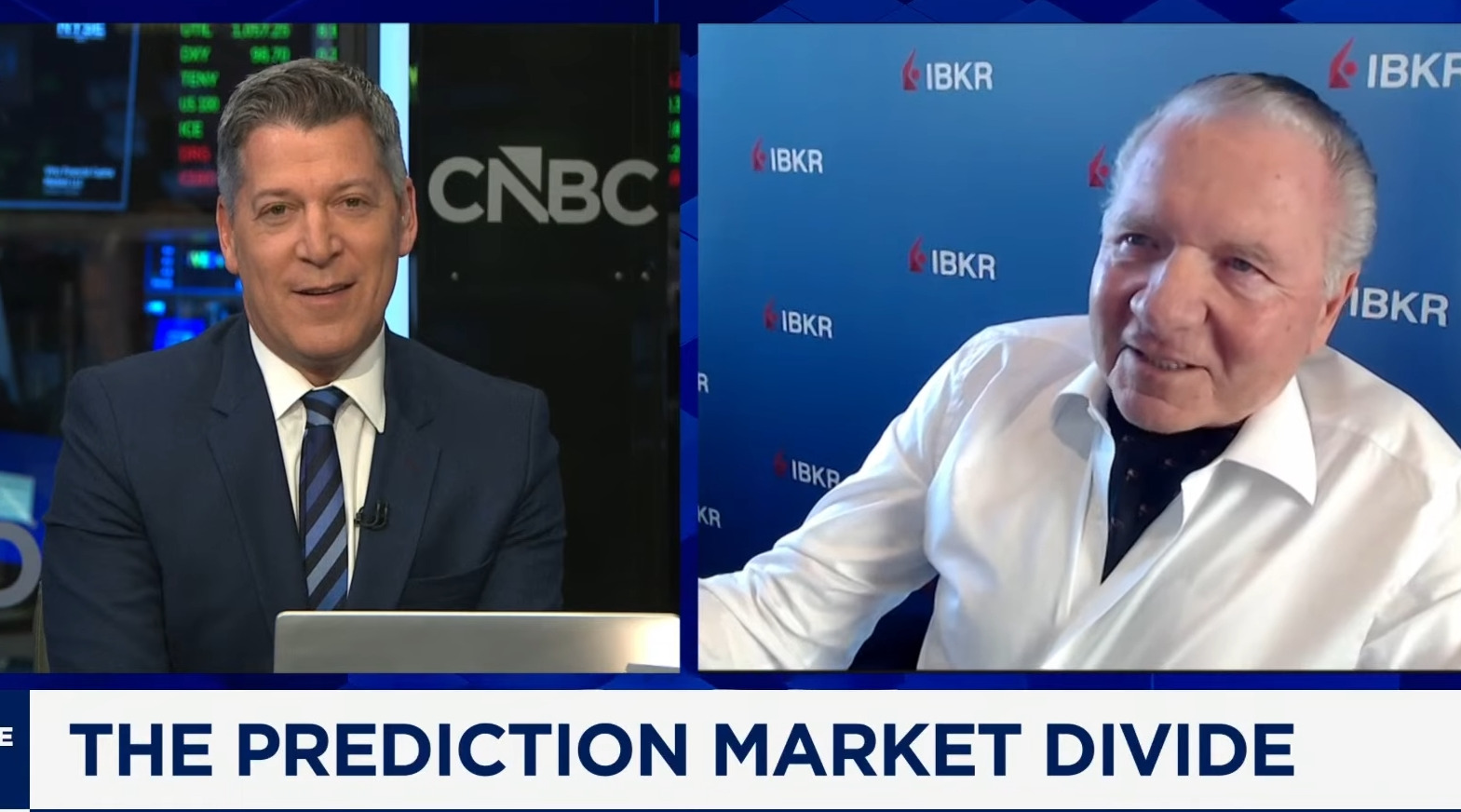
Thomas Peterffy (right) speaking with CNBC. Source: YouTube

Thomas Peterffy, Founder and Chairman of Interactive Brokers, appeared on CNBC to discuss prediction markets and their differences from long-term investing.

The segment began by replaying an earlier discussion in which it was noted, “most of them, the more they play, will lose money,” and added that prediction markets are “not the same as investing in the stock market.” Peterffy was invited to offer his perspective and disagreed with these points.

Serious Questions, Not Celebrities: Peterffy Explains

Peterffy explained that his interest in prediction-style questions began about ten years ago as an educational tool. He described the approach as asking “yes or no questions” to illustrate the probabilistic nature of future events, aiming to help customers understand uncertainty.

He acknowledged that some markets have shifted toward less serious topics, noting that “some people picked up on this idea” and created questions about celebrities. However, he emphasized that the core intent was to focus on economic and climate indicators, which he described as “very, very serious questions.”

49.5% Profit Rate Shows Market Efficiency

According to Peterffy, prediction markets can help form a consensus view about the future and serve as a hedging mechanism. He compared the risk of outcomes going to zero with options trading, saying that “options can go to zero” without making them invalid trading tools.

Interactive Brokers has expanded into prediction markets in recent years. Brown questioned whether demand for bets on topics such as climate outcomes or awards would ever rival traditional investing. Peterffy responded that in prediction markets, “49.5% of the people make money and 50.5% of the people lose money,” noting that such balance does not undermine the usefulness of the market.

Prediction Markets Require Regulation Oversight, Guidance

The discussion also covered regulation and misuse. Brown raised concerns about betting on military actions and potential insider activity. Peterffy said the Commodity Futures Trading Commission requires surveillance for manipulation and insider information and that questions about “war or military action” are “supposed to be prohibited.”

Despite these concerns, Peterffy expressed optimism about growth. He said he believes these markets will become “much, much larger,” arguing that they address “all the questions about our future.” Brown agreed on their informational value but emphasized the distinction between long-term investment and sequential betting markets.

Thomas Peterffy, Founder and Chairman of Interactive Brokers, appeared on CNBC to discuss prediction markets and their differences from long-term investing.

The segment began by replaying an earlier discussion in which it was noted, “most of them, the more they play, will lose money,” and added that prediction markets are “not the same as investing in the stock market.” Peterffy was invited to offer his perspective and disagreed with these points.

Serious Questions, Not Celebrities: Peterffy Explains

Peterffy explained that his interest in prediction-style questions began about ten years ago as an educational tool. He described the approach as asking “yes or no questions” to illustrate the probabilistic nature of future events, aiming to help customers understand uncertainty.

He acknowledged that some markets have shifted toward less serious topics, noting that “some people picked up on this idea” and created questions about celebrities. However, he emphasized that the core intent was to focus on economic and climate indicators, which he described as “very, very serious questions.”

49.5% Profit Rate Shows Market Efficiency

According to Peterffy, prediction markets can help form a consensus view about the future and serve as a hedging mechanism. He compared the risk of outcomes going to zero with options trading, saying that “options can go to zero” without making them invalid trading tools.

Interactive Brokers has expanded into prediction markets in recent years. Brown questioned whether demand for bets on topics such as climate outcomes or awards would ever rival traditional investing. Peterffy responded that in prediction markets, “49.5% of the people make money and 50.5% of the people lose money,” noting that such balance does not undermine the usefulness of the market.

Prediction Markets Require Regulation Oversight, Guidance

The discussion also covered regulation and misuse. Brown raised concerns about betting on military actions and potential insider activity. Peterffy said the Commodity Futures Trading Commission requires surveillance for manipulation and insider information and that questions about “war or military action” are “supposed to be prohibited.”

Despite these concerns, Peterffy expressed optimism about growth. He said he believes these markets will become “much, much larger,” arguing that they address “all the questions about our future.” Brown agreed on their informational value but emphasized the distinction between long-term investment and sequential betting markets.

About the Author: Tareq Sikder
Tareq Sikder
  • 2058 Articles
  • 37 Followers
A Forex technical analyst and writer who has been engaged in financial writing for 12 years.

More from the Author

Retail FX