The brand will operate from Singapore under an MAS licence.
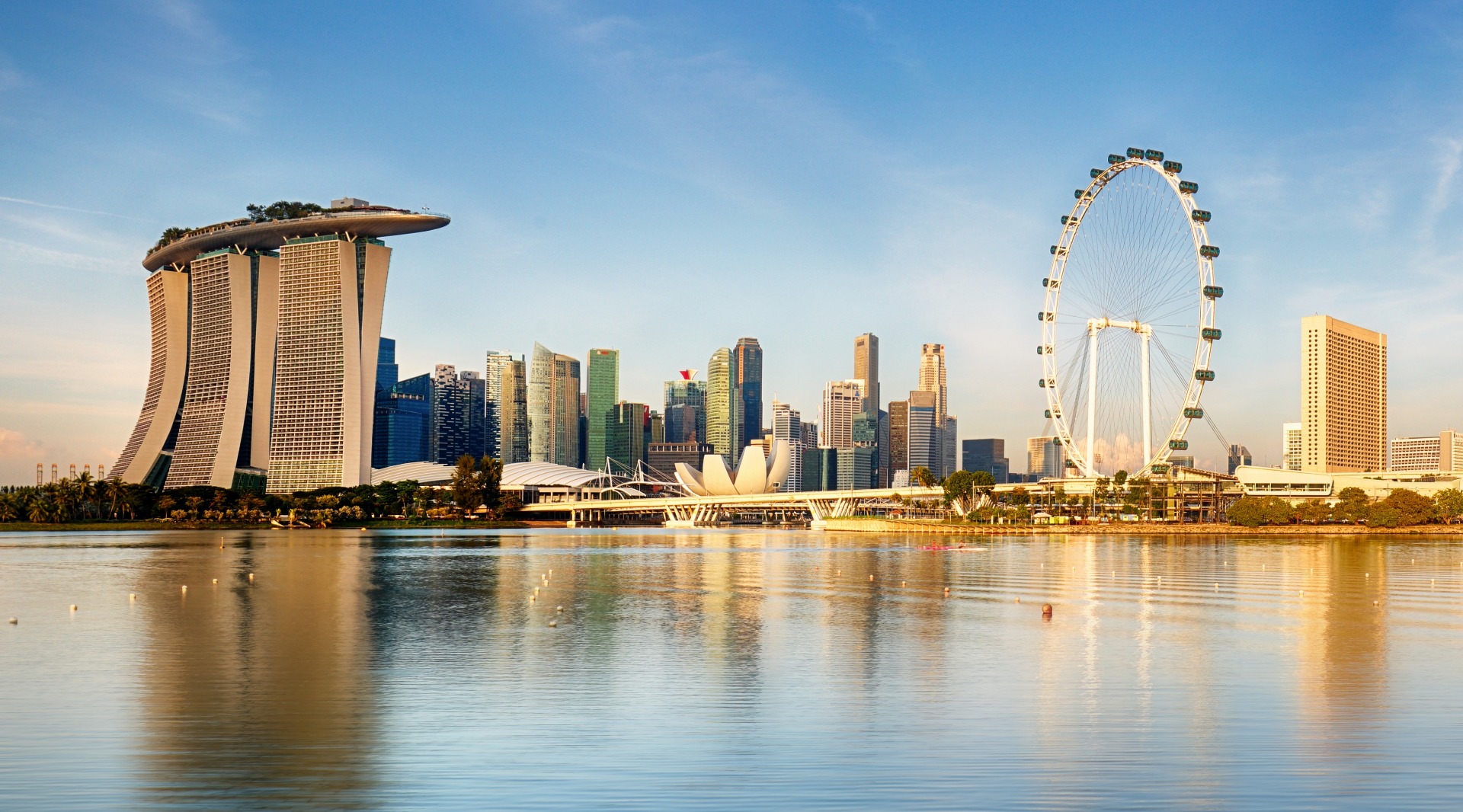
Despite its small size, Singapore is attractive due to its deep-pocketed traders.
The skyline of Singapore
Forex.com, the retail trading brand owned by StoneX, has expanded its presence in the Asia-Pacific by launching its contracts for differences (CFDs) trading services from its new Singapore base. Announced today (Monday), locally registered StoneX Financial gained the Monetary Authority of Singapore (MAS) licence to offer CFD trading services under the Forex.com brand.
Forex.com Eyes Singapore Traders
"This launch marks a strategic milestone in helping Singapore's retail traders access thousands of global CFD markets across top FX pairs, indices, shares, gold, silver and commodities," said Andy Hudson, StoneX’s Head of Retail – Singapore.
Andy Hudson, StoneX’s Head of Retail – Singapore (photo: LinkedIn)
Forex.com is one of the popular brands in the CFDs market. It was first launched in 2001 in the United States and then expanded across markets in Europe, the Middle East, and Asia-Pacific. It remains one of the very few regulated forex brokers in the US.
StoneX took control of the brand after acquiring GAIN Capital in 2020 for about $236 million. Apart from Forex.com, GAIN Capital also operates the City Index brand. With the acquisition at the time, StoneX more than doubled the number of active retail accounts on its platform globally to 295,000. The platform now has over 400,000 retail accounts worldwide.
An Attractive Market
The Singapore launch of the Forex.com brand comes as the city-state remains attractive for retail trading service providers. According to Investment Trends, Singapore's leveraged trading market continues to contract towards pre-pandemic levels, yet maintains a significant market presence, with 73,000 potential investors still showing interest in CFD trading.
Greg Kallinikos, StoneX’s CEO of APAC (photo: LinkedIn)
Despite the country’s small size, Singapore-based traders contribute significantly to the overall revenue of CFD brokers. London-listed IG Group generated £38.1 million from Singapore out of its total trading revenue of £451.7 million in the first six months of the ongoing financial year. The average revenue per user from the city-state also remains one of the highest.
“Since 2006, StoneX has supported its customers across APAC from our Singapore headquarters,” said Greg Kallinikos, StoneX’s CEO of APAC. “We are pleased to expand this service further by having Forex.com launch in Singapore and help us connect even more clients to markets. Forex.com customers in Singapore will benefit from dedicated support operating 24 hours a day, five days a week to meet their trading needs.”
Forex.com, the retail trading brand owned by StoneX, has expanded its presence in the Asia-Pacific by launching its contracts for differences (CFDs) trading services from its new Singapore base. Announced today (Monday), locally registered StoneX Financial gained the Monetary Authority of Singapore (MAS) licence to offer CFD trading services under the Forex.com brand.
Forex.com Eyes Singapore Traders
"This launch marks a strategic milestone in helping Singapore's retail traders access thousands of global CFD markets across top FX pairs, indices, shares, gold, silver and commodities," said Andy Hudson, StoneX’s Head of Retail – Singapore.
Andy Hudson, StoneX’s Head of Retail – Singapore (photo: LinkedIn)
Forex.com is one of the popular brands in the CFDs market. It was first launched in 2001 in the United States and then expanded across markets in Europe, the Middle East, and Asia-Pacific. It remains one of the very few regulated forex brokers in the US.
StoneX took control of the brand after acquiring GAIN Capital in 2020 for about $236 million. Apart from Forex.com, GAIN Capital also operates the City Index brand. With the acquisition at the time, StoneX more than doubled the number of active retail accounts on its platform globally to 295,000. The platform now has over 400,000 retail accounts worldwide.
An Attractive Market
The Singapore launch of the Forex.com brand comes as the city-state remains attractive for retail trading service providers. According to Investment Trends, Singapore's leveraged trading market continues to contract towards pre-pandemic levels, yet maintains a significant market presence, with 73,000 potential investors still showing interest in CFD trading.
Greg Kallinikos, StoneX’s CEO of APAC (photo: LinkedIn)
Despite the country’s small size, Singapore-based traders contribute significantly to the overall revenue of CFD brokers. London-listed IG Group generated £38.1 million from Singapore out of its total trading revenue of £451.7 million in the first six months of the ongoing financial year. The average revenue per user from the city-state also remains one of the highest.
“Since 2006, StoneX has supported its customers across APAC from our Singapore headquarters,” said Greg Kallinikos, StoneX’s CEO of APAC. “We are pleased to expand this service further by having Forex.com launch in Singapore and help us connect even more clients to markets. Forex.com customers in Singapore will benefit from dedicated support operating 24 hours a day, five days a week to meet their trading needs.”
Arnab Shome is an electronics engineer-turned-financial editor. He holds a Bachelor of Technology from the National Institute of Technology, Agartala. He entered the retail trading industry about a decade ago, covering the cryptocurrency market for Finance Magnates, and later expanded his coverage to include forex and CFDs as well.
His work at Finance Magnates includes C-level interviews, data-driven analysis, opinion pieces, and scoops of industry exclusives. He also contributes to Finance Magnates’ quarterly industry report.
Area of coverage:
1. CFD broker-related news
2. Industry-related Regulatory updates and developments
3. New retail trading trends
4. Prop trading industry updates
5. Executive interviews
Education:
Bachelor of Technology - National Institute of Technology, Agartala (India)
IG Group Weighs Move from London to Wall Street: Report
Finance Magnates Awards 2026 – Nominations Now Open
Finance Magnates Awards 2026 – Nominations Now Open
The Finance Magnates Awards 2026 nominations are now open. 🏆
From fintech innovators to leading brokers, this is where the finance industry celebrates its biggest achievements.
Winners will be announced at the Cyprus Gala Dinner on November 6, 2026.
Nominate your brand now.
https://awards.financemagnates.com/?utm_source=linkedin&utm_medium=video&utm_campaign=nominations-open
#FMAwards #FinanceMagnates #FintechAwards #Fintech #FinanceIndustry
The Finance Magnates Awards 2026 nominations are now open. 🏆
From fintech innovators to leading brokers, this is where the finance industry celebrates its biggest achievements.
Winners will be announced at the Cyprus Gala Dinner on November 6, 2026.
Nominate your brand now.
https://awards.financemagnates.com/?utm_source=linkedin&utm_medium=video&utm_campaign=nominations-open
#FMAwards #FinanceMagnates #FintechAwards #Fintech #FinanceIndustry
Finance Magnates Awards 2026 | Nominations Now Open 🏆#Fintech #FMAwards #TradingIndustry
Finance Magnates Awards 2026 | Nominations Now Open 🏆#Fintech #FMAwards #TradingIndustry
Lights on. Cameras ready. 🎬
Finance Magnates Awards 2026 nominations are now open. 🏆
#FMAwards #FinanceMagnates #FintechAwards #Fintech
Lights on. Cameras ready. 🎬
Finance Magnates Awards 2026 nominations are now open. 🏆
#FMAwards #FinanceMagnates #FintechAwards #Fintech
Exness sees trust as the key theme for growth in MENA Trading Growth for 2026
Exness sees trust as the key theme for growth in MENA Trading Growth for 2026
Mohammad Amer, Regional Commercial Director at Exness, sits down to discuss the booming MENA financial trading market. Find out why Dubai is key to the company's growth strategy, how a mobile-first generation is changing expectations, and why trust will be the defining theme for traders in 2026.
In this interview, you'll learn:
* Why Dubai and the MENA region are critical growth markets for fintech and online trading.
* How Exness is addressing the demands of mobile-first, younger traders through engineering, platform stability, and transparent conditions.
* The essential role local talent plays in providing a culturally relevant and compliant user experience.
* Mohammad Amer's outlook on the future of the online trading industry and why stronger controls and systems are necessary.
* Why "trust" isn't just a brand value, but has commercial value—and why he predicts 2026 will be the "Year of Trust."
Key Takeaways:
➡️ The MENA region is rapidly shaping global financial markets.
➡️ New traders expect stability, precise execution, and transparency.
➡️ Local expertise is key to regulatory compliance and user experience.
➡️ Future success belongs to firms capable of meeting rising standards across regulation and platform consistency.
Read the full article at: https://www.financemagnates.com/thought-leadership/exness-sees-trust-as-the-key-theme-for-growth-in-mena-trading-growth-for-2026/
#Exness #MENA #Trading #FinTech #Dubai #OnlineTrading #FinanceMagnates #MohammadAmer #Trust #MobileTrading
Mohammad Amer, Regional Commercial Director at Exness, sits down to discuss the booming MENA financial trading market. Find out why Dubai is key to the company's growth strategy, how a mobile-first generation is changing expectations, and why trust will be the defining theme for traders in 2026.
In this interview, you'll learn:
* Why Dubai and the MENA region are critical growth markets for fintech and online trading.
* How Exness is addressing the demands of mobile-first, younger traders through engineering, platform stability, and transparent conditions.
* The essential role local talent plays in providing a culturally relevant and compliant user experience.
* Mohammad Amer's outlook on the future of the online trading industry and why stronger controls and systems are necessary.
* Why "trust" isn't just a brand value, but has commercial value—and why he predicts 2026 will be the "Year of Trust."
Key Takeaways:
➡️ The MENA region is rapidly shaping global financial markets.
➡️ New traders expect stability, precise execution, and transparency.
➡️ Local expertise is key to regulatory compliance and user experience.
➡️ Future success belongs to firms capable of meeting rising standards across regulation and platform consistency.
Read the full article at: https://www.financemagnates.com/thought-leadership/exness-sees-trust-as-the-key-theme-for-growth-in-mena-trading-growth-for-2026/
#Exness #MENA #Trading #FinTech #Dubai #OnlineTrading #FinanceMagnates #MohammadAmer #Trust #MobileTrading
Paytiko CEO Razi Salih on Why Payment Orchestration is a MUST-HAVE for Brokers in 2026
Paytiko CEO Razi Salih on Why Payment Orchestration is a MUST-HAVE for Brokers in 2026
At iFX Expo Dubai, Finance Magnates spoke with Razi Salih, CEO at Paytiko, about the evolution of the payments ecosystem and why payment orchestration has shifted from an option to a necessity for brokers, prop firms, and exchanges.
Mr. Salih explains how global expansion, the need for deep localisation, and the sheer number of new payment methods, from instant banking to stablecoins, are driving this critical infrastructure shift.
#PaymentOrchestration #Fintech #Brokerage #TradingPayments #RaziSalih #Paytiko #iFXExpoDubai #Stablecoins #AIinFintech
At iFX Expo Dubai, Finance Magnates spoke with Razi Salih, CEO at Paytiko, about the evolution of the payments ecosystem and why payment orchestration has shifted from an option to a necessity for brokers, prop firms, and exchanges.
Mr. Salih explains how global expansion, the need for deep localisation, and the sheer number of new payment methods, from instant banking to stablecoins, are driving this critical infrastructure shift.
#PaymentOrchestration #Fintech #Brokerage #TradingPayments #RaziSalih #Paytiko #iFXExpoDubai #Stablecoins #AIinFintech
Altima CTO Sunil Jadhav: Solving Data Fragmentation & Lag for Brokers & Prop Firms
Altima CTO Sunil Jadhav: Solving Data Fragmentation & Lag for Brokers & Prop Firms
Altima CTO Sunil Jadhav sits down with Finance Magnates to discuss the core technology challenges facing CFD brokers and proprietary trading firms today.
Jadhav explains how the industry's reliance on batch processing and fragmented systems (where CRMs, risk tools, and trading platforms operate with separate 'sources of truth') leads to delayed data and inconsistent operational decisions. He argues that real-time event processing is essential for managing fast-moving trading activity and risk.
Learn how Altima's unified, event-driven architecture, connecting Altima CRM, Altima Prop, IB systems, and risk management through a single backbone, is designed to provide synchronous data and better operational coordination for modern brokerage and prop firm stacks.
Key Topics:
- Broker and Prop Firm Data Challenges
- The problem of delayed data processing (batch processing vs. real-time events)
- Fragmented systems and conflicting data sources
- Altima's unified, event-driven solution architecture
- The concept of a "risk-aware CRM"
- Built-in risk management in Altima Prop
#Altima #financemagnates #iFXDubai #FinTech #BrokerTech #PropFirm #CFDBroker #TradingTechnology #RealTimeData #RiskManagement #CRM #FinancialMarkets #EventDrivenArchitecture
Altima CTO Sunil Jadhav sits down with Finance Magnates to discuss the core technology challenges facing CFD brokers and proprietary trading firms today.
Jadhav explains how the industry's reliance on batch processing and fragmented systems (where CRMs, risk tools, and trading platforms operate with separate 'sources of truth') leads to delayed data and inconsistent operational decisions. He argues that real-time event processing is essential for managing fast-moving trading activity and risk.
Learn how Altima's unified, event-driven architecture, connecting Altima CRM, Altima Prop, IB systems, and risk management through a single backbone, is designed to provide synchronous data and better operational coordination for modern brokerage and prop firm stacks.
Key Topics:
- Broker and Prop Firm Data Challenges
- The problem of delayed data processing (batch processing vs. real-time events)
- Fragmented systems and conflicting data sources
- Altima's unified, event-driven solution architecture
- The concept of a "risk-aware CRM"
- Built-in risk management in Altima Prop
#Altima #financemagnates #iFXDubai #FinTech #BrokerTech #PropFirm #CFDBroker #TradingTechnology #RealTimeData #RiskManagement #CRM #FinancialMarkets #EventDrivenArchitecture