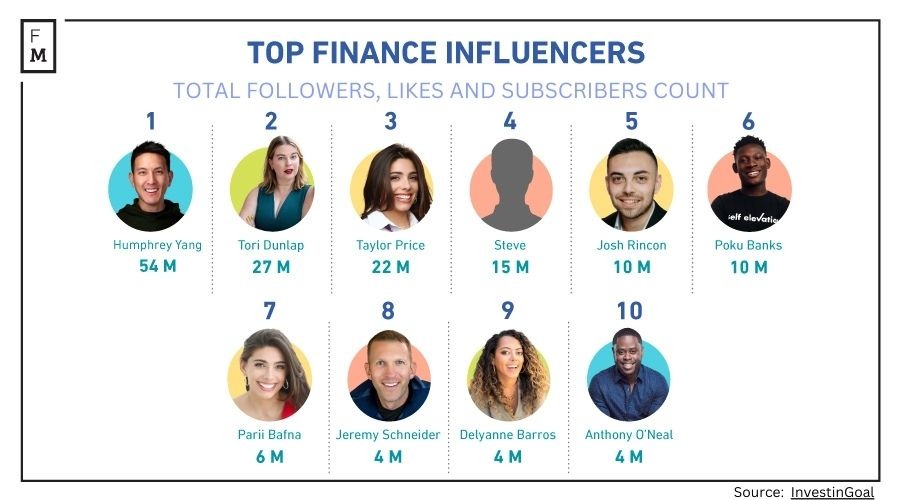
Australia recently went after a major finfluencer, while Europe raised concerns.
Many celebrities were also fined for promoting fraudulent investments
The views of financial influencers, or rather known as finfluencers, have much significance on retail traders. The Australian financial market regulator found that 28 percent of young people follow at least one finfluencer on social media. Another survey by the Cypriot regulator revealed 31 percent of retail investors rely on finfluencers when making investment decisions.
However, regulators around the world are now getting cautious about the popularity of finfluencers. So how big are finfluencers? What is the regulatory approach towards them? Should they be licensed?
Apologies for the Followers
The influence of finfluencers on retail investors cannot be downplayed. These social media personalities push all types of instruments, ranging from equities, margin forex, and even cryptocurrencies.
Additionally, a large chunk of financial influencers made a positive impact by increasing financial literacy among young investors.
Queenie Tan has more than 117,000 followers on Instagram.(Instagram)
Kendall Meade, a financial planner at SoFi
"Financial Influencers can get a bad rap, but there are many examples of good financial advice out there. It's important to know where to look and how to distinguish between what's credible and what's not," Kendall Meade, a financial planner at SoFi, told Finance Magnates. "Social media and financial influencers have actually spread the word about the importance of personal finances, and we see a lot more younger adults like Millennials and Gen Z prioritizing their financial health and expanding their financial knowledge."
However, many of these influencers may promote scams and even indulge in pump-and-dump schemes. Many also recommended risky and now-failed crypto projects, including BlockFi, FTX, and several others. Though FTX was widely recognized as a legitimate platform until its collapse, the crypto lending platforms were suspiciously offering high-interest rates.
The influencers certainly did not have any insight into high-interest the internal operations of those risky businesses, which also raises concerns about their shallow research before recommending anything. Most of the finfluencers often failed to disclose their payment for endorsing financial services companies.
Many finfluencers also apologized to their followers after the collapse of those crypto projects. But are their accountabilities only limited to an apology?
Regulatory Warnings and Crackdowns
The increasing number of influencers has alarmed financial market regulators globally. Some are merely issuing warnings, while a few are taking enforcement actions.
Australia's financial market watchdog was among the first regulators to acknowledge the significance of finfluencers and issue a warning in 2021. The regulator highlighted that these finfluencers provide unlicensed financial advice.
"As most finfluencers do not hold an AFS license, they are not subject to the requirements that apply to licensees," ASIC stated. The regulator even threatened these illegal influencers with possible jail terms and penalties of up to AU$1 million and cautioned Aussie companies from associating with such unlicensed finfluencers.
ASIC has made its crackdown against misinformation on social media, including finfluencer conduct, one of its priorities for 2023. It has already moved against social media influencer Tyson Robert Scholz, popularly known as ASX Wolf, recently banned by a court from offering financial advice.
The UK's FCA took a unique stance and instead chose to educate the finfluencers. The agency recently partnered with a reality television contestant with a massive social media following for its educational campaigns. Intending to stop illegal 'get rich quick' schemes, the FCA is now influencers' agents and the Influencer Marketing Trade Body to an open roundtable discussion.
Sarah Pritchard, FCA's Executive Director for Markets
"We've seen more cases of influencers touting products that they shouldn't be. They are often doing this without knowledge of the rules and without an understanding of the harm they could cause their followers," said Sarah Pritchard, the FCA's Executive Director for Markets.
"We want to work with influencers so they keep on the right side of the law, as this will also help protect people from being shown scams or investments that are too risky."
However, regulators in the US did not come out with any warnings or cautions against finfluencers. Instead, the US Securities and Exchange Commission (SEC) eight Twitter influencers for using social media platforms Twitter and Discord to manipulate exchange-traded stocks in a $100 million pump-and-dump scheme.
Dr. Giorgos Theocharides, CySEC's Chair
European regulators are also concerned over the growth of finfluencers. The Cyprus financial market regulator raised concerns over the growing number of influencers and their impact on young investors.
"CySEC is particularly concerned by the increasing participation of young. Inexperienced investors and the proliferation of complex product promotion material through social media and online platforms, as they may not always be what they seem," said CySEC's Chair, Dr Giorgos Theocharides.
Celebrities Fined
Financial influencers, specifically those promoting financial products, are not the only ones pushing fake financial instruments. Many celebrities have promoted questionable crypto schemes and are now facing regulatory wrath.
The SEC fined boxer Floyd Mayweather and rapper DJ Khalid for endorsing the $25 million fraudulent initial coin offering (ICO) of Centra Tech. Kim Kardashian and a former NBA Star Paul Pierce settled with the US regulator, paying $1.26 million and $1.4 million, respectively, for promoting EthereumMax without disclosing it as paid promotion.
Floyd Mayweather endorsing Centra ICO
Gary Gensler, SEC's Chair
"When celebrities endorse investment opportunities, including crypto-asset securities, investors should be careful to research if the investments are right for them, and they should know why celebrities are making those endorsements," said SEC's Chair, Gary Gensler.
Gurbir Grewal, the Director of the SEC's Division of Enforcement, added: "The federal securities laws are clear that any celebrity or other individual who promotes a crypto asset security must disclose the nature, source, and amount of compensation they received in exchange for the promotion."
David Morrison, Senior Market Analyst at Trade Nation
"We saw this ridiculous situation where we had the cryptos and NFTs and the stupidity surrounding that where you had the likes of the Kardashians and God knows who else. Sadly, people like Larry David recommending particular NFTs... is a completely wrong thing." David Morrison, Senior Market Analyst at Trade Nation, told Finance Magnates. "But there are people... within the financial world... who know what they're talking about. I don't see any problem with them on social media."
How to Identify a Legit Finfluencer
There are thousands of financial influencers across social media, such as TikTok, Twitter, Linkedin, Youtube, and whatnot. Many of them have tens of millions of followers.
These finflencers often take thousands of dollars from companies and brands to promote their products. Some of the finfluencers also share affiliate links to receive commissions on the successful onboarding of their followers to any of the financial services platforms. However, many finfluencers are not transparent about their payment for promotions.
So how should rookie investors evaluate if a finfluencer is legitimate or just posing as one to pump risky financial products?
Andy LaPointe, Corporate Advisor for a Digital Asset firm
"The best way to differentiate between a legit and scammer is to really listen to their recommendations of advice," said Andy LaPointe, the Corporate Advisor for a Digital Asset firm.
"Many influencers are simply regurgitating information they read from a book or a youtube video in an attempt to gain or keep viewers or buyers of their courses. If the information is insightful and will work in the real world, it may be worth listening more of."
Meade added: "Keep in mind the old saying of if it sounds too good to be true, it usually is. I have seen many examples of get-rich-quick or foolproof strategies that are extremely risky and not suitable for most people. This type of content gets a lot of views because everyone wants an easy solution to a hard problem, but this can cause much more harm than good."
Should Finflueners Apply for Licenses?
ASIC warnings and action against ASX Wolf made it clear that Aussie finfluencers will need to obtain licenses in the future. Though people can still provide financial education, recommending financial products will require authorization.
Also, obtaining those licenses would be tough as they are meant for financial advisors. It will certainly put an end to stock advices from someone with a few thousands of followers on social media.
However, outside of Australia, the requirement of licensing for finfluencer is still vague. Though European regulators are vocal against rising finfluencers, they did not specify anything on licensing requirements.
"Currently, there are no barriers to entry to being a financial influencer. That means people can easily provide and access information. However, when it comes to something as important and complex as finances, that can be a problem," said SoFi's Meade.
FXStreet's Senior Analyst, Ian Coleman, is in favor of regulations. In a conversation with Finance Magnates, he said: "I do believe in regulation. I do believe in honesty and openness... [Finfluencers] should be licensed."
It is to be noted that all finfluencers are not providing stock ideas or giving investment advice. Coleman was particularly targeting the bunch that is vocal on social media and influences the trading behavior of retail traders. "I do believe that there's a lot of people out there that have a massive influence over individuals but don't actually walk the walk. They only talk the talk," he added.
However, LaPointe disagrees with "a regulation of influencers," adding, "the reason is some people have a natural understanding and valuable insight into money management and personal finance. Let the market sort it out."
Fraudsters Tapping Sports-Influencers
Sports marketing has always been important for all industries, from aviation to FMCG, and financial services are no exception. Many sports personalities have become the face of several financial services platforms, and even clubs are inking massive deals, putting these brands in front of hundreds of millions of fans.
While the industry is legit, many fraudsters also use such deals to promote their platforms. According to BBC, top English football clubs, including Chelsea, Fulham, Everton, Leads United, Liverpool, Manchester City, Southampton, and Tottenham Hotspurs, have signed deals with suspected scam brands. Spain's Sellvia FC even promoted a brand that turned out to be a fraudulent brokerage platform.
The Future of Finfluencers
Social media has given voice to everyone. Now, financial advisors are not limited to some newspaper columns or business news TV channels. Anyone with a decent number of social media followers can promote financial products.
"The future of financial influencers depends in large part on how global regulators decide to treat them," said Richard Gardner, the CEO at Modulus. "If regulatory trends begin to heavily move towards categorizing financial influencers as financial advisors, then it will begin to wither under pressure. If there's a move towards licensing, that will further put a strain on most, though there's a fine line between fraud prevention and infringement on first amendment rights."
"Under the slipperiest slope, a single mom suggesting a dividend stock strategy on TikTok could turn into a financial advisor – or be silenced. Alternatively, what happens to Reddit's WallStreetBets? Could message boards be considered financial advising? Under certain regulatory regimes, the answer is yes. One of the most important things to consider should be intent. Financial influencers should absolutely, categorically, be required to disclose their own investments. Those who would participate in pump-and-dump schemes, as well as other forms of market manipulation, should be severely punished."
The views of financial influencers, or rather known as finfluencers, have much significance on retail traders. The Australian financial market regulator found that 28 percent of young people follow at least one finfluencer on social media. Another survey by the Cypriot regulator revealed 31 percent of retail investors rely on finfluencers when making investment decisions.
However, regulators around the world are now getting cautious about the popularity of finfluencers. So how big are finfluencers? What is the regulatory approach towards them? Should they be licensed?
Apologies for the Followers
The influence of finfluencers on retail investors cannot be downplayed. These social media personalities push all types of instruments, ranging from equities, margin forex, and even cryptocurrencies.
Additionally, a large chunk of financial influencers made a positive impact by increasing financial literacy among young investors.
Queenie Tan has more than 117,000 followers on Instagram.(Instagram)
Kendall Meade, a financial planner at SoFi
"Financial Influencers can get a bad rap, but there are many examples of good financial advice out there. It's important to know where to look and how to distinguish between what's credible and what's not," Kendall Meade, a financial planner at SoFi, told Finance Magnates. "Social media and financial influencers have actually spread the word about the importance of personal finances, and we see a lot more younger adults like Millennials and Gen Z prioritizing their financial health and expanding their financial knowledge."
However, many of these influencers may promote scams and even indulge in pump-and-dump schemes. Many also recommended risky and now-failed crypto projects, including BlockFi, FTX, and several others. Though FTX was widely recognized as a legitimate platform until its collapse, the crypto lending platforms were suspiciously offering high-interest rates.
The influencers certainly did not have any insight into high-interest the internal operations of those risky businesses, which also raises concerns about their shallow research before recommending anything. Most of the finfluencers often failed to disclose their payment for endorsing financial services companies.
Many finfluencers also apologized to their followers after the collapse of those crypto projects. But are their accountabilities only limited to an apology?
Regulatory Warnings and Crackdowns
The increasing number of influencers has alarmed financial market regulators globally. Some are merely issuing warnings, while a few are taking enforcement actions.
Australia's financial market watchdog was among the first regulators to acknowledge the significance of finfluencers and issue a warning in 2021. The regulator highlighted that these finfluencers provide unlicensed financial advice.
"As most finfluencers do not hold an AFS license, they are not subject to the requirements that apply to licensees," ASIC stated. The regulator even threatened these illegal influencers with possible jail terms and penalties of up to AU$1 million and cautioned Aussie companies from associating with such unlicensed finfluencers.
ASIC has made its crackdown against misinformation on social media, including finfluencer conduct, one of its priorities for 2023. It has already moved against social media influencer Tyson Robert Scholz, popularly known as ASX Wolf, recently banned by a court from offering financial advice.
The UK's FCA took a unique stance and instead chose to educate the finfluencers. The agency recently partnered with a reality television contestant with a massive social media following for its educational campaigns. Intending to stop illegal 'get rich quick' schemes, the FCA is now influencers' agents and the Influencer Marketing Trade Body to an open roundtable discussion.
Sarah Pritchard, FCA's Executive Director for Markets
"We've seen more cases of influencers touting products that they shouldn't be. They are often doing this without knowledge of the rules and without an understanding of the harm they could cause their followers," said Sarah Pritchard, the FCA's Executive Director for Markets.
"We want to work with influencers so they keep on the right side of the law, as this will also help protect people from being shown scams or investments that are too risky."
However, regulators in the US did not come out with any warnings or cautions against finfluencers. Instead, the US Securities and Exchange Commission (SEC) eight Twitter influencers for using social media platforms Twitter and Discord to manipulate exchange-traded stocks in a $100 million pump-and-dump scheme.
Dr. Giorgos Theocharides, CySEC's Chair
European regulators are also concerned over the growth of finfluencers. The Cyprus financial market regulator raised concerns over the growing number of influencers and their impact on young investors.
"CySEC is particularly concerned by the increasing participation of young. Inexperienced investors and the proliferation of complex product promotion material through social media and online platforms, as they may not always be what they seem," said CySEC's Chair, Dr Giorgos Theocharides.
Celebrities Fined
Financial influencers, specifically those promoting financial products, are not the only ones pushing fake financial instruments. Many celebrities have promoted questionable crypto schemes and are now facing regulatory wrath.
The SEC fined boxer Floyd Mayweather and rapper DJ Khalid for endorsing the $25 million fraudulent initial coin offering (ICO) of Centra Tech. Kim Kardashian and a former NBA Star Paul Pierce settled with the US regulator, paying $1.26 million and $1.4 million, respectively, for promoting EthereumMax without disclosing it as paid promotion.
Floyd Mayweather endorsing Centra ICO
Gary Gensler, SEC's Chair
"When celebrities endorse investment opportunities, including crypto-asset securities, investors should be careful to research if the investments are right for them, and they should know why celebrities are making those endorsements," said SEC's Chair, Gary Gensler.
Gurbir Grewal, the Director of the SEC's Division of Enforcement, added: "The federal securities laws are clear that any celebrity or other individual who promotes a crypto asset security must disclose the nature, source, and amount of compensation they received in exchange for the promotion."
David Morrison, Senior Market Analyst at Trade Nation
"We saw this ridiculous situation where we had the cryptos and NFTs and the stupidity surrounding that where you had the likes of the Kardashians and God knows who else. Sadly, people like Larry David recommending particular NFTs... is a completely wrong thing." David Morrison, Senior Market Analyst at Trade Nation, told Finance Magnates. "But there are people... within the financial world... who know what they're talking about. I don't see any problem with them on social media."
How to Identify a Legit Finfluencer
There are thousands of financial influencers across social media, such as TikTok, Twitter, Linkedin, Youtube, and whatnot. Many of them have tens of millions of followers.
These finflencers often take thousands of dollars from companies and brands to promote their products. Some of the finfluencers also share affiliate links to receive commissions on the successful onboarding of their followers to any of the financial services platforms. However, many finfluencers are not transparent about their payment for promotions.
So how should rookie investors evaluate if a finfluencer is legitimate or just posing as one to pump risky financial products?
Andy LaPointe, Corporate Advisor for a Digital Asset firm
"The best way to differentiate between a legit and scammer is to really listen to their recommendations of advice," said Andy LaPointe, the Corporate Advisor for a Digital Asset firm.
"Many influencers are simply regurgitating information they read from a book or a youtube video in an attempt to gain or keep viewers or buyers of their courses. If the information is insightful and will work in the real world, it may be worth listening more of."
Meade added: "Keep in mind the old saying of if it sounds too good to be true, it usually is. I have seen many examples of get-rich-quick or foolproof strategies that are extremely risky and not suitable for most people. This type of content gets a lot of views because everyone wants an easy solution to a hard problem, but this can cause much more harm than good."
Should Finflueners Apply for Licenses?
ASIC warnings and action against ASX Wolf made it clear that Aussie finfluencers will need to obtain licenses in the future. Though people can still provide financial education, recommending financial products will require authorization.
Also, obtaining those licenses would be tough as they are meant for financial advisors. It will certainly put an end to stock advices from someone with a few thousands of followers on social media.
However, outside of Australia, the requirement of licensing for finfluencer is still vague. Though European regulators are vocal against rising finfluencers, they did not specify anything on licensing requirements.
"Currently, there are no barriers to entry to being a financial influencer. That means people can easily provide and access information. However, when it comes to something as important and complex as finances, that can be a problem," said SoFi's Meade.
FXStreet's Senior Analyst, Ian Coleman, is in favor of regulations. In a conversation with Finance Magnates, he said: "I do believe in regulation. I do believe in honesty and openness... [Finfluencers] should be licensed."
It is to be noted that all finfluencers are not providing stock ideas or giving investment advice. Coleman was particularly targeting the bunch that is vocal on social media and influences the trading behavior of retail traders. "I do believe that there's a lot of people out there that have a massive influence over individuals but don't actually walk the walk. They only talk the talk," he added.
However, LaPointe disagrees with "a regulation of influencers," adding, "the reason is some people have a natural understanding and valuable insight into money management and personal finance. Let the market sort it out."
Fraudsters Tapping Sports-Influencers
Sports marketing has always been important for all industries, from aviation to FMCG, and financial services are no exception. Many sports personalities have become the face of several financial services platforms, and even clubs are inking massive deals, putting these brands in front of hundreds of millions of fans.
While the industry is legit, many fraudsters also use such deals to promote their platforms. According to BBC, top English football clubs, including Chelsea, Fulham, Everton, Leads United, Liverpool, Manchester City, Southampton, and Tottenham Hotspurs, have signed deals with suspected scam brands. Spain's Sellvia FC even promoted a brand that turned out to be a fraudulent brokerage platform.
The Future of Finfluencers
Social media has given voice to everyone. Now, financial advisors are not limited to some newspaper columns or business news TV channels. Anyone with a decent number of social media followers can promote financial products.
"The future of financial influencers depends in large part on how global regulators decide to treat them," said Richard Gardner, the CEO at Modulus. "If regulatory trends begin to heavily move towards categorizing financial influencers as financial advisors, then it will begin to wither under pressure. If there's a move towards licensing, that will further put a strain on most, though there's a fine line between fraud prevention and infringement on first amendment rights."
"Under the slipperiest slope, a single mom suggesting a dividend stock strategy on TikTok could turn into a financial advisor – or be silenced. Alternatively, what happens to Reddit's WallStreetBets? Could message boards be considered financial advising? Under certain regulatory regimes, the answer is yes. One of the most important things to consider should be intent. Financial influencers should absolutely, categorically, be required to disclose their own investments. Those who would participate in pump-and-dump schemes, as well as other forms of market manipulation, should be severely punished."
Arnab Shome is an electronics engineer-turned-financial editor. He holds a Bachelor of Technology from the National Institute of Technology, Agartala. He entered the retail trading industry about a decade ago, covering the cryptocurrency market for Finance Magnates, and later expanded his coverage to include forex and CFDs as well.
His work at Finance Magnates includes C-level interviews, data-driven analysis, opinion pieces, and scoops of industry exclusives. He also contributes to Finance Magnates’ quarterly industry report.
Area of coverage:
1. CFD broker-related news
2. Industry-related Regulatory updates and developments
3. New retail trading trends
4. Prop trading industry updates
5. Executive interviews
Education:
Bachelor of Technology - National Institute of Technology, Agartala (India)
Webull Spent Big to Hit Record Revenue, and the Bill Is in the Fine Print
FP Markets Winner Spotlight 🏆 | Global Broker of the Year 2025 #Trading #Broker #Innovation #Shorts
FP Markets Winner Spotlight 🏆 | Global Broker of the Year 2025 #Trading #Broker #Innovation #Shorts
FP Markets takes the spotlight as Global Broker of the Year 2025 at the Finance Magnates Awards.
Martin Stoilov, Head of Client Experience, shares that trust, innovation, and people played a key role in the company’s success, supported by a strong foundation of integrity and client-centricity.
Following this milestone, FP Markets continues to focus on growth, technology investment, and its core values of transparency and excellence.
👉 Be part of FM Awards 2026: https://awards.financemagnates.com/#nominate
FP Markets takes the spotlight as Global Broker of the Year 2025 at the Finance Magnates Awards.
Martin Stoilov, Head of Client Experience, shares that trust, innovation, and people played a key role in the company’s success, supported by a strong foundation of integrity and client-centricity.
Following this milestone, FP Markets continues to focus on growth, technology investment, and its core values of transparency and excellence.
👉 Be part of FM Awards 2026: https://awards.financemagnates.com/#nominate
In this video, we review @HolaPrimeMarketsOfficial, a multi-asset forex and CFDs broker offering different account types, trading platforms, and flexible trading conditions.
We cover the broker’s overall offering, including account options, trading environment, platforms like MT4 and MT5, and additional services such as managed accounts and fast withdrawals.
Watch the full video to see if Hola Prime Markets fits your trading needs.
📣 Stay up to date with the latest in finance and trading. Follow Finance Magnates for industry news, insights, and global event coverage.
Connect with us:
🔗 LinkedIn: /financemagnates
👍 Facebook: /financemagnates
📸 Instagram: https://www.instagram.com/financemagnates
🐦 X: https://x.com/financemagnates
🎥 TikTok: https://www.tiktok.com/tag/financemagnates
▶️ YouTube: /@financemagnates_official
#HolaPrime #ForexBroker #CFDTrading #FinanceMagnates #Trading #Forex #BrokerReview
In this video, we review @HolaPrimeMarketsOfficial, a multi-asset forex and CFDs broker offering different account types, trading platforms, and flexible trading conditions.
We cover the broker’s overall offering, including account options, trading environment, platforms like MT4 and MT5, and additional services such as managed accounts and fast withdrawals.
Watch the full video to see if Hola Prime Markets fits your trading needs.
📣 Stay up to date with the latest in finance and trading. Follow Finance Magnates for industry news, insights, and global event coverage.
Connect with us:
🔗 LinkedIn: /financemagnates
👍 Facebook: /financemagnates
📸 Instagram: https://www.instagram.com/financemagnates
🐦 X: https://x.com/financemagnates
🎥 TikTok: https://www.tiktok.com/tag/financemagnates
▶️ YouTube: /@financemagnates_official
#HolaPrime #ForexBroker #CFDTrading #FinanceMagnates #Trading #Forex #BrokerReview
Hola Prime Review: What You Need to Know | Full Breakdown by Finance Magnates
Hola Prime Review: What You Need to Know | Full Breakdown by Finance Magnates
In this video, we review @HolaPrime_Global, a proprietary trading firm offering evaluation programs and performance-based payouts in simulated market environments.
We cover how the challenge model works, including account types, profit splits (up to 95%), trading rules, and what it takes to reach a funded account. You’ll also learn about available platforms like MT4, MT5, cTrader, and more, along with insights into payouts, support, and trading conditions.
Watch the full video to see if Hola Prime fits your trading style.
📣 Stay up to date with the latest in finance and trading. Follow Finance Magnates for industry news, insights, and global event coverage.
Connect with us:
🔗 LinkedIn: /financemagnates
👍 Facebook: /financemagnates
📸 Instagram: https://www.instagram.com/financemagnates
🐦 X: https://x.com/financemagnates
🎥 TikTok: https://www.tiktok.com/tag/financemagnates
▶️ YouTube: /@financemagnates_official
#HolaPrime #PropFirm #Trading #FinanceMagnates #Forex #FuturesTrading #TradingReview #PropFirmReview
In this video, we review @HolaPrime_Global, a proprietary trading firm offering evaluation programs and performance-based payouts in simulated market environments.
We cover how the challenge model works, including account types, profit splits (up to 95%), trading rules, and what it takes to reach a funded account. You’ll also learn about available platforms like MT4, MT5, cTrader, and more, along with insights into payouts, support, and trading conditions.
Watch the full video to see if Hola Prime fits your trading style.
📣 Stay up to date with the latest in finance and trading. Follow Finance Magnates for industry news, insights, and global event coverage.
Connect with us:
🔗 LinkedIn: /financemagnates
👍 Facebook: /financemagnates
📸 Instagram: https://www.instagram.com/financemagnates
🐦 X: https://x.com/financemagnates
🎥 TikTok: https://www.tiktok.com/tag/financemagnates
▶️ YouTube: /@financemagnates_official
#HolaPrime #PropFirm #Trading #FinanceMagnates #Forex #FuturesTrading #TradingReview #PropFirmReview
Axi Winner Spotlight 🏆 | Global Most Innovative Broker 2025 #Innovation #Trading #Fintech #Broker
Axi Winner Spotlight 🏆 | Global Most Innovative Broker 2025 #Innovation #Trading #Fintech #Broker
Axi takes the spotlight at the Finance Magnates Awards, winning Global Most Innovative Broker 2025.
Olivia Xenofontos and Ivanna Openko share how the team will feel: proud, motivated, and ready to keep delivering.
They also describe the night as well-organized, focused, and enjoyable for all.
👉 Be part of FM Awards 2026.
Axi takes the spotlight at the Finance Magnates Awards, winning Global Most Innovative Broker 2025.
Olivia Xenofontos and Ivanna Openko share how the team will feel: proud, motivated, and ready to keep delivering.
They also describe the night as well-organized, focused, and enjoyable for all.
👉 Be part of FM Awards 2026.
Recognition that matters.
Built on transparency.
Driven by the industry.
The Finance Magnates Awards 2026.
Nominations are now open.
🔗 https://awards.financemagnates.com/?utm_source=SM&utm_medium=social&utm_campaign=recognition-matters
Recognition that matters.
Built on transparency.
Driven by the industry.
The Finance Magnates Awards 2026.
Nominations are now open.
🔗 https://awards.financemagnates.com/?utm_source=SM&utm_medium=social&utm_campaign=recognition-matters