Finance Magnates has learned that the ESMA held a discussion around prop trading regulations.
Muinmos' CEO reveals that regulators are "conducting studies, gathering data, and engaging in consultations" for possible prop regulations.
Inside an ESMA office; Source: ESMA
The increasing popularity of trader-funded firms, marketed as prop trading firms, has attracted the attention of regulators. An industry source told Finance Magnates that the European Securities and Markets Authority (ESMA) recently ran an initial check on such prop trading firms and also discussed possible regulations in the industry. However, the pan-European regulator refused to confirm its possible move towards prop trading regulations.
Further, Remonda Kirketerp-Møller, founder and CEO at the regulatory compliance firm Muinmos, confirmed to Finance Magnates that “regulators have been conducting studies, gathering data, and engaging in consultations with industry participants to better understand the nature and implications of prop trading.”
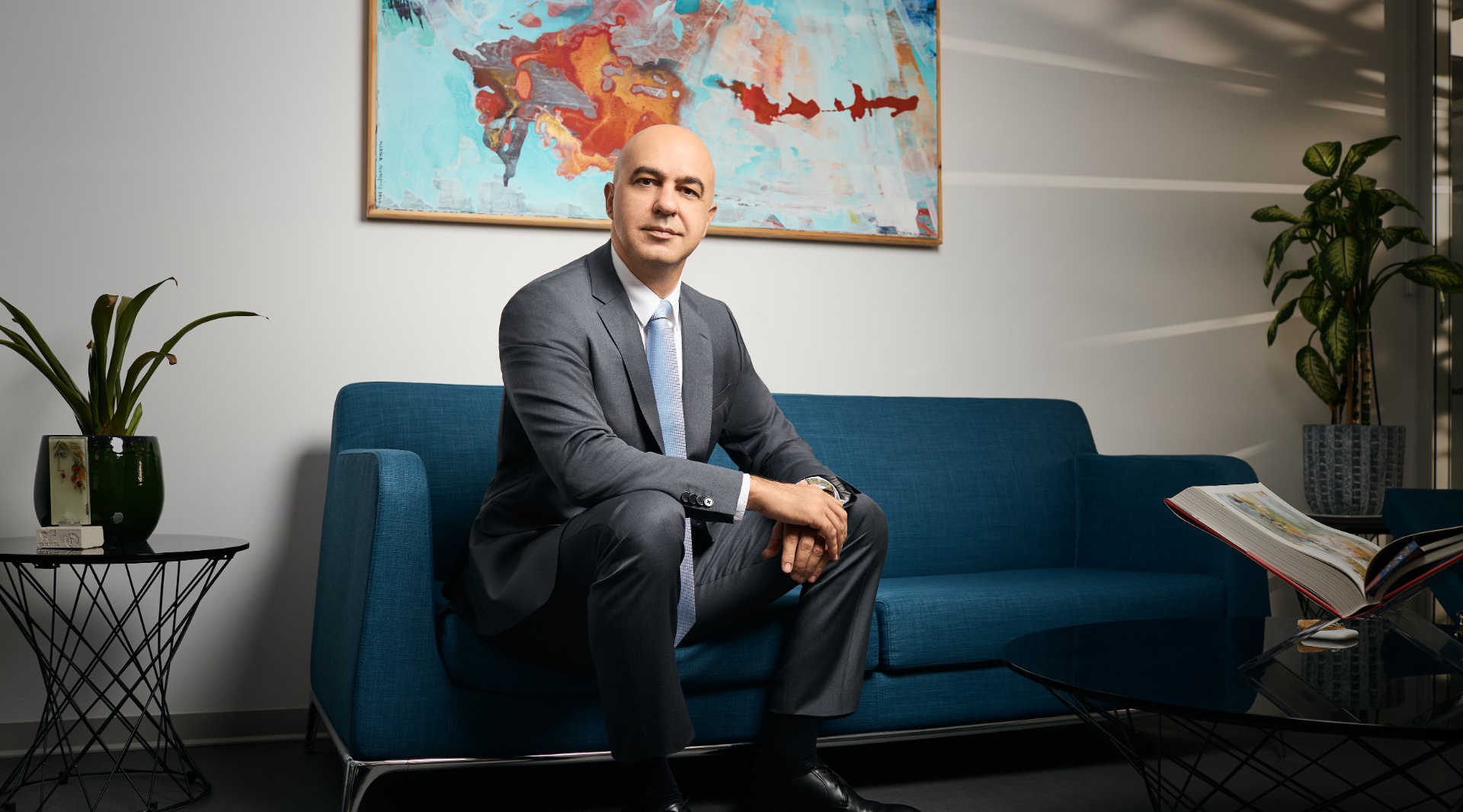
Muinmos' Founder and CEO, Remonda Kirketerp-Møller
Currently, prop trading companies only have to follow laws such as consumer protection rules, data protection rules, and conditions for international sanctions. The registration of such companies is concentrated in the US, the UK, the UAE, and Saint Vincent and the Grenadines. Yet, many are registered within the EU.
"Some jurisdictions have implemented certain regulatory measures or guidelines to oversee prop trading activities within their markets," Kirketerp-Møller added. However, proper regulatory measures are yet to come.
The Approach of Regulators
Regulatory interest in prop trading surfaced with the Commodity Futures Trading Commission's (CFTC) and its Canadian counterpart's lawsuit against My Forex Funds last year. However, those were limited to only enforcement levels.
In March, Belgium’s regulator, the Financial Services and Markets Authority (FSMA), issued a warning against prop trading, calling it a “game of shadow investing, a practice that costs money and can lead to reckless behaviour.” Notably, Belgium is the only country in the European Union that has banned the offering of contracts for differences (CFDs) instruments to retail traders.
However, none of the other regulators have made any public statements about prop trading and the possibility of regulations. FTMO, one of the popular prop trading brands, also confirmed that the company was not approached by any regulator “to discuss future regulation of the industry.”
However, when regulators prepare for regulations, they usually consult industry players. "When CFDs regulation was introduced in Israel, Leverate actively participated in the process," said Ran Strauss, CEO of Leverate, a technology provider in the financial services space.
“Some regulators don't believe in the model (of prop trading), some want to ban the model, some believe the model will die off,” a long-term industry insider told Finance Magnates. “We should expect some clarity towards the end of this year.”
When Finance Magnates approached the ESMA, it refused to confirm the discussion on the prop trading regulations, saying: “The meeting dates of ESMA meetings are not published, nor are the agendas of these meetings. So we cannot comment on anything else on this.”
However, many industry participants are still anticipating a regulatory push on prop trading. Evdokia Pitsillidou, Risk & Compliance Director at SALVUS Funds, said: “On a European level, regulators are anticipated to introduce requirements for proprietary trading firms, including authorisation under the Markets in Financial Instruments Directive (MiFID), subject to the investment service of Dealing on Own Account.”
"This expectation stems from the understanding that certain aspects of prop trading may fall within this investment service category. This could entail firms needing this designation to offer services to clients, even for activities such as collecting subscriptions for demo trading. The aim is to ensure that firms are subject to organizational and operational requirements, enhancing transparency and investor protection within the prop trading sector."
The nature of the prop trading model has also created confusion about who should regulate this industry.
“Regulation will definitely come, but it’s unclear when, how, and from whom,” Devexperts’ CEO, Evgeny Sorokin, highlighted. “Rules around prop firm operations could be better suited to the gaming and gambling industry legislation rather than financial.”
The Dilemma of Prop Trading Regulations
Prop trading firms do not handle clients’ monies for trading or offer brokerage services. So, the existing regulations on retail over-the-counter derivatives brokers do not apply to them. Furthermore, most of the prop trading activities—from challenges to trading with funded accounts—are conducted on demo accounts.
Due to the unregulated nature of the prop trading businesses, hundreds, if not more, of brands have spawned over the past few years. While some have established their name, many face complaints, mostly around denied payouts.
“Currently, prop trading is a little like the Wild West with very few industry regulations,” Greg Rubin, Head of Axi Select, told Finance Magnates. “Most players in this space use demo accounts and charge a registration fee to participate. They ultimately structure the offering to be virtual and non-financial, and therefore not subject to financial regulations.”
"This means that most of the firms would likely not even complete the most basic client checks such as the AML or KYC on clients."
This is the first part of our two-part series on prop trading regulations. The upcoming second part will portray what industry experts think about how the possible prop trading regulations would look like. Stay tuned!
The increasing popularity of trader-funded firms, marketed as prop trading firms, has attracted the attention of regulators. An industry source told Finance Magnates that the European Securities and Markets Authority (ESMA) recently ran an initial check on such prop trading firms and also discussed possible regulations in the industry. However, the pan-European regulator refused to confirm its possible move towards prop trading regulations.
Further, Remonda Kirketerp-Møller, founder and CEO at the regulatory compliance firm Muinmos, confirmed to Finance Magnates that “regulators have been conducting studies, gathering data, and engaging in consultations with industry participants to better understand the nature and implications of prop trading.”
Muinmos' Founder and CEO, Remonda Kirketerp-Møller
Currently, prop trading companies only have to follow laws such as consumer protection rules, data protection rules, and conditions for international sanctions. The registration of such companies is concentrated in the US, the UK, the UAE, and Saint Vincent and the Grenadines. Yet, many are registered within the EU.
"Some jurisdictions have implemented certain regulatory measures or guidelines to oversee prop trading activities within their markets," Kirketerp-Møller added. However, proper regulatory measures are yet to come.
The Approach of Regulators
Regulatory interest in prop trading surfaced with the Commodity Futures Trading Commission's (CFTC) and its Canadian counterpart's lawsuit against My Forex Funds last year. However, those were limited to only enforcement levels.
In March, Belgium’s regulator, the Financial Services and Markets Authority (FSMA), issued a warning against prop trading, calling it a “game of shadow investing, a practice that costs money and can lead to reckless behaviour.” Notably, Belgium is the only country in the European Union that has banned the offering of contracts for differences (CFDs) instruments to retail traders.
However, none of the other regulators have made any public statements about prop trading and the possibility of regulations. FTMO, one of the popular prop trading brands, also confirmed that the company was not approached by any regulator “to discuss future regulation of the industry.”
However, when regulators prepare for regulations, they usually consult industry players. "When CFDs regulation was introduced in Israel, Leverate actively participated in the process," said Ran Strauss, CEO of Leverate, a technology provider in the financial services space.
“Some regulators don't believe in the model (of prop trading), some want to ban the model, some believe the model will die off,” a long-term industry insider told Finance Magnates. “We should expect some clarity towards the end of this year.”
When Finance Magnates approached the ESMA, it refused to confirm the discussion on the prop trading regulations, saying: “The meeting dates of ESMA meetings are not published, nor are the agendas of these meetings. So we cannot comment on anything else on this.”
However, many industry participants are still anticipating a regulatory push on prop trading. Evdokia Pitsillidou, Risk & Compliance Director at SALVUS Funds, said: “On a European level, regulators are anticipated to introduce requirements for proprietary trading firms, including authorisation under the Markets in Financial Instruments Directive (MiFID), subject to the investment service of Dealing on Own Account.”
"This expectation stems from the understanding that certain aspects of prop trading may fall within this investment service category. This could entail firms needing this designation to offer services to clients, even for activities such as collecting subscriptions for demo trading. The aim is to ensure that firms are subject to organizational and operational requirements, enhancing transparency and investor protection within the prop trading sector."
The nature of the prop trading model has also created confusion about who should regulate this industry.
“Regulation will definitely come, but it’s unclear when, how, and from whom,” Devexperts’ CEO, Evgeny Sorokin, highlighted. “Rules around prop firm operations could be better suited to the gaming and gambling industry legislation rather than financial.”
The Dilemma of Prop Trading Regulations
Prop trading firms do not handle clients’ monies for trading or offer brokerage services. So, the existing regulations on retail over-the-counter derivatives brokers do not apply to them. Furthermore, most of the prop trading activities—from challenges to trading with funded accounts—are conducted on demo accounts.
Due to the unregulated nature of the prop trading businesses, hundreds, if not more, of brands have spawned over the past few years. While some have established their name, many face complaints, mostly around denied payouts.
“Currently, prop trading is a little like the Wild West with very few industry regulations,” Greg Rubin, Head of Axi Select, told Finance Magnates. “Most players in this space use demo accounts and charge a registration fee to participate. They ultimately structure the offering to be virtual and non-financial, and therefore not subject to financial regulations.”
"This means that most of the firms would likely not even complete the most basic client checks such as the AML or KYC on clients."
This is the first part of our two-part series on prop trading regulations. The upcoming second part will portray what industry experts think about how the possible prop trading regulations would look like. Stay tuned!
Yam Yehoshua is Editor-in-Chief, leading coverage of the global online trading, fintech, and digital assets sectors. He sets editorial direction and oversees how major developments are reported and explained for industry professionals.
Under his leadership, the newsroom focuses on the structural trends affecting brokers, trading platforms, and market infrastructure, including regulation, licensing, consolidation, and the evolution of CFD and crypto business models. The editorial approach prioritises clarity, financial accuracy, and relevance for decision-makers.
Yam has a background in both print and digital journalism and works closely with executives, regulators, and operators across key jurisdictions. His work is focused on separating market narrative from financial reality and ensuring coverage reflects how the industry operates in practice, not just how it is marketed.
Education:
Journalism and Communication Studies (Diploma Program)
Headline College, Tel Aviv, Israel
42% of Swiss Financial Firms Have No Digital Fraud Policy, FINMA Finds
FP Markets Winner Spotlight 🏆 | Global Broker of the Year 2025 #Trading #Broker #Innovation #Shorts
FP Markets Winner Spotlight 🏆 | Global Broker of the Year 2025 #Trading #Broker #Innovation #Shorts
FP Markets takes the spotlight as Global Broker of the Year 2025 at the Finance Magnates Awards.
Martin Stoilov, Head of Client Experience, shares that trust, innovation, and people played a key role in the company’s success, supported by a strong foundation of integrity and client-centricity.
Following this milestone, FP Markets continues to focus on growth, technology investment, and its core values of transparency and excellence.
👉 Be part of FM Awards 2026: https://awards.financemagnates.com/#nominate
FP Markets takes the spotlight as Global Broker of the Year 2025 at the Finance Magnates Awards.
Martin Stoilov, Head of Client Experience, shares that trust, innovation, and people played a key role in the company’s success, supported by a strong foundation of integrity and client-centricity.
Following this milestone, FP Markets continues to focus on growth, technology investment, and its core values of transparency and excellence.
👉 Be part of FM Awards 2026: https://awards.financemagnates.com/#nominate
In this video, we review @HolaPrimeMarketsOfficial, a multi-asset forex and CFDs broker offering different account types, trading platforms, and flexible trading conditions.
We cover the broker’s overall offering, including account options, trading environment, platforms like MT4 and MT5, and additional services such as managed accounts and fast withdrawals.
Watch the full video to see if Hola Prime Markets fits your trading needs.
📣 Stay up to date with the latest in finance and trading. Follow Finance Magnates for industry news, insights, and global event coverage.
Connect with us:
🔗 LinkedIn: /financemagnates
👍 Facebook: /financemagnates
📸 Instagram: https://www.instagram.com/financemagnates
🐦 X: https://x.com/financemagnates
🎥 TikTok: https://www.tiktok.com/tag/financemagnates
▶️ YouTube: /@financemagnates_official
#HolaPrime #ForexBroker #CFDTrading #FinanceMagnates #Trading #Forex #BrokerReview
In this video, we review @HolaPrimeMarketsOfficial, a multi-asset forex and CFDs broker offering different account types, trading platforms, and flexible trading conditions.
We cover the broker’s overall offering, including account options, trading environment, platforms like MT4 and MT5, and additional services such as managed accounts and fast withdrawals.
Watch the full video to see if Hola Prime Markets fits your trading needs.
📣 Stay up to date with the latest in finance and trading. Follow Finance Magnates for industry news, insights, and global event coverage.
Connect with us:
🔗 LinkedIn: /financemagnates
👍 Facebook: /financemagnates
📸 Instagram: https://www.instagram.com/financemagnates
🐦 X: https://x.com/financemagnates
🎥 TikTok: https://www.tiktok.com/tag/financemagnates
▶️ YouTube: /@financemagnates_official
#HolaPrime #ForexBroker #CFDTrading #FinanceMagnates #Trading #Forex #BrokerReview
Hola Prime Review: What You Need to Know | Full Breakdown by Finance Magnates
Hola Prime Review: What You Need to Know | Full Breakdown by Finance Magnates
In this video, we review @HolaPrime_Global, a proprietary trading firm offering evaluation programs and performance-based payouts in simulated market environments.
We cover how the challenge model works, including account types, profit splits (up to 95%), trading rules, and what it takes to reach a funded account. You’ll also learn about available platforms like MT4, MT5, cTrader, and more, along with insights into payouts, support, and trading conditions.
Watch the full video to see if Hola Prime fits your trading style.
📣 Stay up to date with the latest in finance and trading. Follow Finance Magnates for industry news, insights, and global event coverage.
Connect with us:
🔗 LinkedIn: /financemagnates
👍 Facebook: /financemagnates
📸 Instagram: https://www.instagram.com/financemagnates
🐦 X: https://x.com/financemagnates
🎥 TikTok: https://www.tiktok.com/tag/financemagnates
▶️ YouTube: /@financemagnates_official
#HolaPrime #PropFirm #Trading #FinanceMagnates #Forex #FuturesTrading #TradingReview #PropFirmReview
In this video, we review @HolaPrime_Global, a proprietary trading firm offering evaluation programs and performance-based payouts in simulated market environments.
We cover how the challenge model works, including account types, profit splits (up to 95%), trading rules, and what it takes to reach a funded account. You’ll also learn about available platforms like MT4, MT5, cTrader, and more, along with insights into payouts, support, and trading conditions.
Watch the full video to see if Hola Prime fits your trading style.
📣 Stay up to date with the latest in finance and trading. Follow Finance Magnates for industry news, insights, and global event coverage.
Connect with us:
🔗 LinkedIn: /financemagnates
👍 Facebook: /financemagnates
📸 Instagram: https://www.instagram.com/financemagnates
🐦 X: https://x.com/financemagnates
🎥 TikTok: https://www.tiktok.com/tag/financemagnates
▶️ YouTube: /@financemagnates_official
#HolaPrime #PropFirm #Trading #FinanceMagnates #Forex #FuturesTrading #TradingReview #PropFirmReview
Axi Winner Spotlight 🏆 | Global Most Innovative Broker 2025 #Innovation #Trading #Fintech #Broker
Axi Winner Spotlight 🏆 | Global Most Innovative Broker 2025 #Innovation #Trading #Fintech #Broker
Axi takes the spotlight at the Finance Magnates Awards, winning Global Most Innovative Broker 2025.
Olivia Xenofontos and Ivanna Openko share how the team will feel: proud, motivated, and ready to keep delivering.
They also describe the night as well-organized, focused, and enjoyable for all.
👉 Be part of FM Awards 2026.
Axi takes the spotlight at the Finance Magnates Awards, winning Global Most Innovative Broker 2025.
Olivia Xenofontos and Ivanna Openko share how the team will feel: proud, motivated, and ready to keep delivering.
They also describe the night as well-organized, focused, and enjoyable for all.
👉 Be part of FM Awards 2026.
Recognition that matters.
Built on transparency.
Driven by the industry.
The Finance Magnates Awards 2026.
Nominations are now open.
🔗 https://awards.financemagnates.com/?utm_source=SM&utm_medium=social&utm_campaign=recognition-matters
Recognition that matters.
Built on transparency.
Driven by the industry.
The Finance Magnates Awards 2026.
Nominations are now open.
🔗 https://awards.financemagnates.com/?utm_source=SM&utm_medium=social&utm_campaign=recognition-matters