ADSS opted for the new cloud-based platform to overcome the challenges it has been facing with MT4.
"Cloud offers a far higher quality technical platform," said the CEO of Adaptive in a joint interview with Finance Magnates.
The use of cloud-based technology in the capital markets is rare. Only a handful of giants are selectively using cloud, but none have replaced their legacy infrastructure with it. However, ADSS, a forex and contracts for differences (CFDs) broker with an extensive presence in the Middle East, made a bold move to tap the services of technology provider Adaptive for the development of its proprietary trading platform based on the cloud infrastructure rather than legacy data centers, Finance Magnates learned.
Cloud - Can It Overtake Legacy Infrastructure?
Cloud-based infrastructure is relatively new in the financial services industry. Such infrastructure uses the cloud services provided by tech giants like Amazon, Google, and Microsoft, eliminating the need to maintain physical data center infrastructures.
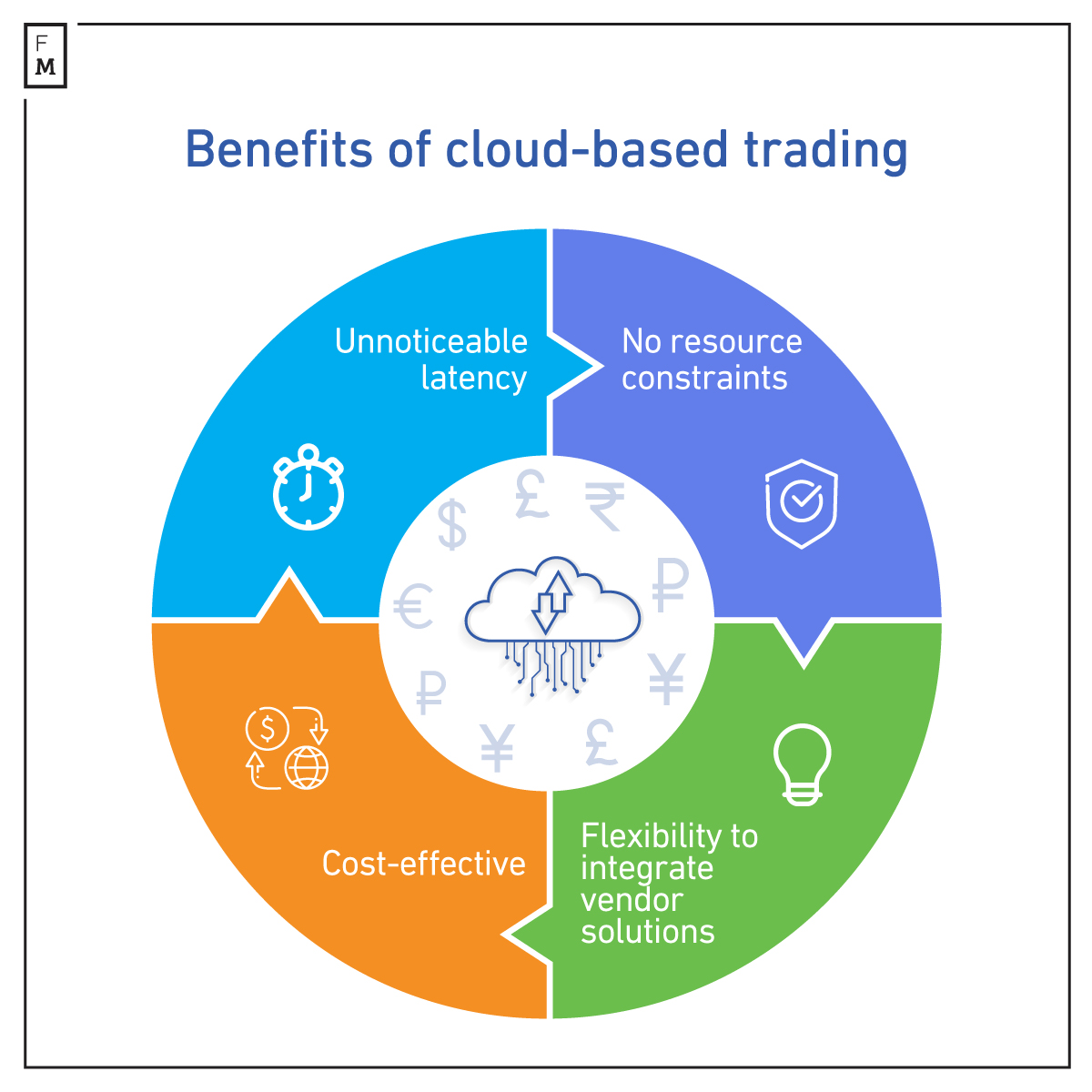
Matt Barrett, the CEO and Co-Founder of Adaptive Financial Consulting, said: “The performance of the cloud is more than sufficient for retail brokers having price streams on mobile or web browsers. Wherever they are in the world, they won't see a latency difference.”
Matt Barrett, CEO and Co-Founder at Adaptive Financial Consulting
“Obviously, price formation still happens in physical data centers. But the cloud provides the ability to connect to those data centers and the pricing and connectivity infrastructure very easily.”
He also stressed that with cloud-based infrastructure "we're not going to run into resource constraints."
He further highlighted that cloud-based infrastructures are very flexible, and it's “very easy for vendors and brokers to integrate their solutions.”
The Need for a New Platform
Adaptive operates as a software development company for the trading industry rather than a white-label solution provider. The intellectual property of the trading platforms developed by the company is entirely owned by the brokers, meaning the new platform of ADSS is proprietary to it.
ADSS already offers trading services with MetaTrader 4 (MT4), one of the most popular third-party platforms. Now, the broker is offering the proprietary “ADSS Platform” in addition to MT4.
Sophia Salim, Chief Technology Officer at ADSS
According to Sophia Salim, the Chief Technology Officer at ADSS, the broker developed the proprietary platform to overcome the limitations of MT4. "What we wanted was flexibility and scale"' said Salim. "We also wanted to be able to innovate, to build custom experiences for our customers. That flexibility is much harder to achieve with 3rd party ready-made trading platforms.”
She further highlighted the dated UX of MT4, which significantly lags behind the design capabilities of this day and age. It is to be noted that MetaQuotes Software, the company behind MT4, has stopped issuing new licenses for the legacy MT4 trading platform and is now pushing its modern successor, MetaTrader 5 (MT5). Along with Salim, Barrett also agreed to the dated nature of MT4.
“There is a tremendous recognizable value in optimizing the UX for our traders, and of course, the agility that it gives us through innovation to our clients,” Salim added. However, ADSS has yet to decide if it will solely offer the proprietary platform in the future or will complement it with MT4. “We will keep doing what's right for our customers.” she said.
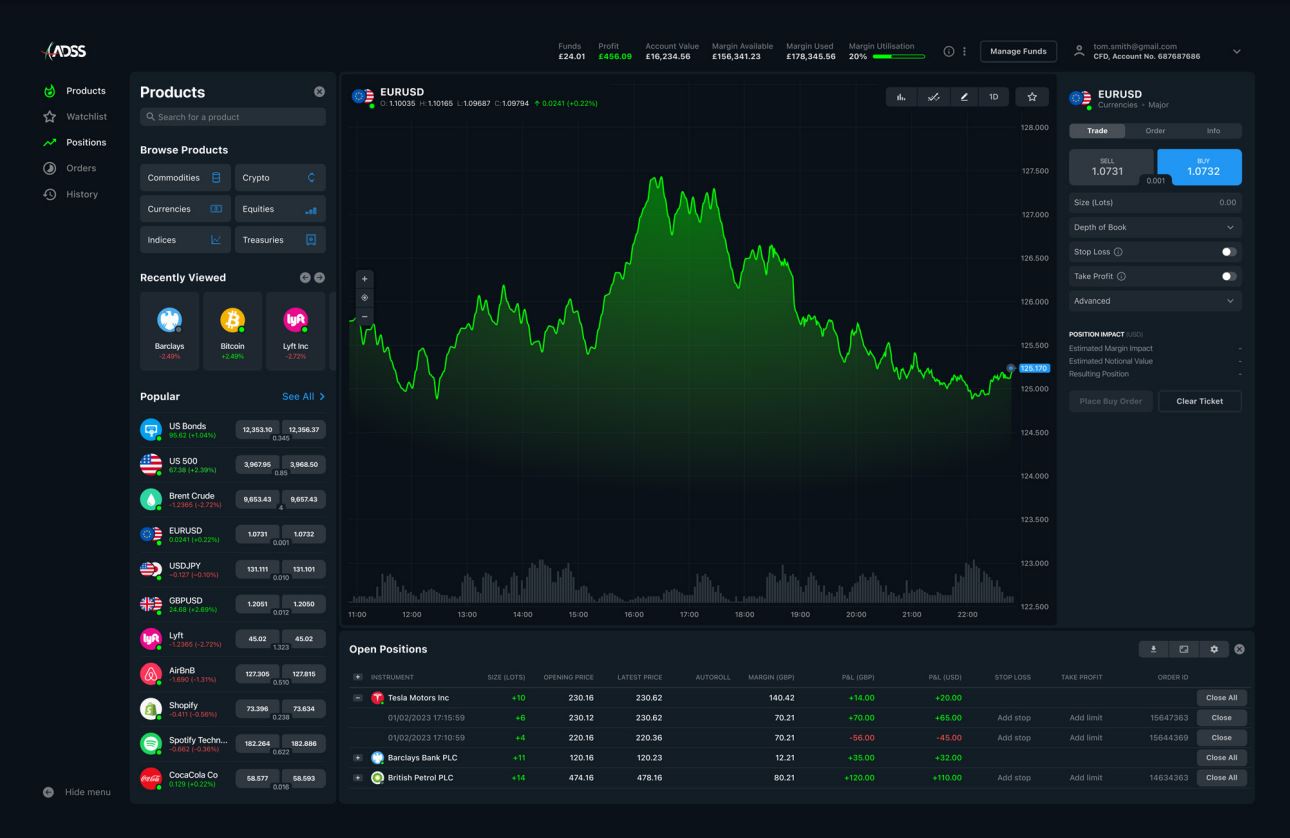
ADSS trading desktop UI (Pricing/markets for illustrative purposes only)
Interestingly, ADSS is not the first broker to take the proprietary platform route and diverge from MetaTrader. Last year, Estonia-headquartered Admirals launched a proprietary trading platform showcasing the trend of owning the technology.
Some popular brokers like eToro, Trading 212, and Plus500 are only offering trading on their own platform. While some other big brands offer services on proprietary and third-party platforms, most brokers still rely on licensing the platforms.
ADSS is a recognizable brand when it comes to retail forex and CFDs trading. Its focus is on the Middle East and to concentrate on its core markets further, the broker withdrew from the United Kingdom last year by renouncing its Financial Conduct Authority license.
Costly yet Cost-Efficient
Developing a trading platform is always a more costly option than licensing a third-party platform. However, the former has many advantages. According to Salim, it's “value versus cost.”
“Running an out-of-the-box solution is definitely cheaper,” said Salim. “But it's all about the value that your customers derive from it and the ability to drive the economies of scale as you have more and more customers on the platform.”
“On cloud, many of these things are figured out, and they're easy to turn up and turn down. And, of course, there is the reliability of performance and the accelerants you get from building on the cloud, in terms of the infrastructure you're using, versus customer infrastructure that you have to stand up,” she added.
Mentioning the infrastructure costs, Barrett said: “You can't talk about costs without talking about value. Cloud offers a far higher quality technical platform.” He further highlighted: “Things like resiliency, latency, performance, disaster recovery, replicated sites, scalability - all those things are more cost-effective in the cloud.”
“It's just more expensive on legacy infrastructure," said Barrett. “You have to operate two data centers, even though the second one isn't doing anything. You don't have to do that on cloud.”
Security Is a Challenges
Despite all the promises, cloud-based infrastructure in the capital markets is very new. And, it comes with its own set of challenges.
One of the significant challenges is “cybersecurity,” according to Barrett. “We've found over the years that it's as much about reality as it is about perception when it comes to cybersecurity,” he explained. “Some firms have chosen to not build platforms on the cloud over the last five or six years, due to perceived security issues, but that is now changing.”
“The perception of cyber security in the cloud is one of the things that we see as a challenge to be addressed.”
A Collaboration to Work on a New Technology
Cloud-based infrastructure is still rare in the financial services industry and, according to the Adaptive, it is likely the only technology provider in the financial services space to provide cloud-centric services. With such limited adoption of cloud, the process of the collaboration between ADSS and Adaptive to develop a trading platform on cloud was interesting.
"The journey between Adaptive and ADSS started in mid to late 2020," said Barrett. "The very early conversations were about the ambitions of ADSS and how Adaptive's technology platform and approach could be used to realize those goals."
"As a vendor providing a service to a client, you obviously want to help them realize their vision."
According to a case study by ADSS' Salim, the broker's goals with a new trading platform were to have "24/7 high availability, an engaging, intuitive user interface on mobile and web, [and] support for a high volume of traffic." All of these were achieved by Adaptive's cloud-based solution.
"ADSS had an ambition to build a market-leading and market-defining platform, and you don't do that on undifferentiated technology," Barrett said. "Cloud was part of the solution."
"Through our collaboration, we had to remain very flexible and open to changes and direction on behalf of ADSS. At each point, we achieved this through being very open - we exposed development methodology and the team model to ADSS. We tried to facilitate as many touch points between the two organizations as possible."
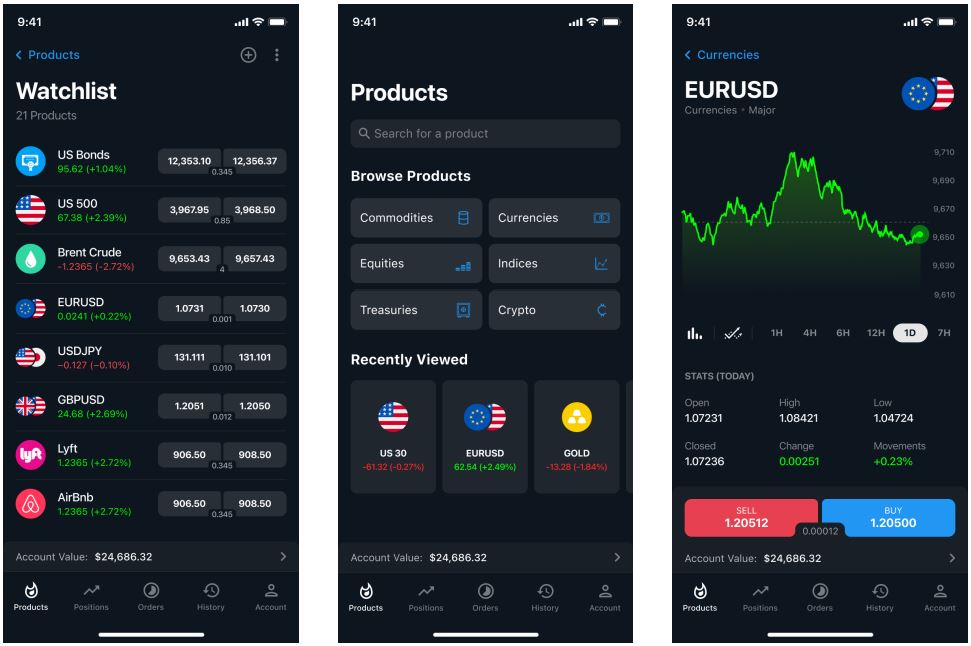
ADSS mobile interface ((Pricing/markets for illustrative purposes only)
Shift-Towards Cloud
Although cloud-based technology is new in the capital markets, Barrett predicts it will take over the legacy infrastructure over the next five to ten years.
“It's part of a wider shift that we see across the industry outside of just retail broking. In the institutional markets, the big centralized exchanges, like CME and NASDAQ, announced major cloud partnerships over the last three to four years,” he added.
Taking on the legacy technology players of the trading industry, Barrett said: "If a broker runs their business on MT4 or MT5 now, it is, in some sense, circumscribing its ambition."
"There are businesses that are profitable without differentiated technology, but they will be differentiating themselves via existing relationships, regional franchises, or some other facet of their business."
The use of cloud-based technology in the capital markets is rare. Only a handful of giants are selectively using cloud, but none have replaced their legacy infrastructure with it. However, ADSS, a forex and contracts for differences (CFDs) broker with an extensive presence in the Middle East, made a bold move to tap the services of technology provider Adaptive for the development of its proprietary trading platform based on the cloud infrastructure rather than legacy data centers, Finance Magnates learned.
Cloud - Can It Overtake Legacy Infrastructure?
Cloud-based infrastructure is relatively new in the financial services industry. Such infrastructure uses the cloud services provided by tech giants like Amazon, Google, and Microsoft, eliminating the need to maintain physical data center infrastructures.
Matt Barrett, the CEO and Co-Founder of Adaptive Financial Consulting, said: “The performance of the cloud is more than sufficient for retail brokers having price streams on mobile or web browsers. Wherever they are in the world, they won't see a latency difference.”
Matt Barrett, CEO and Co-Founder at Adaptive Financial Consulting
“Obviously, price formation still happens in physical data centers. But the cloud provides the ability to connect to those data centers and the pricing and connectivity infrastructure very easily.”
He also stressed that with cloud-based infrastructure "we're not going to run into resource constraints."
He further highlighted that cloud-based infrastructures are very flexible, and it's “very easy for vendors and brokers to integrate their solutions.”
The Need for a New Platform
Adaptive operates as a software development company for the trading industry rather than a white-label solution provider. The intellectual property of the trading platforms developed by the company is entirely owned by the brokers, meaning the new platform of ADSS is proprietary to it.
ADSS already offers trading services with MetaTrader 4 (MT4), one of the most popular third-party platforms. Now, the broker is offering the proprietary “ADSS Platform” in addition to MT4.
Sophia Salim, Chief Technology Officer at ADSS
According to Sophia Salim, the Chief Technology Officer at ADSS, the broker developed the proprietary platform to overcome the limitations of MT4. "What we wanted was flexibility and scale"' said Salim. "We also wanted to be able to innovate, to build custom experiences for our customers. That flexibility is much harder to achieve with 3rd party ready-made trading platforms.”
She further highlighted the dated UX of MT4, which significantly lags behind the design capabilities of this day and age. It is to be noted that MetaQuotes Software, the company behind MT4, has stopped issuing new licenses for the legacy MT4 trading platform and is now pushing its modern successor, MetaTrader 5 (MT5). Along with Salim, Barrett also agreed to the dated nature of MT4.
“There is a tremendous recognizable value in optimizing the UX for our traders, and of course, the agility that it gives us through innovation to our clients,” Salim added. However, ADSS has yet to decide if it will solely offer the proprietary platform in the future or will complement it with MT4. “We will keep doing what's right for our customers.” she said.
ADSS trading desktop UI (Pricing/markets for illustrative purposes only)
Interestingly, ADSS is not the first broker to take the proprietary platform route and diverge from MetaTrader. Last year, Estonia-headquartered Admirals launched a proprietary trading platform showcasing the trend of owning the technology.
Some popular brokers like eToro, Trading 212, and Plus500 are only offering trading on their own platform. While some other big brands offer services on proprietary and third-party platforms, most brokers still rely on licensing the platforms.
ADSS is a recognizable brand when it comes to retail forex and CFDs trading. Its focus is on the Middle East and to concentrate on its core markets further, the broker withdrew from the United Kingdom last year by renouncing its Financial Conduct Authority license.
Costly yet Cost-Efficient
Developing a trading platform is always a more costly option than licensing a third-party platform. However, the former has many advantages. According to Salim, it's “value versus cost.”
“Running an out-of-the-box solution is definitely cheaper,” said Salim. “But it's all about the value that your customers derive from it and the ability to drive the economies of scale as you have more and more customers on the platform.”
“On cloud, many of these things are figured out, and they're easy to turn up and turn down. And, of course, there is the reliability of performance and the accelerants you get from building on the cloud, in terms of the infrastructure you're using, versus customer infrastructure that you have to stand up,” she added.
Mentioning the infrastructure costs, Barrett said: “You can't talk about costs without talking about value. Cloud offers a far higher quality technical platform.” He further highlighted: “Things like resiliency, latency, performance, disaster recovery, replicated sites, scalability - all those things are more cost-effective in the cloud.”
“It's just more expensive on legacy infrastructure," said Barrett. “You have to operate two data centers, even though the second one isn't doing anything. You don't have to do that on cloud.”
Security Is a Challenges
Despite all the promises, cloud-based infrastructure in the capital markets is very new. And, it comes with its own set of challenges.
One of the significant challenges is “cybersecurity,” according to Barrett. “We've found over the years that it's as much about reality as it is about perception when it comes to cybersecurity,” he explained. “Some firms have chosen to not build platforms on the cloud over the last five or six years, due to perceived security issues, but that is now changing.”
“The perception of cyber security in the cloud is one of the things that we see as a challenge to be addressed.”
A Collaboration to Work on a New Technology
Cloud-based infrastructure is still rare in the financial services industry and, according to the Adaptive, it is likely the only technology provider in the financial services space to provide cloud-centric services. With such limited adoption of cloud, the process of the collaboration between ADSS and Adaptive to develop a trading platform on cloud was interesting.
"The journey between Adaptive and ADSS started in mid to late 2020," said Barrett. "The very early conversations were about the ambitions of ADSS and how Adaptive's technology platform and approach could be used to realize those goals."
"As a vendor providing a service to a client, you obviously want to help them realize their vision."
According to a case study by ADSS' Salim, the broker's goals with a new trading platform were to have "24/7 high availability, an engaging, intuitive user interface on mobile and web, [and] support for a high volume of traffic." All of these were achieved by Adaptive's cloud-based solution.
"ADSS had an ambition to build a market-leading and market-defining platform, and you don't do that on undifferentiated technology," Barrett said. "Cloud was part of the solution."
"Through our collaboration, we had to remain very flexible and open to changes and direction on behalf of ADSS. At each point, we achieved this through being very open - we exposed development methodology and the team model to ADSS. We tried to facilitate as many touch points between the two organizations as possible."
ADSS mobile interface ((Pricing/markets for illustrative purposes only)
Shift-Towards Cloud
Although cloud-based technology is new in the capital markets, Barrett predicts it will take over the legacy infrastructure over the next five to ten years.
“It's part of a wider shift that we see across the industry outside of just retail broking. In the institutional markets, the big centralized exchanges, like CME and NASDAQ, announced major cloud partnerships over the last three to four years,” he added.
Taking on the legacy technology players of the trading industry, Barrett said: "If a broker runs their business on MT4 or MT5 now, it is, in some sense, circumscribing its ambition."
"There are businesses that are profitable without differentiated technology, but they will be differentiating themselves via existing relationships, regional franchises, or some other facet of their business."
Arnab Shome is an electronics engineer-turned-financial editor. He holds a Bachelor of Technology from the National Institute of Technology, Agartala. He entered the retail trading industry about a decade ago, covering the cryptocurrency market for Finance Magnates, and later expanded his coverage to include forex and CFDs as well.
His work at Finance Magnates includes C-level interviews, data-driven analysis, opinion pieces, and scoops of industry exclusives. He also contributes to Finance Magnates’ quarterly industry report.
Area of coverage:
1. CFD broker-related news
2. Industry-related Regulatory updates and developments
3. New retail trading trends
4. Prop trading industry updates
5. Executive interviews
Education:
Bachelor of Technology - National Institute of Technology, Agartala (India)
Most Axi Clients Now Trade on MetaTrader 5 as Broker Rolls Out MetaQuotes' Order Engine
Featured Videos
AvaTrade to Acquire Most of FXCM; NAGA Raises $8M
AvaTrade to Acquire Most of FXCM; NAGA Raises $8M
AvaTrade to Acquire Most of FXCM; NAGA Raises $8M
AvaTrade to Acquire Most of FXCM; NAGA Raises $8M
Today’s financial news recap covers AvaTrade agrees to acquire most of FXCM, NAGA secures eight million dollars in new financing, and Wise seeks a tax settlement in the UK.
Finance Magnates Daily Recap brings you the latest news from forex and CFD brokers, fintech, payments, cryptocurrency, digital assets, trading platforms, financial regulation and global markets.
Get the key company news, executive moves, deals, regulatory updates and market developments of the day, in just a few minutes. New episodes published every weekday.
Read more: https://www.financemagnates.com
#FinanceMagnates #ForexNews #FintechNews
Today’s financial news recap covers AvaTrade agrees to acquire most of FXCM, NAGA secures eight million dollars in new financing, and Wise seeks a tax settlement in the UK.
Finance Magnates Daily Recap brings you the latest news from forex and CFD brokers, fintech, payments, cryptocurrency, digital assets, trading platforms, financial regulation and global markets.
Get the key company news, executive moves, deals, regulatory updates and market developments of the day, in just a few minutes. New episodes published every weekday.
Read more: https://www.financemagnates.com
#FinanceMagnates #ForexNews #FintechNews
Today’s financial news recap covers AvaTrade agrees to acquire most of FXCM, NAGA secures eight million dollars in new financing, and Wise seeks a tax settlement in the UK.
Finance Magnates Daily Recap brings you the latest news from forex and CFD brokers, fintech, payments, cryptocurrency, digital assets, trading platforms, financial regulation and global markets.
Get the key company news, executive moves, deals, regulatory updates and market developments of the day, in just a few minutes. New episodes published every weekday.
Read more: https://www.financemagnates.com
#FinanceMagnates #ForexNews #FintechNews
Today’s financial news recap covers AvaTrade agrees to acquire most of FXCM, NAGA secures eight million dollars in new financing, and Wise seeks a tax settlement in the UK.
Finance Magnates Daily Recap brings you the latest news from forex and CFD brokers, fintech, payments, cryptocurrency, digital assets, trading platforms, financial regulation and global markets.
Get the key company news, executive moves, deals, regulatory updates and market developments of the day, in just a few minutes. New episodes published every weekday.
Read more: https://www.financemagnates.com
#FinanceMagnates #ForexNews #FintechNews
XTB Adds Overnight US Stock Trading; Nasdaq Ventures Invests in One Trading
XTB Adds Overnight US Stock Trading; Nasdaq Ventures Invests in One Trading
XTB Adds Overnight US Stock Trading; Nasdaq Ventures Invests in One Trading
XTB Adds Overnight US Stock Trading; Nasdaq Ventures Invests in One Trading
XTB Adds Overnight US Stock Trading; Nasdaq Ventures Invests in One Trading
XTB Adds Overnight US Stock Trading; Nasdaq Ventures Invests in One Trading
Today’s financial news recap covers XTB expands overnight US stock trading, Fortrade reports higher revenue, Nasdaq backs One Trading, and Vest Labs raises 13 million dollars.
Finance Magnates Daily Recap brings you the latest news from forex and CFD brokers, fintech, payments, cryptocurrency, digital assets, trading platforms, financial regulation and global markets.
Get the key company news, executive moves, deals, regulatory updates and market developments of the day, in just a few minutes. New episodes published every weekday.
Read more: https://www.financemagnates.com
#FinanceMagnates #ForexNews #FintechNews
Today’s financial news recap covers XTB expands overnight US stock trading, Fortrade reports higher revenue, Nasdaq backs One Trading, and Vest Labs raises 13 million dollars.
Finance Magnates Daily Recap brings you the latest news from forex and CFD brokers, fintech, payments, cryptocurrency, digital assets, trading platforms, financial regulation and global markets.
Get the key company news, executive moves, deals, regulatory updates and market developments of the day, in just a few minutes. New episodes published every weekday.
Read more: https://www.financemagnates.com
#FinanceMagnates #ForexNews #FintechNews
Today’s financial news recap covers XTB expands overnight US stock trading, Fortrade reports higher revenue, Nasdaq backs One Trading, and Vest Labs raises 13 million dollars.
Finance Magnates Daily Recap brings you the latest news from forex and CFD brokers, fintech, payments, cryptocurrency, digital assets, trading platforms, financial regulation and global markets.
Get the key company news, executive moves, deals, regulatory updates and market developments of the day, in just a few minutes. New episodes published every weekday.
Read more: https://www.financemagnates.com
#FinanceMagnates #ForexNews #FintechNews
Today’s financial news recap covers XTB expands overnight US stock trading, Fortrade reports higher revenue, Nasdaq backs One Trading, and Vest Labs raises 13 million dollars.
Finance Magnates Daily Recap brings you the latest news from forex and CFD brokers, fintech, payments, cryptocurrency, digital assets, trading platforms, financial regulation and global markets.
Get the key company news, executive moves, deals, regulatory updates and market developments of the day, in just a few minutes. New episodes published every weekday.
Read more: https://www.financemagnates.com
#FinanceMagnates #ForexNews #FintechNews
Today’s financial news recap covers XTB expands overnight US stock trading, Fortrade reports higher revenue, Nasdaq backs One Trading, and Vest Labs raises 13 million dollars.
Finance Magnates Daily Recap brings you the latest news from forex and CFD brokers, fintech, payments, cryptocurrency, digital assets, trading platforms, financial regulation and global markets.
Get the key company news, executive moves, deals, regulatory updates and market developments of the day, in just a few minutes. New episodes published every weekday.
Read more: https://www.financemagnates.com
#FinanceMagnates #ForexNews #FintechNews
Today’s financial news recap covers XTB expands overnight US stock trading, Fortrade reports higher revenue, Nasdaq backs One Trading, and Vest Labs raises 13 million dollars.
Finance Magnates Daily Recap brings you the latest news from forex and CFD brokers, fintech, payments, cryptocurrency, digital assets, trading platforms, financial regulation and global markets.
Get the key company news, executive moves, deals, regulatory updates and market developments of the day, in just a few minutes. New episodes published every weekday.
Read more: https://www.financemagnates.com
#FinanceMagnates #ForexNews #FintechNews
CMC Founder Downplays Volatility Hit; Devexperts Names CEO
CMC Founder Downplays Volatility Hit; Devexperts Names CEO
CMC Founder Downplays Volatility Hit; Devexperts Names CEO
CMC Founder Downplays Volatility Hit; Devexperts Names CEO
CMC Founder Downplays Volatility Hit; Devexperts Names CEO
CMC Founder Downplays Volatility Hit; Devexperts Names CEO
Today’s financial news recap covers low volatility pressures brokers, Devexperts names a new CEO, Saxo cuts onboarding time, and OKX reaches a 25 billion dollar valuation.
Finance Magnates Daily Recap brings you the latest news from forex and CFD brokers, fintech, payments, cryptocurrency, digital assets, trading platforms, financial regulation and global markets.
Get the key company news, executive moves, deals, regulatory updates and market developments of the day, in just a few minutes. New episodes published every weekday.
Read more: https://www.financemagnates.com
#FinanceMagnates #ForexNews #FintechNews
Today’s financial news recap covers low volatility pressures brokers, Devexperts names a new CEO, Saxo cuts onboarding time, and OKX reaches a 25 billion dollar valuation.
Finance Magnates Daily Recap brings you the latest news from forex and CFD brokers, fintech, payments, cryptocurrency, digital assets, trading platforms, financial regulation and global markets.
Get the key company news, executive moves, deals, regulatory updates and market developments of the day, in just a few minutes. New episodes published every weekday.
Read more: https://www.financemagnates.com
#FinanceMagnates #ForexNews #FintechNews
Today’s financial news recap covers low volatility pressures brokers, Devexperts names a new CEO, Saxo cuts onboarding time, and OKX reaches a 25 billion dollar valuation.
Finance Magnates Daily Recap brings you the latest news from forex and CFD brokers, fintech, payments, cryptocurrency, digital assets, trading platforms, financial regulation and global markets.
Get the key company news, executive moves, deals, regulatory updates and market developments of the day, in just a few minutes. New episodes published every weekday.
Read more: https://www.financemagnates.com
#FinanceMagnates #ForexNews #FintechNews
Today’s financial news recap covers low volatility pressures brokers, Devexperts names a new CEO, Saxo cuts onboarding time, and OKX reaches a 25 billion dollar valuation.
Finance Magnates Daily Recap brings you the latest news from forex and CFD brokers, fintech, payments, cryptocurrency, digital assets, trading platforms, financial regulation and global markets.
Get the key company news, executive moves, deals, regulatory updates and market developments of the day, in just a few minutes. New episodes published every weekday.
Read more: https://www.financemagnates.com
#FinanceMagnates #ForexNews #FintechNews
Today’s financial news recap covers low volatility pressures brokers, Devexperts names a new CEO, Saxo cuts onboarding time, and OKX reaches a 25 billion dollar valuation.
Finance Magnates Daily Recap brings you the latest news from forex and CFD brokers, fintech, payments, cryptocurrency, digital assets, trading platforms, financial regulation and global markets.
Get the key company news, executive moves, deals, regulatory updates and market developments of the day, in just a few minutes. New episodes published every weekday.
Read more: https://www.financemagnates.com
#FinanceMagnates #ForexNews #FintechNews
Today’s financial news recap covers low volatility pressures brokers, Devexperts names a new CEO, Saxo cuts onboarding time, and OKX reaches a 25 billion dollar valuation.
Finance Magnates Daily Recap brings you the latest news from forex and CFD brokers, fintech, payments, cryptocurrency, digital assets, trading platforms, financial regulation and global markets.
Get the key company news, executive moves, deals, regulatory updates and market developments of the day, in just a few minutes. New episodes published every weekday.
Read more: https://www.financemagnates.com
#FinanceMagnates #ForexNews #FintechNews
Today’s financial news recap covers Trade Nation buys FXCM's UK client book, Trading 212 reports higher revenue, the CFTC's move to allow perpetual index futures.
Finance Magnates Daily Recap brings you the latest news from forex and CFD brokers, fintech, payments, cryptocurrency, digital assets, trading platforms, financial regulation and global markets.
Get the key company news, executive moves, deals, regulatory updates and market developments of the day, in just a few minutes. New episodes published every weekday.
Read more: https://www.financemagnates.com
#FinanceMagnates #ForexNews #FintechNews
Today’s financial news recap covers Trade Nation buys FXCM's UK client book, Trading 212 reports higher revenue, the CFTC's move to allow perpetual index futures.
Finance Magnates Daily Recap brings you the latest news from forex and CFD brokers, fintech, payments, cryptocurrency, digital assets, trading platforms, financial regulation and global markets.
Get the key company news, executive moves, deals, regulatory updates and market developments of the day, in just a few minutes. New episodes published every weekday.
Read more: https://www.financemagnates.com
#FinanceMagnates #ForexNews #FintechNews
Today’s financial news recap covers Trade Nation buys FXCM's UK client book, Trading 212 reports higher revenue, the CFTC's move to allow perpetual index futures.
Finance Magnates Daily Recap brings you the latest news from forex and CFD brokers, fintech, payments, cryptocurrency, digital assets, trading platforms, financial regulation and global markets.
Get the key company news, executive moves, deals, regulatory updates and market developments of the day, in just a few minutes. New episodes published every weekday.
Read more: https://www.financemagnates.com
#FinanceMagnates #ForexNews #FintechNews
Today’s financial news recap covers Trade Nation buys FXCM's UK client book, Trading 212 reports higher revenue, the CFTC's move to allow perpetual index futures.
Finance Magnates Daily Recap brings you the latest news from forex and CFD brokers, fintech, payments, cryptocurrency, digital assets, trading platforms, financial regulation and global markets.
Get the key company news, executive moves, deals, regulatory updates and market developments of the day, in just a few minutes. New episodes published every weekday.
Read more: https://www.financemagnates.com
#FinanceMagnates #ForexNews #FintechNews
Today’s financial news recap covers Trade Nation buys FXCM's UK client book, Trading 212 reports higher revenue, the CFTC's move to allow perpetual index futures.
Finance Magnates Daily Recap brings you the latest news from forex and CFD brokers, fintech, payments, cryptocurrency, digital assets, trading platforms, financial regulation and global markets.
Get the key company news, executive moves, deals, regulatory updates and market developments of the day, in just a few minutes. New episodes published every weekday.
Read more: https://www.financemagnates.com
#FinanceMagnates #ForexNews #FintechNews
Today’s financial news recap covers Trade Nation buys FXCM's UK client book, Trading 212 reports higher revenue, the CFTC's move to allow perpetual index futures.
Finance Magnates Daily Recap brings you the latest news from forex and CFD brokers, fintech, payments, cryptocurrency, digital assets, trading platforms, financial regulation and global markets.
Get the key company news, executive moves, deals, regulatory updates and market developments of the day, in just a few minutes. New episodes published every weekday.
Read more: https://www.financemagnates.com
#FinanceMagnates #ForexNews #FintechNews
Your career isn’t a linear path.
Your career isn’t a linear path.
Your career isn’t a linear path.
Your career isn’t a linear path.
Your career isn’t a linear path.
Your career isn’t a linear path.
Roles change. Career goals change. Sometimes you want a completely new challenge.
But the skills and knowledge you build along the way can stay with you and give you something to build on.
For Jeff Patterson, that continued growth is key to long-term career development.
You bring the skills. FM Academy helps you build the knowledge.
#FMAcademy #FinanceMagnates #FinanceCareers #ProfessionalDevelopment #Fintech
Roles change. Career goals change. Sometimes you want a completely new challenge.
But the skills and knowledge you build along the way can stay with you and give you something to build on.
For Jeff Patterson, that continued growth is key to long-term career development.
You bring the skills. FM Academy helps you build the knowledge.
#FMAcademy #FinanceMagnates #FinanceCareers #ProfessionalDevelopment #Fintech
Roles change. Career goals change. Sometimes you want a completely new challenge.
But the skills and knowledge you build along the way can stay with you and give you something to build on.
For Jeff Patterson, that continued growth is key to long-term career development.
You bring the skills. FM Academy helps you build the knowledge.
#FMAcademy #FinanceMagnates #FinanceCareers #ProfessionalDevelopment #Fintech
Roles change. Career goals change. Sometimes you want a completely new challenge.
But the skills and knowledge you build along the way can stay with you and give you something to build on.
For Jeff Patterson, that continued growth is key to long-term career development.
You bring the skills. FM Academy helps you build the knowledge.
#FMAcademy #FinanceMagnates #FinanceCareers #ProfessionalDevelopment #Fintech
Roles change. Career goals change. Sometimes you want a completely new challenge.
But the skills and knowledge you build along the way can stay with you and give you something to build on.
For Jeff Patterson, that continued growth is key to long-term career development.
You bring the skills. FM Academy helps you build the knowledge.
#FMAcademy #FinanceMagnates #FinanceCareers #ProfessionalDevelopment #Fintech
Roles change. Career goals change. Sometimes you want a completely new challenge.
But the skills and knowledge you build along the way can stay with you and give you something to build on.
For Jeff Patterson, that continued growth is key to long-term career development.
You bring the skills. FM Academy helps you build the knowledge.
#FMAcademy #FinanceMagnates #FinanceCareers #ProfessionalDevelopment #Fintech