A US court threw out the CFTC's case against My Forex Funds, citing questionable practices to build the case. But prop firms took it as a caution to offer services in the US.
Now, MyFunded Futures wants to operate as a CFTC-regulated IB and is looking to hire a “Director of Brokerage Operations – Futures Brokerage.”
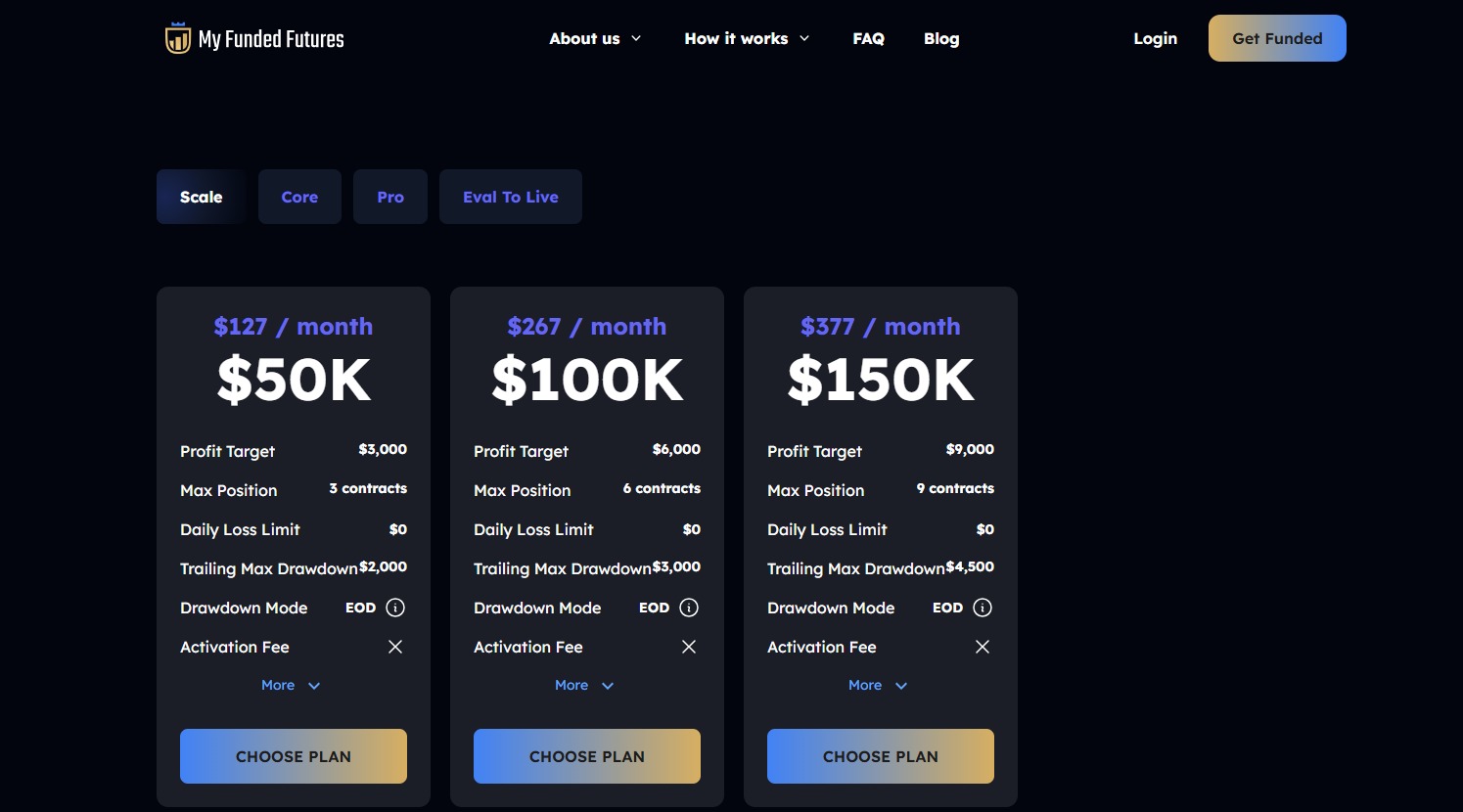
A screenshot of MyFunded Futures' website showing its challenges
MyFunded Futures, a proprietary trading platform based in the United States, is now moving towards becoming a “fully licensed Introducing Broker (IB)” regulated by the National Futures Association (NFA) and the Commodity Futures Trading Commission (CFTC).
A Job Post Reveals MyFunded Futures’ Plans
Revealed in a recent job post on LinkedIn, the prop platform is looking to hire a “Director of Brokerage Operations – Futures Brokerage,” who will be based in the US.
“The Director of Brokerage Operations will lead our brokerage infrastructure as we complete our IB registration and establish supervisory practices,” the job description states.
The company, however, does not yet appear to be registered with the NFA or CFTC. A search in the Background Affiliation Status Information Centre (BASIC) database using the terms “MyFunded Futures” or “MyFunded” does not return any results.
An IB is the sales and client-facing arm of the US futures and retail forex market. It finds and onboards traders, guides them through the account forms, and passes every order directly to a carrying Futures Commission Merchant (FCM) or, in the case of retail forex, to a Retail Foreign Exchange Dealer (RFED). The IB may offer a trading platform and market commentary but never holds client money; all funds, margin, and clearing risk remain with the FCM.
In the US, an IB operates under two models – guaranteed or independent. A guaranteed IB relies on one FCM for capital support, whereas an independent IB must meet a minimum net capital requirement of around USD 45,000. The IB earns a portion of each trade’s commission and must also register separately as a Commodity Trading Advisor or Pool Operator before giving personal advice or managing client funds.
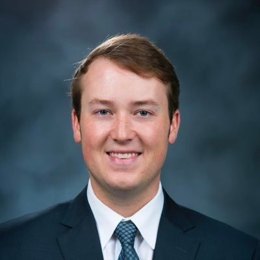
Matthew Leech, CEO of MyFunded Futures (Photo: LinkedIn)
The specifics of MyFunded Futures’ IB business remain undisclosed at this time.
FinanceMagnates.com approached Matthew Leech, the CEO of MyFunded Futures, for details on the platform’s IB operations, but as of press time, no response had been received.
Props Becoming Brokers Is a Trend
Leech entered the prop trading business with another platform, MyFundedFX, which has since been rebranded to SeacrestFunded. That prop platform also has a brokerage unit, Seacrest Markets, which operates under a South African licence.
Although several prop trading platforms have now obtained brokerage licences, most seem to be using them to meet technological requirements, such as obtaining MetaTrader licences. Additionally, most of these registrations are issued in St Lucia, which does not have a dedicated brokerage license regime, or in the controversial jurisdiction of Comoros. Only a few of these prop firms appear to be offering standalone brokerage services.
However, MyFunded Futures’ move to become an IB in the US appears to be a first.
MyFunded Futures, a proprietary trading platform based in the United States, is now moving towards becoming a “fully licensed Introducing Broker (IB)” regulated by the National Futures Association (NFA) and the Commodity Futures Trading Commission (CFTC).
A Job Post Reveals MyFunded Futures’ Plans
Revealed in a recent job post on LinkedIn, the prop platform is looking to hire a “Director of Brokerage Operations – Futures Brokerage,” who will be based in the US.
“The Director of Brokerage Operations will lead our brokerage infrastructure as we complete our IB registration and establish supervisory practices,” the job description states.
The company, however, does not yet appear to be registered with the NFA or CFTC. A search in the Background Affiliation Status Information Centre (BASIC) database using the terms “MyFunded Futures” or “MyFunded” does not return any results.
An IB is the sales and client-facing arm of the US futures and retail forex market. It finds and onboards traders, guides them through the account forms, and passes every order directly to a carrying Futures Commission Merchant (FCM) or, in the case of retail forex, to a Retail Foreign Exchange Dealer (RFED). The IB may offer a trading platform and market commentary but never holds client money; all funds, margin, and clearing risk remain with the FCM.
In the US, an IB operates under two models – guaranteed or independent. A guaranteed IB relies on one FCM for capital support, whereas an independent IB must meet a minimum net capital requirement of around USD 45,000. The IB earns a portion of each trade’s commission and must also register separately as a Commodity Trading Advisor or Pool Operator before giving personal advice or managing client funds.
Matthew Leech, CEO of MyFunded Futures (Photo: LinkedIn)
The specifics of MyFunded Futures’ IB business remain undisclosed at this time.
FinanceMagnates.com approached Matthew Leech, the CEO of MyFunded Futures, for details on the platform’s IB operations, but as of press time, no response had been received.
Props Becoming Brokers Is a Trend
Leech entered the prop trading business with another platform, MyFundedFX, which has since been rebranded to SeacrestFunded. That prop platform also has a brokerage unit, Seacrest Markets, which operates under a South African licence.
Although several prop trading platforms have now obtained brokerage licences, most seem to be using them to meet technological requirements, such as obtaining MetaTrader licences. Additionally, most of these registrations are issued in St Lucia, which does not have a dedicated brokerage license regime, or in the controversial jurisdiction of Comoros. Only a few of these prop firms appear to be offering standalone brokerage services.
However, MyFunded Futures’ move to become an IB in the US appears to be a first.
Arnab Shome is an electronics engineer-turned-financial editor. He holds a Bachelor of Technology from the National Institute of Technology, Agartala. He entered the retail trading industry about a decade ago, covering the cryptocurrency market for Finance Magnates, and later expanded his coverage to include forex and CFDs as well.
His work at Finance Magnates includes C-level interviews, data-driven analysis, opinion pieces, and scoops of industry exclusives. He also contributes to Finance Magnates’ quarterly industry report.
Area of coverage:
1. CFD broker-related news
2. Industry-related Regulatory updates and developments
3. New retail trading trends
4. Prop trading industry updates
5. Executive interviews
Education:
Bachelor of Technology - National Institute of Technology, Agartala (India)
Webull Spent Big to Hit Record Revenue, and the Bill Is in the Fine Print
FP Markets Winner Spotlight 🏆 | Global Broker of the Year 2025 #Trading #Broker #Innovation #Shorts
FP Markets Winner Spotlight 🏆 | Global Broker of the Year 2025 #Trading #Broker #Innovation #Shorts
FP Markets takes the spotlight as Global Broker of the Year 2025 at the Finance Magnates Awards.
Martin Stoilov, Head of Client Experience, shares that trust, innovation, and people played a key role in the company’s success, supported by a strong foundation of integrity and client-centricity.
Following this milestone, FP Markets continues to focus on growth, technology investment, and its core values of transparency and excellence.
👉 Be part of FM Awards 2026: https://awards.financemagnates.com/#nominate
FP Markets takes the spotlight as Global Broker of the Year 2025 at the Finance Magnates Awards.
Martin Stoilov, Head of Client Experience, shares that trust, innovation, and people played a key role in the company’s success, supported by a strong foundation of integrity and client-centricity.
Following this milestone, FP Markets continues to focus on growth, technology investment, and its core values of transparency and excellence.
👉 Be part of FM Awards 2026: https://awards.financemagnates.com/#nominate
In this video, we review @HolaPrimeMarketsOfficial, a multi-asset forex and CFDs broker offering different account types, trading platforms, and flexible trading conditions.
We cover the broker’s overall offering, including account options, trading environment, platforms like MT4 and MT5, and additional services such as managed accounts and fast withdrawals.
Watch the full video to see if Hola Prime Markets fits your trading needs.
📣 Stay up to date with the latest in finance and trading. Follow Finance Magnates for industry news, insights, and global event coverage.
Connect with us:
🔗 LinkedIn: /financemagnates
👍 Facebook: /financemagnates
📸 Instagram: https://www.instagram.com/financemagnates
🐦 X: https://x.com/financemagnates
🎥 TikTok: https://www.tiktok.com/tag/financemagnates
▶️ YouTube: /@financemagnates_official
#HolaPrime #ForexBroker #CFDTrading #FinanceMagnates #Trading #Forex #BrokerReview
In this video, we review @HolaPrimeMarketsOfficial, a multi-asset forex and CFDs broker offering different account types, trading platforms, and flexible trading conditions.
We cover the broker’s overall offering, including account options, trading environment, platforms like MT4 and MT5, and additional services such as managed accounts and fast withdrawals.
Watch the full video to see if Hola Prime Markets fits your trading needs.
📣 Stay up to date with the latest in finance and trading. Follow Finance Magnates for industry news, insights, and global event coverage.
Connect with us:
🔗 LinkedIn: /financemagnates
👍 Facebook: /financemagnates
📸 Instagram: https://www.instagram.com/financemagnates
🐦 X: https://x.com/financemagnates
🎥 TikTok: https://www.tiktok.com/tag/financemagnates
▶️ YouTube: /@financemagnates_official
#HolaPrime #ForexBroker #CFDTrading #FinanceMagnates #Trading #Forex #BrokerReview
Hola Prime Review: What You Need to Know | Full Breakdown by Finance Magnates
Hola Prime Review: What You Need to Know | Full Breakdown by Finance Magnates
In this video, we review @HolaPrime_Global, a proprietary trading firm offering evaluation programs and performance-based payouts in simulated market environments.
We cover how the challenge model works, including account types, profit splits (up to 95%), trading rules, and what it takes to reach a funded account. You’ll also learn about available platforms like MT4, MT5, cTrader, and more, along with insights into payouts, support, and trading conditions.
Watch the full video to see if Hola Prime fits your trading style.
📣 Stay up to date with the latest in finance and trading. Follow Finance Magnates for industry news, insights, and global event coverage.
Connect with us:
🔗 LinkedIn: /financemagnates
👍 Facebook: /financemagnates
📸 Instagram: https://www.instagram.com/financemagnates
🐦 X: https://x.com/financemagnates
🎥 TikTok: https://www.tiktok.com/tag/financemagnates
▶️ YouTube: /@financemagnates_official
#HolaPrime #PropFirm #Trading #FinanceMagnates #Forex #FuturesTrading #TradingReview #PropFirmReview
In this video, we review @HolaPrime_Global, a proprietary trading firm offering evaluation programs and performance-based payouts in simulated market environments.
We cover how the challenge model works, including account types, profit splits (up to 95%), trading rules, and what it takes to reach a funded account. You’ll also learn about available platforms like MT4, MT5, cTrader, and more, along with insights into payouts, support, and trading conditions.
Watch the full video to see if Hola Prime fits your trading style.
📣 Stay up to date with the latest in finance and trading. Follow Finance Magnates for industry news, insights, and global event coverage.
Connect with us:
🔗 LinkedIn: /financemagnates
👍 Facebook: /financemagnates
📸 Instagram: https://www.instagram.com/financemagnates
🐦 X: https://x.com/financemagnates
🎥 TikTok: https://www.tiktok.com/tag/financemagnates
▶️ YouTube: /@financemagnates_official
#HolaPrime #PropFirm #Trading #FinanceMagnates #Forex #FuturesTrading #TradingReview #PropFirmReview
Axi Winner Spotlight 🏆 | Global Most Innovative Broker 2025 #Innovation #Trading #Fintech #Broker
Axi Winner Spotlight 🏆 | Global Most Innovative Broker 2025 #Innovation #Trading #Fintech #Broker
Axi takes the spotlight at the Finance Magnates Awards, winning Global Most Innovative Broker 2025.
Olivia Xenofontos and Ivanna Openko share how the team will feel: proud, motivated, and ready to keep delivering.
They also describe the night as well-organized, focused, and enjoyable for all.
👉 Be part of FM Awards 2026.
Axi takes the spotlight at the Finance Magnates Awards, winning Global Most Innovative Broker 2025.
Olivia Xenofontos and Ivanna Openko share how the team will feel: proud, motivated, and ready to keep delivering.
They also describe the night as well-organized, focused, and enjoyable for all.
👉 Be part of FM Awards 2026.
Recognition that matters.
Built on transparency.
Driven by the industry.
The Finance Magnates Awards 2026.
Nominations are now open.
🔗 https://awards.financemagnates.com/?utm_source=SM&utm_medium=social&utm_campaign=recognition-matters
Recognition that matters.
Built on transparency.
Driven by the industry.
The Finance Magnates Awards 2026.
Nominations are now open.
🔗 https://awards.financemagnates.com/?utm_source=SM&utm_medium=social&utm_campaign=recognition-matters