The UK-registered arm of Capital Markets Elite Group, a broker providing access to equities and contracts for difference (CFDs), reported another loss in its latest financial year, but the gap narrowed sharply as revenue grew to more than £559,000 and costs moved lower.
The company generated turnover of £559,005 for the year ended 31 May 2025, up 11% from £502,699 a year earlier. Cost of sales dropped to £199,250 from £264,514, which lifted gross profit to £359,755, compared with £238,185 in the prior year.
- CM Elite Group UK’s FY24 Revenue Jumps amid Significant Client Growth
- Capital Markets Elite Group’s UK Losses Deepen despite Revenue Rise
Operating Loss Shrinks but Remains Significant
Administrative expenses, which cover overheads such as staff and office costs, fell to £870,814 from £1,055,386. This reduction helped narrow the operating loss to £511,059, down from £817,201 in 2024.
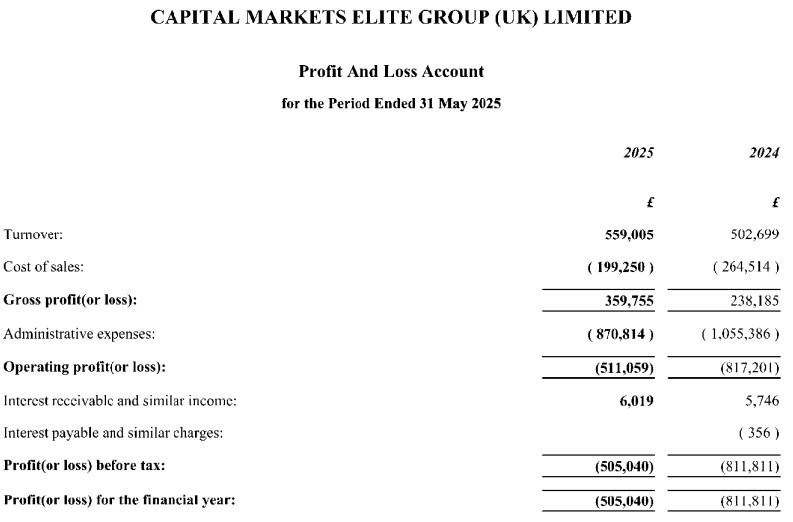
After booking £6,019 in interest receivable and a small interest charge in the previous year, the loss before tax stood at £505,040, versus £811,811 a year earlier. The company’s loss for the financial year matched this figure at £505,040, reflecting a material but still incomplete improvement in its bottom line.
CM Elite Group (UK) provides execution services for both unleveraged and margined US equities , as well as CFDs across several major financial instruments. It serves retail and institutional clients and earns fees for giving access to a mix of third-party and proprietary trading platforms.
The business operates on an execution-only model, with fee income driven by trading activity and platform usage rather than advisory work.
Cost Base and Headcount
The accounts highlight a smaller team as part of the cost adjustment. The average number of employees fell to four in 2025 from six in 2024. A reduced headcount likely contributed to the £184,572 drop in administrative expenses and the £306,142 improvement in operating loss.
You may also like: Saxo Bank Fined Nearly $50 Million in Denmark, Its Largest Penalty in Recent Years
The shift to a leaner structure indicated efforts to align ongoing costs with current revenue levels while still maintaining the infrastructure required to support equity and CFD execution .
The move from an £811,811 loss to a £505,040 loss, alongside a rise in turnover of more than £56,000 and an increase in gross profit of over £121,000, showed a gradual progress toward a more sustainable operation.