>
You Trade We Earn - Indian Govt's Proposed Commodity Transaction Tax CTT - Budget 2013
You Trade We Earn - Indian Govt's Proposed Commodity Transaction Tax CTT - Budget 2013
Wednesday,27/02/2013|11:54GMTby
Adil Siddiqui
There’s winners and losers in financial markets trading as one man’s gain is another man’s loss! But how about a situation where regardless of who claims victory there’s a champion! This is the world of taxes on financial transactions. As if we hadn't heard enough of the financial transaction tax (Tobin tax) affecting European participants then the new CTT props up, it seems the same dilemma has shifted 7000 km east as Mumbai fights against the governments new proposed commodity transaction tax.
India's thriving capital markets have positioned the world’s 2nd most populous nation as a 'go to' place for investment products as the worlds developed markets dry up. The nation boasts five major commodity exchanges and is fast becoming a leading market for commodity derivatives. However the Indian government feels that the domestic market can do with a slowdown and needs to put the brakes on by sharing some revenue. As the 2013 budget approaches India's government tries 'again' to implement a tax on commodity trading.
India has been slow to open its economy up to the world as compared to other Asian nations. Commodity trading in the physical markets is an old concept however from 2003 onwards new venues were being introduced for
D K Aggrawal Managing Director of SMC Trade
hedging purposes. The new venues have seen remarkable support and volumes have been astonishing. The MCX exchange is one of the most liquid for Gold and Silver trading.
In 2008, the Indian government proposed a commodity transaction tax (CTT) on all commodity contracts as it believed the new tax will drive revenue and create a transparent and well regulated market. The commodity professionals disagreed and lobbied against the move and the Prime Minister's Economic Advisory Council or PMEAC cautioned against the proposed levy, ultimately the government had to put a sock in it however after a lengthy five years, where the world has witnessed major changes (mainly on the down side) the government wants to try its luck 'again'.
Financial Taxes
The government is no stranger to taxing financial markets products. The government implemented a securities transaction tax (STT) in the 2004/2005 budget; it came as a result of inconsistent information about profits on equity trades, investors simply failed to declare their earnings which meant the government lost out. The (STT) tax is paid on buy or sell trades regardless of the outcome.
When purchasing or selling stocks or equity oriented mutual funds, the STT is 0.125% of the total transaction value. For squaring off of daily positions or not taking delivery, the STT is 0.025%. And in the case of derivatives, the tax is only on the seller and is calculated at 0.017%.
Taxes are common fees that investors pay, in the UK stamp duty and capitals gain is paid on investments. Spread betting by passes both and UK-based investors pay zero tax when trading in financial instruments as a spread bet.
The new tax will increase the cost of trading dramatically currently traders on the exchange incur an average transaction cost of about Rs 2 per lakh traded. The introduction of the commodity transaction tax (CTT) will increase transaction cost to more than 8 times the current cost.
Mohd Naved, Delhi based Trader & Tutor
Mixed Views
On the one hand traders feel the market is gradually gaining momentum and a tax like this will have a major impact on the future growth, furthermore the new tax will create an underground market, that already exists, the world of 'dabba' trading aka commodity markets equivalent to a bucket shop.
D K Aggrawal Managing Director of SMC Trade says “The proposal to levy tax on commodity derivatives trade, on the lines of the securities transaction tax (STT) if implemented will be very detrimental to the commodities future market.”
Mohd Naved an experienced independent trader and tutor from Delhi doesn’t see the proposed tax having a major impact on commodities, he says "CTT is not big enough in value to effect trading profitability, so I don't expect any decrease in trading volume by active traders due the introduction of CTT".
The government feels that speculators are playing a more significant role and hence affecting the fair value of these instruments. Furthermore, the core objectives of commodity futures historically have been to service; producers, suppliers and manufactures operating in the commodities space, with only a limited number of pure hedgers in the market the volatility is alarming. Mohd adds "most of the volume on commodity trading is done in Gold, silver, copper, crude, and natural gas, in which major players are speculators which target a reasonable profit thus without worrying about small charges like CTT".
On the other hand taxes have been implemented by governments, in the equity markets, the STT was sanctioned and the much awaited Tobin tax is thought to be well on its way. So why the outcry in the CTT? The stock exchanges have been the prime suspects behind the CTT, with equity markets taking a hit on the back of declining investments. With intense volatility in Gold and Oil since the 2008 credit crisis traders have sought the benefits of rapid price movements with no additional fees unlike the taxes prevalent in the stocks.
Mohd Naved agrees with the government and believes there is more good than bad from the CTT, he concludes "I consider this introduction of CTT as a slightly negative to neutral for short term trading volume, but in long run it will have a positive effect by increasing the transparency."
Although not in complete favour of the tax, Iftekhar Abidi Director - Marketing & Business Development at Indo Jatalia, a commodity trading firm, says ” tax implications shows government interest on Commodities Trading, which is still not grown as it should be if we compare with developed markets (Comex). Therefore in future we may hope for further reforms likewise institutions might get permission for trading participation at exchanges.”
Shifting Volumes Elsewhere
The concern among the pro-commodity sector is that the industry is still in its infancy and needs as much support as possible. The new tax will potentially harm volumes on the commodity exchanges; furthermore volumes could shift to alternative venues.
A study by the Confederation of Indian Industry (CII) suggests the commodities transaction tax (CTT) will lower trade activity by 18-59 per cent within a week of its introduction.
Alok Kumara a Researcher in Commodities & Currencies at Destimoney Securities Pvt. Ltd says “after the introduction of STT in 2004/ 2005, there are so many Foreign Institutional Investor’s (FII’s) who have shifted their trading from India to Singapore, where the same Asset (Nifty) is traded, to avail the cheaper taxes. For example STT of Rs. 1700 per Crore on nifty Future trading even if the make profit or loss. It unnecessarily raises cost of transaction. So FII shifted their trading nifty Future from India to Singapore, Even tax on profit is very low in Singapore".
Iftekhar Abidi Director - Marketing & Business Development at Indo Jatalia
The CII’ s study highlights that since the imposition of STT on July 9, 2004, saw average trading volume, which was Rs 4,476 crores (USD $828 million) during 2003-04, drop 80 per cent to Rs 898 crores (USD $166 million) in 2006-07.
Although India’s banking systems is becoming widely used even in rural areas it’s believed that the pure cash economy is still significant. Estimates from Liases Foras a research and consulting firm claim Indians black money in the real estate sector alone is around $6 billion.
More Transparency, there’s already enough!
The government wants the market to be more transparent. A fair claim as the more transparent any system the more difficult for issues to arise. However the system is relatively clear, to open an account in India firms and individuals face strict KYC and account verification guidelines. Furthermore, any transaction above Rs 10 lakh (USD $18,560) is reported to the Income Tax department.
The government should encourage participation from farmers, processors and users to create a more even ground where supply and demand dictate price discovery. With the absence of banks and the buy-side the commodity markets suffer from institutional flows and if India wants to compete with the major players it needs to open both the front and back door with a smile.
Ashok Mittal CEO of Emkay Commotrade Ltd
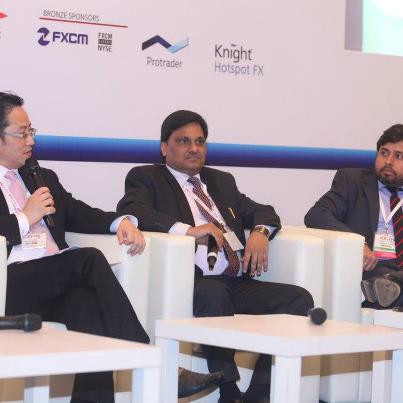
Indian commodity markets were part of the discussion on the Commodity Panel at the iFXEXPO Asia Summit in Macau where Mr D K Aggrawal was a speaker.
There’s winners and losers in financial markets trading as one man’s gain is another man’s loss! But how about a situation where regardless of who claims victory there’s a champion! This is the world of taxes on financial transactions. As if we hadn't heard enough of the financial transaction tax (Tobin tax) affecting European participants then the new CTT props up, it seems the same dilemma has shifted 7000 km east as Mumbai fights against the governments new proposed commodity transaction tax.
India's thriving capital markets have positioned the world’s 2nd most populous nation as a 'go to' place for investment products as the worlds developed markets dry up. The nation boasts five major commodity exchanges and is fast becoming a leading market for commodity derivatives. However the Indian government feels that the domestic market can do with a slowdown and needs to put the brakes on by sharing some revenue. As the 2013 budget approaches India's government tries 'again' to implement a tax on commodity trading.
India has been slow to open its economy up to the world as compared to other Asian nations. Commodity trading in the physical markets is an old concept however from 2003 onwards new venues were being introduced for
D K Aggrawal Managing Director of SMC Trade
hedging purposes. The new venues have seen remarkable support and volumes have been astonishing. The MCX exchange is one of the most liquid for Gold and Silver trading.
In 2008, the Indian government proposed a commodity transaction tax (CTT) on all commodity contracts as it believed the new tax will drive revenue and create a transparent and well regulated market. The commodity professionals disagreed and lobbied against the move and the Prime Minister's Economic Advisory Council or PMEAC cautioned against the proposed levy, ultimately the government had to put a sock in it however after a lengthy five years, where the world has witnessed major changes (mainly on the down side) the government wants to try its luck 'again'.
Financial Taxes
The government is no stranger to taxing financial markets products. The government implemented a securities transaction tax (STT) in the 2004/2005 budget; it came as a result of inconsistent information about profits on equity trades, investors simply failed to declare their earnings which meant the government lost out. The (STT) tax is paid on buy or sell trades regardless of the outcome.
When purchasing or selling stocks or equity oriented mutual funds, the STT is 0.125% of the total transaction value. For squaring off of daily positions or not taking delivery, the STT is 0.025%. And in the case of derivatives, the tax is only on the seller and is calculated at 0.017%.
Taxes are common fees that investors pay, in the UK stamp duty and capitals gain is paid on investments. Spread betting by passes both and UK-based investors pay zero tax when trading in financial instruments as a spread bet.
The new tax will increase the cost of trading dramatically currently traders on the exchange incur an average transaction cost of about Rs 2 per lakh traded. The introduction of the commodity transaction tax (CTT) will increase transaction cost to more than 8 times the current cost.
Mohd Naved, Delhi based Trader & Tutor
Mixed Views
On the one hand traders feel the market is gradually gaining momentum and a tax like this will have a major impact on the future growth, furthermore the new tax will create an underground market, that already exists, the world of 'dabba' trading aka commodity markets equivalent to a bucket shop.
D K Aggrawal Managing Director of SMC Trade says “The proposal to levy tax on commodity derivatives trade, on the lines of the securities transaction tax (STT) if implemented will be very detrimental to the commodities future market.”
Mohd Naved an experienced independent trader and tutor from Delhi doesn’t see the proposed tax having a major impact on commodities, he says "CTT is not big enough in value to effect trading profitability, so I don't expect any decrease in trading volume by active traders due the introduction of CTT".
The government feels that speculators are playing a more significant role and hence affecting the fair value of these instruments. Furthermore, the core objectives of commodity futures historically have been to service; producers, suppliers and manufactures operating in the commodities space, with only a limited number of pure hedgers in the market the volatility is alarming. Mohd adds "most of the volume on commodity trading is done in Gold, silver, copper, crude, and natural gas, in which major players are speculators which target a reasonable profit thus without worrying about small charges like CTT".
On the other hand taxes have been implemented by governments, in the equity markets, the STT was sanctioned and the much awaited Tobin tax is thought to be well on its way. So why the outcry in the CTT? The stock exchanges have been the prime suspects behind the CTT, with equity markets taking a hit on the back of declining investments. With intense volatility in Gold and Oil since the 2008 credit crisis traders have sought the benefits of rapid price movements with no additional fees unlike the taxes prevalent in the stocks.
Mohd Naved agrees with the government and believes there is more good than bad from the CTT, he concludes "I consider this introduction of CTT as a slightly negative to neutral for short term trading volume, but in long run it will have a positive effect by increasing the transparency."
Although not in complete favour of the tax, Iftekhar Abidi Director - Marketing & Business Development at Indo Jatalia, a commodity trading firm, says ” tax implications shows government interest on Commodities Trading, which is still not grown as it should be if we compare with developed markets (Comex). Therefore in future we may hope for further reforms likewise institutions might get permission for trading participation at exchanges.”
Shifting Volumes Elsewhere
The concern among the pro-commodity sector is that the industry is still in its infancy and needs as much support as possible. The new tax will potentially harm volumes on the commodity exchanges; furthermore volumes could shift to alternative venues.
A study by the Confederation of Indian Industry (CII) suggests the commodities transaction tax (CTT) will lower trade activity by 18-59 per cent within a week of its introduction.
Alok Kumara a Researcher in Commodities & Currencies at Destimoney Securities Pvt. Ltd says “after the introduction of STT in 2004/ 2005, there are so many Foreign Institutional Investor’s (FII’s) who have shifted their trading from India to Singapore, where the same Asset (Nifty) is traded, to avail the cheaper taxes. For example STT of Rs. 1700 per Crore on nifty Future trading even if the make profit or loss. It unnecessarily raises cost of transaction. So FII shifted their trading nifty Future from India to Singapore, Even tax on profit is very low in Singapore".
Iftekhar Abidi Director - Marketing & Business Development at Indo Jatalia
The CII’ s study highlights that since the imposition of STT on July 9, 2004, saw average trading volume, which was Rs 4,476 crores (USD $828 million) during 2003-04, drop 80 per cent to Rs 898 crores (USD $166 million) in 2006-07.
Although India’s banking systems is becoming widely used even in rural areas it’s believed that the pure cash economy is still significant. Estimates from Liases Foras a research and consulting firm claim Indians black money in the real estate sector alone is around $6 billion.
More Transparency, there’s already enough!
The government wants the market to be more transparent. A fair claim as the more transparent any system the more difficult for issues to arise. However the system is relatively clear, to open an account in India firms and individuals face strict KYC and account verification guidelines. Furthermore, any transaction above Rs 10 lakh (USD $18,560) is reported to the Income Tax department.
The government should encourage participation from farmers, processors and users to create a more even ground where supply and demand dictate price discovery. With the absence of banks and the buy-side the commodity markets suffer from institutional flows and if India wants to compete with the major players it needs to open both the front and back door with a smile.
Ashok Mittal CEO of Emkay Commotrade Ltd
Indian commodity markets were part of the discussion on the Commodity Panel at the iFXEXPO Asia Summit in Macau where Mr D K Aggrawal was a speaker.
Italy’s Consob Tightens Net on AI-Fueled Scams With Fresh Website Bans
Featured Videos
FP Markets Winner Spotlight 🏆 | Global Broker of the Year 2025 #Trading #Broker #Innovation #Shorts
FP Markets Winner Spotlight 🏆 | Global Broker of the Year 2025 #Trading #Broker #Innovation #Shorts
FP Markets Winner Spotlight 🏆 | Global Broker of the Year 2025 #Trading #Broker #Innovation #Shorts
FP Markets Winner Spotlight 🏆 | Global Broker of the Year 2025 #Trading #Broker #Innovation #Shorts
FP Markets takes the spotlight as Global Broker of the Year 2025 at the Finance Magnates Awards.
Martin Stoilov, Head of Client Experience, shares that trust, innovation, and people played a key role in the company’s success, supported by a strong foundation of integrity and client-centricity.
Following this milestone, FP Markets continues to focus on growth, technology investment, and its core values of transparency and excellence.
👉 Be part of FM Awards 2026: https://awards.financemagnates.com/#nominate
FP Markets takes the spotlight as Global Broker of the Year 2025 at the Finance Magnates Awards.
Martin Stoilov, Head of Client Experience, shares that trust, innovation, and people played a key role in the company’s success, supported by a strong foundation of integrity and client-centricity.
Following this milestone, FP Markets continues to focus on growth, technology investment, and its core values of transparency and excellence.
👉 Be part of FM Awards 2026: https://awards.financemagnates.com/#nominate
FP Markets takes the spotlight as Global Broker of the Year 2025 at the Finance Magnates Awards.
Martin Stoilov, Head of Client Experience, shares that trust, innovation, and people played a key role in the company’s success, supported by a strong foundation of integrity and client-centricity.
Following this milestone, FP Markets continues to focus on growth, technology investment, and its core values of transparency and excellence.
👉 Be part of FM Awards 2026: https://awards.financemagnates.com/#nominate
FP Markets takes the spotlight as Global Broker of the Year 2025 at the Finance Magnates Awards.
Martin Stoilov, Head of Client Experience, shares that trust, innovation, and people played a key role in the company’s success, supported by a strong foundation of integrity and client-centricity.
Following this milestone, FP Markets continues to focus on growth, technology investment, and its core values of transparency and excellence.
👉 Be part of FM Awards 2026: https://awards.financemagnates.com/#nominate
In this video, we review @HolaPrimeMarketsOfficial, a multi-asset forex and CFDs broker offering different account types, trading platforms, and flexible trading conditions.
We cover the broker’s overall offering, including account options, trading environment, platforms like MT4 and MT5, and additional services such as managed accounts and fast withdrawals.
Watch the full video to see if Hola Prime Markets fits your trading needs.
📣 Stay up to date with the latest in finance and trading. Follow Finance Magnates for industry news, insights, and global event coverage.
Connect with us:
🔗 LinkedIn: /financemagnates
👍 Facebook: /financemagnates
📸 Instagram: https://www.instagram.com/financemagnates
🐦 X: https://x.com/financemagnates
🎥 TikTok: https://www.tiktok.com/tag/financemagnates
▶️ YouTube: /@financemagnates_official
#HolaPrime #ForexBroker #CFDTrading #FinanceMagnates #Trading #Forex #BrokerReview
In this video, we review @HolaPrimeMarketsOfficial, a multi-asset forex and CFDs broker offering different account types, trading platforms, and flexible trading conditions.
We cover the broker’s overall offering, including account options, trading environment, platforms like MT4 and MT5, and additional services such as managed accounts and fast withdrawals.
Watch the full video to see if Hola Prime Markets fits your trading needs.
📣 Stay up to date with the latest in finance and trading. Follow Finance Magnates for industry news, insights, and global event coverage.
Connect with us:
🔗 LinkedIn: /financemagnates
👍 Facebook: /financemagnates
📸 Instagram: https://www.instagram.com/financemagnates
🐦 X: https://x.com/financemagnates
🎥 TikTok: https://www.tiktok.com/tag/financemagnates
▶️ YouTube: /@financemagnates_official
#HolaPrime #ForexBroker #CFDTrading #FinanceMagnates #Trading #Forex #BrokerReview
In this video, we review @HolaPrimeMarketsOfficial, a multi-asset forex and CFDs broker offering different account types, trading platforms, and flexible trading conditions.
We cover the broker’s overall offering, including account options, trading environment, platforms like MT4 and MT5, and additional services such as managed accounts and fast withdrawals.
Watch the full video to see if Hola Prime Markets fits your trading needs.
📣 Stay up to date with the latest in finance and trading. Follow Finance Magnates for industry news, insights, and global event coverage.
Connect with us:
🔗 LinkedIn: /financemagnates
👍 Facebook: /financemagnates
📸 Instagram: https://www.instagram.com/financemagnates
🐦 X: https://x.com/financemagnates
🎥 TikTok: https://www.tiktok.com/tag/financemagnates
▶️ YouTube: /@financemagnates_official
#HolaPrime #ForexBroker #CFDTrading #FinanceMagnates #Trading #Forex #BrokerReview
In this video, we review @HolaPrimeMarketsOfficial, a multi-asset forex and CFDs broker offering different account types, trading platforms, and flexible trading conditions.
We cover the broker’s overall offering, including account options, trading environment, platforms like MT4 and MT5, and additional services such as managed accounts and fast withdrawals.
Watch the full video to see if Hola Prime Markets fits your trading needs.
📣 Stay up to date with the latest in finance and trading. Follow Finance Magnates for industry news, insights, and global event coverage.
Connect with us:
🔗 LinkedIn: /financemagnates
👍 Facebook: /financemagnates
📸 Instagram: https://www.instagram.com/financemagnates
🐦 X: https://x.com/financemagnates
🎥 TikTok: https://www.tiktok.com/tag/financemagnates
▶️ YouTube: /@financemagnates_official
#HolaPrime #ForexBroker #CFDTrading #FinanceMagnates #Trading #Forex #BrokerReview
In this video, we review @HolaPrimeMarketsOfficial, a multi-asset forex and CFDs broker offering different account types, trading platforms, and flexible trading conditions.
We cover the broker’s overall offering, including account options, trading environment, platforms like MT4 and MT5, and additional services such as managed accounts and fast withdrawals.
Watch the full video to see if Hola Prime Markets fits your trading needs.
📣 Stay up to date with the latest in finance and trading. Follow Finance Magnates for industry news, insights, and global event coverage.
Connect with us:
🔗 LinkedIn: /financemagnates
👍 Facebook: /financemagnates
📸 Instagram: https://www.instagram.com/financemagnates
🐦 X: https://x.com/financemagnates
🎥 TikTok: https://www.tiktok.com/tag/financemagnates
▶️ YouTube: /@financemagnates_official
#HolaPrime #ForexBroker #CFDTrading #FinanceMagnates #Trading #Forex #BrokerReview
In this video, we review @HolaPrimeMarketsOfficial, a multi-asset forex and CFDs broker offering different account types, trading platforms, and flexible trading conditions.
We cover the broker’s overall offering, including account options, trading environment, platforms like MT4 and MT5, and additional services such as managed accounts and fast withdrawals.
Watch the full video to see if Hola Prime Markets fits your trading needs.
📣 Stay up to date with the latest in finance and trading. Follow Finance Magnates for industry news, insights, and global event coverage.
Connect with us:
🔗 LinkedIn: /financemagnates
👍 Facebook: /financemagnates
📸 Instagram: https://www.instagram.com/financemagnates
🐦 X: https://x.com/financemagnates
🎥 TikTok: https://www.tiktok.com/tag/financemagnates
▶️ YouTube: /@financemagnates_official
#HolaPrime #ForexBroker #CFDTrading #FinanceMagnates #Trading #Forex #BrokerReview
Hola Prime Review: What You Need to Know | Full Breakdown by Finance Magnates
Hola Prime Review: What You Need to Know | Full Breakdown by Finance Magnates
Hola Prime Review: What You Need to Know | Full Breakdown by Finance Magnates
Hola Prime Review: What You Need to Know | Full Breakdown by Finance Magnates
Hola Prime Review: What You Need to Know | Full Breakdown by Finance Magnates
Hola Prime Review: What You Need to Know | Full Breakdown by Finance Magnates
In this video, we review @HolaPrime_Global, a proprietary trading firm offering evaluation programs and performance-based payouts in simulated market environments.
We cover how the challenge model works, including account types, profit splits (up to 95%), trading rules, and what it takes to reach a funded account. You’ll also learn about available platforms like MT4, MT5, cTrader, and more, along with insights into payouts, support, and trading conditions.
Watch the full video to see if Hola Prime fits your trading style.
📣 Stay up to date with the latest in finance and trading. Follow Finance Magnates for industry news, insights, and global event coverage.
Connect with us:
🔗 LinkedIn: /financemagnates
👍 Facebook: /financemagnates
📸 Instagram: https://www.instagram.com/financemagnates
🐦 X: https://x.com/financemagnates
🎥 TikTok: https://www.tiktok.com/tag/financemagnates
▶️ YouTube: /@financemagnates_official
#HolaPrime #PropFirm #Trading #FinanceMagnates #Forex #FuturesTrading #TradingReview #PropFirmReview
In this video, we review @HolaPrime_Global, a proprietary trading firm offering evaluation programs and performance-based payouts in simulated market environments.
We cover how the challenge model works, including account types, profit splits (up to 95%), trading rules, and what it takes to reach a funded account. You’ll also learn about available platforms like MT4, MT5, cTrader, and more, along with insights into payouts, support, and trading conditions.
Watch the full video to see if Hola Prime fits your trading style.
📣 Stay up to date with the latest in finance and trading. Follow Finance Magnates for industry news, insights, and global event coverage.
Connect with us:
🔗 LinkedIn: /financemagnates
👍 Facebook: /financemagnates
📸 Instagram: https://www.instagram.com/financemagnates
🐦 X: https://x.com/financemagnates
🎥 TikTok: https://www.tiktok.com/tag/financemagnates
▶️ YouTube: /@financemagnates_official
#HolaPrime #PropFirm #Trading #FinanceMagnates #Forex #FuturesTrading #TradingReview #PropFirmReview
In this video, we review @HolaPrime_Global, a proprietary trading firm offering evaluation programs and performance-based payouts in simulated market environments.
We cover how the challenge model works, including account types, profit splits (up to 95%), trading rules, and what it takes to reach a funded account. You’ll also learn about available platforms like MT4, MT5, cTrader, and more, along with insights into payouts, support, and trading conditions.
Watch the full video to see if Hola Prime fits your trading style.
📣 Stay up to date with the latest in finance and trading. Follow Finance Magnates for industry news, insights, and global event coverage.
Connect with us:
🔗 LinkedIn: /financemagnates
👍 Facebook: /financemagnates
📸 Instagram: https://www.instagram.com/financemagnates
🐦 X: https://x.com/financemagnates
🎥 TikTok: https://www.tiktok.com/tag/financemagnates
▶️ YouTube: /@financemagnates_official
#HolaPrime #PropFirm #Trading #FinanceMagnates #Forex #FuturesTrading #TradingReview #PropFirmReview
In this video, we review @HolaPrime_Global, a proprietary trading firm offering evaluation programs and performance-based payouts in simulated market environments.
We cover how the challenge model works, including account types, profit splits (up to 95%), trading rules, and what it takes to reach a funded account. You’ll also learn about available platforms like MT4, MT5, cTrader, and more, along with insights into payouts, support, and trading conditions.
Watch the full video to see if Hola Prime fits your trading style.
📣 Stay up to date with the latest in finance and trading. Follow Finance Magnates for industry news, insights, and global event coverage.
Connect with us:
🔗 LinkedIn: /financemagnates
👍 Facebook: /financemagnates
📸 Instagram: https://www.instagram.com/financemagnates
🐦 X: https://x.com/financemagnates
🎥 TikTok: https://www.tiktok.com/tag/financemagnates
▶️ YouTube: /@financemagnates_official
#HolaPrime #PropFirm #Trading #FinanceMagnates #Forex #FuturesTrading #TradingReview #PropFirmReview
In this video, we review @HolaPrime_Global, a proprietary trading firm offering evaluation programs and performance-based payouts in simulated market environments.
We cover how the challenge model works, including account types, profit splits (up to 95%), trading rules, and what it takes to reach a funded account. You’ll also learn about available platforms like MT4, MT5, cTrader, and more, along with insights into payouts, support, and trading conditions.
Watch the full video to see if Hola Prime fits your trading style.
📣 Stay up to date with the latest in finance and trading. Follow Finance Magnates for industry news, insights, and global event coverage.
Connect with us:
🔗 LinkedIn: /financemagnates
👍 Facebook: /financemagnates
📸 Instagram: https://www.instagram.com/financemagnates
🐦 X: https://x.com/financemagnates
🎥 TikTok: https://www.tiktok.com/tag/financemagnates
▶️ YouTube: /@financemagnates_official
#HolaPrime #PropFirm #Trading #FinanceMagnates #Forex #FuturesTrading #TradingReview #PropFirmReview
In this video, we review @HolaPrime_Global, a proprietary trading firm offering evaluation programs and performance-based payouts in simulated market environments.
We cover how the challenge model works, including account types, profit splits (up to 95%), trading rules, and what it takes to reach a funded account. You’ll also learn about available platforms like MT4, MT5, cTrader, and more, along with insights into payouts, support, and trading conditions.
Watch the full video to see if Hola Prime fits your trading style.
📣 Stay up to date with the latest in finance and trading. Follow Finance Magnates for industry news, insights, and global event coverage.
Connect with us:
🔗 LinkedIn: /financemagnates
👍 Facebook: /financemagnates
📸 Instagram: https://www.instagram.com/financemagnates
🐦 X: https://x.com/financemagnates
🎥 TikTok: https://www.tiktok.com/tag/financemagnates
▶️ YouTube: /@financemagnates_official
#HolaPrime #PropFirm #Trading #FinanceMagnates #Forex #FuturesTrading #TradingReview #PropFirmReview
Axi Winner Spotlight 🏆 | Global Most Innovative Broker 2025 #Innovation #Trading #Fintech #Broker
Axi Winner Spotlight 🏆 | Global Most Innovative Broker 2025 #Innovation #Trading #Fintech #Broker
Axi Winner Spotlight 🏆 | Global Most Innovative Broker 2025 #Innovation #Trading #Fintech #Broker
Axi Winner Spotlight 🏆 | Global Most Innovative Broker 2025 #Innovation #Trading #Fintech #Broker
Axi Winner Spotlight 🏆 | Global Most Innovative Broker 2025 #Innovation #Trading #Fintech #Broker
Axi Winner Spotlight 🏆 | Global Most Innovative Broker 2025 #Innovation #Trading #Fintech #Broker
Axi takes the spotlight at the Finance Magnates Awards, winning Global Most Innovative Broker 2025.
Olivia Xenofontos and Ivanna Openko share how the team will feel: proud, motivated, and ready to keep delivering.
They also describe the night as well-organized, focused, and enjoyable for all.
👉 Be part of FM Awards 2026.
Axi takes the spotlight at the Finance Magnates Awards, winning Global Most Innovative Broker 2025.
Olivia Xenofontos and Ivanna Openko share how the team will feel: proud, motivated, and ready to keep delivering.
They also describe the night as well-organized, focused, and enjoyable for all.
👉 Be part of FM Awards 2026.
Axi takes the spotlight at the Finance Magnates Awards, winning Global Most Innovative Broker 2025.
Olivia Xenofontos and Ivanna Openko share how the team will feel: proud, motivated, and ready to keep delivering.
They also describe the night as well-organized, focused, and enjoyable for all.
👉 Be part of FM Awards 2026.
Axi takes the spotlight at the Finance Magnates Awards, winning Global Most Innovative Broker 2025.
Olivia Xenofontos and Ivanna Openko share how the team will feel: proud, motivated, and ready to keep delivering.
They also describe the night as well-organized, focused, and enjoyable for all.
👉 Be part of FM Awards 2026.
Axi takes the spotlight at the Finance Magnates Awards, winning Global Most Innovative Broker 2025.
Olivia Xenofontos and Ivanna Openko share how the team will feel: proud, motivated, and ready to keep delivering.
They also describe the night as well-organized, focused, and enjoyable for all.
👉 Be part of FM Awards 2026.
Axi takes the spotlight at the Finance Magnates Awards, winning Global Most Innovative Broker 2025.
Olivia Xenofontos and Ivanna Openko share how the team will feel: proud, motivated, and ready to keep delivering.
They also describe the night as well-organized, focused, and enjoyable for all.
👉 Be part of FM Awards 2026.
Recognition that matters.
Built on transparency.
Driven by the industry.
The Finance Magnates Awards 2026.
Nominations are now open.
🔗 https://awards.financemagnates.com/?utm_source=SM&utm_medium=social&utm_campaign=recognition-matters
Recognition that matters.
Built on transparency.
Driven by the industry.
The Finance Magnates Awards 2026.
Nominations are now open.
🔗 https://awards.financemagnates.com/?utm_source=SM&utm_medium=social&utm_campaign=recognition-matters
Recognition that matters.
Built on transparency.
Driven by the industry.
The Finance Magnates Awards 2026.
Nominations are now open.
🔗 https://awards.financemagnates.com/?utm_source=SM&utm_medium=social&utm_campaign=recognition-matters
Recognition that matters.
Built on transparency.
Driven by the industry.
The Finance Magnates Awards 2026.
Nominations are now open.
🔗 https://awards.financemagnates.com/?utm_source=SM&utm_medium=social&utm_campaign=recognition-matters
Recognition that matters.
Built on transparency.
Driven by the industry.
The Finance Magnates Awards 2026.
Nominations are now open.
🔗 https://awards.financemagnates.com/?utm_source=SM&utm_medium=social&utm_campaign=recognition-matters
Recognition that matters.
Built on transparency.
Driven by the industry.
The Finance Magnates Awards 2026.
Nominations are now open.
🔗 https://awards.financemagnates.com/?utm_source=SM&utm_medium=social&utm_campaign=recognition-matters