Recently more and more brokers have been opening their offices in Poland
The Polish FX/CFD market, which is one of the most developed retail markets in Europe with an established position and strong brokerage brands, has attracted the interest of several international brokers over the past few months, including among others AvaTrade, Plus500, OANDA and ATFX.
Poland: A Country, with Even Bigger Retail Trading Potential
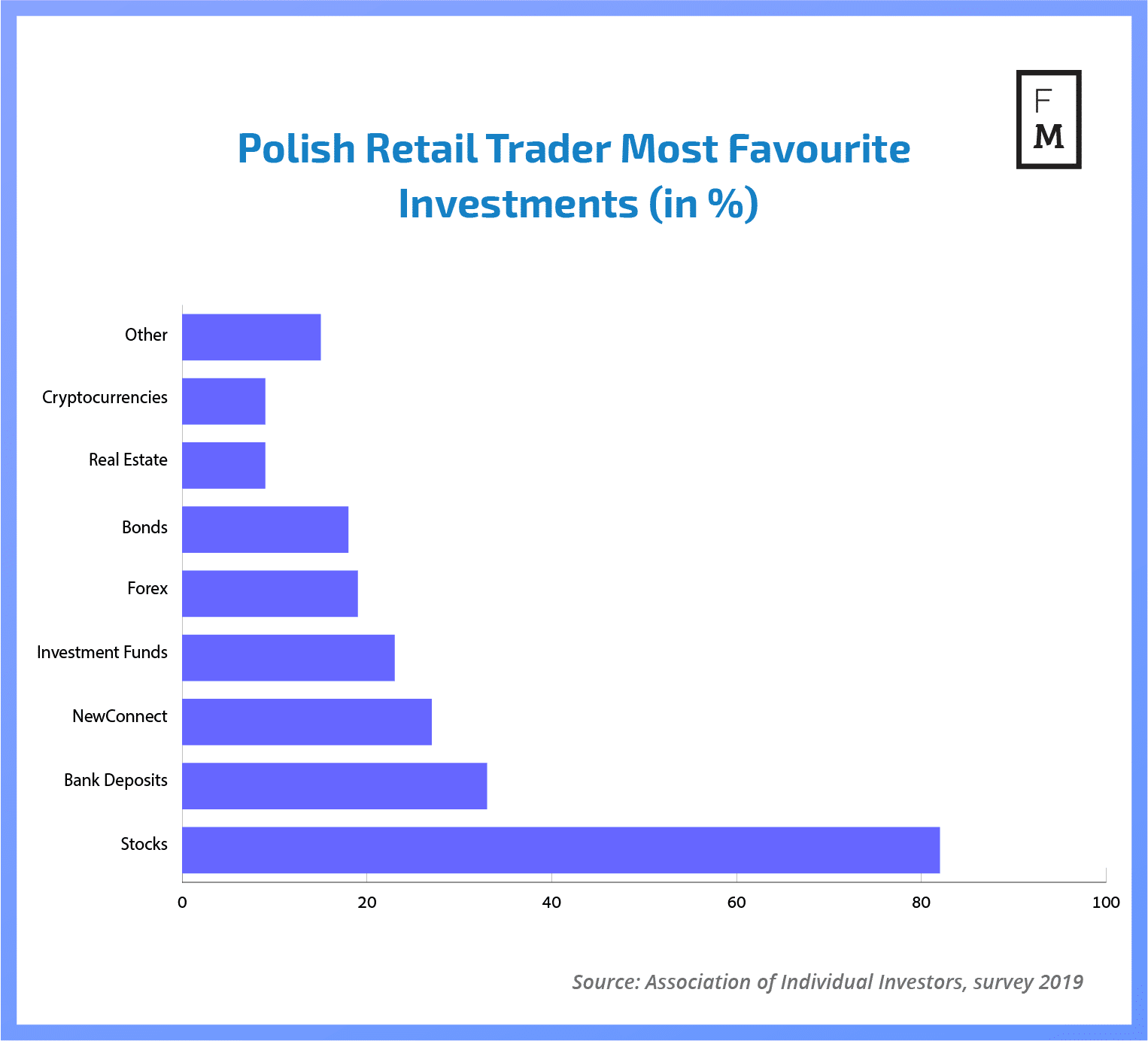
Poland is one of the 40 largest countries in the world in terms of population and, according to data from August 2020, has over 38 million citizens. However, the free market economy has only been developing in Poland for 30 years, previously under the domination of the communists. Thus, economic awareness is relatively low, as is the number of active retail investors. This year, the number of brokerage accounts maintained by Polish residents achieved a record of 1.3 million. While in comparison to other European nations this number might be modest, they are rising rapidly.
For years, Poland has been associated with a country that has been very proactive in regulating the derivatives market. First, in 2015, the local Polish Financial Services Authority (PFSA), to protect investors from exotic brokers' offers and very high Leverage, introduced its limitation to 100:1. Three years later, as the only EU28 country, it opposed the European Securities Markets Authority (ESMA) proposal to limit the leverage to a maximum of 30:1. Then it introduced its regulations, which led to the creation of an independent category of ‘experienced trader’. Retail customers who can confirm their market knowledge and experience can use more attractive trading conditions.
Polish FX/CFD Market Grows but XTB Is Confident of Its Dominant Position
In the Polish Forex market, apart from XTB and TMS Brokers, only a few local players stand out. These include bank brokers: mForex from mBank, BossaFX from BOŚ BANK and several foreign entities. The recent addition of OANDA, AvaTrade, ATFX and Plus500 may shake up the current environment, which was consolidating it strongly in recent years.
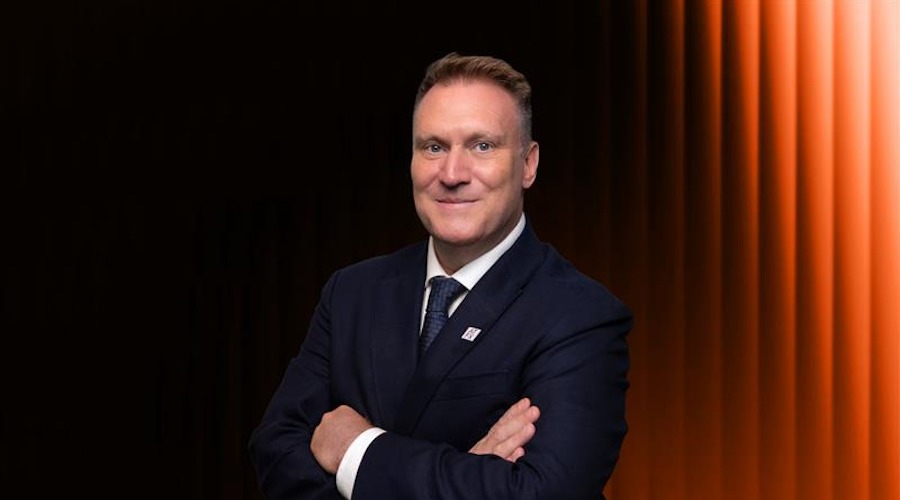
Finance Magnates asked the president of the largest Polish broker, XTB, for his opinion on the subject. Omar Arnaout pointed out that the Polish market is one of the most competitive markets in Central Europe, and it is comprised of both local and international companies. For XTB it is important to maintain the position of the market leader, and Mr. Arnaout is confident that his company has ‘the know-how and the experience to do so’.
“After the introduction of the product intervention in 2018, the industry has become very challenging, especially for small and medium-sized brokers, so I believe that generally, and regardless of whether we are talking about Poland or any other place in the world, only the biggest and most optimized companies will be able to grow. It is one of our key goals that we do not only want to be one of the biggest CFD and stock providers in Europe but also on a global scale. This is why we recently started our partnership with our new brand ambassador, Jose Mourinho - one of the world's most successful football managers,” Mr. Arnaout stated.
To get the full article and the bigger-picture on FX/CFD industry in Poland, get our latest Quarterly Intelligence Report.
The Polish FX/CFD market, which is one of the most developed retail markets in Europe with an established position and strong brokerage brands, has attracted the interest of several international brokers over the past few months, including among others AvaTrade, Plus500, OANDA and ATFX.
Poland: A Country, with Even Bigger Retail Trading Potential
Poland is one of the 40 largest countries in the world in terms of population and, according to data from August 2020, has over 38 million citizens. However, the free market economy has only been developing in Poland for 30 years, previously under the domination of the communists. Thus, economic awareness is relatively low, as is the number of active retail investors. This year, the number of brokerage accounts maintained by Polish residents achieved a record of 1.3 million. While in comparison to other European nations this number might be modest, they are rising rapidly.
For years, Poland has been associated with a country that has been very proactive in regulating the derivatives market. First, in 2015, the local Polish Financial Services Authority (PFSA), to protect investors from exotic brokers' offers and very high Leverage, introduced its limitation to 100:1. Three years later, as the only EU28 country, it opposed the European Securities Markets Authority (ESMA) proposal to limit the leverage to a maximum of 30:1. Then it introduced its regulations, which led to the creation of an independent category of ‘experienced trader’. Retail customers who can confirm their market knowledge and experience can use more attractive trading conditions.
Polish FX/CFD Market Grows but XTB Is Confident of Its Dominant Position
In the Polish Forex market, apart from XTB and TMS Brokers, only a few local players stand out. These include bank brokers: mForex from mBank, BossaFX from BOŚ BANK and several foreign entities. The recent addition of OANDA, AvaTrade, ATFX and Plus500 may shake up the current environment, which was consolidating it strongly in recent years.
Finance Magnates asked the president of the largest Polish broker, XTB, for his opinion on the subject. Omar Arnaout pointed out that the Polish market is one of the most competitive markets in Central Europe, and it is comprised of both local and international companies. For XTB it is important to maintain the position of the market leader, and Mr. Arnaout is confident that his company has ‘the know-how and the experience to do so’.
“After the introduction of the product intervention in 2018, the industry has become very challenging, especially for small and medium-sized brokers, so I believe that generally, and regardless of whether we are talking about Poland or any other place in the world, only the biggest and most optimized companies will be able to grow. It is one of our key goals that we do not only want to be one of the biggest CFD and stock providers in Europe but also on a global scale. This is why we recently started our partnership with our new brand ambassador, Jose Mourinho - one of the world's most successful football managers,” Mr. Arnaout stated.
To get the full article and the bigger-picture on FX/CFD industry in Poland, get our latest Quarterly Intelligence Report.
Sylwester is a graduate of the Warsaw School of Economics, holding an MA in Finance and Banking. He currently serves as Head of the Insights & Reporting Hub at Finance Magnates. He is also a former minority partner in an NFA-registered US forex broker and has been involved in numerous forex and trading industry projects since 2003.
Privately, Sylwester is a husband and father to a 7-year-old daughter, as well as an enthusiast of trading and Formula 1.
Italy’s Consob Tightens Net on AI-Fueled Scams With Fresh Website Bans
FP Markets Winner Spotlight 🏆 | Global Broker of the Year 2025 #Trading #Broker #Innovation #Shorts
FP Markets Winner Spotlight 🏆 | Global Broker of the Year 2025 #Trading #Broker #Innovation #Shorts
FP Markets takes the spotlight as Global Broker of the Year 2025 at the Finance Magnates Awards.
Martin Stoilov, Head of Client Experience, shares that trust, innovation, and people played a key role in the company’s success, supported by a strong foundation of integrity and client-centricity.
Following this milestone, FP Markets continues to focus on growth, technology investment, and its core values of transparency and excellence.
👉 Be part of FM Awards 2026: https://awards.financemagnates.com/#nominate
FP Markets takes the spotlight as Global Broker of the Year 2025 at the Finance Magnates Awards.
Martin Stoilov, Head of Client Experience, shares that trust, innovation, and people played a key role in the company’s success, supported by a strong foundation of integrity and client-centricity.
Following this milestone, FP Markets continues to focus on growth, technology investment, and its core values of transparency and excellence.
👉 Be part of FM Awards 2026: https://awards.financemagnates.com/#nominate
In this video, we review @HolaPrimeMarketsOfficial, a multi-asset forex and CFDs broker offering different account types, trading platforms, and flexible trading conditions.
We cover the broker’s overall offering, including account options, trading environment, platforms like MT4 and MT5, and additional services such as managed accounts and fast withdrawals.
Watch the full video to see if Hola Prime Markets fits your trading needs.
📣 Stay up to date with the latest in finance and trading. Follow Finance Magnates for industry news, insights, and global event coverage.
Connect with us:
🔗 LinkedIn: /financemagnates
👍 Facebook: /financemagnates
📸 Instagram: https://www.instagram.com/financemagnates
🐦 X: https://x.com/financemagnates
🎥 TikTok: https://www.tiktok.com/tag/financemagnates
▶️ YouTube: /@financemagnates_official
#HolaPrime #ForexBroker #CFDTrading #FinanceMagnates #Trading #Forex #BrokerReview
In this video, we review @HolaPrimeMarketsOfficial, a multi-asset forex and CFDs broker offering different account types, trading platforms, and flexible trading conditions.
We cover the broker’s overall offering, including account options, trading environment, platforms like MT4 and MT5, and additional services such as managed accounts and fast withdrawals.
Watch the full video to see if Hola Prime Markets fits your trading needs.
📣 Stay up to date with the latest in finance and trading. Follow Finance Magnates for industry news, insights, and global event coverage.
Connect with us:
🔗 LinkedIn: /financemagnates
👍 Facebook: /financemagnates
📸 Instagram: https://www.instagram.com/financemagnates
🐦 X: https://x.com/financemagnates
🎥 TikTok: https://www.tiktok.com/tag/financemagnates
▶️ YouTube: /@financemagnates_official
#HolaPrime #ForexBroker #CFDTrading #FinanceMagnates #Trading #Forex #BrokerReview
Hola Prime Review: What You Need to Know | Full Breakdown by Finance Magnates
Hola Prime Review: What You Need to Know | Full Breakdown by Finance Magnates
In this video, we review @HolaPrime_Global, a proprietary trading firm offering evaluation programs and performance-based payouts in simulated market environments.
We cover how the challenge model works, including account types, profit splits (up to 95%), trading rules, and what it takes to reach a funded account. You’ll also learn about available platforms like MT4, MT5, cTrader, and more, along with insights into payouts, support, and trading conditions.
Watch the full video to see if Hola Prime fits your trading style.
📣 Stay up to date with the latest in finance and trading. Follow Finance Magnates for industry news, insights, and global event coverage.
Connect with us:
🔗 LinkedIn: /financemagnates
👍 Facebook: /financemagnates
📸 Instagram: https://www.instagram.com/financemagnates
🐦 X: https://x.com/financemagnates
🎥 TikTok: https://www.tiktok.com/tag/financemagnates
▶️ YouTube: /@financemagnates_official
#HolaPrime #PropFirm #Trading #FinanceMagnates #Forex #FuturesTrading #TradingReview #PropFirmReview
In this video, we review @HolaPrime_Global, a proprietary trading firm offering evaluation programs and performance-based payouts in simulated market environments.
We cover how the challenge model works, including account types, profit splits (up to 95%), trading rules, and what it takes to reach a funded account. You’ll also learn about available platforms like MT4, MT5, cTrader, and more, along with insights into payouts, support, and trading conditions.
Watch the full video to see if Hola Prime fits your trading style.
📣 Stay up to date with the latest in finance and trading. Follow Finance Magnates for industry news, insights, and global event coverage.
Connect with us:
🔗 LinkedIn: /financemagnates
👍 Facebook: /financemagnates
📸 Instagram: https://www.instagram.com/financemagnates
🐦 X: https://x.com/financemagnates
🎥 TikTok: https://www.tiktok.com/tag/financemagnates
▶️ YouTube: /@financemagnates_official
#HolaPrime #PropFirm #Trading #FinanceMagnates #Forex #FuturesTrading #TradingReview #PropFirmReview
Axi Winner Spotlight 🏆 | Global Most Innovative Broker 2025 #Innovation #Trading #Fintech #Broker
Axi Winner Spotlight 🏆 | Global Most Innovative Broker 2025 #Innovation #Trading #Fintech #Broker
Axi takes the spotlight at the Finance Magnates Awards, winning Global Most Innovative Broker 2025.
Olivia Xenofontos and Ivanna Openko share how the team will feel: proud, motivated, and ready to keep delivering.
They also describe the night as well-organized, focused, and enjoyable for all.
👉 Be part of FM Awards 2026.
Axi takes the spotlight at the Finance Magnates Awards, winning Global Most Innovative Broker 2025.
Olivia Xenofontos and Ivanna Openko share how the team will feel: proud, motivated, and ready to keep delivering.
They also describe the night as well-organized, focused, and enjoyable for all.
👉 Be part of FM Awards 2026.
Recognition that matters.
Built on transparency.
Driven by the industry.
The Finance Magnates Awards 2026.
Nominations are now open.
🔗 https://awards.financemagnates.com/?utm_source=SM&utm_medium=social&utm_campaign=recognition-matters
Recognition that matters.
Built on transparency.
Driven by the industry.
The Finance Magnates Awards 2026.
Nominations are now open.
🔗 https://awards.financemagnates.com/?utm_source=SM&utm_medium=social&utm_campaign=recognition-matters