
Former RBS trader Mark Barnes on how to most effectively commit your funds to charity.
Pixabay
In these times of change we are all starting to give second thought to some of our long standing beliefs.
This year is proving to be anything but a regular one when it comes to the direction in which the wind of change blows. What is clear is that some of the political and economical models we have been using for the past several decades are not working.
Being able to donate in this way has made me donate more and donate more effectively
With a big part of the financial industry generating substantial profits over the past years, only a relatively small proportion of the population has benefited. The rise of Bernie Sanders and the calls for the wealthiest people to start giving more to the not so fortunate is no accident.
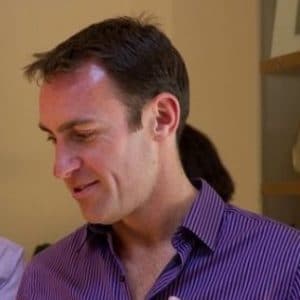
Mark Barnes, Investor and Charitable Causes Activist, Source: LinkedIn
Meet Mark Barnes, former trader at the Royal Bank of Scotland (RBS), has decided to apply what he has learned in the financial markets to the world of charity. After years of extensive coverage of the financial industry he has committed to becoming a Member of the Advisory Board of Giving What We Can, a community dedicated to changing the world via effective and significant donations.
Using scientific methods developed to trade FX to decide how to donate funds to charity
"Being able to donate in this way has made me donate more and donate more effectively, which in turn has made my financial career more valuable and myself more happy,” Mr Barnes shared with Finance Magnates. He also gave an extensive interview about the causes and the prospects for the financial industry to commit more funds to charitable purposes.
In what ways has your career in investment banking led you to the board of Giving What We Can, and committing to charity in general?
During my investment banking career, I rigorously used data and mathematical models in helping to assess trading and investment decisions. This scientific approach to business was the bedrock of my career and I wanted to use the very same methods when deciding how to donate to charity. At first it was difficult to find charities that supported their claims with rigorous scientific analysis, but then I came across Giving What We Can. They use evidence, careful analysis and cutting edge research drawn from economics, statistics and global health to determine which are the most effective charities. I was so sold by the work they did that I took the GWWC pledge to donate 10% of my earnings to effective charities and joined their advisory board.
Considering the huge scale of institutional trading, are financial services firms doing enough to give back?
There is no need for nearly half a million people to die of malaria per year. By providing children with long lasting insecticide treated bednets, we have a practical and affordable solution. I believe both individuals and firms can do more to help solve these problems. Financial firms, in particular, often have the financial muscle and strong interconnectivity amongst relatively well-paid staff to enable them to make greater difference than they currently do.
How can individuals who work in financial services make a difference in charity?
Finance professionals have extraordinary power to address issues such as global poverty and health. Financial services companies have significant resources, influence, and expertise, all of which can be leveraged for these causes by employees who want to engage. Key examples include donating through payroll, inspiring colleagues to do the same, and encouraging their firm to select a highly effective charity partner. They can also ensure that a global view of why effectiveness matters is firmly on the agenda for those at management and board level, so those at the top are also aware of how much of a difference they can make. I'll be covering these areas in more detail in my speech.
Do donor-advised and giving accounts of large investments (such as fidelity) constitute a good solution for charity?
Donor-advised and giving accounts are great at raising awareness and getting individuals to think about charity. Being introduced to such an account is often the trigger for an individual to begin donating to a particular cause. However in my experience they are not as rigorous as they could be in measuring the effectiveness of the causes and charities they support. Giving What We Can has found that a great charity can be 1,000 times more effective than merely a decent charity and so assessing this correctly is very important. At Giving What We Can we continue to engage with these donor-advised funds to try and ensure they are focusing on the most effective causes.
What kind of help can Giving What We Can provide to financial services wishing to optimize their charitable donations?
Giving What We Can and our parent organization The Centre for Effective Altruism offer free advice to companies and individuals on how to maximize the effectiveness of their charitable giving. This ranges from informal conversations with individuals about where they can give right up to large-scale philanthropic advice for trusts, foundations, and HNWI. We can also set up payroll donation schemes for free at UK firms, and can come in and speak about effective giving within companies and at industry events.
E-mail george@centreforeffectivealtruism.org to find out more, and read about Our Methodology for evaluating charities for an overview.
In these times of change we are all starting to give second thought to some of our long standing beliefs.
This year is proving to be anything but a regular one when it comes to the direction in which the wind of change blows. What is clear is that some of the political and economical models we have been using for the past several decades are not working.
Being able to donate in this way has made me donate more and donate more effectively
With a big part of the financial industry generating substantial profits over the past years, only a relatively small proportion of the population has benefited. The rise of Bernie Sanders and the calls for the wealthiest people to start giving more to the not so fortunate is no accident.
Mark Barnes, Investor and Charitable Causes Activist, Source: LinkedIn
Meet Mark Barnes, former trader at the Royal Bank of Scotland (RBS), has decided to apply what he has learned in the financial markets to the world of charity. After years of extensive coverage of the financial industry he has committed to becoming a Member of the Advisory Board of Giving What We Can, a community dedicated to changing the world via effective and significant donations.
Using scientific methods developed to trade FX to decide how to donate funds to charity
"Being able to donate in this way has made me donate more and donate more effectively, which in turn has made my financial career more valuable and myself more happy,” Mr Barnes shared with Finance Magnates. He also gave an extensive interview about the causes and the prospects for the financial industry to commit more funds to charitable purposes.
In what ways has your career in investment banking led you to the board of Giving What We Can, and committing to charity in general?
During my investment banking career, I rigorously used data and mathematical models in helping to assess trading and investment decisions. This scientific approach to business was the bedrock of my career and I wanted to use the very same methods when deciding how to donate to charity. At first it was difficult to find charities that supported their claims with rigorous scientific analysis, but then I came across Giving What We Can. They use evidence, careful analysis and cutting edge research drawn from economics, statistics and global health to determine which are the most effective charities. I was so sold by the work they did that I took the GWWC pledge to donate 10% of my earnings to effective charities and joined their advisory board.
Considering the huge scale of institutional trading, are financial services firms doing enough to give back?
There is no need for nearly half a million people to die of malaria per year. By providing children with long lasting insecticide treated bednets, we have a practical and affordable solution. I believe both individuals and firms can do more to help solve these problems. Financial firms, in particular, often have the financial muscle and strong interconnectivity amongst relatively well-paid staff to enable them to make greater difference than they currently do.
How can individuals who work in financial services make a difference in charity?
Finance professionals have extraordinary power to address issues such as global poverty and health. Financial services companies have significant resources, influence, and expertise, all of which can be leveraged for these causes by employees who want to engage. Key examples include donating through payroll, inspiring colleagues to do the same, and encouraging their firm to select a highly effective charity partner. They can also ensure that a global view of why effectiveness matters is firmly on the agenda for those at management and board level, so those at the top are also aware of how much of a difference they can make. I'll be covering these areas in more detail in my speech.
Do donor-advised and giving accounts of large investments (such as fidelity) constitute a good solution for charity?
Donor-advised and giving accounts are great at raising awareness and getting individuals to think about charity. Being introduced to such an account is often the trigger for an individual to begin donating to a particular cause. However in my experience they are not as rigorous as they could be in measuring the effectiveness of the causes and charities they support. Giving What We Can has found that a great charity can be 1,000 times more effective than merely a decent charity and so assessing this correctly is very important. At Giving What We Can we continue to engage with these donor-advised funds to try and ensure they are focusing on the most effective causes.
What kind of help can Giving What We Can provide to financial services wishing to optimize their charitable donations?
Giving What We Can and our parent organization The Centre for Effective Altruism offer free advice to companies and individuals on how to maximize the effectiveness of their charitable giving. This ranges from informal conversations with individuals about where they can give right up to large-scale philanthropic advice for trusts, foundations, and HNWI. We can also set up payroll donation schemes for free at UK firms, and can come in and speak about effective giving within companies and at industry events.
E-mail george@centreforeffectivealtruism.org to find out more, and read about Our Methodology for evaluating charities for an overview.
“Prediction Markets Are a Vital Source of Information for Our Customers”: IBKR’s Founder Says
Featured Videos
FM Daily Brief - 22 May 2026
You are listening to Finance Magnates Daily Brief. Brought to you by Finance Magnates Intelligence. It’s Friday, the twenty-second of May 2026, and these are our main stories: Interactive Brokers expands its view of prediction markets as an information tool for investors. US prop firms move closer to CFTC oversight structures. And a Polish fintech CEO is detained in the United States.
You are listening to Finance Magnates Daily Brief. Brought to you by Finance Magnates Intelligence. Today's Thursday, the twenty first of May 2026, and these are our main stories: CFD broker CMC Markets and Binance both target SpaceX exposure on the same day, IG Japan pauses retail vanilla options trading, and prediction markets expand across brokers and exchanges.
FM Daily Brief - 20 May 2026
Today’s lead: CFD brokers show a wide divergence in per-account trading activity. Also ahead, a deep dive into IG Group and XTB’s latest numbers. It's Wednesday, 20 May 2026. You're listening to the Finance Magnates Daily Brief.
FM Daily Brief - 19 May 2026
Today's lead: IG Group has lifted its full-year revenue outlook after a strong quarter. Also ahead, Swissquote sets a date for its one-to-ten share split. And CMC Markets’ UK head says neobanks are becoming trading distributors. It’s Tuesday, 19 May 2026. You’re listening to the Finance Magnates Daily Brief.
FM Daily Brief - 18 May 2026
Today’s lead: Cyprus authorities detain suspects in a forex-linked criminal probe. Also ahead: Kraken’s IPO timeline slips further, and CMC Markets expands its Spectre product to retail clients. It’s Monday, 18 May 2026. You’re listening to the Finance Magnates Daily Brief.