"Larger brokers are increasingly looking at data-driven companies as a solution."
Finance Magnates
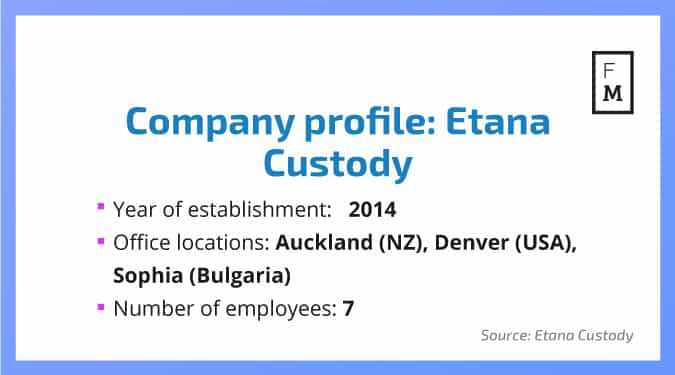
Etana Custody is a firm that offers custodian services, payment solutions and administrative back office services. Finance Magnates sat down with CEO Brandon Russell to discuss the industry and his firm's place within it.
Please tell about yourself and how you reached your current role
I started with Liberty Life Group in the early '90s with a focus on investment products before moving into forex markets as a trader with a London based hedge fund. In 2004, I moved to New York and shortly thereafter found myself wound up in the Refco debacle, which in hindsight, would prove to be a valuable lesson for the future.
Having worked closely with startup brokers for over a decade and having a very good feel for the growing pains they experience, I co-founded Etana Custody in 2014 with the goal of providing accountability, transparency and credibility to the retail FX market.
What are your goals for the company in the next few years?
Etana has a rather altruistic ethos. The goal is to provide a 'safe space' by acting as a mediator of sorts between various market participants. We currently face traders (end-users), brokers, liquidity providers and introducing brokers.
We realized early that to price our model on trading volumes would be counterproductive to our ethos and would create an additional conflict of interest where there is another party participating in the volume. Ultimately, this simply makes it harder for traders to be profitable, a task that is already a challenge for them.
Etana does not have any direct competition at this point
Consequently, we settled on a fee based model which affords every participant on our platform the ability to budget their costs. It’s certainly not the most efficient model for Etana to make money but our goal is simply to get as many traders using our platform where they will be able to select from as many brokers as they like that are on the platform through our e-wallet platform, which is designed to reduce fees associated with traditional account funding mechanisms.
What do you think sets you apart from the competition?
Custodians are not common at all in the retail side of forex. Historically, custodians are associated with wealthy individuals or institutional funds. As such, Etana does not have any direct competition at this point.
We do see regulation coming into play that would mandate brokers to use custodians and we expect with that will come direct competition. Right now, traditional custodians would have to figure how to price themselves in a manner that is affordable to retail traders. Etana has already figured this out.
binary options...don’t fit the definition of a financial product
The other service on offer is Etana acts as an aggregator of payment providers, which affords brokers a gateway for their traders to fund their custody accounts. Etana passes the volume discounts directly to brokers and traders ensuring a more affordable mechanism to fund trading accounts.
Etana delivers its services through a unique propriety online platform which allows various market participants to seamlessly interact with each other. This technology is linked directly to the trading server of the broker and is updated on a 20-minute delay which allows Etana to detect anomalies and verify trade activity.
How do you view the current state of the industry?
No one likes to be labeled. Unfortunately, retail forex hasn’t developed a reputable reputation. This is evidenced in brokers of all sizes acting against client interests and in many instances regulatory requirements. Some brokers struggle to maintain banking relationships in many cases due to misrepresenting their business model. In other scenarios, brokers circumvent regulatory requirements.
The UK’s Financial Conduct Authority has been really open to collaboration
Etana took a view early on with binary options, determining that they don’t fit the definition of a financial product and that the risk associated with them was not aligned with our internal philosophy. We do see regulators continuing to tighten and we perceive this as a welcome development as the evidence for brokers to self-regulate is rather scarce.
Of course, there are many providers that do align themselves with best practices and meet regulatory requirements but the polarization represented in this reality is what creates a negative perception and is one that Etana seeks to address.
What new fields or opportunities do you see as growth potential in the market?
We are seeing regulators embracing new technology aimed at assisting the regulatory environment. The UK’s Financial Conduct Authority has been really open to collaboration with companies who are able to bring market participants together and act as agents of change.
Larger brokers are increasingly looking at data-driven companies as a solution. We perceive that this will remain a driver for the next few years as regtech addresses the efficiency, stability and transparency that everyone from traders to brokers wants.
Etana Custody is a firm that offers custodian services, payment solutions and administrative back office services. Finance Magnates sat down with CEO Brandon Russell to discuss the industry and his firm's place within it.
Please tell about yourself and how you reached your current role
I started with Liberty Life Group in the early '90s with a focus on investment products before moving into forex markets as a trader with a London based hedge fund. In 2004, I moved to New York and shortly thereafter found myself wound up in the Refco debacle, which in hindsight, would prove to be a valuable lesson for the future.
Having worked closely with startup brokers for over a decade and having a very good feel for the growing pains they experience, I co-founded Etana Custody in 2014 with the goal of providing accountability, transparency and credibility to the retail FX market.
What are your goals for the company in the next few years?
Etana has a rather altruistic ethos. The goal is to provide a 'safe space' by acting as a mediator of sorts between various market participants. We currently face traders (end-users), brokers, liquidity providers and introducing brokers.
We realized early that to price our model on trading volumes would be counterproductive to our ethos and would create an additional conflict of interest where there is another party participating in the volume. Ultimately, this simply makes it harder for traders to be profitable, a task that is already a challenge for them.
Etana does not have any direct competition at this point
Consequently, we settled on a fee based model which affords every participant on our platform the ability to budget their costs. It’s certainly not the most efficient model for Etana to make money but our goal is simply to get as many traders using our platform where they will be able to select from as many brokers as they like that are on the platform through our e-wallet platform, which is designed to reduce fees associated with traditional account funding mechanisms.
What do you think sets you apart from the competition?
Custodians are not common at all in the retail side of forex. Historically, custodians are associated with wealthy individuals or institutional funds. As such, Etana does not have any direct competition at this point.
We do see regulation coming into play that would mandate brokers to use custodians and we expect with that will come direct competition. Right now, traditional custodians would have to figure how to price themselves in a manner that is affordable to retail traders. Etana has already figured this out.
binary options...don’t fit the definition of a financial product
The other service on offer is Etana acts as an aggregator of payment providers, which affords brokers a gateway for their traders to fund their custody accounts. Etana passes the volume discounts directly to brokers and traders ensuring a more affordable mechanism to fund trading accounts.
Etana delivers its services through a unique propriety online platform which allows various market participants to seamlessly interact with each other. This technology is linked directly to the trading server of the broker and is updated on a 20-minute delay which allows Etana to detect anomalies and verify trade activity.
How do you view the current state of the industry?
No one likes to be labeled. Unfortunately, retail forex hasn’t developed a reputable reputation. This is evidenced in brokers of all sizes acting against client interests and in many instances regulatory requirements. Some brokers struggle to maintain banking relationships in many cases due to misrepresenting their business model. In other scenarios, brokers circumvent regulatory requirements.
The UK’s Financial Conduct Authority has been really open to collaboration
Etana took a view early on with binary options, determining that they don’t fit the definition of a financial product and that the risk associated with them was not aligned with our internal philosophy. We do see regulators continuing to tighten and we perceive this as a welcome development as the evidence for brokers to self-regulate is rather scarce.
Of course, there are many providers that do align themselves with best practices and meet regulatory requirements but the polarization represented in this reality is what creates a negative perception and is one that Etana seeks to address.
What new fields or opportunities do you see as growth potential in the market?
We are seeing regulators embracing new technology aimed at assisting the regulatory environment. The UK’s Financial Conduct Authority has been really open to collaboration with companies who are able to bring market participants together and act as agents of change.
Larger brokers are increasingly looking at data-driven companies as a solution. We perceive that this will remain a driver for the next few years as regtech addresses the efficiency, stability and transparency that everyone from traders to brokers wants.
iFOREX Adds Saudi and South Korean Equity CFDs as IPO Is Delayed
Featured Videos
Executive Interview | Charlotte Bullock | Chief Product Officer, Bank of London | FMLS:25
In this interview, we sat down with Charlotte Bullock, Head of Product at The Bank of London, previously at SAP and now shaping product at one of the sector’s most ambitious new banking players.
Charlotte reflects on the Summit so far and talks about the culture inside fintech banks today. We look at the pressures that come with scaling, and how firms can hold onto the nimble approach that made them stand out early on.
We also cover the state of payments ahead of her appearance on the payments roundtable: the blockages financial firms face, the areas that still need fixing, and what a realistic solution looks like in 2026.
In this interview, we sat down with Charlotte Bullock, Head of Product at The Bank of London, previously at SAP and now shaping product at one of the sector’s most ambitious new banking players.
Charlotte reflects on the Summit so far and talks about the culture inside fintech banks today. We look at the pressures that come with scaling, and how firms can hold onto the nimble approach that made them stand out early on.
We also cover the state of payments ahead of her appearance on the payments roundtable: the blockages financial firms face, the areas that still need fixing, and what a realistic solution looks like in 2026.
In this interview, we sat down with Charlotte Bullock, Head of Product at The Bank of London, previously at SAP and now shaping product at one of the sector’s most ambitious new banking players.
Charlotte reflects on the Summit so far and talks about the culture inside fintech banks today. We look at the pressures that come with scaling, and how firms can hold onto the nimble approach that made them stand out early on.
We also cover the state of payments ahead of her appearance on the payments roundtable: the blockages financial firms face, the areas that still need fixing, and what a realistic solution looks like in 2026.
In this interview, we sat down with Charlotte Bullock, Head of Product at The Bank of London, previously at SAP and now shaping product at one of the sector’s most ambitious new banking players.
Charlotte reflects on the Summit so far and talks about the culture inside fintech banks today. We look at the pressures that come with scaling, and how firms can hold onto the nimble approach that made them stand out early on.
We also cover the state of payments ahead of her appearance on the payments roundtable: the blockages financial firms face, the areas that still need fixing, and what a realistic solution looks like in 2026.
In this conversation, we sit down with Drew Niv, CSO at ATFX Connect and one of the most influential figures in modern FX.
We speak about market structure, the institutional view on liquidity, and the sharp rise of prop trading, a sector Drew has been commenting on in recent months. Drew explains why he once dismissed prop trading, why his view changed, and what he now thinks the model means for brokers, clients and risk managers.
We explore subscription-fee dependency, the high reneging rate, and the long-term challenge: how brokers can build a more stable and honest version of the model. Drew also talks about the traffic advantage standalone prop firms have built and why brokers may still win in the long run if they take the right approach.
In this conversation, we sit down with Drew Niv, CSO at ATFX Connect and one of the most influential figures in modern FX.
We speak about market structure, the institutional view on liquidity, and the sharp rise of prop trading, a sector Drew has been commenting on in recent months. Drew explains why he once dismissed prop trading, why his view changed, and what he now thinks the model means for brokers, clients and risk managers.
We explore subscription-fee dependency, the high reneging rate, and the long-term challenge: how brokers can build a more stable and honest version of the model. Drew also talks about the traffic advantage standalone prop firms have built and why brokers may still win in the long run if they take the right approach.
In this conversation, we sit down with Drew Niv, CSO at ATFX Connect and one of the most influential figures in modern FX.
We speak about market structure, the institutional view on liquidity, and the sharp rise of prop trading, a sector Drew has been commenting on in recent months. Drew explains why he once dismissed prop trading, why his view changed, and what he now thinks the model means for brokers, clients and risk managers.
We explore subscription-fee dependency, the high reneging rate, and the long-term challenge: how brokers can build a more stable and honest version of the model. Drew also talks about the traffic advantage standalone prop firms have built and why brokers may still win in the long run if they take the right approach.
In this conversation, we sit down with Drew Niv, CSO at ATFX Connect and one of the most influential figures in modern FX.
We speak about market structure, the institutional view on liquidity, and the sharp rise of prop trading, a sector Drew has been commenting on in recent months. Drew explains why he once dismissed prop trading, why his view changed, and what he now thinks the model means for brokers, clients and risk managers.
We explore subscription-fee dependency, the high reneging rate, and the long-term challenge: how brokers can build a more stable and honest version of the model. Drew also talks about the traffic advantage standalone prop firms have built and why brokers may still win in the long run if they take the right approach.
In this conversation, we sit down with Drew Niv, CSO at ATFX Connect and one of the most influential figures in modern FX.
We speak about market structure, the institutional view on liquidity, and the sharp rise of prop trading, a sector Drew has been commenting on in recent months. Drew explains why he once dismissed prop trading, why his view changed, and what he now thinks the model means for brokers, clients and risk managers.
We explore subscription-fee dependency, the high reneging rate, and the long-term challenge: how brokers can build a more stable and honest version of the model. Drew also talks about the traffic advantage standalone prop firms have built and why brokers may still win in the long run if they take the right approach.
In this conversation, we sit down with Drew Niv, CSO at ATFX Connect and one of the most influential figures in modern FX.
We speak about market structure, the institutional view on liquidity, and the sharp rise of prop trading, a sector Drew has been commenting on in recent months. Drew explains why he once dismissed prop trading, why his view changed, and what he now thinks the model means for brokers, clients and risk managers.
We explore subscription-fee dependency, the high reneging rate, and the long-term challenge: how brokers can build a more stable and honest version of the model. Drew also talks about the traffic advantage standalone prop firms have built and why brokers may still win in the long run if they take the right approach.
Executive Interview | Remonda Z. Kirketerp Møller| CEO & Founder Muinmos | FMLS:25
In this interview, Remonda Z. Kirketerp Møller, founder of Muinmos, breaks down the state of AI in regtech and what responsible adoption really looks like for brokers. We talk about rising fragmentation, the pressures around compliance accuracy, and why most firms are still in the early stages of AI maturity.
Ramanda also shares insights on regulator sandboxes, shifting expectations around accountability, and the current reality of MiCA licensing and passporting in Europe.
A concise look at where compliance, onboarding, and AI-driven processes are heading next.
In this interview, Remonda Z. Kirketerp Møller, founder of Muinmos, breaks down the state of AI in regtech and what responsible adoption really looks like for brokers. We talk about rising fragmentation, the pressures around compliance accuracy, and why most firms are still in the early stages of AI maturity.
Ramanda also shares insights on regulator sandboxes, shifting expectations around accountability, and the current reality of MiCA licensing and passporting in Europe.
A concise look at where compliance, onboarding, and AI-driven processes are heading next.
In this interview, Remonda Z. Kirketerp Møller, founder of Muinmos, breaks down the state of AI in regtech and what responsible adoption really looks like for brokers. We talk about rising fragmentation, the pressures around compliance accuracy, and why most firms are still in the early stages of AI maturity.
Ramanda also shares insights on regulator sandboxes, shifting expectations around accountability, and the current reality of MiCA licensing and passporting in Europe.
A concise look at where compliance, onboarding, and AI-driven processes are heading next.
In this interview, Remonda Z. Kirketerp Møller, founder of Muinmos, breaks down the state of AI in regtech and what responsible adoption really looks like for brokers. We talk about rising fragmentation, the pressures around compliance accuracy, and why most firms are still in the early stages of AI maturity.
Ramanda also shares insights on regulator sandboxes, shifting expectations around accountability, and the current reality of MiCA licensing and passporting in Europe.
A concise look at where compliance, onboarding, and AI-driven processes are heading next.
In this interview, Remonda Z. Kirketerp Møller, founder of Muinmos, breaks down the state of AI in regtech and what responsible adoption really looks like for brokers. We talk about rising fragmentation, the pressures around compliance accuracy, and why most firms are still in the early stages of AI maturity.
Ramanda also shares insights on regulator sandboxes, shifting expectations around accountability, and the current reality of MiCA licensing and passporting in Europe.
A concise look at where compliance, onboarding, and AI-driven processes are heading next.
In this interview, Remonda Z. Kirketerp Møller, founder of Muinmos, breaks down the state of AI in regtech and what responsible adoption really looks like for brokers. We talk about rising fragmentation, the pressures around compliance accuracy, and why most firms are still in the early stages of AI maturity.
Ramanda also shares insights on regulator sandboxes, shifting expectations around accountability, and the current reality of MiCA licensing and passporting in Europe.
A concise look at where compliance, onboarding, and AI-driven processes are heading next.
In this conversation, we speak with Aydin Bonabi, CEO and co-founder of Surveill, a firm focused on fraud detection and AI-driven compliance tools for financial institutions.
We start with Aydin’s view of the Summit and the challenges brokers face as fraud tactics grow more complex. He explains how firms can stay ahead through real-time signals, data patterns, and early-stage detection.
We also talk about AI training and why compliance teams often struggle to keep models accurate, fair, and aligned with regulatory expectations. Aydin breaks down what “good” AI training looks like inside a financial environment, including the importance of clean data, domain expertise, and human oversight.
He closes with a clear message: fraud is scaling, and so must the tools that stop it.
In this conversation, we speak with Aydin Bonabi, CEO and co-founder of Surveill, a firm focused on fraud detection and AI-driven compliance tools for financial institutions.
We start with Aydin’s view of the Summit and the challenges brokers face as fraud tactics grow more complex. He explains how firms can stay ahead through real-time signals, data patterns, and early-stage detection.
We also talk about AI training and why compliance teams often struggle to keep models accurate, fair, and aligned with regulatory expectations. Aydin breaks down what “good” AI training looks like inside a financial environment, including the importance of clean data, domain expertise, and human oversight.
He closes with a clear message: fraud is scaling, and so must the tools that stop it.
In this conversation, we speak with Aydin Bonabi, CEO and co-founder of Surveill, a firm focused on fraud detection and AI-driven compliance tools for financial institutions.
We start with Aydin’s view of the Summit and the challenges brokers face as fraud tactics grow more complex. He explains how firms can stay ahead through real-time signals, data patterns, and early-stage detection.
We also talk about AI training and why compliance teams often struggle to keep models accurate, fair, and aligned with regulatory expectations. Aydin breaks down what “good” AI training looks like inside a financial environment, including the importance of clean data, domain expertise, and human oversight.
He closes with a clear message: fraud is scaling, and so must the tools that stop it.
In this conversation, we speak with Aydin Bonabi, CEO and co-founder of Surveill, a firm focused on fraud detection and AI-driven compliance tools for financial institutions.
We start with Aydin’s view of the Summit and the challenges brokers face as fraud tactics grow more complex. He explains how firms can stay ahead through real-time signals, data patterns, and early-stage detection.
We also talk about AI training and why compliance teams often struggle to keep models accurate, fair, and aligned with regulatory expectations. Aydin breaks down what “good” AI training looks like inside a financial environment, including the importance of clean data, domain expertise, and human oversight.
He closes with a clear message: fraud is scaling, and so must the tools that stop it.
In this conversation, we speak with Aydin Bonabi, CEO and co-founder of Surveill, a firm focused on fraud detection and AI-driven compliance tools for financial institutions.
We start with Aydin’s view of the Summit and the challenges brokers face as fraud tactics grow more complex. He explains how firms can stay ahead through real-time signals, data patterns, and early-stage detection.
We also talk about AI training and why compliance teams often struggle to keep models accurate, fair, and aligned with regulatory expectations. Aydin breaks down what “good” AI training looks like inside a financial environment, including the importance of clean data, domain expertise, and human oversight.
He closes with a clear message: fraud is scaling, and so must the tools that stop it.
In this conversation, we speak with Aydin Bonabi, CEO and co-founder of Surveill, a firm focused on fraud detection and AI-driven compliance tools for financial institutions.
We start with Aydin’s view of the Summit and the challenges brokers face as fraud tactics grow more complex. He explains how firms can stay ahead through real-time signals, data patterns, and early-stage detection.
We also talk about AI training and why compliance teams often struggle to keep models accurate, fair, and aligned with regulatory expectations. Aydin breaks down what “good” AI training looks like inside a financial environment, including the importance of clean data, domain expertise, and human oversight.
He closes with a clear message: fraud is scaling, and so must the tools that stop it.
Exness expands its presence in Africa: Inside our interview with Paul Margarites in Cape Town
Finance Magnates met with Paul Margarites, Exness regional commercial director for Sub-Saharan Africa, during a visit to the firm’s office opening in Cape Town. In this talk, led by Andrea Badiola Mateos, Co-CEO at Finance Magnates, Paul shares views on the South African trading space, local user behavior, mobile trends, regulation, team growth, and how Exness plans to grow in more markets across the region. @Exness
Read the article at: https://www.financemagnates.com/thought-leadership/exness-expands-its-presence-in-africa-inside-our-interview-with-paul-margarites/
#exness #financemagnates #exnesstrading #CFDtrading #tradeonline #africanews #capetown
Finance Magnates met with Paul Margarites, Exness regional commercial director for Sub-Saharan Africa, during a visit to the firm’s office opening in Cape Town. In this talk, led by Andrea Badiola Mateos, Co-CEO at Finance Magnates, Paul shares views on the South African trading space, local user behavior, mobile trends, regulation, team growth, and how Exness plans to grow in more markets across the region. @Exness
Read the article at: https://www.financemagnates.com/thought-leadership/exness-expands-its-presence-in-africa-inside-our-interview-with-paul-margarites/
#exness #financemagnates #exnesstrading #CFDtrading #tradeonline #africanews #capetown
Finance Magnates met with Paul Margarites, Exness regional commercial director for Sub-Saharan Africa, during a visit to the firm’s office opening in Cape Town. In this talk, led by Andrea Badiola Mateos, Co-CEO at Finance Magnates, Paul shares views on the South African trading space, local user behavior, mobile trends, regulation, team growth, and how Exness plans to grow in more markets across the region. @Exness
Read the article at: https://www.financemagnates.com/thought-leadership/exness-expands-its-presence-in-africa-inside-our-interview-with-paul-margarites/
#exness #financemagnates #exnesstrading #CFDtrading #tradeonline #africanews #capetown
Finance Magnates met with Paul Margarites, Exness regional commercial director for Sub-Saharan Africa, during a visit to the firm’s office opening in Cape Town. In this talk, led by Andrea Badiola Mateos, Co-CEO at Finance Magnates, Paul shares views on the South African trading space, local user behavior, mobile trends, regulation, team growth, and how Exness plans to grow in more markets across the region. @Exness
Read the article at: https://www.financemagnates.com/thought-leadership/exness-expands-its-presence-in-africa-inside-our-interview-with-paul-margarites/
#exness #financemagnates #exnesstrading #CFDtrading #tradeonline #africanews #capetown
Finance Magnates met with Paul Margarites, Exness regional commercial director for Sub-Saharan Africa, during a visit to the firm’s office opening in Cape Town. In this talk, led by Andrea Badiola Mateos, Co-CEO at Finance Magnates, Paul shares views on the South African trading space, local user behavior, mobile trends, regulation, team growth, and how Exness plans to grow in more markets across the region. @Exness
Read the article at: https://www.financemagnates.com/thought-leadership/exness-expands-its-presence-in-africa-inside-our-interview-with-paul-margarites/
#exness #financemagnates #exnesstrading #CFDtrading #tradeonline #africanews #capetown
Finance Magnates met with Paul Margarites, Exness regional commercial director for Sub-Saharan Africa, during a visit to the firm’s office opening in Cape Town. In this talk, led by Andrea Badiola Mateos, Co-CEO at Finance Magnates, Paul shares views on the South African trading space, local user behavior, mobile trends, regulation, team growth, and how Exness plans to grow in more markets across the region. @Exness
Read the article at: https://www.financemagnates.com/thought-leadership/exness-expands-its-presence-in-africa-inside-our-interview-with-paul-margarites/
#exness #financemagnates #exnesstrading #CFDtrading #tradeonline #africanews #capetown