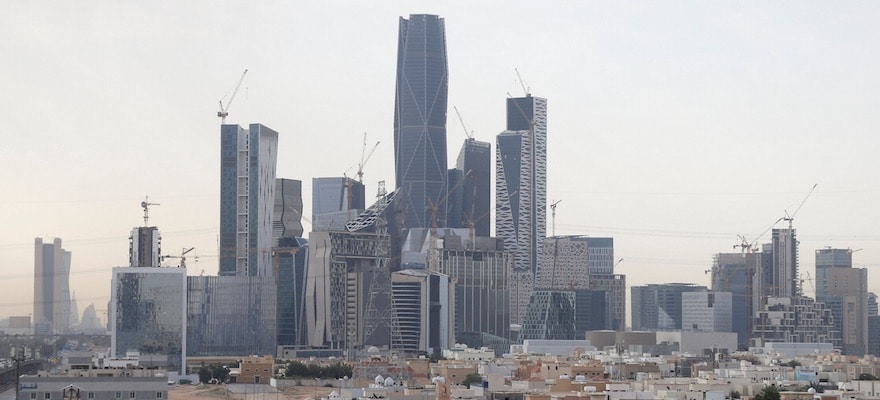
Brexit measures have impacted the company’s results from its home markets in the UK and Ireland.
Bloomberg
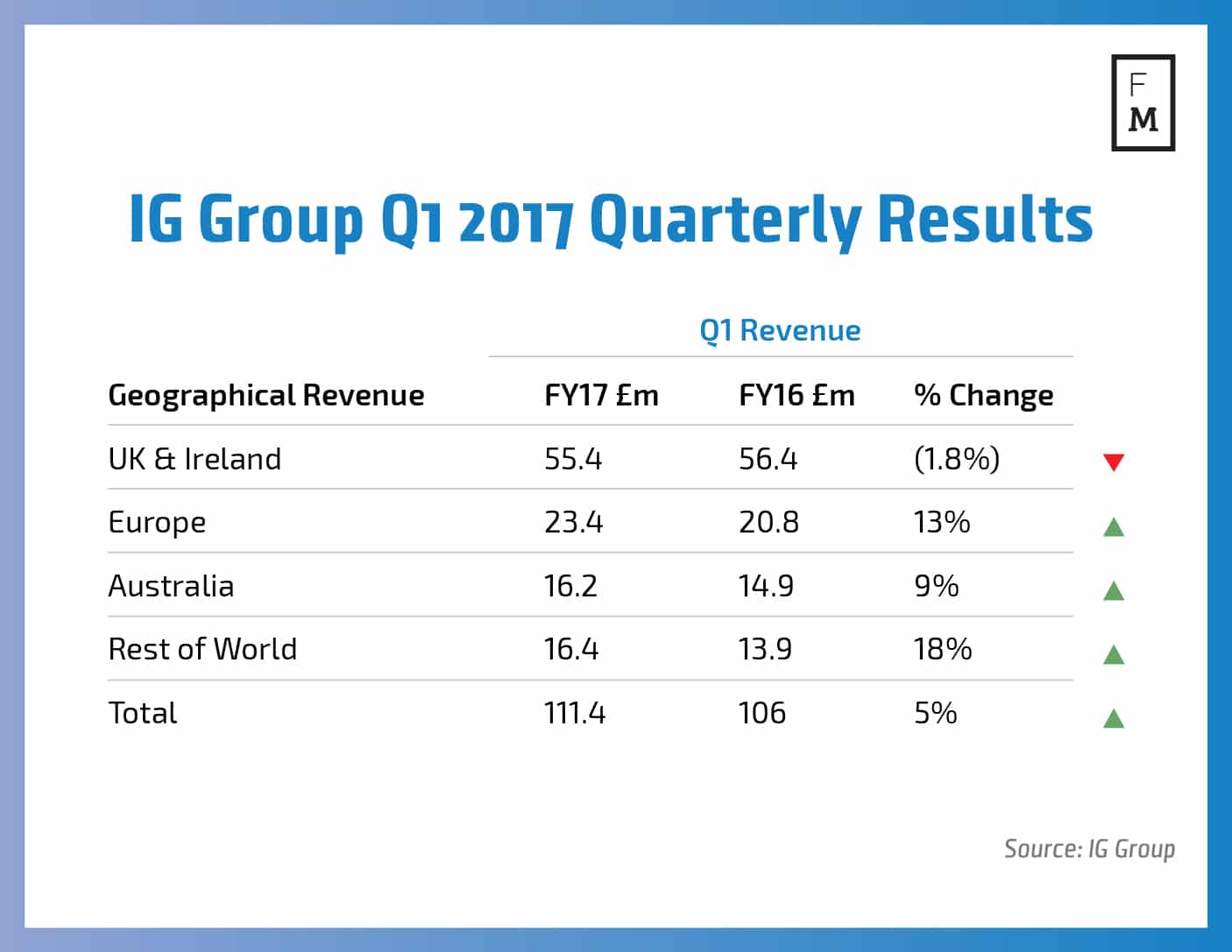
IG Group (LON:IGG) has just reported some financial metrics for the first quarter of fiscal 2016 in a trading statement. The company has announced that it generated a 5.1 per cent increase in revenues when compared to the same period last year, with the total figure amounting to £111.4 million ($145 million).
The result is rather positive due to the comparably lower Volatility during the period with the VIX index dropping to its lowest levels in July and August. With the first quarter of the year being relatively stagnant in terms of trading opportunities, IG Group's revenues from the UK and Ireland was very slightly lower when compared to Q1 of fiscal 2016.
The main reason for the decline were the measures that IG Group took in the run-up to the UK’s EU membership referendum. The company significantly raised margin requirements for its clients in order to protect the firm and its clients for the excessive volatility.
New and Active Clients Grow as Revenues Per User Decline Led by UK
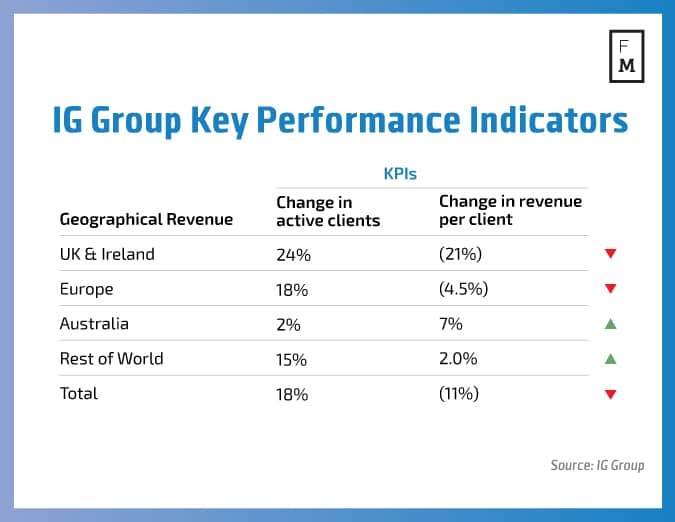
The amount of new clients that opened accounts with the company has remained strong during the period with the number of active accounts increasing by 18 per cent when compared to Q1 2016. That said, the revenues per client (RPC) metrics have declined by 11 per cent when compared to the same period last year.
Looking at the regional distribution in Key Performance Indicators (KPIs) the firm has seen the most of its user growth coming from its home market of the UK and Ireland at 24 per cent, however the decline in RPC was also more pronounced at 21 per cent.
Business was mostly flat to slightly higher in Australia with annual growth in active users increasing by 1.5 per cent in tandem with growth in RPC at 7.4 per cent.
Growth in Europe continued, with the number of active clients rising by 18 per cent, outpacing a decline in RPC totaling 4.5 per cent.
Recently the company launched its Limited Risk Account offering which aims to maximize long term value for clients who are not so adept at managing their risk/reward balances. IG Group also introduced stockbroking to Australia, which is set to increase the range of trading opportunities for its clients in the region and increase demand for the firm’s product.
The company also shared in its trading update that the level of new client first trades has increased substantially, outpacing last year’s figures by 70 per cent, a figure which is related to IG Group’s optimized marketing spending.
Late June was the peak for new client accounts openings as pre- and post-Brexit volatility roiled the markets.
IG Group (LON:IGG) has just reported some financial metrics for the first quarter of fiscal 2016 in a trading statement. The company has announced that it generated a 5.1 per cent increase in revenues when compared to the same period last year, with the total figure amounting to £111.4 million ($145 million).
The result is rather positive due to the comparably lower Volatility during the period with the VIX index dropping to its lowest levels in July and August. With the first quarter of the year being relatively stagnant in terms of trading opportunities, IG Group's revenues from the UK and Ireland was very slightly lower when compared to Q1 of fiscal 2016.
The main reason for the decline were the measures that IG Group took in the run-up to the UK’s EU membership referendum. The company significantly raised margin requirements for its clients in order to protect the firm and its clients for the excessive volatility.
New and Active Clients Grow as Revenues Per User Decline Led by UK
The amount of new clients that opened accounts with the company has remained strong during the period with the number of active accounts increasing by 18 per cent when compared to Q1 2016. That said, the revenues per client (RPC) metrics have declined by 11 per cent when compared to the same period last year.
Looking at the regional distribution in Key Performance Indicators (KPIs) the firm has seen the most of its user growth coming from its home market of the UK and Ireland at 24 per cent, however the decline in RPC was also more pronounced at 21 per cent.
Business was mostly flat to slightly higher in Australia with annual growth in active users increasing by 1.5 per cent in tandem with growth in RPC at 7.4 per cent.
Growth in Europe continued, with the number of active clients rising by 18 per cent, outpacing a decline in RPC totaling 4.5 per cent.
Recently the company launched its Limited Risk Account offering which aims to maximize long term value for clients who are not so adept at managing their risk/reward balances. IG Group also introduced stockbroking to Australia, which is set to increase the range of trading opportunities for its clients in the region and increase demand for the firm’s product.
The company also shared in its trading update that the level of new client first trades has increased substantially, outpacing last year’s figures by 70 per cent, a figure which is related to IG Group’s optimized marketing spending.
Late June was the peak for new client accounts openings as pre- and post-Brexit volatility roiled the markets.
IG CEO: “Prediction Markets Are a Different Title for Binaries… We Have Capability in the Space”
CMC Markets’ Artur Delijergijevs on Metals Demand, Volatility, & Stable Execution
CMC Markets’ Artur Delijergijevs on Metals Demand, Volatility, & Stable Execution
In this exclusive Executive Interview, Finance Magnates speaks with Artur Delijergijevs, Head of Systematic Market Making at CMC Markets, about the current state of metals demand and market volatility.
Delijergijevs offers a desk-level view on:
- Metals Demand: Why metals are seeing the strongest demand from both retail and institutional clients right now.
- The Safe-Haven Debate: Questioning whether gold still fits the classic safe-haven definition given large daily price movements.
- Volatile Market Prep: How a market-making desk prepares its systems and pricing for stressed market conditions and high-impact economic events.
- Hybrid Execution: Why the best execution model combines electronic speed with human relationship support, especially during volatility.
- AI in Workflow: Where CMC Markets is integrating machine learning for risk management and pricing, and the limitations of AI during stressed markets.
- Dubai's Role: The strategic importance of Dubai’s location for covering global trading sessions across Asia, Europe, and the US.
Watch to understand how CMC Markets maintains stable pricing and reliable execution quality in high-volatility environments.
#CMCmarkets #forex #metals #gold #trading #volatility #MarketMaking #iFXDubai #FinanceMagnates #Finance #Fintech #Execution #AlgorithmicTrading #RiskManagement
In this exclusive Executive Interview, Finance Magnates speaks with Artur Delijergijevs, Head of Systematic Market Making at CMC Markets, about the current state of metals demand and market volatility.
Delijergijevs offers a desk-level view on:
- Metals Demand: Why metals are seeing the strongest demand from both retail and institutional clients right now.
- The Safe-Haven Debate: Questioning whether gold still fits the classic safe-haven definition given large daily price movements.
- Volatile Market Prep: How a market-making desk prepares its systems and pricing for stressed market conditions and high-impact economic events.
- Hybrid Execution: Why the best execution model combines electronic speed with human relationship support, especially during volatility.
- AI in Workflow: Where CMC Markets is integrating machine learning for risk management and pricing, and the limitations of AI during stressed markets.
- Dubai's Role: The strategic importance of Dubai’s location for covering global trading sessions across Asia, Europe, and the US.
Watch to understand how CMC Markets maintains stable pricing and reliable execution quality in high-volatility environments.
#CMCmarkets #forex #metals #gold #trading #volatility #MarketMaking #iFXDubai #FinanceMagnates #Finance #Fintech #Execution #AlgorithmicTrading #RiskManagement
Finance Magnates Awards 2026 – Nominations Now Open
Finance Magnates Awards 2026 – Nominations Now Open
The Finance Magnates Awards 2026 nominations are now open. 🏆
From fintech innovators to leading brokers, this is where the finance industry celebrates its biggest achievements.
Winners will be announced at the Cyprus Gala Dinner on November 6, 2026.
Nominate your brand now.
https://awards.financemagnates.com/?utm_source=linkedin&utm_medium=video&utm_campaign=nominations-open
#FMAwards #FinanceMagnates #FintechAwards #Fintech #FinanceIndustry
The Finance Magnates Awards 2026 nominations are now open. 🏆
From fintech innovators to leading brokers, this is where the finance industry celebrates its biggest achievements.
Winners will be announced at the Cyprus Gala Dinner on November 6, 2026.
Nominate your brand now.
https://awards.financemagnates.com/?utm_source=linkedin&utm_medium=video&utm_campaign=nominations-open
#FMAwards #FinanceMagnates #FintechAwards #Fintech #FinanceIndustry
Finance Magnates Awards 2026 | Nominations Now Open 🏆#Fintech #FMAwards #TradingIndustry
Finance Magnates Awards 2026 | Nominations Now Open 🏆#Fintech #FMAwards #TradingIndustry
Lights on. Cameras ready. 🎬
Finance Magnates Awards 2026 nominations are now open. 🏆
#FMAwards #FinanceMagnates #FintechAwards #Fintech
Lights on. Cameras ready. 🎬
Finance Magnates Awards 2026 nominations are now open. 🏆
#FMAwards #FinanceMagnates #FintechAwards #Fintech
Exness sees trust as the key theme for growth in MENA Trading Growth for 2026
Exness sees trust as the key theme for growth in MENA Trading Growth for 2026
Mohammad Amer, Regional Commercial Director at Exness, sits down to discuss the booming MENA financial trading market. Find out why Dubai is key to the company's growth strategy, how a mobile-first generation is changing expectations, and why trust will be the defining theme for traders in 2026.
In this interview, you'll learn:
* Why Dubai and the MENA region are critical growth markets for fintech and online trading.
* How Exness is addressing the demands of mobile-first, younger traders through engineering, platform stability, and transparent conditions.
* The essential role local talent plays in providing a culturally relevant and compliant user experience.
* Mohammad Amer's outlook on the future of the online trading industry and why stronger controls and systems are necessary.
* Why "trust" isn't just a brand value, but has commercial value—and why he predicts 2026 will be the "Year of Trust."
Key Takeaways:
➡️ The MENA region is rapidly shaping global financial markets.
➡️ New traders expect stability, precise execution, and transparency.
➡️ Local expertise is key to regulatory compliance and user experience.
➡️ Future success belongs to firms capable of meeting rising standards across regulation and platform consistency.
Read the full article at: https://www.financemagnates.com/thought-leadership/exness-sees-trust-as-the-key-theme-for-growth-in-mena-trading-growth-for-2026/
#Exness #MENA #Trading #FinTech #Dubai #OnlineTrading #FinanceMagnates #MohammadAmer #Trust #MobileTrading
Mohammad Amer, Regional Commercial Director at Exness, sits down to discuss the booming MENA financial trading market. Find out why Dubai is key to the company's growth strategy, how a mobile-first generation is changing expectations, and why trust will be the defining theme for traders in 2026.
In this interview, you'll learn:
* Why Dubai and the MENA region are critical growth markets for fintech and online trading.
* How Exness is addressing the demands of mobile-first, younger traders through engineering, platform stability, and transparent conditions.
* The essential role local talent plays in providing a culturally relevant and compliant user experience.
* Mohammad Amer's outlook on the future of the online trading industry and why stronger controls and systems are necessary.
* Why "trust" isn't just a brand value, but has commercial value—and why he predicts 2026 will be the "Year of Trust."
Key Takeaways:
➡️ The MENA region is rapidly shaping global financial markets.
➡️ New traders expect stability, precise execution, and transparency.
➡️ Local expertise is key to regulatory compliance and user experience.
➡️ Future success belongs to firms capable of meeting rising standards across regulation and platform consistency.
Read the full article at: https://www.financemagnates.com/thought-leadership/exness-sees-trust-as-the-key-theme-for-growth-in-mena-trading-growth-for-2026/
#Exness #MENA #Trading #FinTech #Dubai #OnlineTrading #FinanceMagnates #MohammadAmer #Trust #MobileTrading
Paytiko CEO Razi Salih on Why Payment Orchestration is a MUST-HAVE for Brokers in 2026
Paytiko CEO Razi Salih on Why Payment Orchestration is a MUST-HAVE for Brokers in 2026
At iFX Expo Dubai, Finance Magnates spoke with Razi Salih, CEO at Paytiko, about the evolution of the payments ecosystem and why payment orchestration has shifted from an option to a necessity for brokers, prop firms, and exchanges.
Mr. Salih explains how global expansion, the need for deep localisation, and the sheer number of new payment methods, from instant banking to stablecoins, are driving this critical infrastructure shift.
#PaymentOrchestration #Fintech #Brokerage #TradingPayments #RaziSalih #Paytiko #iFXExpoDubai #Stablecoins #AIinFintech
At iFX Expo Dubai, Finance Magnates spoke with Razi Salih, CEO at Paytiko, about the evolution of the payments ecosystem and why payment orchestration has shifted from an option to a necessity for brokers, prop firms, and exchanges.
Mr. Salih explains how global expansion, the need for deep localisation, and the sheer number of new payment methods, from instant banking to stablecoins, are driving this critical infrastructure shift.
#PaymentOrchestration #Fintech #Brokerage #TradingPayments #RaziSalih #Paytiko #iFXExpoDubai #Stablecoins #AIinFintech