Our industry is very much a ‘me too’. Only a few made innovative “moves,” such as eToro & Plus500. What’s going to be the next big thing?
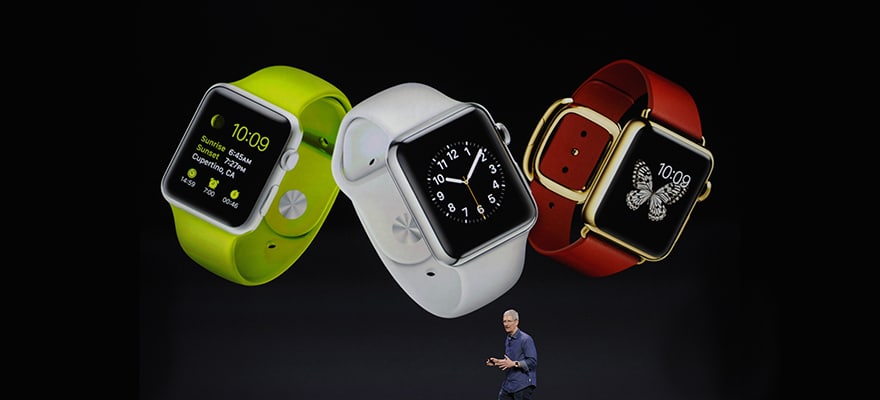
Apple Watch (Photo: Bloomberg)
This article is written by Hillik Nissani, a seasoned global marketing & strategy consultant, as well as executive coach with a proven track record of over 25 years across 5 continents in both B2B and B2C with a strong technology background. He is currently a non-executive director on TechFinancials and sits on advisory boards and board members of a few other high-tech companies.
Each such company has a Brand Identity it has created and developed. This Brand Identity was created at its inception and along its life-cycle; it is nurtured, developed, improved, strengthened and exposed with the intention of building Brand Equity, which is the value of having a well-known Brand Identity.
Some say that the Brand Identify has been the single most important factor in increasing sales and ensuring growth since the dawn of capitalism. A major part of the Brand Identity is its Unique Value Proposition – or its differentiator - the promise the company makes to its target audiences. The Value Proposition defines its target audience(s), states what the company is offering to the target audience(s) and why the audience(s) should buy from that company and not from its competitors.
If this is the case, it is natural to assume that all the companies in our industry go through this process of creating a Unique Value Proposition in order to build its Brand Identity and Brand Equity. But is this really the case? Are all companies really different or have a key differentiator?
Those of you who are very familiar with the industry, will immediately reply – “heck, no!!” and I agree with them. Most companies don’t have any uniqueness whatsoever.
Some of the companies will argue that they have, but I urge you to browse some of the websites of some known companies and look for sections that explain, “Why X is different?” or “What you should trade with us.” Compare what you read there – do you really see any substantial differences?
Why is it so important to build a true differentiator and strong Brand Identity?
Brand Equity is built from the following components –
Brand Awareness – how well is your brand known or remembered
The Brand’s Perceived Quality – what your customers and potential customers think about the quality of your offering
Brand Association – what are the associations that come to mind when people are reminded of your brand
Brand Loyalty – which is the desire of a customer to remain as such when he has so many alternatives.
When a company is successful in building high Brand Equity, it can charge more money for its services and products or pay less for the acquisition and retention of their customers. They usually sell more than their competitors and the combination of the aforementioned factors means – they generate higher profits and higher returns to their investors in the long run.
In order to build the Brand Equity a company must start with its Brand Identity and then execute meticulously and consistently in order to achieve the above (awareness, loyalty, quality and correct associations).
If it is clear that there is high value in building Brand Equity, then why aren’t all companies committed to doing so? Isn’t it puzzling?
It is not too late if you haven’t started
The good news is that even if you haven’t invested in building your Brand Equity or in investing enough in it, it is not too late. There are ample examples of companies that have rebranded and emerged as a dominant force, even in highly crowded markets. Apple came with its laptops, taking on mature and dominant laptop manufactures such as DELL, LENOVO, HP and others – and I am sure you will admit that you either own a MacBook or you would like to own one, but your IT department is still giving you a hard time about it.
We all think about Apple as the big successful company, but until Steve Jobs regained his CEO position before the turn of the century, it was lagging behind and quite irrelevant in the market with its desktop computers. Jobs revived the company, rebranded and took the world in a storm.
Examples of companies that were successful in building Brand Equity
Plus500 is also a stellar example, whose success can be attributed to a combination of an awesome automatic funnel, a technology that was developed in-house and a great unique positioning (World’s Trading Machine) which was achieved by offering its traders access to nearly 2,000 of stocks they could trade using CFDs. Their agile recovery from their recent regulatory issues can be, at least, partially attributed to their accumulated Brand Equity – due to their clients' loyalty, awareness and perceived quality.
How do you create a true differentiator?
There are quite a few ways to create differentiators. A company can target specific geographies and grab a substantial market share in a certain country or come out with unique business models. Developing proprietary innovative technologies such as Plus500's automatic funnel and SEM/SEO bidding “machine” can also lead to creating differentiators.
Pricing is also something to consider, but in rare cases this factor is sustainable as a long-term differentiator, unless it is based on the company’s unique and proprietary assets that allow them to create a sustained pricing gap between them and their competitors.
Focus on your day-to-day execution, but don’t overlook the future
I personally believe that every company should check its Unique Value Proposition every once in a while to make sure their claim for differentiation is indeed valid and make the necessary adjustments. As important as it is to aspire to high quality operational execution, it is also vital to think about the future and the company’s ability to sustain its growth and success.
There is a very structured process to curve out a new or a revised Value Proposition and this can be done internally or by using an external agency or consultants specializing in that. A good internal team can do this, but many tend to seek a fresh look from external experts.
Summary
Building Brand Equity is key. Whether you are a small company that wants to become a dominant “market player” or a leading company that is already public and has a strong Brand ID – it is important that you check your Value Proposition and make sure it is really differentiated and relevant.
Our industry is very much a ‘me too’. Only a few made innovative “moves,” such as eToro & Plus500 with their positioning and technology.
Most companies do not hold real, substantial and sustained differentiators and as such, it is extremely hard for them to create the so desired ‘sustained growth’ required for their shareholders to generate a growing return on their investments – which is folks, what really counts!
What’s going to be the next thing? Who’s going to disrupt the market again and create a true differentiator? Any thoughts? Ideas?
This article is written by Hillik Nissani, a seasoned global marketing & strategy consultant, as well as executive coach with a proven track record of over 25 years across 5 continents in both B2B and B2C with a strong technology background. He is currently a non-executive director on TechFinancials and sits on advisory boards and board members of a few other high-tech companies.
Each such company has a Brand Identity it has created and developed. This Brand Identity was created at its inception and along its life-cycle; it is nurtured, developed, improved, strengthened and exposed with the intention of building Brand Equity, which is the value of having a well-known Brand Identity.
Some say that the Brand Identify has been the single most important factor in increasing sales and ensuring growth since the dawn of capitalism. A major part of the Brand Identity is its Unique Value Proposition – or its differentiator - the promise the company makes to its target audiences. The Value Proposition defines its target audience(s), states what the company is offering to the target audience(s) and why the audience(s) should buy from that company and not from its competitors.
If this is the case, it is natural to assume that all the companies in our industry go through this process of creating a Unique Value Proposition in order to build its Brand Identity and Brand Equity. But is this really the case? Are all companies really different or have a key differentiator?
Those of you who are very familiar with the industry, will immediately reply – “heck, no!!” and I agree with them. Most companies don’t have any uniqueness whatsoever.
Some of the companies will argue that they have, but I urge you to browse some of the websites of some known companies and look for sections that explain, “Why X is different?” or “What you should trade with us.” Compare what you read there – do you really see any substantial differences?
Why is it so important to build a true differentiator and strong Brand Identity?
Brand Equity is built from the following components –
Brand Awareness – how well is your brand known or remembered
The Brand’s Perceived Quality – what your customers and potential customers think about the quality of your offering
Brand Association – what are the associations that come to mind when people are reminded of your brand
Brand Loyalty – which is the desire of a customer to remain as such when he has so many alternatives.
When a company is successful in building high Brand Equity, it can charge more money for its services and products or pay less for the acquisition and retention of their customers. They usually sell more than their competitors and the combination of the aforementioned factors means – they generate higher profits and higher returns to their investors in the long run.
In order to build the Brand Equity a company must start with its Brand Identity and then execute meticulously and consistently in order to achieve the above (awareness, loyalty, quality and correct associations).
If it is clear that there is high value in building Brand Equity, then why aren’t all companies committed to doing so? Isn’t it puzzling?
It is not too late if you haven’t started
The good news is that even if you haven’t invested in building your Brand Equity or in investing enough in it, it is not too late. There are ample examples of companies that have rebranded and emerged as a dominant force, even in highly crowded markets. Apple came with its laptops, taking on mature and dominant laptop manufactures such as DELL, LENOVO, HP and others – and I am sure you will admit that you either own a MacBook or you would like to own one, but your IT department is still giving you a hard time about it.
We all think about Apple as the big successful company, but until Steve Jobs regained his CEO position before the turn of the century, it was lagging behind and quite irrelevant in the market with its desktop computers. Jobs revived the company, rebranded and took the world in a storm.
Examples of companies that were successful in building Brand Equity
Plus500 is also a stellar example, whose success can be attributed to a combination of an awesome automatic funnel, a technology that was developed in-house and a great unique positioning (World’s Trading Machine) which was achieved by offering its traders access to nearly 2,000 of stocks they could trade using CFDs. Their agile recovery from their recent regulatory issues can be, at least, partially attributed to their accumulated Brand Equity – due to their clients' loyalty, awareness and perceived quality.
How do you create a true differentiator?
There are quite a few ways to create differentiators. A company can target specific geographies and grab a substantial market share in a certain country or come out with unique business models. Developing proprietary innovative technologies such as Plus500's automatic funnel and SEM/SEO bidding “machine” can also lead to creating differentiators.
Pricing is also something to consider, but in rare cases this factor is sustainable as a long-term differentiator, unless it is based on the company’s unique and proprietary assets that allow them to create a sustained pricing gap between them and their competitors.
Focus on your day-to-day execution, but don’t overlook the future
I personally believe that every company should check its Unique Value Proposition every once in a while to make sure their claim for differentiation is indeed valid and make the necessary adjustments. As important as it is to aspire to high quality operational execution, it is also vital to think about the future and the company’s ability to sustain its growth and success.
There is a very structured process to curve out a new or a revised Value Proposition and this can be done internally or by using an external agency or consultants specializing in that. A good internal team can do this, but many tend to seek a fresh look from external experts.
Summary
Building Brand Equity is key. Whether you are a small company that wants to become a dominant “market player” or a leading company that is already public and has a strong Brand ID – it is important that you check your Value Proposition and make sure it is really differentiated and relevant.
Our industry is very much a ‘me too’. Only a few made innovative “moves,” such as eToro & Plus500 with their positioning and technology.
Most companies do not hold real, substantial and sustained differentiators and as such, it is extremely hard for them to create the so desired ‘sustained growth’ required for their shareholders to generate a growing return on their investments – which is folks, what really counts!
What’s going to be the next thing? Who’s going to disrupt the market again and create a true differentiator? Any thoughts? Ideas?
Italy’s Consob Tightens Net on AI-Fueled Scams With Fresh Website Bans
Featured Videos
FP Markets Winner Spotlight 🏆 | Global Broker of the Year 2025 #Trading #Broker #Innovation #Shorts
FP Markets Winner Spotlight 🏆 | Global Broker of the Year 2025 #Trading #Broker #Innovation #Shorts
FP Markets Winner Spotlight 🏆 | Global Broker of the Year 2025 #Trading #Broker #Innovation #Shorts
FP Markets Winner Spotlight 🏆 | Global Broker of the Year 2025 #Trading #Broker #Innovation #Shorts
FP Markets takes the spotlight as Global Broker of the Year 2025 at the Finance Magnates Awards.
Martin Stoilov, Head of Client Experience, shares that trust, innovation, and people played a key role in the company’s success, supported by a strong foundation of integrity and client-centricity.
Following this milestone, FP Markets continues to focus on growth, technology investment, and its core values of transparency and excellence.
👉 Be part of FM Awards 2026: https://awards.financemagnates.com/#nominate
FP Markets takes the spotlight as Global Broker of the Year 2025 at the Finance Magnates Awards.
Martin Stoilov, Head of Client Experience, shares that trust, innovation, and people played a key role in the company’s success, supported by a strong foundation of integrity and client-centricity.
Following this milestone, FP Markets continues to focus on growth, technology investment, and its core values of transparency and excellence.
👉 Be part of FM Awards 2026: https://awards.financemagnates.com/#nominate
FP Markets takes the spotlight as Global Broker of the Year 2025 at the Finance Magnates Awards.
Martin Stoilov, Head of Client Experience, shares that trust, innovation, and people played a key role in the company’s success, supported by a strong foundation of integrity and client-centricity.
Following this milestone, FP Markets continues to focus on growth, technology investment, and its core values of transparency and excellence.
👉 Be part of FM Awards 2026: https://awards.financemagnates.com/#nominate
FP Markets takes the spotlight as Global Broker of the Year 2025 at the Finance Magnates Awards.
Martin Stoilov, Head of Client Experience, shares that trust, innovation, and people played a key role in the company’s success, supported by a strong foundation of integrity and client-centricity.
Following this milestone, FP Markets continues to focus on growth, technology investment, and its core values of transparency and excellence.
👉 Be part of FM Awards 2026: https://awards.financemagnates.com/#nominate
In this video, we review @HolaPrimeMarketsOfficial, a multi-asset forex and CFDs broker offering different account types, trading platforms, and flexible trading conditions.
We cover the broker’s overall offering, including account options, trading environment, platforms like MT4 and MT5, and additional services such as managed accounts and fast withdrawals.
Watch the full video to see if Hola Prime Markets fits your trading needs.
📣 Stay up to date with the latest in finance and trading. Follow Finance Magnates for industry news, insights, and global event coverage.
Connect with us:
🔗 LinkedIn: /financemagnates
👍 Facebook: /financemagnates
📸 Instagram: https://www.instagram.com/financemagnates
🐦 X: https://x.com/financemagnates
🎥 TikTok: https://www.tiktok.com/tag/financemagnates
▶️ YouTube: /@financemagnates_official
#HolaPrime #ForexBroker #CFDTrading #FinanceMagnates #Trading #Forex #BrokerReview
In this video, we review @HolaPrimeMarketsOfficial, a multi-asset forex and CFDs broker offering different account types, trading platforms, and flexible trading conditions.
We cover the broker’s overall offering, including account options, trading environment, platforms like MT4 and MT5, and additional services such as managed accounts and fast withdrawals.
Watch the full video to see if Hola Prime Markets fits your trading needs.
📣 Stay up to date with the latest in finance and trading. Follow Finance Magnates for industry news, insights, and global event coverage.
Connect with us:
🔗 LinkedIn: /financemagnates
👍 Facebook: /financemagnates
📸 Instagram: https://www.instagram.com/financemagnates
🐦 X: https://x.com/financemagnates
🎥 TikTok: https://www.tiktok.com/tag/financemagnates
▶️ YouTube: /@financemagnates_official
#HolaPrime #ForexBroker #CFDTrading #FinanceMagnates #Trading #Forex #BrokerReview
In this video, we review @HolaPrimeMarketsOfficial, a multi-asset forex and CFDs broker offering different account types, trading platforms, and flexible trading conditions.
We cover the broker’s overall offering, including account options, trading environment, platforms like MT4 and MT5, and additional services such as managed accounts and fast withdrawals.
Watch the full video to see if Hola Prime Markets fits your trading needs.
📣 Stay up to date with the latest in finance and trading. Follow Finance Magnates for industry news, insights, and global event coverage.
Connect with us:
🔗 LinkedIn: /financemagnates
👍 Facebook: /financemagnates
📸 Instagram: https://www.instagram.com/financemagnates
🐦 X: https://x.com/financemagnates
🎥 TikTok: https://www.tiktok.com/tag/financemagnates
▶️ YouTube: /@financemagnates_official
#HolaPrime #ForexBroker #CFDTrading #FinanceMagnates #Trading #Forex #BrokerReview
In this video, we review @HolaPrimeMarketsOfficial, a multi-asset forex and CFDs broker offering different account types, trading platforms, and flexible trading conditions.
We cover the broker’s overall offering, including account options, trading environment, platforms like MT4 and MT5, and additional services such as managed accounts and fast withdrawals.
Watch the full video to see if Hola Prime Markets fits your trading needs.
📣 Stay up to date with the latest in finance and trading. Follow Finance Magnates for industry news, insights, and global event coverage.
Connect with us:
🔗 LinkedIn: /financemagnates
👍 Facebook: /financemagnates
📸 Instagram: https://www.instagram.com/financemagnates
🐦 X: https://x.com/financemagnates
🎥 TikTok: https://www.tiktok.com/tag/financemagnates
▶️ YouTube: /@financemagnates_official
#HolaPrime #ForexBroker #CFDTrading #FinanceMagnates #Trading #Forex #BrokerReview
In this video, we review @HolaPrimeMarketsOfficial, a multi-asset forex and CFDs broker offering different account types, trading platforms, and flexible trading conditions.
We cover the broker’s overall offering, including account options, trading environment, platforms like MT4 and MT5, and additional services such as managed accounts and fast withdrawals.
Watch the full video to see if Hola Prime Markets fits your trading needs.
📣 Stay up to date with the latest in finance and trading. Follow Finance Magnates for industry news, insights, and global event coverage.
Connect with us:
🔗 LinkedIn: /financemagnates
👍 Facebook: /financemagnates
📸 Instagram: https://www.instagram.com/financemagnates
🐦 X: https://x.com/financemagnates
🎥 TikTok: https://www.tiktok.com/tag/financemagnates
▶️ YouTube: /@financemagnates_official
#HolaPrime #ForexBroker #CFDTrading #FinanceMagnates #Trading #Forex #BrokerReview
In this video, we review @HolaPrimeMarketsOfficial, a multi-asset forex and CFDs broker offering different account types, trading platforms, and flexible trading conditions.
We cover the broker’s overall offering, including account options, trading environment, platforms like MT4 and MT5, and additional services such as managed accounts and fast withdrawals.
Watch the full video to see if Hola Prime Markets fits your trading needs.
📣 Stay up to date with the latest in finance and trading. Follow Finance Magnates for industry news, insights, and global event coverage.
Connect with us:
🔗 LinkedIn: /financemagnates
👍 Facebook: /financemagnates
📸 Instagram: https://www.instagram.com/financemagnates
🐦 X: https://x.com/financemagnates
🎥 TikTok: https://www.tiktok.com/tag/financemagnates
▶️ YouTube: /@financemagnates_official
#HolaPrime #ForexBroker #CFDTrading #FinanceMagnates #Trading #Forex #BrokerReview
Hola Prime Review: What You Need to Know | Full Breakdown by Finance Magnates
Hola Prime Review: What You Need to Know | Full Breakdown by Finance Magnates
Hola Prime Review: What You Need to Know | Full Breakdown by Finance Magnates
Hola Prime Review: What You Need to Know | Full Breakdown by Finance Magnates
Hola Prime Review: What You Need to Know | Full Breakdown by Finance Magnates
Hola Prime Review: What You Need to Know | Full Breakdown by Finance Magnates
In this video, we review @HolaPrime_Global, a proprietary trading firm offering evaluation programs and performance-based payouts in simulated market environments.
We cover how the challenge model works, including account types, profit splits (up to 95%), trading rules, and what it takes to reach a funded account. You’ll also learn about available platforms like MT4, MT5, cTrader, and more, along with insights into payouts, support, and trading conditions.
Watch the full video to see if Hola Prime fits your trading style.
📣 Stay up to date with the latest in finance and trading. Follow Finance Magnates for industry news, insights, and global event coverage.
Connect with us:
🔗 LinkedIn: /financemagnates
👍 Facebook: /financemagnates
📸 Instagram: https://www.instagram.com/financemagnates
🐦 X: https://x.com/financemagnates
🎥 TikTok: https://www.tiktok.com/tag/financemagnates
▶️ YouTube: /@financemagnates_official
#HolaPrime #PropFirm #Trading #FinanceMagnates #Forex #FuturesTrading #TradingReview #PropFirmReview
In this video, we review @HolaPrime_Global, a proprietary trading firm offering evaluation programs and performance-based payouts in simulated market environments.
We cover how the challenge model works, including account types, profit splits (up to 95%), trading rules, and what it takes to reach a funded account. You’ll also learn about available platforms like MT4, MT5, cTrader, and more, along with insights into payouts, support, and trading conditions.
Watch the full video to see if Hola Prime fits your trading style.
📣 Stay up to date with the latest in finance and trading. Follow Finance Magnates for industry news, insights, and global event coverage.
Connect with us:
🔗 LinkedIn: /financemagnates
👍 Facebook: /financemagnates
📸 Instagram: https://www.instagram.com/financemagnates
🐦 X: https://x.com/financemagnates
🎥 TikTok: https://www.tiktok.com/tag/financemagnates
▶️ YouTube: /@financemagnates_official
#HolaPrime #PropFirm #Trading #FinanceMagnates #Forex #FuturesTrading #TradingReview #PropFirmReview
In this video, we review @HolaPrime_Global, a proprietary trading firm offering evaluation programs and performance-based payouts in simulated market environments.
We cover how the challenge model works, including account types, profit splits (up to 95%), trading rules, and what it takes to reach a funded account. You’ll also learn about available platforms like MT4, MT5, cTrader, and more, along with insights into payouts, support, and trading conditions.
Watch the full video to see if Hola Prime fits your trading style.
📣 Stay up to date with the latest in finance and trading. Follow Finance Magnates for industry news, insights, and global event coverage.
Connect with us:
🔗 LinkedIn: /financemagnates
👍 Facebook: /financemagnates
📸 Instagram: https://www.instagram.com/financemagnates
🐦 X: https://x.com/financemagnates
🎥 TikTok: https://www.tiktok.com/tag/financemagnates
▶️ YouTube: /@financemagnates_official
#HolaPrime #PropFirm #Trading #FinanceMagnates #Forex #FuturesTrading #TradingReview #PropFirmReview
In this video, we review @HolaPrime_Global, a proprietary trading firm offering evaluation programs and performance-based payouts in simulated market environments.
We cover how the challenge model works, including account types, profit splits (up to 95%), trading rules, and what it takes to reach a funded account. You’ll also learn about available platforms like MT4, MT5, cTrader, and more, along with insights into payouts, support, and trading conditions.
Watch the full video to see if Hola Prime fits your trading style.
📣 Stay up to date with the latest in finance and trading. Follow Finance Magnates for industry news, insights, and global event coverage.
Connect with us:
🔗 LinkedIn: /financemagnates
👍 Facebook: /financemagnates
📸 Instagram: https://www.instagram.com/financemagnates
🐦 X: https://x.com/financemagnates
🎥 TikTok: https://www.tiktok.com/tag/financemagnates
▶️ YouTube: /@financemagnates_official
#HolaPrime #PropFirm #Trading #FinanceMagnates #Forex #FuturesTrading #TradingReview #PropFirmReview
In this video, we review @HolaPrime_Global, a proprietary trading firm offering evaluation programs and performance-based payouts in simulated market environments.
We cover how the challenge model works, including account types, profit splits (up to 95%), trading rules, and what it takes to reach a funded account. You’ll also learn about available platforms like MT4, MT5, cTrader, and more, along with insights into payouts, support, and trading conditions.
Watch the full video to see if Hola Prime fits your trading style.
📣 Stay up to date with the latest in finance and trading. Follow Finance Magnates for industry news, insights, and global event coverage.
Connect with us:
🔗 LinkedIn: /financemagnates
👍 Facebook: /financemagnates
📸 Instagram: https://www.instagram.com/financemagnates
🐦 X: https://x.com/financemagnates
🎥 TikTok: https://www.tiktok.com/tag/financemagnates
▶️ YouTube: /@financemagnates_official
#HolaPrime #PropFirm #Trading #FinanceMagnates #Forex #FuturesTrading #TradingReview #PropFirmReview
In this video, we review @HolaPrime_Global, a proprietary trading firm offering evaluation programs and performance-based payouts in simulated market environments.
We cover how the challenge model works, including account types, profit splits (up to 95%), trading rules, and what it takes to reach a funded account. You’ll also learn about available platforms like MT4, MT5, cTrader, and more, along with insights into payouts, support, and trading conditions.
Watch the full video to see if Hola Prime fits your trading style.
📣 Stay up to date with the latest in finance and trading. Follow Finance Magnates for industry news, insights, and global event coverage.
Connect with us:
🔗 LinkedIn: /financemagnates
👍 Facebook: /financemagnates
📸 Instagram: https://www.instagram.com/financemagnates
🐦 X: https://x.com/financemagnates
🎥 TikTok: https://www.tiktok.com/tag/financemagnates
▶️ YouTube: /@financemagnates_official
#HolaPrime #PropFirm #Trading #FinanceMagnates #Forex #FuturesTrading #TradingReview #PropFirmReview
Axi Winner Spotlight 🏆 | Global Most Innovative Broker 2025 #Innovation #Trading #Fintech #Broker
Axi Winner Spotlight 🏆 | Global Most Innovative Broker 2025 #Innovation #Trading #Fintech #Broker
Axi Winner Spotlight 🏆 | Global Most Innovative Broker 2025 #Innovation #Trading #Fintech #Broker
Axi Winner Spotlight 🏆 | Global Most Innovative Broker 2025 #Innovation #Trading #Fintech #Broker
Axi Winner Spotlight 🏆 | Global Most Innovative Broker 2025 #Innovation #Trading #Fintech #Broker
Axi Winner Spotlight 🏆 | Global Most Innovative Broker 2025 #Innovation #Trading #Fintech #Broker
Axi takes the spotlight at the Finance Magnates Awards, winning Global Most Innovative Broker 2025.
Olivia Xenofontos and Ivanna Openko share how the team will feel: proud, motivated, and ready to keep delivering.
They also describe the night as well-organized, focused, and enjoyable for all.
👉 Be part of FM Awards 2026.
Axi takes the spotlight at the Finance Magnates Awards, winning Global Most Innovative Broker 2025.
Olivia Xenofontos and Ivanna Openko share how the team will feel: proud, motivated, and ready to keep delivering.
They also describe the night as well-organized, focused, and enjoyable for all.
👉 Be part of FM Awards 2026.
Axi takes the spotlight at the Finance Magnates Awards, winning Global Most Innovative Broker 2025.
Olivia Xenofontos and Ivanna Openko share how the team will feel: proud, motivated, and ready to keep delivering.
They also describe the night as well-organized, focused, and enjoyable for all.
👉 Be part of FM Awards 2026.
Axi takes the spotlight at the Finance Magnates Awards, winning Global Most Innovative Broker 2025.
Olivia Xenofontos and Ivanna Openko share how the team will feel: proud, motivated, and ready to keep delivering.
They also describe the night as well-organized, focused, and enjoyable for all.
👉 Be part of FM Awards 2026.
Axi takes the spotlight at the Finance Magnates Awards, winning Global Most Innovative Broker 2025.
Olivia Xenofontos and Ivanna Openko share how the team will feel: proud, motivated, and ready to keep delivering.
They also describe the night as well-organized, focused, and enjoyable for all.
👉 Be part of FM Awards 2026.
Axi takes the spotlight at the Finance Magnates Awards, winning Global Most Innovative Broker 2025.
Olivia Xenofontos and Ivanna Openko share how the team will feel: proud, motivated, and ready to keep delivering.
They also describe the night as well-organized, focused, and enjoyable for all.
👉 Be part of FM Awards 2026.
Recognition that matters.
Built on transparency.
Driven by the industry.
The Finance Magnates Awards 2026.
Nominations are now open.
🔗 https://awards.financemagnates.com/?utm_source=SM&utm_medium=social&utm_campaign=recognition-matters
Recognition that matters.
Built on transparency.
Driven by the industry.
The Finance Magnates Awards 2026.
Nominations are now open.
🔗 https://awards.financemagnates.com/?utm_source=SM&utm_medium=social&utm_campaign=recognition-matters
Recognition that matters.
Built on transparency.
Driven by the industry.
The Finance Magnates Awards 2026.
Nominations are now open.
🔗 https://awards.financemagnates.com/?utm_source=SM&utm_medium=social&utm_campaign=recognition-matters
Recognition that matters.
Built on transparency.
Driven by the industry.
The Finance Magnates Awards 2026.
Nominations are now open.
🔗 https://awards.financemagnates.com/?utm_source=SM&utm_medium=social&utm_campaign=recognition-matters
Recognition that matters.
Built on transparency.
Driven by the industry.
The Finance Magnates Awards 2026.
Nominations are now open.
🔗 https://awards.financemagnates.com/?utm_source=SM&utm_medium=social&utm_campaign=recognition-matters
Recognition that matters.
Built on transparency.
Driven by the industry.
The Finance Magnates Awards 2026.
Nominations are now open.
🔗 https://awards.financemagnates.com/?utm_source=SM&utm_medium=social&utm_campaign=recognition-matters