
Economics 101 would teach students that a reduction in demand for a product naturally results in a corresponding reduction in supply. That is not the case with iron ore - here's why.
China’s long history of steadily increasing growth has finally tapered off. In recent statements, the Chinese government (and, in turn, Chinese industry) have reduced expectations for the scale of infrastructure developments and expansion. For global suppliers of raw materials, the drop in demand from China has come as a bit of a shock. China’s growth over the last 23 years has been a steady source of demand for global suppliers of raw materials, but the drop in demand has started to take it’s toll. The price of iron ore has dropped to nearly half of what it was this time last year as a result.
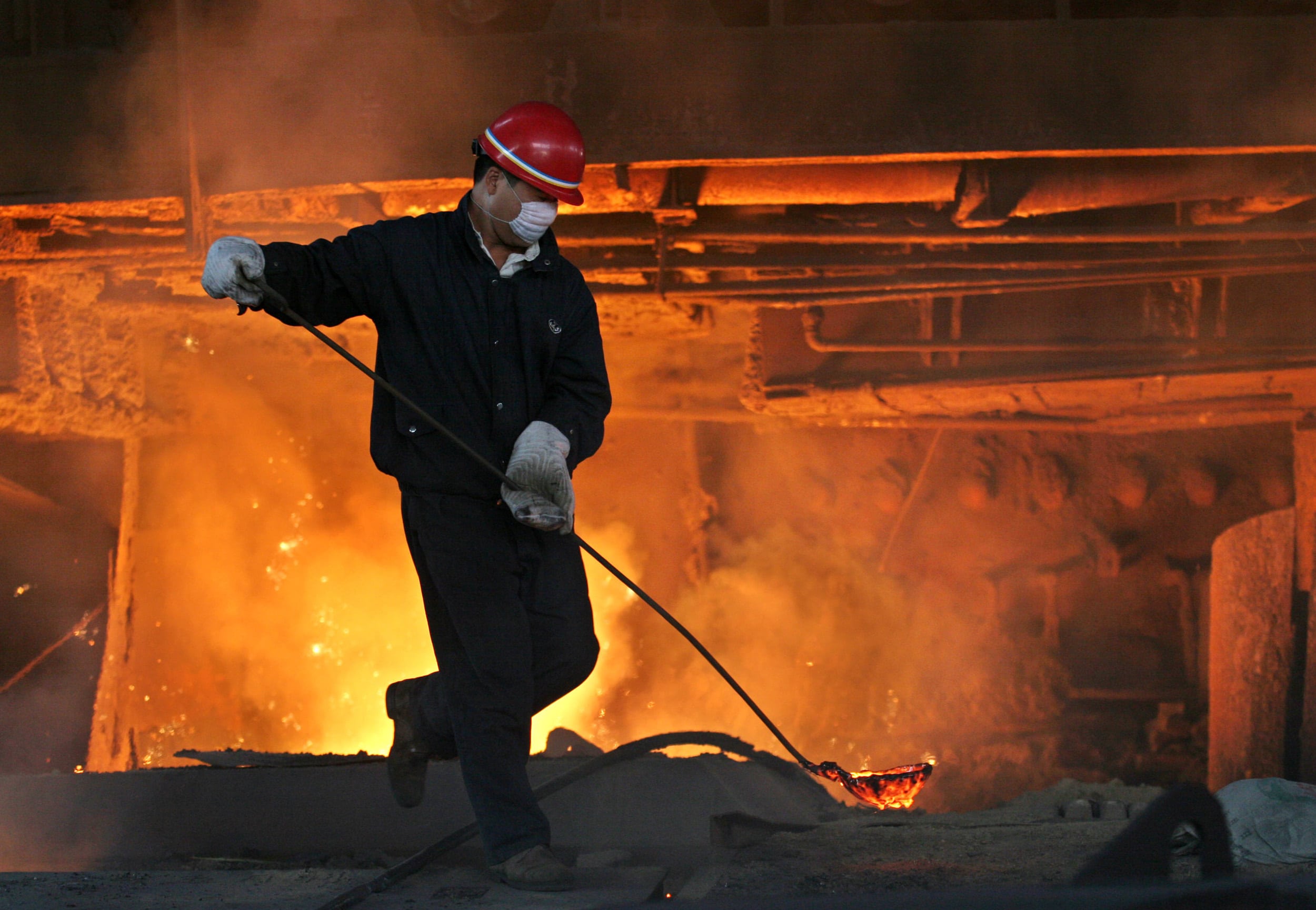
Bao Gang Steelworks, Baotou, Inner Mongolia, China (Photo: Bloomberg)
The most significant source of demand for iron ore in China over the past two decades has been housing. During that time, the Chinese government was concerned with providing sufficient housing for the country’s immense population, which led to unprecedented amounts of steel-frame structures being erected throughout the country. But those consumption trends are over.
The latest government plans look to decrease the amount of new land and real estate developments as China’s growth slows. This governmental shift in focus means that China is now on course to consume less iron than it has been for the past quarter century. With such a dramatic drop in consumption, it’s easy to ask yourself how producers of iron ore around the world are reacting.
Ignoring Demand
Economics 101 would teach students that a reduction in demand for a product naturally results in a corresponding reduction in supply. That is not the current reality of iron ore, however. Despite two consecutive quarters of reduced iron ore consumption in China, the top two iron ore producers in the world are not slowing down their mining operations.
In fact, they are increasing output significantly. The number 1 miner of iron ore, Brazil’s Vale SA, has recently announced record-high output numbers. Further increasing the amount of iron on the global market, the British-Australian mining giant, Rio Tinto, has also increased its iron ore production.
Although the top two producers in the industry appear to be able to handle the pressure of this commodity’s price dropping, competitors are having a rough time in this environment. Companies like China’s Fortescue and South Africa’s Kumba Iron are being forced to reduce dividend payouts due to the steadily falling price of their product.
Kumba has even released statements that they do not foresee a price rebound occurring for iron for a while, but that their mining operations have been and will continue to increase output nonetheless. It appears that, for now, the major miners of iron ore are going to continue to supply the world with plenty of cheap material, despite being heavily criticized for this decision.
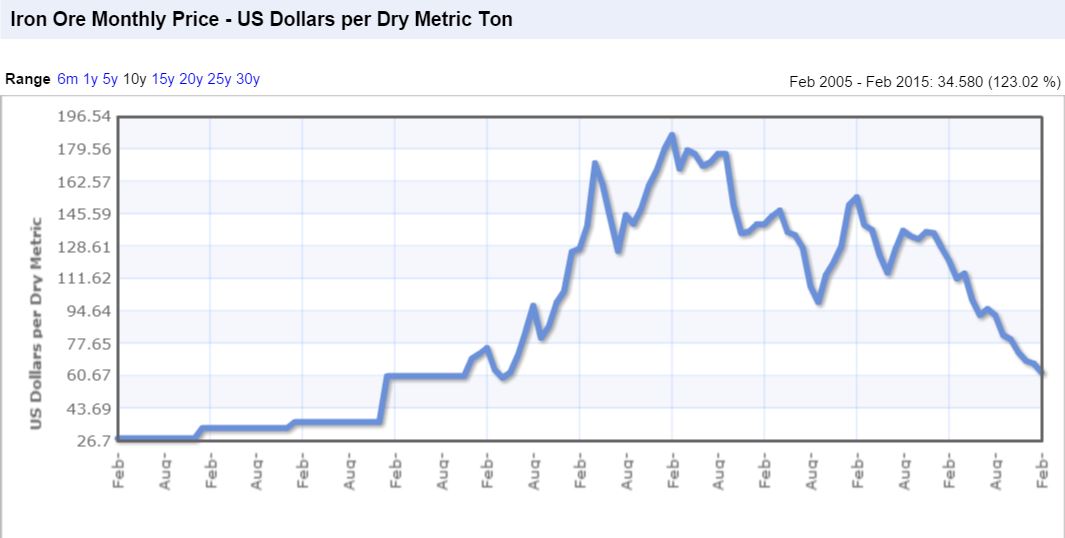
Source: www.indexmundi.com
For investors, the commodities market may appear to be losing steam of late. Much like China, commodities have been trending downward. But commodities are not the same as a nation’s economy. In reality, the value of commodities will have its own ups and downs, similar to the stock market. And like stocks, it’s wise to buy commodities when they are down and sell them when they are up. Right now, iron ore is selling for prices we haven’t seen since 2009.
But in 2011, it was selling at almost three times that price. Hindsight is 20:20, but it’s still easy to see that buying into iron ore in 2009 and selling it in 2011 would have been a solid plan for high performance returns. Taking those figures into consideration, the current situation presents itself as another appropriate time to invest in iron ore with a long-term plan for a solid ROI. For those with the patience to hold onto iron ore until it comes back up in a few years, I advise you to invest in it now.
China’s long history of steadily increasing growth has finally tapered off. In recent statements, the Chinese government (and, in turn, Chinese industry) have reduced expectations for the scale of infrastructure developments and expansion. For global suppliers of raw materials, the drop in demand from China has come as a bit of a shock. China’s growth over the last 23 years has been a steady source of demand for global suppliers of raw materials, but the drop in demand has started to take it’s toll. The price of iron ore has dropped to nearly half of what it was this time last year as a result.
Bao Gang Steelworks, Baotou, Inner Mongolia, China (Photo: Bloomberg)
The most significant source of demand for iron ore in China over the past two decades has been housing. During that time, the Chinese government was concerned with providing sufficient housing for the country’s immense population, which led to unprecedented amounts of steel-frame structures being erected throughout the country. But those consumption trends are over.
The latest government plans look to decrease the amount of new land and real estate developments as China’s growth slows. This governmental shift in focus means that China is now on course to consume less iron than it has been for the past quarter century. With such a dramatic drop in consumption, it’s easy to ask yourself how producers of iron ore around the world are reacting.
Ignoring Demand
Economics 101 would teach students that a reduction in demand for a product naturally results in a corresponding reduction in supply. That is not the current reality of iron ore, however. Despite two consecutive quarters of reduced iron ore consumption in China, the top two iron ore producers in the world are not slowing down their mining operations.
In fact, they are increasing output significantly. The number 1 miner of iron ore, Brazil’s Vale SA, has recently announced record-high output numbers. Further increasing the amount of iron on the global market, the British-Australian mining giant, Rio Tinto, has also increased its iron ore production.
Although the top two producers in the industry appear to be able to handle the pressure of this commodity’s price dropping, competitors are having a rough time in this environment. Companies like China’s Fortescue and South Africa’s Kumba Iron are being forced to reduce dividend payouts due to the steadily falling price of their product.
Kumba has even released statements that they do not foresee a price rebound occurring for iron for a while, but that their mining operations have been and will continue to increase output nonetheless. It appears that, for now, the major miners of iron ore are going to continue to supply the world with plenty of cheap material, despite being heavily criticized for this decision.
Source: www.indexmundi.com
For investors, the commodities market may appear to be losing steam of late. Much like China, commodities have been trending downward. But commodities are not the same as a nation’s economy. In reality, the value of commodities will have its own ups and downs, similar to the stock market. And like stocks, it’s wise to buy commodities when they are down and sell them when they are up. Right now, iron ore is selling for prices we haven’t seen since 2009.
But in 2011, it was selling at almost three times that price. Hindsight is 20:20, but it’s still easy to see that buying into iron ore in 2009 and selling it in 2011 would have been a solid plan for high performance returns. Taking those figures into consideration, the current situation presents itself as another appropriate time to invest in iron ore with a long-term plan for a solid ROI. For those with the patience to hold onto iron ore until it comes back up in a few years, I advise you to invest in it now.
Moomoo Expands Texas Crypto Offering With Wallet Deposit and Withdrawal for Retail Investors
Featured Videos
FM Daily Brief - 25 May 2026
Today's Monday, the twenty fifth of May 2026, and these are our main stories: China’s securities regulator has imposed a heavy penalty against Futu, and Polymarket pushes into Japan's regulatory system.
You are listening to Finance Magnates Daily Brief. Brought to you by Finance Magnates Intelligence. It’s Friday, the twenty-second of May 2026, and these are our main stories: Interactive Brokers expands its view of prediction markets as an information tool for investors. US prop firms move closer to CFTC oversight structures. And a Polish fintech CEO is detained in the United States.
FM Daily Brief - 21 May 2026
You are listening to Finance Magnates Daily Brief. Brought to you by Finance Magnates Intelligence. Today's Thursday, the twenty first of May 2026, and these are our main stories: CFD broker CMC Markets and Binance both target SpaceX exposure on the same day, IG Japan pauses retail vanilla options trading, and prediction markets expand across brokers and exchanges.
FM Daily Brief - 20 May 2026
Today’s lead: CFD brokers show a wide divergence in per-account trading activity. Also ahead, a deep dive into IG Group and XTB’s latest numbers. It's Wednesday, 20 May 2026. You're listening to the Finance Magnates Daily Brief.
FM Daily Brief - 19 May 2026
Today's lead: IG Group has lifted its full-year revenue outlook after a strong quarter. Also ahead, Swissquote sets a date for its one-to-ten share split. And CMC Markets’ UK head says neobanks are becoming trading distributors. It’s Tuesday, 19 May 2026. You’re listening to the Finance Magnates Daily Brief.