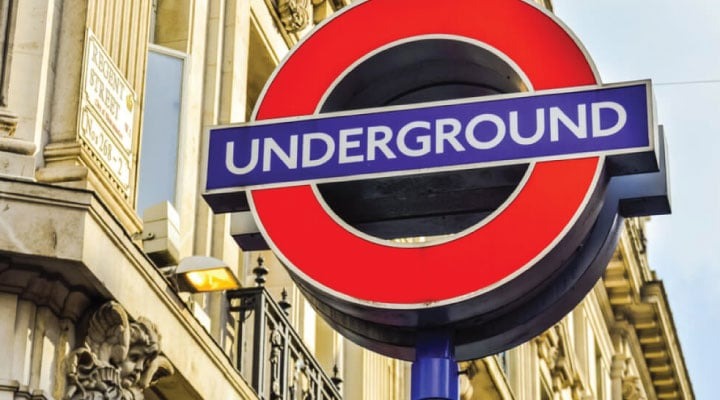
London is home to some of the top retail brokerage names.
Brexit stopped FCA-licensed brokers from offering services in Europe and vice versa.
The United Kingdom is the largest foreign exchange (forex) market. It is true not only in terms of transactions but also for forex derivative products. The average daily forex turnover in the country amounted to $3.65 trillion in 2019. It was 2.5 times more than the United States, which is the second largest forex market.
Despite several macro-economic setbacks, there is no sign of a slowdown in forex demand in the UK. A survey by the Bank for International Settlements (BIS) found that forex demand in London has gone up by around 30 percent in the three years since the Brexit vote.
While the institutional forex demand is soaring, the tiny retail trading market has suffered a lot, especially with the impact of Brexit on the brokerage industry.
A Financial Services Hub
London is positioning itself as the financial services hub, but the stringent conditions of Brexit brought massive regulatory changes for the companies. Retail forex brokers, which have to obtain a license from the city’s Financial Conduct Authority (FCA), suffered the most as they were running European operations as well by passporting their UK license.
Europe-based brokers, which did not obtain an FCA license, also had to suspend their regular operations in the UK. But, the regulators in both jurisdictions allowed a temporary period to operate under some strict conditions to avoid any sudden disruption in their business.
Ben Clark, Devexpert’s VP of Business Development
“I believe that the City of London’s financial services took a large impact from Brexit as they were pretty much left out of the trade deal the UK and EU agreed in 2020. So in 2021, when the rules took effect, British operators took the hit straight away. That being said one of the areas that London is still dominant in is Foreign exchange and derivatives. And, the Mass exodus of companies that was predicted never materialized,” Ben Clark, Devexpert’s VP of Business Development, told Finance Magnates.
Forex CFDs
In the retail market, forex derivatives are traded with contracts for differences (CFDs) instruments. TIn addition, these speculative instruments are available for other asset classes, including equities and commodities.
According to data from Trading Authority, around 560,000 customers traded CFD products each month in 2020 only in the United Kingdom. It was a year-over-increase of 32 percent. Also, there were over a million funded CFDs trading accounts that year.
“The main reason is Covid has provoked volatility in the markets,” said Adrian Reading, Trading Authority’s Head of Research.
“CFD trading presents an opportunity to generate profits in both swings of the market. From the beginning of last year when many shares sunk 60-70 percent to the impressive recovery where growth shares and cryptocurrencies saw a surge of up to 6x, traders have been able to profit both ways.”
A Reputed License
There were around 110 different FCA-regulated CFD trading platforms in the United Kingdom in 2020. Also, the country houses some big industry names like IG and CMC Markets. Moreover, a few international brokers like Plus500 have listed their stocks on the London markets.
Additionally, Brokers preferred the UK to be their base due to the reputation of FCA too. The regulator keeps a keen eye on the operations of these trading platforms and keeps retail traders a priority.
“The FCA license has always been held in high regard due to the stringent checks to obtain the license,” Clark added.
But that perspective is changing. Now, brokers can only operate within the UK with an FCA license, but a European Economic Area regulatory approval can provide them access to a broader European market.
Also, regulators like the Cyprus Securities and Exchange Commission (CySEC) allow brokers to gain a license with much lower capital requirements. Many UK-based brokers are now also seeking European licenses.
“From my perspective new companies that I speak with form a cross section when it comes to the regulators, they are looking to gain. However, there are some reports available on the Internet that indicate that the UK: FCA is still one of the key global onshore CFD/Forex regulators,” said Clark.
Tarik Chebib, the Chief Revenue Officer at Capital.com said: “The UK has an established retail trading population, so there is still a lot of competition here from brokers vying for their business. Most brokers have remained in the UK and increased their European footprint with more licenses sought on the continent as they needed to find a way to [continue serving] their clients to a European entity.”
New brokers might be preferring some EU license now over the FCA one. But, no one can deny the credibility of an FCA approval on the business. Also, the retail forex and CFDs demand among UK investors will always keep the country as one of the most sought-after markets.
The United Kingdom is the largest foreign exchange (forex) market. It is true not only in terms of transactions but also for forex derivative products. The average daily forex turnover in the country amounted to $3.65 trillion in 2019. It was 2.5 times more than the United States, which is the second largest forex market.
Despite several macro-economic setbacks, there is no sign of a slowdown in forex demand in the UK. A survey by the Bank for International Settlements (BIS) found that forex demand in London has gone up by around 30 percent in the three years since the Brexit vote.
While the institutional forex demand is soaring, the tiny retail trading market has suffered a lot, especially with the impact of Brexit on the brokerage industry.
A Financial Services Hub
London is positioning itself as the financial services hub, but the stringent conditions of Brexit brought massive regulatory changes for the companies. Retail forex brokers, which have to obtain a license from the city’s Financial Conduct Authority (FCA), suffered the most as they were running European operations as well by passporting their UK license.
Europe-based brokers, which did not obtain an FCA license, also had to suspend their regular operations in the UK. But, the regulators in both jurisdictions allowed a temporary period to operate under some strict conditions to avoid any sudden disruption in their business.
Ben Clark, Devexpert’s VP of Business Development
“I believe that the City of London’s financial services took a large impact from Brexit as they were pretty much left out of the trade deal the UK and EU agreed in 2020. So in 2021, when the rules took effect, British operators took the hit straight away. That being said one of the areas that London is still dominant in is Foreign exchange and derivatives. And, the Mass exodus of companies that was predicted never materialized,” Ben Clark, Devexpert’s VP of Business Development, told Finance Magnates.
Forex CFDs
In the retail market, forex derivatives are traded with contracts for differences (CFDs) instruments. TIn addition, these speculative instruments are available for other asset classes, including equities and commodities.
According to data from Trading Authority, around 560,000 customers traded CFD products each month in 2020 only in the United Kingdom. It was a year-over-increase of 32 percent. Also, there were over a million funded CFDs trading accounts that year.
“The main reason is Covid has provoked volatility in the markets,” said Adrian Reading, Trading Authority’s Head of Research.
“CFD trading presents an opportunity to generate profits in both swings of the market. From the beginning of last year when many shares sunk 60-70 percent to the impressive recovery where growth shares and cryptocurrencies saw a surge of up to 6x, traders have been able to profit both ways.”
A Reputed License
There were around 110 different FCA-regulated CFD trading platforms in the United Kingdom in 2020. Also, the country houses some big industry names like IG and CMC Markets. Moreover, a few international brokers like Plus500 have listed their stocks on the London markets.
Additionally, Brokers preferred the UK to be their base due to the reputation of FCA too. The regulator keeps a keen eye on the operations of these trading platforms and keeps retail traders a priority.
“The FCA license has always been held in high regard due to the stringent checks to obtain the license,” Clark added.
But that perspective is changing. Now, brokers can only operate within the UK with an FCA license, but a European Economic Area regulatory approval can provide them access to a broader European market.
Also, regulators like the Cyprus Securities and Exchange Commission (CySEC) allow brokers to gain a license with much lower capital requirements. Many UK-based brokers are now also seeking European licenses.
“From my perspective new companies that I speak with form a cross section when it comes to the regulators, they are looking to gain. However, there are some reports available on the Internet that indicate that the UK: FCA is still one of the key global onshore CFD/Forex regulators,” said Clark.
Tarik Chebib, the Chief Revenue Officer at Capital.com said: “The UK has an established retail trading population, so there is still a lot of competition here from brokers vying for their business. Most brokers have remained in the UK and increased their European footprint with more licenses sought on the continent as they needed to find a way to [continue serving] their clients to a European entity.”
New brokers might be preferring some EU license now over the FCA one. But, no one can deny the credibility of an FCA approval on the business. Also, the retail forex and CFDs demand among UK investors will always keep the country as one of the most sought-after markets.
Arnab Shome is an electronics engineer-turned-financial editor. He holds a Bachelor of Technology from the National Institute of Technology, Agartala. He entered the retail trading industry about a decade ago, covering the cryptocurrency market for Finance Magnates, and later expanded his coverage to include forex and CFDs as well.
His work at Finance Magnates includes C-level interviews, data-driven analysis, opinion pieces, and scoops of industry exclusives. He also contributes to Finance Magnates’ quarterly industry report.
Area of coverage:
1. CFD broker-related news
2. Industry-related Regulatory updates and developments
3. New retail trading trends
4. Prop trading industry updates
5. Executive interviews
Education:
Bachelor of Technology - National Institute of Technology, Agartala (India)
42% of Swiss Financial Firms Have No Digital Fraud Policy, FINMA Finds
FP Markets Winner Spotlight 🏆 | Global Broker of the Year 2025 #Trading #Broker #Innovation #Shorts
FP Markets Winner Spotlight 🏆 | Global Broker of the Year 2025 #Trading #Broker #Innovation #Shorts
FP Markets takes the spotlight as Global Broker of the Year 2025 at the Finance Magnates Awards.
Martin Stoilov, Head of Client Experience, shares that trust, innovation, and people played a key role in the company’s success, supported by a strong foundation of integrity and client-centricity.
Following this milestone, FP Markets continues to focus on growth, technology investment, and its core values of transparency and excellence.
👉 Be part of FM Awards 2026: https://awards.financemagnates.com/#nominate
FP Markets takes the spotlight as Global Broker of the Year 2025 at the Finance Magnates Awards.
Martin Stoilov, Head of Client Experience, shares that trust, innovation, and people played a key role in the company’s success, supported by a strong foundation of integrity and client-centricity.
Following this milestone, FP Markets continues to focus on growth, technology investment, and its core values of transparency and excellence.
👉 Be part of FM Awards 2026: https://awards.financemagnates.com/#nominate
In this video, we review @HolaPrimeMarketsOfficial, a multi-asset forex and CFDs broker offering different account types, trading platforms, and flexible trading conditions.
We cover the broker’s overall offering, including account options, trading environment, platforms like MT4 and MT5, and additional services such as managed accounts and fast withdrawals.
Watch the full video to see if Hola Prime Markets fits your trading needs.
📣 Stay up to date with the latest in finance and trading. Follow Finance Magnates for industry news, insights, and global event coverage.
Connect with us:
🔗 LinkedIn: /financemagnates
👍 Facebook: /financemagnates
📸 Instagram: https://www.instagram.com/financemagnates
🐦 X: https://x.com/financemagnates
🎥 TikTok: https://www.tiktok.com/tag/financemagnates
▶️ YouTube: /@financemagnates_official
#HolaPrime #ForexBroker #CFDTrading #FinanceMagnates #Trading #Forex #BrokerReview
In this video, we review @HolaPrimeMarketsOfficial, a multi-asset forex and CFDs broker offering different account types, trading platforms, and flexible trading conditions.
We cover the broker’s overall offering, including account options, trading environment, platforms like MT4 and MT5, and additional services such as managed accounts and fast withdrawals.
Watch the full video to see if Hola Prime Markets fits your trading needs.
📣 Stay up to date with the latest in finance and trading. Follow Finance Magnates for industry news, insights, and global event coverage.
Connect with us:
🔗 LinkedIn: /financemagnates
👍 Facebook: /financemagnates
📸 Instagram: https://www.instagram.com/financemagnates
🐦 X: https://x.com/financemagnates
🎥 TikTok: https://www.tiktok.com/tag/financemagnates
▶️ YouTube: /@financemagnates_official
#HolaPrime #ForexBroker #CFDTrading #FinanceMagnates #Trading #Forex #BrokerReview
Hola Prime Review: What You Need to Know | Full Breakdown by Finance Magnates
Hola Prime Review: What You Need to Know | Full Breakdown by Finance Magnates
In this video, we review @HolaPrime_Global, a proprietary trading firm offering evaluation programs and performance-based payouts in simulated market environments.
We cover how the challenge model works, including account types, profit splits (up to 95%), trading rules, and what it takes to reach a funded account. You’ll also learn about available platforms like MT4, MT5, cTrader, and more, along with insights into payouts, support, and trading conditions.
Watch the full video to see if Hola Prime fits your trading style.
📣 Stay up to date with the latest in finance and trading. Follow Finance Magnates for industry news, insights, and global event coverage.
Connect with us:
🔗 LinkedIn: /financemagnates
👍 Facebook: /financemagnates
📸 Instagram: https://www.instagram.com/financemagnates
🐦 X: https://x.com/financemagnates
🎥 TikTok: https://www.tiktok.com/tag/financemagnates
▶️ YouTube: /@financemagnates_official
#HolaPrime #PropFirm #Trading #FinanceMagnates #Forex #FuturesTrading #TradingReview #PropFirmReview
In this video, we review @HolaPrime_Global, a proprietary trading firm offering evaluation programs and performance-based payouts in simulated market environments.
We cover how the challenge model works, including account types, profit splits (up to 95%), trading rules, and what it takes to reach a funded account. You’ll also learn about available platforms like MT4, MT5, cTrader, and more, along with insights into payouts, support, and trading conditions.
Watch the full video to see if Hola Prime fits your trading style.
📣 Stay up to date with the latest in finance and trading. Follow Finance Magnates for industry news, insights, and global event coverage.
Connect with us:
🔗 LinkedIn: /financemagnates
👍 Facebook: /financemagnates
📸 Instagram: https://www.instagram.com/financemagnates
🐦 X: https://x.com/financemagnates
🎥 TikTok: https://www.tiktok.com/tag/financemagnates
▶️ YouTube: /@financemagnates_official
#HolaPrime #PropFirm #Trading #FinanceMagnates #Forex #FuturesTrading #TradingReview #PropFirmReview
Axi Winner Spotlight 🏆 | Global Most Innovative Broker 2025 #Innovation #Trading #Fintech #Broker
Axi Winner Spotlight 🏆 | Global Most Innovative Broker 2025 #Innovation #Trading #Fintech #Broker
Axi takes the spotlight at the Finance Magnates Awards, winning Global Most Innovative Broker 2025.
Olivia Xenofontos and Ivanna Openko share how the team will feel: proud, motivated, and ready to keep delivering.
They also describe the night as well-organized, focused, and enjoyable for all.
👉 Be part of FM Awards 2026.
Axi takes the spotlight at the Finance Magnates Awards, winning Global Most Innovative Broker 2025.
Olivia Xenofontos and Ivanna Openko share how the team will feel: proud, motivated, and ready to keep delivering.
They also describe the night as well-organized, focused, and enjoyable for all.
👉 Be part of FM Awards 2026.
Recognition that matters.
Built on transparency.
Driven by the industry.
The Finance Magnates Awards 2026.
Nominations are now open.
🔗 https://awards.financemagnates.com/?utm_source=SM&utm_medium=social&utm_campaign=recognition-matters
Recognition that matters.
Built on transparency.
Driven by the industry.
The Finance Magnates Awards 2026.
Nominations are now open.
🔗 https://awards.financemagnates.com/?utm_source=SM&utm_medium=social&utm_campaign=recognition-matters