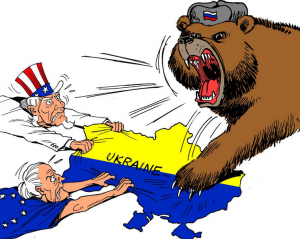
Ukraine Raises Interest Rates to 14%, Stemming Capital Outflows and Forex Devaluation
Thursday,13/11/2014|03:00GMTby
George Tchetvertakov
As the geo-political conflict between Russia and the Ukraine intensifies, both the Rouble and the Hryvnia are suffering via capital outflows. In Ukraine's case, raising interest rates is like fighting a rising tide with a bucket.
The National Bank of Ukraine (NBU), the country’s central bank, raised interest rates from 12.5% to 14.0% as of today. The move was largely unexpected and gave the Ukrainian hryvnia a solid bid in trading during the Asian session.
The latest rate increase is the third this year, as the NBU struggles to stave off USD demand which is driving the Exchange rate to record lows. Ukraine’s continuing conflict with Russia over the Crimean and Eastern regions is contributing to the exodus of capital leaving the country.
Ukraine is also crippled by rampant inflation with consumer prices rising an eye-watering 19.8% in October compared to 0.5% in January. This is the highest rate of inflation since 2009 and the consequential effects of the GFC which can be partly explained by the government’s decision to raise household utility tariffs in order to qualify for an international bailout from the IMF/World Bank. The confluence of war, geopolitical uncertainty, inflation and capital flight has driven the hryvnia 59% lower agains the US dollar since the start of 2014.
Conflict Is Bad for Business
Market conditions have consistently deteriorated since the Ukraine-Russia conflict began in February of this year, so much so that the NBU expects the Ukrainian economy to contract by 7% this year and the growth outlook for 2015 is equally sombre. According to the NBU, the negative GDP growth over the past year is intensifying… “the decline in real GDP in Q3 was 5.1% compared to 4.6% in Q2 and 1.1% in Q1 respectively."
To make things worse, Ukraine is now obligated to meet a slew of macroeconomic conditions and reforms as prescribed by the IMF and World Bank. When analysing IMF involvement in other countries such as Greece and Cyprus, it is likely that Ukraine will be forced to implement increasingly draconian measures to the detriment of its working population, leading to more unemployment and social unrest. Furthermore, national reserves of currency and precious metals are likely to be appropriated by the IMF, conditional for repayment conditions to being met.
According to an official statement accompanying the rate increase, the NBU said, “A worse market outlook and further hryvnia devaluation are causing additional inflation pressure, which will remain during the beginning of next year.” Adding, “Stabilizing measures taken by the central bank need to be reinforced by rate policy tools toward increasing the domestic value of the hryvnia.”
The NBU cites, “mutual restrictions in foreign trade with Russia” as a core factor for the decline in aggregate output. The two countries not only share an economic link but also a cultural bond that account for the majority of Ukraine’s net trade. Given the geopolitical conflict, many of those ties have been severed.
Pointing the finger of blame at Russia, the NBU states, “ The lack of de-escalation of military aggression against Ukraine led to the exacerbation of negative expectations, manifested in accelerating the outflow of deposits from banks and demand for foreign currency in recent months after some signs of stabilization in June 2014." In July and October, hryvnia outflows reached $16.8 billion. In terms of cash currency, the NBU estimates that approximately $1 billion left Ukraine in July-October.
And the Only Winner Is....
The Russia-Ukraine conflict undermines economic activity in both countries and continues to frighten investors from investing in the region until geopolitical conditions improve. Both countries are engaged in artificially supporting their respective currencies and both are using foreign exchange reserves to sustain value in their own currencies. Both the CBR and NBU have raised interest rates several times this year; with a low-rate environment globally, the only thing higher interest rates do is to stifle domestic business activity.
With the conflict now raging for almost a year, the prime benefactors are Russia's global competitors - the US and the EU. Chinese officials are also likely to be filled with glee as a major global player is tangled up with inflation under international sanctions.
The conflict took a turn for the worse yesterday with NATO reporting that Russian troops entered Eastern Ukraine to support the separatist movement that has only grown since its inception. It is difficult to see how the conflict will de-escalate given the impasse over territorial claims and past indiscretions by both nations.
The NBU is likely to raise rates again while the hryvnia continues to see falling demand. With IMF and World Bank involvement, a hryvnia-US dollar peg is also an option likely to be considered as a way to contain rampant inflation.
The National Bank of Ukraine (NBU), the country’s central bank, raised interest rates from 12.5% to 14.0% as of today. The move was largely unexpected and gave the Ukrainian hryvnia a solid bid in trading during the Asian session.
The latest rate increase is the third this year, as the NBU struggles to stave off USD demand which is driving the Exchange rate to record lows. Ukraine’s continuing conflict with Russia over the Crimean and Eastern regions is contributing to the exodus of capital leaving the country.
Ukraine is also crippled by rampant inflation with consumer prices rising an eye-watering 19.8% in October compared to 0.5% in January. This is the highest rate of inflation since 2009 and the consequential effects of the GFC which can be partly explained by the government’s decision to raise household utility tariffs in order to qualify for an international bailout from the IMF/World Bank. The confluence of war, geopolitical uncertainty, inflation and capital flight has driven the hryvnia 59% lower agains the US dollar since the start of 2014.
Conflict Is Bad for Business
Market conditions have consistently deteriorated since the Ukraine-Russia conflict began in February of this year, so much so that the NBU expects the Ukrainian economy to contract by 7% this year and the growth outlook for 2015 is equally sombre. According to the NBU, the negative GDP growth over the past year is intensifying… “the decline in real GDP in Q3 was 5.1% compared to 4.6% in Q2 and 1.1% in Q1 respectively."
To make things worse, Ukraine is now obligated to meet a slew of macroeconomic conditions and reforms as prescribed by the IMF and World Bank. When analysing IMF involvement in other countries such as Greece and Cyprus, it is likely that Ukraine will be forced to implement increasingly draconian measures to the detriment of its working population, leading to more unemployment and social unrest. Furthermore, national reserves of currency and precious metals are likely to be appropriated by the IMF, conditional for repayment conditions to being met.
According to an official statement accompanying the rate increase, the NBU said, “A worse market outlook and further hryvnia devaluation are causing additional inflation pressure, which will remain during the beginning of next year.” Adding, “Stabilizing measures taken by the central bank need to be reinforced by rate policy tools toward increasing the domestic value of the hryvnia.”
The NBU cites, “mutual restrictions in foreign trade with Russia” as a core factor for the decline in aggregate output. The two countries not only share an economic link but also a cultural bond that account for the majority of Ukraine’s net trade. Given the geopolitical conflict, many of those ties have been severed.
Pointing the finger of blame at Russia, the NBU states, “ The lack of de-escalation of military aggression against Ukraine led to the exacerbation of negative expectations, manifested in accelerating the outflow of deposits from banks and demand for foreign currency in recent months after some signs of stabilization in June 2014." In July and October, hryvnia outflows reached $16.8 billion. In terms of cash currency, the NBU estimates that approximately $1 billion left Ukraine in July-October.
And the Only Winner Is....
The Russia-Ukraine conflict undermines economic activity in both countries and continues to frighten investors from investing in the region until geopolitical conditions improve. Both countries are engaged in artificially supporting their respective currencies and both are using foreign exchange reserves to sustain value in their own currencies. Both the CBR and NBU have raised interest rates several times this year; with a low-rate environment globally, the only thing higher interest rates do is to stifle domestic business activity.
With the conflict now raging for almost a year, the prime benefactors are Russia's global competitors - the US and the EU. Chinese officials are also likely to be filled with glee as a major global player is tangled up with inflation under international sanctions.
The conflict took a turn for the worse yesterday with NATO reporting that Russian troops entered Eastern Ukraine to support the separatist movement that has only grown since its inception. It is difficult to see how the conflict will de-escalate given the impasse over territorial claims and past indiscretions by both nations.
The NBU is likely to raise rates again while the hryvnia continues to see falling demand. With IMF and World Bank involvement, a hryvnia-US dollar peg is also an option likely to be considered as a way to contain rampant inflation.
DXtrade Adds Automated Scalper Detection and A/B-Booking Tool via Gold-i Deal
CMC Markets’ Artur Delijergijevs on Metals Demand, Volatility, & Stable Execution
CMC Markets’ Artur Delijergijevs on Metals Demand, Volatility, & Stable Execution
In this exclusive Executive Interview, Finance Magnates speaks with Artur Delijergijevs, Head of Systematic Market Making at CMC Markets, about the current state of metals demand and market volatility.
Delijergijevs offers a desk-level view on:
- Metals Demand: Why metals are seeing the strongest demand from both retail and institutional clients right now.
- The Safe-Haven Debate: Questioning whether gold still fits the classic safe-haven definition given large daily price movements.
- Volatile Market Prep: How a market-making desk prepares its systems and pricing for stressed market conditions and high-impact economic events.
- Hybrid Execution: Why the best execution model combines electronic speed with human relationship support, especially during volatility.
- AI in Workflow: Where CMC Markets is integrating machine learning for risk management and pricing, and the limitations of AI during stressed markets.
- Dubai's Role: The strategic importance of Dubai’s location for covering global trading sessions across Asia, Europe, and the US.
Watch to understand how CMC Markets maintains stable pricing and reliable execution quality in high-volatility environments.
#CMCmarkets #forex #metals #gold #trading #volatility #MarketMaking #iFXDubai #FinanceMagnates #Finance #Fintech #Execution #AlgorithmicTrading #RiskManagement
In this exclusive Executive Interview, Finance Magnates speaks with Artur Delijergijevs, Head of Systematic Market Making at CMC Markets, about the current state of metals demand and market volatility.
Delijergijevs offers a desk-level view on:
- Metals Demand: Why metals are seeing the strongest demand from both retail and institutional clients right now.
- The Safe-Haven Debate: Questioning whether gold still fits the classic safe-haven definition given large daily price movements.
- Volatile Market Prep: How a market-making desk prepares its systems and pricing for stressed market conditions and high-impact economic events.
- Hybrid Execution: Why the best execution model combines electronic speed with human relationship support, especially during volatility.
- AI in Workflow: Where CMC Markets is integrating machine learning for risk management and pricing, and the limitations of AI during stressed markets.
- Dubai's Role: The strategic importance of Dubai’s location for covering global trading sessions across Asia, Europe, and the US.
Watch to understand how CMC Markets maintains stable pricing and reliable execution quality in high-volatility environments.
#CMCmarkets #forex #metals #gold #trading #volatility #MarketMaking #iFXDubai #FinanceMagnates #Finance #Fintech #Execution #AlgorithmicTrading #RiskManagement
Finance Magnates Awards 2026 – Nominations Now Open
Finance Magnates Awards 2026 – Nominations Now Open
The Finance Magnates Awards 2026 nominations are now open. 🏆
From fintech innovators to leading brokers, this is where the finance industry celebrates its biggest achievements.
Winners will be announced at the Cyprus Gala Dinner on November 6, 2026.
Nominate your brand now.
https://awards.financemagnates.com/?utm_source=linkedin&utm_medium=video&utm_campaign=nominations-open
#FMAwards #FinanceMagnates #FintechAwards #Fintech #FinanceIndustry
The Finance Magnates Awards 2026 nominations are now open. 🏆
From fintech innovators to leading brokers, this is where the finance industry celebrates its biggest achievements.
Winners will be announced at the Cyprus Gala Dinner on November 6, 2026.
Nominate your brand now.
https://awards.financemagnates.com/?utm_source=linkedin&utm_medium=video&utm_campaign=nominations-open
#FMAwards #FinanceMagnates #FintechAwards #Fintech #FinanceIndustry
Finance Magnates Awards 2026 | Nominations Now Open 🏆#Fintech #FMAwards #TradingIndustry
Finance Magnates Awards 2026 | Nominations Now Open 🏆#Fintech #FMAwards #TradingIndustry
Lights on. Cameras ready. 🎬
Finance Magnates Awards 2026 nominations are now open. 🏆
#FMAwards #FinanceMagnates #FintechAwards #Fintech
Lights on. Cameras ready. 🎬
Finance Magnates Awards 2026 nominations are now open. 🏆
#FMAwards #FinanceMagnates #FintechAwards #Fintech
Exness sees trust as the key theme for growth in MENA Trading Growth for 2026
Exness sees trust as the key theme for growth in MENA Trading Growth for 2026
Mohammad Amer, Regional Commercial Director at Exness, sits down to discuss the booming MENA financial trading market. Find out why Dubai is key to the company's growth strategy, how a mobile-first generation is changing expectations, and why trust will be the defining theme for traders in 2026.
In this interview, you'll learn:
* Why Dubai and the MENA region are critical growth markets for fintech and online trading.
* How Exness is addressing the demands of mobile-first, younger traders through engineering, platform stability, and transparent conditions.
* The essential role local talent plays in providing a culturally relevant and compliant user experience.
* Mohammad Amer's outlook on the future of the online trading industry and why stronger controls and systems are necessary.
* Why "trust" isn't just a brand value, but has commercial value—and why he predicts 2026 will be the "Year of Trust."
Key Takeaways:
➡️ The MENA region is rapidly shaping global financial markets.
➡️ New traders expect stability, precise execution, and transparency.
➡️ Local expertise is key to regulatory compliance and user experience.
➡️ Future success belongs to firms capable of meeting rising standards across regulation and platform consistency.
Read the full article at: https://www.financemagnates.com/thought-leadership/exness-sees-trust-as-the-key-theme-for-growth-in-mena-trading-growth-for-2026/
#Exness #MENA #Trading #FinTech #Dubai #OnlineTrading #FinanceMagnates #MohammadAmer #Trust #MobileTrading
Mohammad Amer, Regional Commercial Director at Exness, sits down to discuss the booming MENA financial trading market. Find out why Dubai is key to the company's growth strategy, how a mobile-first generation is changing expectations, and why trust will be the defining theme for traders in 2026.
In this interview, you'll learn:
* Why Dubai and the MENA region are critical growth markets for fintech and online trading.
* How Exness is addressing the demands of mobile-first, younger traders through engineering, platform stability, and transparent conditions.
* The essential role local talent plays in providing a culturally relevant and compliant user experience.
* Mohammad Amer's outlook on the future of the online trading industry and why stronger controls and systems are necessary.
* Why "trust" isn't just a brand value, but has commercial value—and why he predicts 2026 will be the "Year of Trust."
Key Takeaways:
➡️ The MENA region is rapidly shaping global financial markets.
➡️ New traders expect stability, precise execution, and transparency.
➡️ Local expertise is key to regulatory compliance and user experience.
➡️ Future success belongs to firms capable of meeting rising standards across regulation and platform consistency.
Read the full article at: https://www.financemagnates.com/thought-leadership/exness-sees-trust-as-the-key-theme-for-growth-in-mena-trading-growth-for-2026/
#Exness #MENA #Trading #FinTech #Dubai #OnlineTrading #FinanceMagnates #MohammadAmer #Trust #MobileTrading
Paytiko CEO Razi Salih on Why Payment Orchestration is a MUST-HAVE for Brokers in 2026
Paytiko CEO Razi Salih on Why Payment Orchestration is a MUST-HAVE for Brokers in 2026
At iFX Expo Dubai, Finance Magnates spoke with Razi Salih, CEO at Paytiko, about the evolution of the payments ecosystem and why payment orchestration has shifted from an option to a necessity for brokers, prop firms, and exchanges.
Mr. Salih explains how global expansion, the need for deep localisation, and the sheer number of new payment methods, from instant banking to stablecoins, are driving this critical infrastructure shift.
#PaymentOrchestration #Fintech #Brokerage #TradingPayments #RaziSalih #Paytiko #iFXExpoDubai #Stablecoins #AIinFintech
At iFX Expo Dubai, Finance Magnates spoke with Razi Salih, CEO at Paytiko, about the evolution of the payments ecosystem and why payment orchestration has shifted from an option to a necessity for brokers, prop firms, and exchanges.
Mr. Salih explains how global expansion, the need for deep localisation, and the sheer number of new payment methods, from instant banking to stablecoins, are driving this critical infrastructure shift.
#PaymentOrchestration #Fintech #Brokerage #TradingPayments #RaziSalih #Paytiko #iFXExpoDubai #Stablecoins #AIinFintech