Spreads to Widen on Index CFDs as Italy Embraces New Trading Tax
Friday,30/08/2013|18:11GMTby
Adil Siddiqui
Italy’s government will embrace the controversial Financial Transaction Tax for Equity Derivatives on September 1st thus affecting CFD spreads on the FTSE MIB. The Italian Parliament approved the FTT bill in December 2012.
Italian equity derivatives traders will feel the brunt of a new tax introduced by the government from the 1st of September. Italy’s parliament approved the Financial Transaction Tax (FTT) bill in December 2012, a new charge that traders pay to trade in selected financial instruments. Italy and France have been the first of 11 European nations that have opted to introduce the financial transaction duty. The European Commission instigated talk about the FTT in 2011, a levy in financial transactions which aims to regulate and stabilise markets.
FXCM, a leading multi asset broker that is listed on the New York Stock Exchange, sent a notification about the new FTT rulings via an email to its clients today. The notification gave details about the proposed changes that will be affecting the FTSE MIB, on the FXCM platform the main Italian Stock Index is defined as the ITA40.
FXCM will widen the spread of the ITA40 by 10 pips (20 pips round turn) in order for the new levy to be paid. The FTT is to be paid by any client (regardless of their location) when transacting in Italian Equity Derivatives.
Challengers of the FTT have been arguing that the new tax will create an unfair advantage for instruments that are under the new regime, this will ultimately divert volume and liquidity to other asset classes that do not have additional transaction charges. Carlo de Casa, a Forex Analyst at Activtrades, believes that; “traders may consider other indices similar to the Italian one, such as the IBEX (the Spanish Index), or the popular and established, German DAX.”
The new tax may also change trader behaviour, as traders explore new strategies and mechanisms to surpass the tax. The tax is charged on the total value of the transaction, and as a result, traders may opt for lower value transactions. Forex Magnates believes that the new tax will have an impact on trading volumes, as seen by data on the Italian stock exchange post securities tax earlier this year and the Commodity Transaction Tax imposed by India’s government.
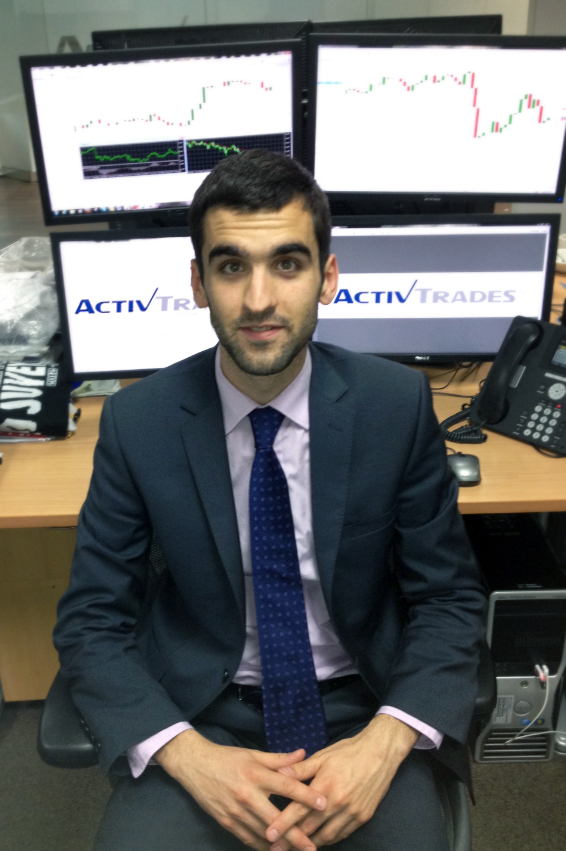
Carlo de Casa
Italy introduced the first element of the FTT earlier this year in March. The tax was to be levied on equities. As expected, the market reacted negatively to the new charge and volumes significantly reduced. According to data from Bats Chi-X Europe, volumes dropped 12% in March from January and February, the total value of trades equaled €2.72bn for the month of March.
The EU’s key objectives
The financial transaction tax comes three years after the global economy suffered immensely due to the credit crisis. The EU Commission, the body that proposed implementation of the tax, believes the charges will have a key impact in ensuring stability and efficiency in the market. The EU Commission expects significant changes to the market place with the implementation of the FTT. The key objectives of the proposed FTT as per the EU Commission:
To prevent the fragmentation of the Single Market that could result from numerous uncoordinated national approaches to taxing financial transactions;
To ensure that the financial sector make a fair and substantial contribution to public finances;
To discourage financial transactions which do not contribute to the efficiency of financial markets or to the real economy;
Italy and the FTT
The key points of the new law are as follows, from the official government website:
The FTT will be imposed on shares issued by Italian resident companies with a capitalisation of more than EUR 500 million, ADRs and GDRs, and shares via convertible bonds;
The rates for taxable transactions will be 0.1% if traded on regulated markets or Multilateral Trading Facilities (MTF), or 0.2% if executed over-the-counter (OTC). However, only for the financial year 2013, the applicable rates will be 0.12% if traded on regulated markets or MTF and 0.22% if executed OTC;
Derivatives contracts traded OTC will be subject to a fixed amount between EUR 0.01875 and EUR 200 depending on the type of contract and its notional value. If derivatives contracts are executed on a regulated market or MTF, the tax will be reduced to 20% of the original notional amount;
The tax liability will be levied on the buyer in case of cash equity, and on each party involved in the transaction for derivatives contracts, while the payment will be due by the 16th of the next month the transaction takes place;
A tax of 0.02% on High-Frequency Trading Tax (HFTT) will be applicable in addition to the new FTT on the counter-value of orders cancelled or amended by HFT systems.
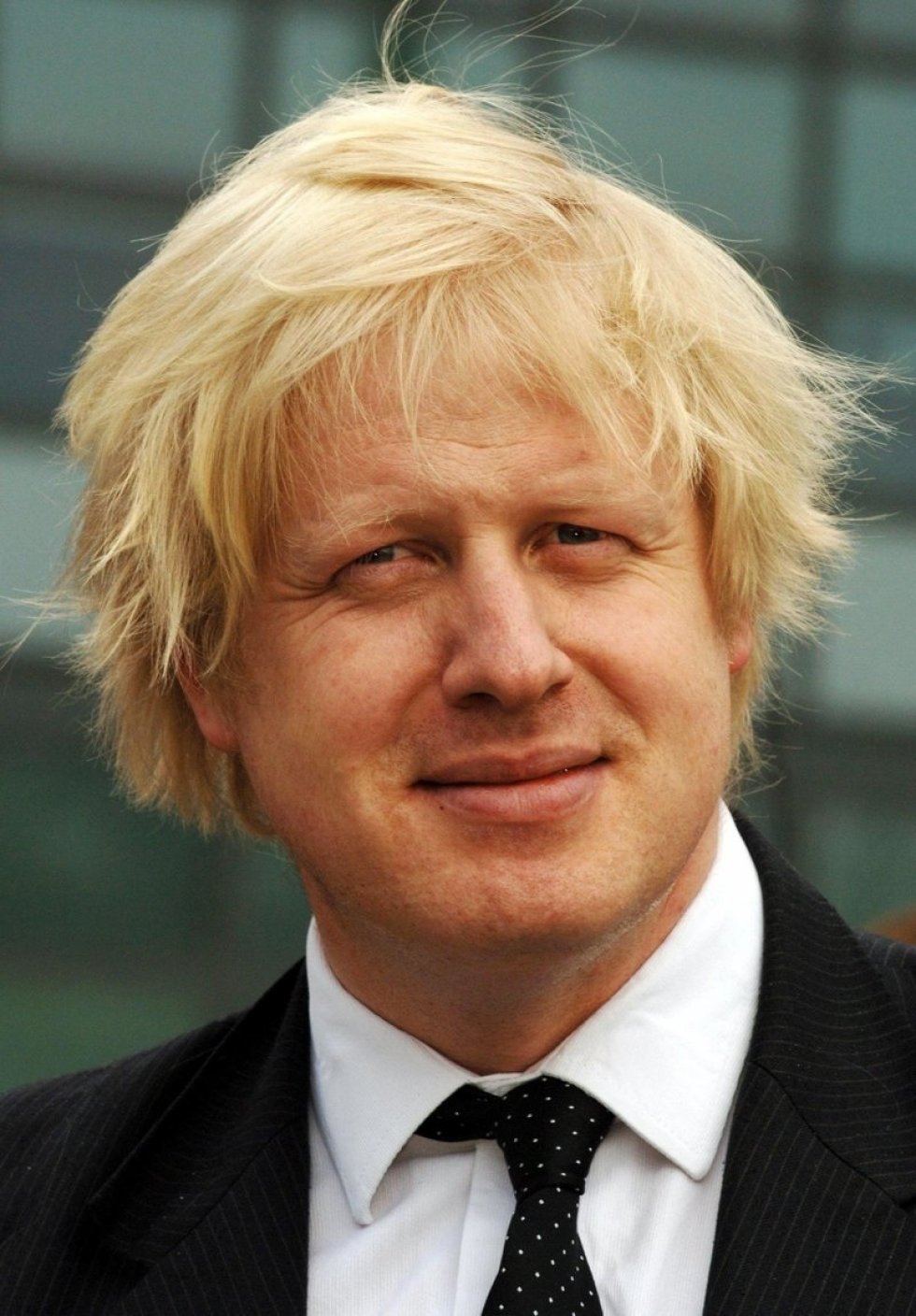
Boris Johnson
The new Financial Transaction Tax is expected to be rolled out across 11 major European countries. The eleven nations include France and Italy as well as; Germany, Spain, Belgium, Austria, Greece, Portugal, Slovakia, Slovenia and Estonia. The UK has been outspoken about the proposed tax and London’s Mayor, Boris Johnson has gone as far as saying: “German and Italian banks should move to the UK if FTT is introduced,” in a statement to the media.
The Financial Transaction Tax is expected to bring in around £30 to £40 billion per annum in revenue for authorities.
Italian equity derivatives traders will feel the brunt of a new tax introduced by the government from the 1st of September. Italy’s parliament approved the Financial Transaction Tax (FTT) bill in December 2012, a new charge that traders pay to trade in selected financial instruments. Italy and France have been the first of 11 European nations that have opted to introduce the financial transaction duty. The European Commission instigated talk about the FTT in 2011, a levy in financial transactions which aims to regulate and stabilise markets.
FXCM, a leading multi asset broker that is listed on the New York Stock Exchange, sent a notification about the new FTT rulings via an email to its clients today. The notification gave details about the proposed changes that will be affecting the FTSE MIB, on the FXCM platform the main Italian Stock Index is defined as the ITA40.
FXCM will widen the spread of the ITA40 by 10 pips (20 pips round turn) in order for the new levy to be paid. The FTT is to be paid by any client (regardless of their location) when transacting in Italian Equity Derivatives.
Challengers of the FTT have been arguing that the new tax will create an unfair advantage for instruments that are under the new regime, this will ultimately divert volume and liquidity to other asset classes that do not have additional transaction charges. Carlo de Casa, a Forex Analyst at Activtrades, believes that; “traders may consider other indices similar to the Italian one, such as the IBEX (the Spanish Index), or the popular and established, German DAX.”
The new tax may also change trader behaviour, as traders explore new strategies and mechanisms to surpass the tax. The tax is charged on the total value of the transaction, and as a result, traders may opt for lower value transactions. Forex Magnates believes that the new tax will have an impact on trading volumes, as seen by data on the Italian stock exchange post securities tax earlier this year and the Commodity Transaction Tax imposed by India’s government.
Carlo de Casa
Italy introduced the first element of the FTT earlier this year in March. The tax was to be levied on equities. As expected, the market reacted negatively to the new charge and volumes significantly reduced. According to data from Bats Chi-X Europe, volumes dropped 12% in March from January and February, the total value of trades equaled €2.72bn for the month of March.
The EU’s key objectives
The financial transaction tax comes three years after the global economy suffered immensely due to the credit crisis. The EU Commission, the body that proposed implementation of the tax, believes the charges will have a key impact in ensuring stability and efficiency in the market. The EU Commission expects significant changes to the market place with the implementation of the FTT. The key objectives of the proposed FTT as per the EU Commission:
To prevent the fragmentation of the Single Market that could result from numerous uncoordinated national approaches to taxing financial transactions;
To ensure that the financial sector make a fair and substantial contribution to public finances;
To discourage financial transactions which do not contribute to the efficiency of financial markets or to the real economy;
Italy and the FTT
The key points of the new law are as follows, from the official government website:
The FTT will be imposed on shares issued by Italian resident companies with a capitalisation of more than EUR 500 million, ADRs and GDRs, and shares via convertible bonds;
The rates for taxable transactions will be 0.1% if traded on regulated markets or Multilateral Trading Facilities (MTF), or 0.2% if executed over-the-counter (OTC). However, only for the financial year 2013, the applicable rates will be 0.12% if traded on regulated markets or MTF and 0.22% if executed OTC;
Derivatives contracts traded OTC will be subject to a fixed amount between EUR 0.01875 and EUR 200 depending on the type of contract and its notional value. If derivatives contracts are executed on a regulated market or MTF, the tax will be reduced to 20% of the original notional amount;
The tax liability will be levied on the buyer in case of cash equity, and on each party involved in the transaction for derivatives contracts, while the payment will be due by the 16th of the next month the transaction takes place;
A tax of 0.02% on High-Frequency Trading Tax (HFTT) will be applicable in addition to the new FTT on the counter-value of orders cancelled or amended by HFT systems.
Boris Johnson
The new Financial Transaction Tax is expected to be rolled out across 11 major European countries. The eleven nations include France and Italy as well as; Germany, Spain, Belgium, Austria, Greece, Portugal, Slovakia, Slovenia and Estonia. The UK has been outspoken about the proposed tax and London’s Mayor, Boris Johnson has gone as far as saying: “German and Italian banks should move to the UK if FTT is introduced,” in a statement to the media.
The Financial Transaction Tax is expected to bring in around £30 to £40 billion per annum in revenue for authorities.
XTB Signs Paris La Défense Arena Deal as French Client Base Grows 50%
CMC Markets’ Artur Delijergijevs on Metals Demand, Volatility, & Stable Execution
CMC Markets’ Artur Delijergijevs on Metals Demand, Volatility, & Stable Execution
In this exclusive Executive Interview, Finance Magnates speaks with Artur Delijergijevs, Head of Systematic Market Making at CMC Markets, about the current state of metals demand and market volatility.
Delijergijevs offers a desk-level view on:
- Metals Demand: Why metals are seeing the strongest demand from both retail and institutional clients right now.
- The Safe-Haven Debate: Questioning whether gold still fits the classic safe-haven definition given large daily price movements.
- Volatile Market Prep: How a market-making desk prepares its systems and pricing for stressed market conditions and high-impact economic events.
- Hybrid Execution: Why the best execution model combines electronic speed with human relationship support, especially during volatility.
- AI in Workflow: Where CMC Markets is integrating machine learning for risk management and pricing, and the limitations of AI during stressed markets.
- Dubai's Role: The strategic importance of Dubai’s location for covering global trading sessions across Asia, Europe, and the US.
Watch to understand how CMC Markets maintains stable pricing and reliable execution quality in high-volatility environments.
#CMCmarkets #forex #metals #gold #trading #volatility #MarketMaking #iFXDubai #FinanceMagnates #Finance #Fintech #Execution #AlgorithmicTrading #RiskManagement
In this exclusive Executive Interview, Finance Magnates speaks with Artur Delijergijevs, Head of Systematic Market Making at CMC Markets, about the current state of metals demand and market volatility.
Delijergijevs offers a desk-level view on:
- Metals Demand: Why metals are seeing the strongest demand from both retail and institutional clients right now.
- The Safe-Haven Debate: Questioning whether gold still fits the classic safe-haven definition given large daily price movements.
- Volatile Market Prep: How a market-making desk prepares its systems and pricing for stressed market conditions and high-impact economic events.
- Hybrid Execution: Why the best execution model combines electronic speed with human relationship support, especially during volatility.
- AI in Workflow: Where CMC Markets is integrating machine learning for risk management and pricing, and the limitations of AI during stressed markets.
- Dubai's Role: The strategic importance of Dubai’s location for covering global trading sessions across Asia, Europe, and the US.
Watch to understand how CMC Markets maintains stable pricing and reliable execution quality in high-volatility environments.
#CMCmarkets #forex #metals #gold #trading #volatility #MarketMaking #iFXDubai #FinanceMagnates #Finance #Fintech #Execution #AlgorithmicTrading #RiskManagement
Finance Magnates Awards 2026 – Nominations Now Open
Finance Magnates Awards 2026 – Nominations Now Open
The Finance Magnates Awards 2026 nominations are now open. 🏆
From fintech innovators to leading brokers, this is where the finance industry celebrates its biggest achievements.
Winners will be announced at the Cyprus Gala Dinner on November 6, 2026.
Nominate your brand now.
https://awards.financemagnates.com/?utm_source=linkedin&utm_medium=video&utm_campaign=nominations-open
#FMAwards #FinanceMagnates #FintechAwards #Fintech #FinanceIndustry
The Finance Magnates Awards 2026 nominations are now open. 🏆
From fintech innovators to leading brokers, this is where the finance industry celebrates its biggest achievements.
Winners will be announced at the Cyprus Gala Dinner on November 6, 2026.
Nominate your brand now.
https://awards.financemagnates.com/?utm_source=linkedin&utm_medium=video&utm_campaign=nominations-open
#FMAwards #FinanceMagnates #FintechAwards #Fintech #FinanceIndustry
Finance Magnates Awards 2026 | Nominations Now Open 🏆#Fintech #FMAwards #TradingIndustry
Finance Magnates Awards 2026 | Nominations Now Open 🏆#Fintech #FMAwards #TradingIndustry
Lights on. Cameras ready. 🎬
Finance Magnates Awards 2026 nominations are now open. 🏆
#FMAwards #FinanceMagnates #FintechAwards #Fintech
Lights on. Cameras ready. 🎬
Finance Magnates Awards 2026 nominations are now open. 🏆
#FMAwards #FinanceMagnates #FintechAwards #Fintech
Exness sees trust as the key theme for growth in MENA Trading Growth for 2026
Exness sees trust as the key theme for growth in MENA Trading Growth for 2026
Mohammad Amer, Regional Commercial Director at Exness, sits down to discuss the booming MENA financial trading market. Find out why Dubai is key to the company's growth strategy, how a mobile-first generation is changing expectations, and why trust will be the defining theme for traders in 2026.
In this interview, you'll learn:
* Why Dubai and the MENA region are critical growth markets for fintech and online trading.
* How Exness is addressing the demands of mobile-first, younger traders through engineering, platform stability, and transparent conditions.
* The essential role local talent plays in providing a culturally relevant and compliant user experience.
* Mohammad Amer's outlook on the future of the online trading industry and why stronger controls and systems are necessary.
* Why "trust" isn't just a brand value, but has commercial value—and why he predicts 2026 will be the "Year of Trust."
Key Takeaways:
➡️ The MENA region is rapidly shaping global financial markets.
➡️ New traders expect stability, precise execution, and transparency.
➡️ Local expertise is key to regulatory compliance and user experience.
➡️ Future success belongs to firms capable of meeting rising standards across regulation and platform consistency.
Read the full article at: https://www.financemagnates.com/thought-leadership/exness-sees-trust-as-the-key-theme-for-growth-in-mena-trading-growth-for-2026/
#Exness #MENA #Trading #FinTech #Dubai #OnlineTrading #FinanceMagnates #MohammadAmer #Trust #MobileTrading
Mohammad Amer, Regional Commercial Director at Exness, sits down to discuss the booming MENA financial trading market. Find out why Dubai is key to the company's growth strategy, how a mobile-first generation is changing expectations, and why trust will be the defining theme for traders in 2026.
In this interview, you'll learn:
* Why Dubai and the MENA region are critical growth markets for fintech and online trading.
* How Exness is addressing the demands of mobile-first, younger traders through engineering, platform stability, and transparent conditions.
* The essential role local talent plays in providing a culturally relevant and compliant user experience.
* Mohammad Amer's outlook on the future of the online trading industry and why stronger controls and systems are necessary.
* Why "trust" isn't just a brand value, but has commercial value—and why he predicts 2026 will be the "Year of Trust."
Key Takeaways:
➡️ The MENA region is rapidly shaping global financial markets.
➡️ New traders expect stability, precise execution, and transparency.
➡️ Local expertise is key to regulatory compliance and user experience.
➡️ Future success belongs to firms capable of meeting rising standards across regulation and platform consistency.
Read the full article at: https://www.financemagnates.com/thought-leadership/exness-sees-trust-as-the-key-theme-for-growth-in-mena-trading-growth-for-2026/
#Exness #MENA #Trading #FinTech #Dubai #OnlineTrading #FinanceMagnates #MohammadAmer #Trust #MobileTrading
Paytiko CEO Razi Salih on Why Payment Orchestration is a MUST-HAVE for Brokers in 2026
Paytiko CEO Razi Salih on Why Payment Orchestration is a MUST-HAVE for Brokers in 2026
At iFX Expo Dubai, Finance Magnates spoke with Razi Salih, CEO at Paytiko, about the evolution of the payments ecosystem and why payment orchestration has shifted from an option to a necessity for brokers, prop firms, and exchanges.
Mr. Salih explains how global expansion, the need for deep localisation, and the sheer number of new payment methods, from instant banking to stablecoins, are driving this critical infrastructure shift.
#PaymentOrchestration #Fintech #Brokerage #TradingPayments #RaziSalih #Paytiko #iFXExpoDubai #Stablecoins #AIinFintech
At iFX Expo Dubai, Finance Magnates spoke with Razi Salih, CEO at Paytiko, about the evolution of the payments ecosystem and why payment orchestration has shifted from an option to a necessity for brokers, prop firms, and exchanges.
Mr. Salih explains how global expansion, the need for deep localisation, and the sheer number of new payment methods, from instant banking to stablecoins, are driving this critical infrastructure shift.
#PaymentOrchestration #Fintech #Brokerage #TradingPayments #RaziSalih #Paytiko #iFXExpoDubai #Stablecoins #AIinFintech