The boom in oil exploration in the 2nd half of the 20th century opened up the Middle East to the global economy and shifted the once nomad land to economic glory. Saudi Arabia, home to the world’s largest oil reserves, ranks as 23rd largest economy of the world.
The largest and most populous nation in the Gulf Cooperation Council (GCC), Saudi Arabia has seen neighbors such as the UAE, Bahrain and Qatar become thriving economic centers, while the kingdom has been slow to adapt the implementation of global values. However with a shift to a more liberal and diversified economy, Saudi Arabia is set to dominate the Middle East and Arab world as an economic leader.
Saudi Arabia is an oil based economy with natural resources making up 45% of budget revenues, 55% of GDP, and 90% of export earnings. However, Saudi Arabia has been developing other sectors of its economy to reduce its dependency on oil revenue. Just before the global financial crisis hit, prices of
oil peaked at $147/barrel before crashing to $30. Although higher priced oil is beneficial for Saudi Arabia, the higher costs also lower the demand.
Due to these massive price shifts and their effect on supply and demand Saudi Arabia has understood
the need for diversification. The country has a strong domestic economy driven by oil and petroleum exports. However a concern for the government is the high unemployment figure which is around 10%. This is alarming when compared to neighbors such as the UAE where only 4.6% of the population is unemployed. The jobless problem becomes more complicated for the future as the majority of the unemployed are below the age of 25. GDP per capita is at a modest $25,000, ranking 38th in the world.
There is a relative imbalance amongst Saudis, although the government gives housing and funding grants. Saudis living in rural areas are faced with difficulty as the oil wealth does not usually reach them. There are an estimated 670,000 families who can be classified as poor or close to the poverty line. From the 18 million Saudi citizens in Saudi Arabia (total population is around 25 million) that equates to nearly 3 million people who are poor.
Despite the nation being home to the highest number of high net worth in the Middle East region, Forex Trading in Saudi Arabia has been an investment product for a small portion of investors. Computer literacy and awareness of global markets meant that only a handful of Saudi Arabian investors were familiar with the leveraged product. Forex was first pioneered in this region by introducing brokers from Jordan in the early 2000s. Clients would be informed of the numerous benefits offered by forex trading and most traders would invest with the introducing broker who would also manage client money on their behalf.
At the same time, firms like FX Solutions had set their eyes on the nation and started preparing the right material to educate Saudi investors on the dynamics of the forex markets. The firm had specialist sales and marketing individuals as well as material in Arabic language. Overall, the country has been slow to explore global investment products like forex and CFDs. Neighboring countries such as Jordan and UAE established marketplaces for online forex trading at an earlier time.
IB and Money Manager Dominance
The Saudi market was driven by introducing brokers and money managers who performed offline marketing; setting up small offices where they would inform and educate traders. However, Saudi investors have faced difficulty with many of these money managers who lured them into forex investments and failed to fully declare the nature and risks of the markets as well as providing falsified previous returns.
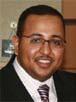
Saudi-based Day Trader Shafi Ahmed
Money managers would get large investments (sums of around $100k) from investors and work with unregulated brokers. The account would then suffer losses with the broker and money manager splitting the losses. Shafi Ahmed, a day trader and portfolio manager based in Saudi Arabia, sees this as a major challenge for investors; “one of the biggest scams is the fake money manager whose main concern is to margin call the accounts”.
This is an excerpt from a full feature on the Saudi Arabian forex market in our Q4 Forex Industry Report.
The boom in oil exploration in the 2nd half of the 20th century opened up the Middle East to the global economy and shifted the once nomad land to economic glory. Saudi Arabia, home to the world’s largest oil reserves, ranks as 23rd largest economy of the world.
The largest and most populous nation in the Gulf Cooperation Council (GCC), Saudi Arabia has seen neighbors such as the UAE, Bahrain and Qatar become thriving economic centers, while the kingdom has been slow to adapt the implementation of global values. However with a shift to a more liberal and diversified economy, Saudi Arabia is set to dominate the Middle East and Arab world as an economic leader.
Saudi Arabia is an oil based economy with natural resources making up 45% of budget revenues, 55% of GDP, and 90% of export earnings. However, Saudi Arabia has been developing other sectors of its economy to reduce its dependency on oil revenue. Just before the global financial crisis hit, prices of
oil peaked at $147/barrel before crashing to $30. Although higher priced oil is beneficial for Saudi Arabia, the higher costs also lower the demand.
Due to these massive price shifts and their effect on supply and demand Saudi Arabia has understood
the need for diversification. The country has a strong domestic economy driven by oil and petroleum exports. However a concern for the government is the high unemployment figure which is around 10%. This is alarming when compared to neighbors such as the UAE where only 4.6% of the population is unemployed. The jobless problem becomes more complicated for the future as the majority of the unemployed are below the age of 25. GDP per capita is at a modest $25,000, ranking 38th in the world.
There is a relative imbalance amongst Saudis, although the government gives housing and funding grants. Saudis living in rural areas are faced with difficulty as the oil wealth does not usually reach them. There are an estimated 670,000 families who can be classified as poor or close to the poverty line. From the 18 million Saudi citizens in Saudi Arabia (total population is around 25 million) that equates to nearly 3 million people who are poor.
Despite the nation being home to the highest number of high net worth in the Middle East region, Forex Trading in Saudi Arabia has been an investment product for a small portion of investors. Computer literacy and awareness of global markets meant that only a handful of Saudi Arabian investors were familiar with the leveraged product. Forex was first pioneered in this region by introducing brokers from Jordan in the early 2000s. Clients would be informed of the numerous benefits offered by forex trading and most traders would invest with the introducing broker who would also manage client money on their behalf.
At the same time, firms like FX Solutions had set their eyes on the nation and started preparing the right material to educate Saudi investors on the dynamics of the forex markets. The firm had specialist sales and marketing individuals as well as material in Arabic language. Overall, the country has been slow to explore global investment products like forex and CFDs. Neighboring countries such as Jordan and UAE established marketplaces for online forex trading at an earlier time.
IB and Money Manager Dominance
The Saudi market was driven by introducing brokers and money managers who performed offline marketing; setting up small offices where they would inform and educate traders. However, Saudi investors have faced difficulty with many of these money managers who lured them into forex investments and failed to fully declare the nature and risks of the markets as well as providing falsified previous returns.
Saudi-based Day Trader Shafi Ahmed
Money managers would get large investments (sums of around $100k) from investors and work with unregulated brokers. The account would then suffer losses with the broker and money manager splitting the losses. Shafi Ahmed, a day trader and portfolio manager based in Saudi Arabia, sees this as a major challenge for investors; “one of the biggest scams is the fake money manager whose main concern is to margin call the accounts”.
This is an excerpt from a full feature on the Saudi Arabian forex market in our Q4 Forex Industry Report.
Italy’s Consob Tightens Net on AI-Fueled Scams With Fresh Website Bans
FP Markets Winner Spotlight 🏆 | Global Broker of the Year 2025 #Trading #Broker #Innovation #Shorts
FP Markets Winner Spotlight 🏆 | Global Broker of the Year 2025 #Trading #Broker #Innovation #Shorts
FP Markets takes the spotlight as Global Broker of the Year 2025 at the Finance Magnates Awards.
Martin Stoilov, Head of Client Experience, shares that trust, innovation, and people played a key role in the company’s success, supported by a strong foundation of integrity and client-centricity.
Following this milestone, FP Markets continues to focus on growth, technology investment, and its core values of transparency and excellence.
👉 Be part of FM Awards 2026: https://awards.financemagnates.com/#nominate
FP Markets takes the spotlight as Global Broker of the Year 2025 at the Finance Magnates Awards.
Martin Stoilov, Head of Client Experience, shares that trust, innovation, and people played a key role in the company’s success, supported by a strong foundation of integrity and client-centricity.
Following this milestone, FP Markets continues to focus on growth, technology investment, and its core values of transparency and excellence.
👉 Be part of FM Awards 2026: https://awards.financemagnates.com/#nominate
In this video, we review @HolaPrimeMarketsOfficial, a multi-asset forex and CFDs broker offering different account types, trading platforms, and flexible trading conditions.
We cover the broker’s overall offering, including account options, trading environment, platforms like MT4 and MT5, and additional services such as managed accounts and fast withdrawals.
Watch the full video to see if Hola Prime Markets fits your trading needs.
📣 Stay up to date with the latest in finance and trading. Follow Finance Magnates for industry news, insights, and global event coverage.
Connect with us:
🔗 LinkedIn: /financemagnates
👍 Facebook: /financemagnates
📸 Instagram: https://www.instagram.com/financemagnates
🐦 X: https://x.com/financemagnates
🎥 TikTok: https://www.tiktok.com/tag/financemagnates
▶️ YouTube: /@financemagnates_official
#HolaPrime #ForexBroker #CFDTrading #FinanceMagnates #Trading #Forex #BrokerReview
In this video, we review @HolaPrimeMarketsOfficial, a multi-asset forex and CFDs broker offering different account types, trading platforms, and flexible trading conditions.
We cover the broker’s overall offering, including account options, trading environment, platforms like MT4 and MT5, and additional services such as managed accounts and fast withdrawals.
Watch the full video to see if Hola Prime Markets fits your trading needs.
📣 Stay up to date with the latest in finance and trading. Follow Finance Magnates for industry news, insights, and global event coverage.
Connect with us:
🔗 LinkedIn: /financemagnates
👍 Facebook: /financemagnates
📸 Instagram: https://www.instagram.com/financemagnates
🐦 X: https://x.com/financemagnates
🎥 TikTok: https://www.tiktok.com/tag/financemagnates
▶️ YouTube: /@financemagnates_official
#HolaPrime #ForexBroker #CFDTrading #FinanceMagnates #Trading #Forex #BrokerReview
Hola Prime Review: What You Need to Know | Full Breakdown by Finance Magnates
Hola Prime Review: What You Need to Know | Full Breakdown by Finance Magnates
In this video, we review @HolaPrime_Global, a proprietary trading firm offering evaluation programs and performance-based payouts in simulated market environments.
We cover how the challenge model works, including account types, profit splits (up to 95%), trading rules, and what it takes to reach a funded account. You’ll also learn about available platforms like MT4, MT5, cTrader, and more, along with insights into payouts, support, and trading conditions.
Watch the full video to see if Hola Prime fits your trading style.
📣 Stay up to date with the latest in finance and trading. Follow Finance Magnates for industry news, insights, and global event coverage.
Connect with us:
🔗 LinkedIn: /financemagnates
👍 Facebook: /financemagnates
📸 Instagram: https://www.instagram.com/financemagnates
🐦 X: https://x.com/financemagnates
🎥 TikTok: https://www.tiktok.com/tag/financemagnates
▶️ YouTube: /@financemagnates_official
#HolaPrime #PropFirm #Trading #FinanceMagnates #Forex #FuturesTrading #TradingReview #PropFirmReview
In this video, we review @HolaPrime_Global, a proprietary trading firm offering evaluation programs and performance-based payouts in simulated market environments.
We cover how the challenge model works, including account types, profit splits (up to 95%), trading rules, and what it takes to reach a funded account. You’ll also learn about available platforms like MT4, MT5, cTrader, and more, along with insights into payouts, support, and trading conditions.
Watch the full video to see if Hola Prime fits your trading style.
📣 Stay up to date with the latest in finance and trading. Follow Finance Magnates for industry news, insights, and global event coverage.
Connect with us:
🔗 LinkedIn: /financemagnates
👍 Facebook: /financemagnates
📸 Instagram: https://www.instagram.com/financemagnates
🐦 X: https://x.com/financemagnates
🎥 TikTok: https://www.tiktok.com/tag/financemagnates
▶️ YouTube: /@financemagnates_official
#HolaPrime #PropFirm #Trading #FinanceMagnates #Forex #FuturesTrading #TradingReview #PropFirmReview
Axi Winner Spotlight 🏆 | Global Most Innovative Broker 2025 #Innovation #Trading #Fintech #Broker
Axi Winner Spotlight 🏆 | Global Most Innovative Broker 2025 #Innovation #Trading #Fintech #Broker
Axi takes the spotlight at the Finance Magnates Awards, winning Global Most Innovative Broker 2025.
Olivia Xenofontos and Ivanna Openko share how the team will feel: proud, motivated, and ready to keep delivering.
They also describe the night as well-organized, focused, and enjoyable for all.
👉 Be part of FM Awards 2026.
Axi takes the spotlight at the Finance Magnates Awards, winning Global Most Innovative Broker 2025.
Olivia Xenofontos and Ivanna Openko share how the team will feel: proud, motivated, and ready to keep delivering.
They also describe the night as well-organized, focused, and enjoyable for all.
👉 Be part of FM Awards 2026.
Recognition that matters.
Built on transparency.
Driven by the industry.
The Finance Magnates Awards 2026.
Nominations are now open.
🔗 https://awards.financemagnates.com/?utm_source=SM&utm_medium=social&utm_campaign=recognition-matters
Recognition that matters.
Built on transparency.
Driven by the industry.
The Finance Magnates Awards 2026.
Nominations are now open.
🔗 https://awards.financemagnates.com/?utm_source=SM&utm_medium=social&utm_campaign=recognition-matters