ASIC limits retail trading leverage at 30:1 for FX majors.
Australia is home to some of the largest retail brokers.
Australia is one of the largest markets when it comes to retail trading. It is home to several top global brokers offering retail trading services with forex and contracts for differences (CFDs). IC Markets, Vantage and Pepperstone are only some of them.
According to the latest Investment Trends report data, more than 100,000 Australians have entered into at least one FX or CFD transaction in 2021.
Also, the industry data collected by Finance Magnates Intelligence shows that the average monthly deposit by the Aussies in the first ten months of 2021 exceeded $8,443. The average number of transactions per Aussie trader in a month also touched 119.
Tightening of Regulations
But, the Aussie retail FX/CFDs trading market underwent a major regulatory overhaul last year.
The Australian Securities & Investments Commission (ASIC), which oversees the Aussie financial market, restricted the leverage that brokers can offer to retail traders. It has capped the maximum leverage for FX majors at 30:1, while for crypto CFDs, it's only 2:1.
James Alexander, Chief Commercial Officer at Invast Global
“We feel that the leverage changes were a positive and much-needed alignment in the industry. Anecdotally, we hear from a number of our broker clients that some of their own retail clients have become less active as a result of the leverage restrictions, however, the impact has been muted, especially where Equity and Index CFDs are concerned as the proportional change in leverage was smaller than was the case in FX,” James Alexander, Invast Global’s Chief Commercial Officer, told Finance Magnates.
Like Europe, the Aussie brokers are exploring the perspectives to shift their focus away from retail traders to professional clients. But, this needs curated products and a higher level of service consistency.
“There has also been an increased focus on creating solutions and trading environments that are favored by the ‘wholesale’ investor who is not presently governed by leverage restrictions,” Alexander added.
But, that is not the only way brokers are trying to circumvent the leverage restrictions.
Sophie Gerber, TRAction Fintech
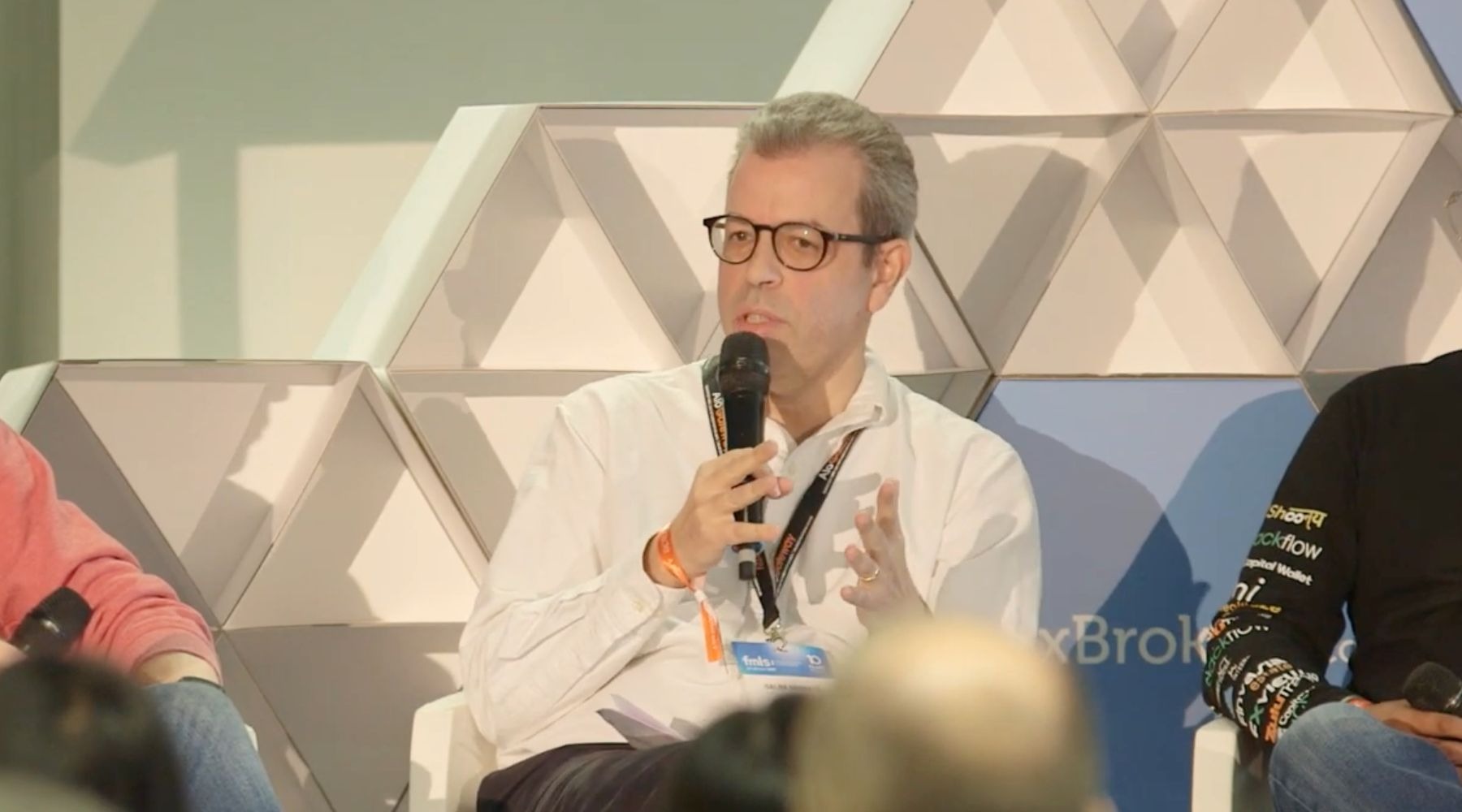
Sophie Gerber, a Director at Sophie Grace and TRAction Fintech, pointed out that “a lot of firms [are] restructuring their operations so that there is an offshore license which is able to accept and operate the business with higher leverage.”
She also stressed that “there was not a large rush to the exit doors when the leverage restrictions came in, and there has not been since.”
But, from a regulatory standpoint, the leverage restrictions are achieving the goal with which they were implemented. These restrictions were initially implemented only for 18 months, but ASIC recently extended them for five years, until 23 May 2027.
According to the regulator, there was a 91 percent reduction in aggregate net losses by retail client accounts along with 51 percent fewer loss-making retail client accounts per quarter on average. In addition, it pointed out an 87 percent fall in margin close-outs, along with an 87 percent reduction in negative balance occurrence for retail clients.
All of them are great for reducing risks for novice retail traders, but definitely a blow to the brokers’ businesses.
A Mature Market
Australia already houses some of the major forex and CFD trading brands. Also, strict regulations for client protection and the reputation of ASIC make Australia one of the mature markets.
“It is a mature industry now in the sense that there is not a large influx of new market participants looking to establish here,” Gerber added. “Successful applications for an AFSL to operate in the FX/CFD market in recent years have been firms which have a strong presence in other regulated jurisdictions (such as FCA in the UK, MAS, CySEC) and are adding an ASIC AFSL to their portfolio of regulated jurisdictions.”
Lack of Automation
Invast’s Alexander, however, believes that there is a lack of automation in the Australian trading market. “One area where I think the Australian market is less mature is that of automated trading. Unlike offshore jurisdictions where automated or systematized trading is widespread, much CFD trading is manual trading via client interfaces,” he said.
“For FX trading in Australia to expand in any significant way, I believe that we will first need to see an increase in automation… With more traders utilizing platforms where automation is more challenging or not readily available, it's no surprise to see more manual trading taking place. With greater emphasis on automation, there can still be a significant expansion of the market. This was certainly the case in Japan as a result of the JFSA introducing leverage restrictions many years ago.”
Australia is one of the largest markets when it comes to retail trading. It is home to several top global brokers offering retail trading services with forex and contracts for differences (CFDs). IC Markets, Vantage and Pepperstone are only some of them.
According to the latest Investment Trends report data, more than 100,000 Australians have entered into at least one FX or CFD transaction in 2021.
Also, the industry data collected by Finance Magnates Intelligence shows that the average monthly deposit by the Aussies in the first ten months of 2021 exceeded $8,443. The average number of transactions per Aussie trader in a month also touched 119.
Tightening of Regulations
But, the Aussie retail FX/CFDs trading market underwent a major regulatory overhaul last year.
The Australian Securities & Investments Commission (ASIC), which oversees the Aussie financial market, restricted the leverage that brokers can offer to retail traders. It has capped the maximum leverage for FX majors at 30:1, while for crypto CFDs, it's only 2:1.
James Alexander, Chief Commercial Officer at Invast Global
“We feel that the leverage changes were a positive and much-needed alignment in the industry. Anecdotally, we hear from a number of our broker clients that some of their own retail clients have become less active as a result of the leverage restrictions, however, the impact has been muted, especially where Equity and Index CFDs are concerned as the proportional change in leverage was smaller than was the case in FX,” James Alexander, Invast Global’s Chief Commercial Officer, told Finance Magnates.
Like Europe, the Aussie brokers are exploring the perspectives to shift their focus away from retail traders to professional clients. But, this needs curated products and a higher level of service consistency.
“There has also been an increased focus on creating solutions and trading environments that are favored by the ‘wholesale’ investor who is not presently governed by leverage restrictions,” Alexander added.
But, that is not the only way brokers are trying to circumvent the leverage restrictions.
Sophie Gerber, TRAction Fintech
Sophie Gerber, a Director at Sophie Grace and TRAction Fintech, pointed out that “a lot of firms [are] restructuring their operations so that there is an offshore license which is able to accept and operate the business with higher leverage.”
She also stressed that “there was not a large rush to the exit doors when the leverage restrictions came in, and there has not been since.”
But, from a regulatory standpoint, the leverage restrictions are achieving the goal with which they were implemented. These restrictions were initially implemented only for 18 months, but ASIC recently extended them for five years, until 23 May 2027.
According to the regulator, there was a 91 percent reduction in aggregate net losses by retail client accounts along with 51 percent fewer loss-making retail client accounts per quarter on average. In addition, it pointed out an 87 percent fall in margin close-outs, along with an 87 percent reduction in negative balance occurrence for retail clients.
All of them are great for reducing risks for novice retail traders, but definitely a blow to the brokers’ businesses.
A Mature Market
Australia already houses some of the major forex and CFD trading brands. Also, strict regulations for client protection and the reputation of ASIC make Australia one of the mature markets.
“It is a mature industry now in the sense that there is not a large influx of new market participants looking to establish here,” Gerber added. “Successful applications for an AFSL to operate in the FX/CFD market in recent years have been firms which have a strong presence in other regulated jurisdictions (such as FCA in the UK, MAS, CySEC) and are adding an ASIC AFSL to their portfolio of regulated jurisdictions.”
Lack of Automation
Invast’s Alexander, however, believes that there is a lack of automation in the Australian trading market. “One area where I think the Australian market is less mature is that of automated trading. Unlike offshore jurisdictions where automated or systematized trading is widespread, much CFD trading is manual trading via client interfaces,” he said.
“For FX trading in Australia to expand in any significant way, I believe that we will first need to see an increase in automation… With more traders utilizing platforms where automation is more challenging or not readily available, it's no surprise to see more manual trading taking place. With greater emphasis on automation, there can still be a significant expansion of the market. This was certainly the case in Japan as a result of the JFSA introducing leverage restrictions many years ago.”
Arnab Shome is an electronics engineer-turned-financial editor. He holds a Bachelor of Technology from the National Institute of Technology, Agartala. He entered the retail trading industry about a decade ago, covering the cryptocurrency market for Finance Magnates, and later expanded his coverage to include forex and CFDs as well.
His work at Finance Magnates includes C-level interviews, data-driven analysis, opinion pieces, and scoops of industry exclusives. He also contributes to Finance Magnates’ quarterly industry report.
Area of coverage:
1. CFD broker-related news
2. Industry-related Regulatory updates and developments
3. New retail trading trends
4. Prop trading industry updates
5. Executive interviews
Education:
Bachelor of Technology - National Institute of Technology, Agartala (India)
42% of Swiss Financial Firms Have No Digital Fraud Policy, FINMA Finds
FP Markets Winner Spotlight 🏆 | Global Broker of the Year 2025 #Trading #Broker #Innovation #Shorts
FP Markets Winner Spotlight 🏆 | Global Broker of the Year 2025 #Trading #Broker #Innovation #Shorts
FP Markets takes the spotlight as Global Broker of the Year 2025 at the Finance Magnates Awards.
Martin Stoilov, Head of Client Experience, shares that trust, innovation, and people played a key role in the company’s success, supported by a strong foundation of integrity and client-centricity.
Following this milestone, FP Markets continues to focus on growth, technology investment, and its core values of transparency and excellence.
👉 Be part of FM Awards 2026: https://awards.financemagnates.com/#nominate
FP Markets takes the spotlight as Global Broker of the Year 2025 at the Finance Magnates Awards.
Martin Stoilov, Head of Client Experience, shares that trust, innovation, and people played a key role in the company’s success, supported by a strong foundation of integrity and client-centricity.
Following this milestone, FP Markets continues to focus on growth, technology investment, and its core values of transparency and excellence.
👉 Be part of FM Awards 2026: https://awards.financemagnates.com/#nominate
In this video, we review @HolaPrimeMarketsOfficial, a multi-asset forex and CFDs broker offering different account types, trading platforms, and flexible trading conditions.
We cover the broker’s overall offering, including account options, trading environment, platforms like MT4 and MT5, and additional services such as managed accounts and fast withdrawals.
Watch the full video to see if Hola Prime Markets fits your trading needs.
📣 Stay up to date with the latest in finance and trading. Follow Finance Magnates for industry news, insights, and global event coverage.
Connect with us:
🔗 LinkedIn: /financemagnates
👍 Facebook: /financemagnates
📸 Instagram: https://www.instagram.com/financemagnates
🐦 X: https://x.com/financemagnates
🎥 TikTok: https://www.tiktok.com/tag/financemagnates
▶️ YouTube: /@financemagnates_official
#HolaPrime #ForexBroker #CFDTrading #FinanceMagnates #Trading #Forex #BrokerReview
In this video, we review @HolaPrimeMarketsOfficial, a multi-asset forex and CFDs broker offering different account types, trading platforms, and flexible trading conditions.
We cover the broker’s overall offering, including account options, trading environment, platforms like MT4 and MT5, and additional services such as managed accounts and fast withdrawals.
Watch the full video to see if Hola Prime Markets fits your trading needs.
📣 Stay up to date with the latest in finance and trading. Follow Finance Magnates for industry news, insights, and global event coverage.
Connect with us:
🔗 LinkedIn: /financemagnates
👍 Facebook: /financemagnates
📸 Instagram: https://www.instagram.com/financemagnates
🐦 X: https://x.com/financemagnates
🎥 TikTok: https://www.tiktok.com/tag/financemagnates
▶️ YouTube: /@financemagnates_official
#HolaPrime #ForexBroker #CFDTrading #FinanceMagnates #Trading #Forex #BrokerReview
Hola Prime Review: What You Need to Know | Full Breakdown by Finance Magnates
Hola Prime Review: What You Need to Know | Full Breakdown by Finance Magnates
In this video, we review @HolaPrime_Global, a proprietary trading firm offering evaluation programs and performance-based payouts in simulated market environments.
We cover how the challenge model works, including account types, profit splits (up to 95%), trading rules, and what it takes to reach a funded account. You’ll also learn about available platforms like MT4, MT5, cTrader, and more, along with insights into payouts, support, and trading conditions.
Watch the full video to see if Hola Prime fits your trading style.
📣 Stay up to date with the latest in finance and trading. Follow Finance Magnates for industry news, insights, and global event coverage.
Connect with us:
🔗 LinkedIn: /financemagnates
👍 Facebook: /financemagnates
📸 Instagram: https://www.instagram.com/financemagnates
🐦 X: https://x.com/financemagnates
🎥 TikTok: https://www.tiktok.com/tag/financemagnates
▶️ YouTube: /@financemagnates_official
#HolaPrime #PropFirm #Trading #FinanceMagnates #Forex #FuturesTrading #TradingReview #PropFirmReview
In this video, we review @HolaPrime_Global, a proprietary trading firm offering evaluation programs and performance-based payouts in simulated market environments.
We cover how the challenge model works, including account types, profit splits (up to 95%), trading rules, and what it takes to reach a funded account. You’ll also learn about available platforms like MT4, MT5, cTrader, and more, along with insights into payouts, support, and trading conditions.
Watch the full video to see if Hola Prime fits your trading style.
📣 Stay up to date with the latest in finance and trading. Follow Finance Magnates for industry news, insights, and global event coverage.
Connect with us:
🔗 LinkedIn: /financemagnates
👍 Facebook: /financemagnates
📸 Instagram: https://www.instagram.com/financemagnates
🐦 X: https://x.com/financemagnates
🎥 TikTok: https://www.tiktok.com/tag/financemagnates
▶️ YouTube: /@financemagnates_official
#HolaPrime #PropFirm #Trading #FinanceMagnates #Forex #FuturesTrading #TradingReview #PropFirmReview
Axi Winner Spotlight 🏆 | Global Most Innovative Broker 2025 #Innovation #Trading #Fintech #Broker
Axi Winner Spotlight 🏆 | Global Most Innovative Broker 2025 #Innovation #Trading #Fintech #Broker
Axi takes the spotlight at the Finance Magnates Awards, winning Global Most Innovative Broker 2025.
Olivia Xenofontos and Ivanna Openko share how the team will feel: proud, motivated, and ready to keep delivering.
They also describe the night as well-organized, focused, and enjoyable for all.
👉 Be part of FM Awards 2026.
Axi takes the spotlight at the Finance Magnates Awards, winning Global Most Innovative Broker 2025.
Olivia Xenofontos and Ivanna Openko share how the team will feel: proud, motivated, and ready to keep delivering.
They also describe the night as well-organized, focused, and enjoyable for all.
👉 Be part of FM Awards 2026.
Recognition that matters.
Built on transparency.
Driven by the industry.
The Finance Magnates Awards 2026.
Nominations are now open.
🔗 https://awards.financemagnates.com/?utm_source=SM&utm_medium=social&utm_campaign=recognition-matters
Recognition that matters.
Built on transparency.
Driven by the industry.
The Finance Magnates Awards 2026.
Nominations are now open.
🔗 https://awards.financemagnates.com/?utm_source=SM&utm_medium=social&utm_campaign=recognition-matters