FOFA Bandwagon Takes Unexpected U-Turn as Advisors Brace for Compliance Quagmire
Thursday,20/11/2014|04:51GMTby
George Tchetvertakov
With regulators in the process of reforming financial regulation worldwide, the Australian Senate gets involved by voting to repeal previous regulation designed to protect retail investors. Political games in economic circles.
In an unexpected U-turn, Australian policy-makers have decided to reject the repealing of the just recently deployed Future of Financial Advice (FOFA) rules applying to all Australian financial advisers, intended to protect retail investors in the advisory and discretionary broking space.
Parliamentary debate came to a crescendo in an a rarely seen late evening sitting, where a 32-30 vote ensured currently active government changes would be scrapped. The vote effectively means financial planners will have to contact their customers and obtain permission/authorisation for trading activity to be legitimate.
The incumbent Liberal government was aiming to repeal the FOFA regulations and make financial advisory services more 'laissez-faire', or in other words, operate under less bureaucracy. However, such intentions have attracted unscrupulous market operators seeking to take advantage of looser disclosure measures.
Regardless of the political reasoning behind this most economic of issues, the fact remains that the advisory industry in Australia now faces a scramble to comply with the roundabout turn embarked upon by MPs.
Jacqui Lambie, Australian Senator
Crossbench Senators Jacqui Lambie and Ricky Muir have removed their previous support for the federal government's wind back of FOFA reforms first introduced by the Labor Party. That has sparked widespread praise from consumer advocates but also concerns from some in the sector that vast swaths of the industry could effectively be operating outside the law.
The decision has divided public opinion in the financial services community, with brokers and advisers feeling hard done by and retail investors broadly welcoming the move.
Ms. Lambie was one of the biggest supporters of FOFA guidelines, “I will not allow the Liberal Party and their supporters to wind back consumer protection at a time when the financial advice industry has been shown to act in a scandalous manner."
Financial Services Council (FSC) Chief Executive, John Brodgen, criticised the change as it would cause unnecessary uncertainty, "The industry has been working under the current FOFA arrangements since July 1st. To turn around and just throw them out is irresponsible." Adding, "This disallowance motion will create a legal quagmire that will lead to disruption and unnecessary costs and will reduce affordability and accessibility of financial advice."
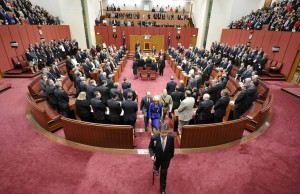
Australian Senate in Session
If the government's regulations are disallowed, previous legislation passed by the Gillard government would come into force. These laws include a requirement for clients who signed up after July 2013 to 'opt-in' every two years, a broader duty for advisers to act in the client's best interests and tougher restrictions on referral/affiliate Payments from financial intermediaries to advisors.
In addition, advisers would have to provide retrospective fee disclosure statements to all clients who initiated a broker-client relationship before July 2013.
In an emergency statement published in the late evening hours , the Australian Securities and Investments Commission (ASIC) acknowledged the disallowance by stating, “ASIC will take a practical and measured approach to administering the law as it now stands following the disallowance of the Corporations Amendment (Streamlining Future of Financial Advice) Regulation 2014."
In an ominous statement the regulator added, “…many Australian financial services (AFS) licensees will now need to make systems changes. We will work with Australian financial services licensees, taking a facilitative approach until 1st of July, 2015."
In an unexpected U-turn, Australian policy-makers have decided to reject the repealing of the just recently deployed Future of Financial Advice (FOFA) rules applying to all Australian financial advisers, intended to protect retail investors in the advisory and discretionary broking space.
Parliamentary debate came to a crescendo in an a rarely seen late evening sitting, where a 32-30 vote ensured currently active government changes would be scrapped. The vote effectively means financial planners will have to contact their customers and obtain permission/authorisation for trading activity to be legitimate.
The incumbent Liberal government was aiming to repeal the FOFA regulations and make financial advisory services more 'laissez-faire', or in other words, operate under less bureaucracy. However, such intentions have attracted unscrupulous market operators seeking to take advantage of looser disclosure measures.
Regardless of the political reasoning behind this most economic of issues, the fact remains that the advisory industry in Australia now faces a scramble to comply with the roundabout turn embarked upon by MPs.
Jacqui Lambie, Australian Senator
Crossbench Senators Jacqui Lambie and Ricky Muir have removed their previous support for the federal government's wind back of FOFA reforms first introduced by the Labor Party. That has sparked widespread praise from consumer advocates but also concerns from some in the sector that vast swaths of the industry could effectively be operating outside the law.
The decision has divided public opinion in the financial services community, with brokers and advisers feeling hard done by and retail investors broadly welcoming the move.
Ms. Lambie was one of the biggest supporters of FOFA guidelines, “I will not allow the Liberal Party and their supporters to wind back consumer protection at a time when the financial advice industry has been shown to act in a scandalous manner."
Financial Services Council (FSC) Chief Executive, John Brodgen, criticised the change as it would cause unnecessary uncertainty, "The industry has been working under the current FOFA arrangements since July 1st. To turn around and just throw them out is irresponsible." Adding, "This disallowance motion will create a legal quagmire that will lead to disruption and unnecessary costs and will reduce affordability and accessibility of financial advice."
Australian Senate in Session
If the government's regulations are disallowed, previous legislation passed by the Gillard government would come into force. These laws include a requirement for clients who signed up after July 2013 to 'opt-in' every two years, a broader duty for advisers to act in the client's best interests and tougher restrictions on referral/affiliate Payments from financial intermediaries to advisors.
In addition, advisers would have to provide retrospective fee disclosure statements to all clients who initiated a broker-client relationship before July 2013.
In an emergency statement published in the late evening hours , the Australian Securities and Investments Commission (ASIC) acknowledged the disallowance by stating, “ASIC will take a practical and measured approach to administering the law as it now stands following the disallowance of the Corporations Amendment (Streamlining Future of Financial Advice) Regulation 2014."
In an ominous statement the regulator added, “…many Australian financial services (AFS) licensees will now need to make systems changes. We will work with Australian financial services licensees, taking a facilitative approach until 1st of July, 2015."
Italy’s Consob Tightens Net on AI-Fueled Scams With Fresh Website Bans
FP Markets Winner Spotlight 🏆 | Global Broker of the Year 2025 #Trading #Broker #Innovation #Shorts
FP Markets Winner Spotlight 🏆 | Global Broker of the Year 2025 #Trading #Broker #Innovation #Shorts
FP Markets takes the spotlight as Global Broker of the Year 2025 at the Finance Magnates Awards.
Martin Stoilov, Head of Client Experience, shares that trust, innovation, and people played a key role in the company’s success, supported by a strong foundation of integrity and client-centricity.
Following this milestone, FP Markets continues to focus on growth, technology investment, and its core values of transparency and excellence.
👉 Be part of FM Awards 2026: https://awards.financemagnates.com/#nominate
FP Markets takes the spotlight as Global Broker of the Year 2025 at the Finance Magnates Awards.
Martin Stoilov, Head of Client Experience, shares that trust, innovation, and people played a key role in the company’s success, supported by a strong foundation of integrity and client-centricity.
Following this milestone, FP Markets continues to focus on growth, technology investment, and its core values of transparency and excellence.
👉 Be part of FM Awards 2026: https://awards.financemagnates.com/#nominate
In this video, we review @HolaPrimeMarketsOfficial, a multi-asset forex and CFDs broker offering different account types, trading platforms, and flexible trading conditions.
We cover the broker’s overall offering, including account options, trading environment, platforms like MT4 and MT5, and additional services such as managed accounts and fast withdrawals.
Watch the full video to see if Hola Prime Markets fits your trading needs.
📣 Stay up to date with the latest in finance and trading. Follow Finance Magnates for industry news, insights, and global event coverage.
Connect with us:
🔗 LinkedIn: /financemagnates
👍 Facebook: /financemagnates
📸 Instagram: https://www.instagram.com/financemagnates
🐦 X: https://x.com/financemagnates
🎥 TikTok: https://www.tiktok.com/tag/financemagnates
▶️ YouTube: /@financemagnates_official
#HolaPrime #ForexBroker #CFDTrading #FinanceMagnates #Trading #Forex #BrokerReview
In this video, we review @HolaPrimeMarketsOfficial, a multi-asset forex and CFDs broker offering different account types, trading platforms, and flexible trading conditions.
We cover the broker’s overall offering, including account options, trading environment, platforms like MT4 and MT5, and additional services such as managed accounts and fast withdrawals.
Watch the full video to see if Hola Prime Markets fits your trading needs.
📣 Stay up to date with the latest in finance and trading. Follow Finance Magnates for industry news, insights, and global event coverage.
Connect with us:
🔗 LinkedIn: /financemagnates
👍 Facebook: /financemagnates
📸 Instagram: https://www.instagram.com/financemagnates
🐦 X: https://x.com/financemagnates
🎥 TikTok: https://www.tiktok.com/tag/financemagnates
▶️ YouTube: /@financemagnates_official
#HolaPrime #ForexBroker #CFDTrading #FinanceMagnates #Trading #Forex #BrokerReview
Hola Prime Review: What You Need to Know | Full Breakdown by Finance Magnates
Hola Prime Review: What You Need to Know | Full Breakdown by Finance Magnates
In this video, we review @HolaPrime_Global, a proprietary trading firm offering evaluation programs and performance-based payouts in simulated market environments.
We cover how the challenge model works, including account types, profit splits (up to 95%), trading rules, and what it takes to reach a funded account. You’ll also learn about available platforms like MT4, MT5, cTrader, and more, along with insights into payouts, support, and trading conditions.
Watch the full video to see if Hola Prime fits your trading style.
📣 Stay up to date with the latest in finance and trading. Follow Finance Magnates for industry news, insights, and global event coverage.
Connect with us:
🔗 LinkedIn: /financemagnates
👍 Facebook: /financemagnates
📸 Instagram: https://www.instagram.com/financemagnates
🐦 X: https://x.com/financemagnates
🎥 TikTok: https://www.tiktok.com/tag/financemagnates
▶️ YouTube: /@financemagnates_official
#HolaPrime #PropFirm #Trading #FinanceMagnates #Forex #FuturesTrading #TradingReview #PropFirmReview
In this video, we review @HolaPrime_Global, a proprietary trading firm offering evaluation programs and performance-based payouts in simulated market environments.
We cover how the challenge model works, including account types, profit splits (up to 95%), trading rules, and what it takes to reach a funded account. You’ll also learn about available platforms like MT4, MT5, cTrader, and more, along with insights into payouts, support, and trading conditions.
Watch the full video to see if Hola Prime fits your trading style.
📣 Stay up to date with the latest in finance and trading. Follow Finance Magnates for industry news, insights, and global event coverage.
Connect with us:
🔗 LinkedIn: /financemagnates
👍 Facebook: /financemagnates
📸 Instagram: https://www.instagram.com/financemagnates
🐦 X: https://x.com/financemagnates
🎥 TikTok: https://www.tiktok.com/tag/financemagnates
▶️ YouTube: /@financemagnates_official
#HolaPrime #PropFirm #Trading #FinanceMagnates #Forex #FuturesTrading #TradingReview #PropFirmReview
Axi Winner Spotlight 🏆 | Global Most Innovative Broker 2025 #Innovation #Trading #Fintech #Broker
Axi Winner Spotlight 🏆 | Global Most Innovative Broker 2025 #Innovation #Trading #Fintech #Broker
Axi takes the spotlight at the Finance Magnates Awards, winning Global Most Innovative Broker 2025.
Olivia Xenofontos and Ivanna Openko share how the team will feel: proud, motivated, and ready to keep delivering.
They also describe the night as well-organized, focused, and enjoyable for all.
👉 Be part of FM Awards 2026.
Axi takes the spotlight at the Finance Magnates Awards, winning Global Most Innovative Broker 2025.
Olivia Xenofontos and Ivanna Openko share how the team will feel: proud, motivated, and ready to keep delivering.
They also describe the night as well-organized, focused, and enjoyable for all.
👉 Be part of FM Awards 2026.
Recognition that matters.
Built on transparency.
Driven by the industry.
The Finance Magnates Awards 2026.
Nominations are now open.
🔗 https://awards.financemagnates.com/?utm_source=SM&utm_medium=social&utm_campaign=recognition-matters
Recognition that matters.
Built on transparency.
Driven by the industry.
The Finance Magnates Awards 2026.
Nominations are now open.
🔗 https://awards.financemagnates.com/?utm_source=SM&utm_medium=social&utm_campaign=recognition-matters