High-Calibre Infrastructure Is Spearheading Mobile Trading Growth in the APAC Region
Tuesday,19/08/2014|07:44GMTby
George Tchetvertakov
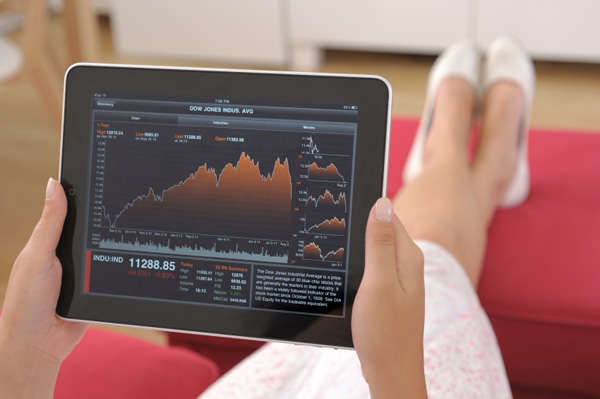
Trading via mobile devices is growing, and according to a study surveying the APAC outnumbers PC trading in the region. Both brokers and traders stand to gain from this shift as mobiles become faster and stronger.
Online trading via mobile devices such as smartphones and tablets is growing rapidly according to a recent study published by Investment Trends, a multinational research company focusing on financial services and related industries in Australia, Asia, Europe and the United States.
The research carried out surveyed 12,398 Australian investors from April to June this year, in the largest study of its kind in Australia according to Uwe Helmes, a Senior Analyst at Investment Trends. The findings showed that 71% of CFD trading activity is now done via a mobile device with the remaining 29% done via a PC or telephone. The research also found that 17% of those surveyed intend to use an electronic device for at least a portion of their trading activity within the next 12 months. Investment Trends estimates that between June 2013 and June 2014, 585,000 Australians did at least one online share trade (approximately 3% of the total population). When reviewing other countries, Investment Trends estimates that 83% of traders in Singapore prefer to use a mobile device for trading purposes, higher than the 71% of traders in the US
Forex Magnates reached out to Investment Trends, which publishes separate periodic reports on specific industry niches, such as share dealing, leveraged FX and CFD trading. "Each particular sector has some statistical differences between the various countries surveyed, but the overall trend remains consistent," said Mr. Helmes.
The five countries with the highest online share trading 'adoption rate' are Singapore (5.2%), Australia (3.4%), United States (2.6%) United Kingdom (1.5%), Germany (1.2%) and France (1%), according to the most recent Investment Trends' report focusing on online share dealing.
According to Mr.Helmes, "When figures for share dealing are combined with other financial products such as leveraged FX and CFD contracts, the raw numbers are much higher with the broad trend remaining constant that online and mobile participation rates for any financial instrument in Asia are broadly higher than those in the US or Europe." When asked to highlight a standout country where he believes mobile and online trading is particularly on the rise, Mr. Helmes responded: "In Singapore, we’ve seen growth rates of over 50% in the mobile trading space over the past three years with Android devices overtaking IOS(Apple) devices since 2013."
In the latest report covering Australian online share dealing only, the majority of investors surveyed regarded CommSec as having the "most satisfactory mobile Trading Platform."
Mobile or Stationary?
The fairly recent phenomenon of using mobile devices for trading keeps on growing. As mobile internet connections speeds increase rapidly alongside falling connection costs, it allows brokers to offer the same sophisticated services via mobile platforms that they already offer via a PC without compromising on execution, latency and other features.
The expansion in the variety and sophistication of devices available to traders is also a factor. Mobile phones were used primarily for calls and messaging when they were first adopted en masse in the late 1990's. Today, mobile phones have large, high resolution screens, broadband internet access and third party software development. Mobile phones have become a derivative of a PC and with the introduction of hybrid devices such as smartphones, tablets and netbooks, the mobile device landscape has never been so rich.
The explosion in the use of mobile devices has influenced how brokers operate in the online trading industry because the additional convenience offered by mobility is very attractive to all traders, amateur or professional. The fact that financial markets and the various trading instruments available are becoming increasingly accessible with longer trading hours and more sophisticated via additional asset classes such as CFD's, Binary Options, Futures and ETF's, means traders have more information to keep track of and from more sources. Mobile devices help traders bridge this information gap.
The Investment Trends survey combined with other research available indicate that countries with higher national broadband speeds and faster mobile internet speeds tend to have a higher adoption rate for online trading. In 2014, the highest internet connection speeds are in Asia; specifically Hong Kong, South Korea, Japan and Singapore, according to Akamai's 'State of the Internet Report' published in Q1 2014. With Taiwan placing eighth, Asia made up half of the top 10. With Asia leading the world in internet connectivity combined with more spare capacity for new traders compared to the US, UK and Europe, suggests the future is bright for both traders and brokers operating in the Asia-Pacific region.
Online trading via mobile devices such as smartphones and tablets is growing rapidly according to a recent study published by Investment Trends, a multinational research company focusing on financial services and related industries in Australia, Asia, Europe and the United States.
The research carried out surveyed 12,398 Australian investors from April to June this year, in the largest study of its kind in Australia according to Uwe Helmes, a Senior Analyst at Investment Trends. The findings showed that 71% of CFD trading activity is now done via a mobile device with the remaining 29% done via a PC or telephone. The research also found that 17% of those surveyed intend to use an electronic device for at least a portion of their trading activity within the next 12 months. Investment Trends estimates that between June 2013 and June 2014, 585,000 Australians did at least one online share trade (approximately 3% of the total population). When reviewing other countries, Investment Trends estimates that 83% of traders in Singapore prefer to use a mobile device for trading purposes, higher than the 71% of traders in the US
Forex Magnates reached out to Investment Trends, which publishes separate periodic reports on specific industry niches, such as share dealing, leveraged FX and CFD trading. "Each particular sector has some statistical differences between the various countries surveyed, but the overall trend remains consistent," said Mr. Helmes.
The five countries with the highest online share trading 'adoption rate' are Singapore (5.2%), Australia (3.4%), United States (2.6%) United Kingdom (1.5%), Germany (1.2%) and France (1%), according to the most recent Investment Trends' report focusing on online share dealing.
According to Mr.Helmes, "When figures for share dealing are combined with other financial products such as leveraged FX and CFD contracts, the raw numbers are much higher with the broad trend remaining constant that online and mobile participation rates for any financial instrument in Asia are broadly higher than those in the US or Europe." When asked to highlight a standout country where he believes mobile and online trading is particularly on the rise, Mr. Helmes responded: "In Singapore, we’ve seen growth rates of over 50% in the mobile trading space over the past three years with Android devices overtaking IOS(Apple) devices since 2013."
In the latest report covering Australian online share dealing only, the majority of investors surveyed regarded CommSec as having the "most satisfactory mobile Trading Platform."
Mobile or Stationary?
The fairly recent phenomenon of using mobile devices for trading keeps on growing. As mobile internet connections speeds increase rapidly alongside falling connection costs, it allows brokers to offer the same sophisticated services via mobile platforms that they already offer via a PC without compromising on execution, latency and other features.
The expansion in the variety and sophistication of devices available to traders is also a factor. Mobile phones were used primarily for calls and messaging when they were first adopted en masse in the late 1990's. Today, mobile phones have large, high resolution screens, broadband internet access and third party software development. Mobile phones have become a derivative of a PC and with the introduction of hybrid devices such as smartphones, tablets and netbooks, the mobile device landscape has never been so rich.
The explosion in the use of mobile devices has influenced how brokers operate in the online trading industry because the additional convenience offered by mobility is very attractive to all traders, amateur or professional. The fact that financial markets and the various trading instruments available are becoming increasingly accessible with longer trading hours and more sophisticated via additional asset classes such as CFD's, Binary Options, Futures and ETF's, means traders have more information to keep track of and from more sources. Mobile devices help traders bridge this information gap.
The Investment Trends survey combined with other research available indicate that countries with higher national broadband speeds and faster mobile internet speeds tend to have a higher adoption rate for online trading. In 2014, the highest internet connection speeds are in Asia; specifically Hong Kong, South Korea, Japan and Singapore, according to Akamai's 'State of the Internet Report' published in Q1 2014. With Taiwan placing eighth, Asia made up half of the top 10. With Asia leading the world in internet connectivity combined with more spare capacity for new traders compared to the US, UK and Europe, suggests the future is bright for both traders and brokers operating in the Asia-Pacific region.
XTB Signs Paris La Défense Arena Deal as French Client Base Grows 50%
CMC Markets’ Artur Delijergijevs on Metals Demand, Volatility, & Stable Execution
CMC Markets’ Artur Delijergijevs on Metals Demand, Volatility, & Stable Execution
In this exclusive Executive Interview, Finance Magnates speaks with Artur Delijergijevs, Head of Systematic Market Making at CMC Markets, about the current state of metals demand and market volatility.
Delijergijevs offers a desk-level view on:
- Metals Demand: Why metals are seeing the strongest demand from both retail and institutional clients right now.
- The Safe-Haven Debate: Questioning whether gold still fits the classic safe-haven definition given large daily price movements.
- Volatile Market Prep: How a market-making desk prepares its systems and pricing for stressed market conditions and high-impact economic events.
- Hybrid Execution: Why the best execution model combines electronic speed with human relationship support, especially during volatility.
- AI in Workflow: Where CMC Markets is integrating machine learning for risk management and pricing, and the limitations of AI during stressed markets.
- Dubai's Role: The strategic importance of Dubai’s location for covering global trading sessions across Asia, Europe, and the US.
Watch to understand how CMC Markets maintains stable pricing and reliable execution quality in high-volatility environments.
#CMCmarkets #forex #metals #gold #trading #volatility #MarketMaking #iFXDubai #FinanceMagnates #Finance #Fintech #Execution #AlgorithmicTrading #RiskManagement
In this exclusive Executive Interview, Finance Magnates speaks with Artur Delijergijevs, Head of Systematic Market Making at CMC Markets, about the current state of metals demand and market volatility.
Delijergijevs offers a desk-level view on:
- Metals Demand: Why metals are seeing the strongest demand from both retail and institutional clients right now.
- The Safe-Haven Debate: Questioning whether gold still fits the classic safe-haven definition given large daily price movements.
- Volatile Market Prep: How a market-making desk prepares its systems and pricing for stressed market conditions and high-impact economic events.
- Hybrid Execution: Why the best execution model combines electronic speed with human relationship support, especially during volatility.
- AI in Workflow: Where CMC Markets is integrating machine learning for risk management and pricing, and the limitations of AI during stressed markets.
- Dubai's Role: The strategic importance of Dubai’s location for covering global trading sessions across Asia, Europe, and the US.
Watch to understand how CMC Markets maintains stable pricing and reliable execution quality in high-volatility environments.
#CMCmarkets #forex #metals #gold #trading #volatility #MarketMaking #iFXDubai #FinanceMagnates #Finance #Fintech #Execution #AlgorithmicTrading #RiskManagement
Finance Magnates Awards 2026 – Nominations Now Open
Finance Magnates Awards 2026 – Nominations Now Open
The Finance Magnates Awards 2026 nominations are now open. 🏆
From fintech innovators to leading brokers, this is where the finance industry celebrates its biggest achievements.
Winners will be announced at the Cyprus Gala Dinner on November 6, 2026.
Nominate your brand now.
https://awards.financemagnates.com/?utm_source=linkedin&utm_medium=video&utm_campaign=nominations-open
#FMAwards #FinanceMagnates #FintechAwards #Fintech #FinanceIndustry
The Finance Magnates Awards 2026 nominations are now open. 🏆
From fintech innovators to leading brokers, this is where the finance industry celebrates its biggest achievements.
Winners will be announced at the Cyprus Gala Dinner on November 6, 2026.
Nominate your brand now.
https://awards.financemagnates.com/?utm_source=linkedin&utm_medium=video&utm_campaign=nominations-open
#FMAwards #FinanceMagnates #FintechAwards #Fintech #FinanceIndustry
Finance Magnates Awards 2026 | Nominations Now Open 🏆#Fintech #FMAwards #TradingIndustry
Finance Magnates Awards 2026 | Nominations Now Open 🏆#Fintech #FMAwards #TradingIndustry
Lights on. Cameras ready. 🎬
Finance Magnates Awards 2026 nominations are now open. 🏆
#FMAwards #FinanceMagnates #FintechAwards #Fintech
Lights on. Cameras ready. 🎬
Finance Magnates Awards 2026 nominations are now open. 🏆
#FMAwards #FinanceMagnates #FintechAwards #Fintech
Exness sees trust as the key theme for growth in MENA Trading Growth for 2026
Exness sees trust as the key theme for growth in MENA Trading Growth for 2026
Mohammad Amer, Regional Commercial Director at Exness, sits down to discuss the booming MENA financial trading market. Find out why Dubai is key to the company's growth strategy, how a mobile-first generation is changing expectations, and why trust will be the defining theme for traders in 2026.
In this interview, you'll learn:
* Why Dubai and the MENA region are critical growth markets for fintech and online trading.
* How Exness is addressing the demands of mobile-first, younger traders through engineering, platform stability, and transparent conditions.
* The essential role local talent plays in providing a culturally relevant and compliant user experience.
* Mohammad Amer's outlook on the future of the online trading industry and why stronger controls and systems are necessary.
* Why "trust" isn't just a brand value, but has commercial value—and why he predicts 2026 will be the "Year of Trust."
Key Takeaways:
➡️ The MENA region is rapidly shaping global financial markets.
➡️ New traders expect stability, precise execution, and transparency.
➡️ Local expertise is key to regulatory compliance and user experience.
➡️ Future success belongs to firms capable of meeting rising standards across regulation and platform consistency.
Read the full article at: https://www.financemagnates.com/thought-leadership/exness-sees-trust-as-the-key-theme-for-growth-in-mena-trading-growth-for-2026/
#Exness #MENA #Trading #FinTech #Dubai #OnlineTrading #FinanceMagnates #MohammadAmer #Trust #MobileTrading
Mohammad Amer, Regional Commercial Director at Exness, sits down to discuss the booming MENA financial trading market. Find out why Dubai is key to the company's growth strategy, how a mobile-first generation is changing expectations, and why trust will be the defining theme for traders in 2026.
In this interview, you'll learn:
* Why Dubai and the MENA region are critical growth markets for fintech and online trading.
* How Exness is addressing the demands of mobile-first, younger traders through engineering, platform stability, and transparent conditions.
* The essential role local talent plays in providing a culturally relevant and compliant user experience.
* Mohammad Amer's outlook on the future of the online trading industry and why stronger controls and systems are necessary.
* Why "trust" isn't just a brand value, but has commercial value—and why he predicts 2026 will be the "Year of Trust."
Key Takeaways:
➡️ The MENA region is rapidly shaping global financial markets.
➡️ New traders expect stability, precise execution, and transparency.
➡️ Local expertise is key to regulatory compliance and user experience.
➡️ Future success belongs to firms capable of meeting rising standards across regulation and platform consistency.
Read the full article at: https://www.financemagnates.com/thought-leadership/exness-sees-trust-as-the-key-theme-for-growth-in-mena-trading-growth-for-2026/
#Exness #MENA #Trading #FinTech #Dubai #OnlineTrading #FinanceMagnates #MohammadAmer #Trust #MobileTrading
Paytiko CEO Razi Salih on Why Payment Orchestration is a MUST-HAVE for Brokers in 2026
Paytiko CEO Razi Salih on Why Payment Orchestration is a MUST-HAVE for Brokers in 2026
At iFX Expo Dubai, Finance Magnates spoke with Razi Salih, CEO at Paytiko, about the evolution of the payments ecosystem and why payment orchestration has shifted from an option to a necessity for brokers, prop firms, and exchanges.
Mr. Salih explains how global expansion, the need for deep localisation, and the sheer number of new payment methods, from instant banking to stablecoins, are driving this critical infrastructure shift.
#PaymentOrchestration #Fintech #Brokerage #TradingPayments #RaziSalih #Paytiko #iFXExpoDubai #Stablecoins #AIinFintech
At iFX Expo Dubai, Finance Magnates spoke with Razi Salih, CEO at Paytiko, about the evolution of the payments ecosystem and why payment orchestration has shifted from an option to a necessity for brokers, prop firms, and exchanges.
Mr. Salih explains how global expansion, the need for deep localisation, and the sheer number of new payment methods, from instant banking to stablecoins, are driving this critical infrastructure shift.
#PaymentOrchestration #Fintech #Brokerage #TradingPayments #RaziSalih #Paytiko #iFXExpoDubai #Stablecoins #AIinFintech