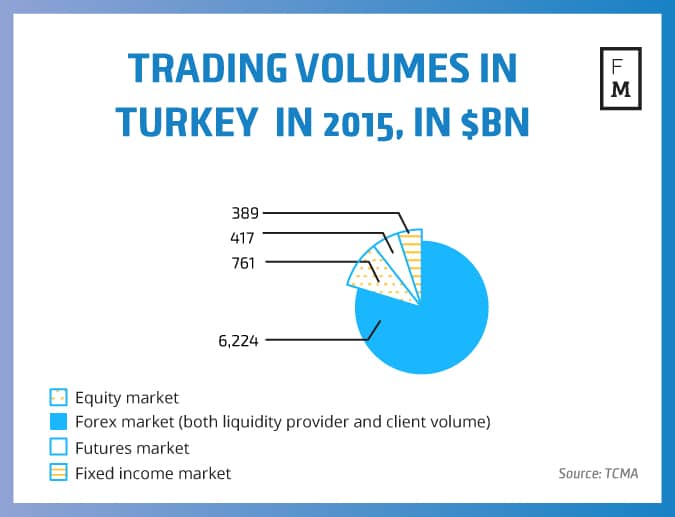
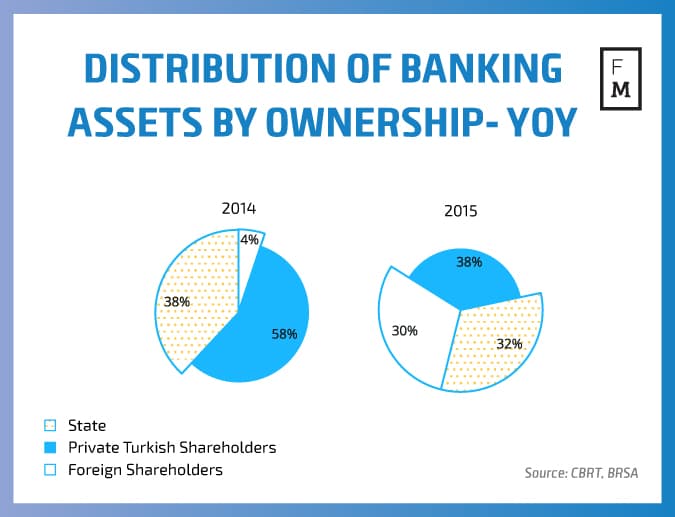
The Turkish FX industry has quickly evolved following Erdoğan’s efforts to turn Turkey into regional financial hub.
FM
The current leader of Turkey, President Recep Tayyip Erdoğan, entered major league politics in 2003 when he became the prime minister. In 2001, he established the Justice and Development Party (AKP). During the period when the AKP was in power Turkey experienced strong economic growth. From 2003 to 2016 GDP growth was negative only once – in 2009, as a result of the world financial crisis.
In 2010, GDP growth was close to 9.2% and in 2011 it was almost 8.8%. The country has managed to stay on the path of rapid economic expansion even though in recent years growth has been below the 4% mark.
[gptAdvertisement]
Up until last year, the situation in Turkey was evolving in the right direction, with all aspects of the financial market giving hope for even greater prospects. However, 2016 has brought about a series of events that may be seen as small question marks on the horizon.
The clear sky of Turkey has been slightly covered by shadows of the unknown. All of the questions now being raised have their origin outside of the Turkish financial market or even the economy - they are related to global politics.
In the Global Financial Centres Index #15 from 2014 Istanbul was ranked 47th. In the latest edition (19th, March 2016), it holds the 45th position. It will be interesting to see how the failed coup affects the next edition’s decision making process concerning its ranking.
However, it seems very important for Turkey to retain a good partnership with the EU and the US. If it can manage to achieve this, the local FX industry should be able to remain on a solid path of growth. Will it evolve in a direction similar to that of Japan, where volumes are the biggest globally but only local, Japanese brokers share most of it? Or maybe, will it leave room for foreign players?
“I strongly believe that the resilience of the Turkish capital markets will endure, as seen during the recent Liquidity crisis that swept the global economies as well as during the failed coup attempt. Market reaction to these events have clearly proven the Turkish financial industry’s desire and readiness to become the financial Hub of the region," said Cuneyt Akdemir, Manager at IS Investment & Securities, in an interview with Finance Magnates.
“Thus, as additional planned regulatory changes aiming to address this goal come into effect, the Turkish financial industry will see a greater appetite from local and foreign investors, as it continues to develop itself in terms of stability, range of products offered and market access.”, he added.
In the upcoming quarters the internal politics of Turkey will determine the further evolution of the local financial market.
This will shape bilateral relations between Turkey and the US as well as with the EU. Even the most ambitious goals may be overshadowed by potential, geopolitical tensions. Turkey needs foreign partners in order to be recognized as a financial hub in the region.
Want to learn more about the Turkish retail FX industry? Read the full article in the latest Finance Magnates Intelligence Report.
The current leader of Turkey, President Recep Tayyip Erdoğan, entered major league politics in 2003 when he became the prime minister. In 2001, he established the Justice and Development Party (AKP). During the period when the AKP was in power Turkey experienced strong economic growth. From 2003 to 2016 GDP growth was negative only once – in 2009, as a result of the world financial crisis.
In 2010, GDP growth was close to 9.2% and in 2011 it was almost 8.8%. The country has managed to stay on the path of rapid economic expansion even though in recent years growth has been below the 4% mark.
[gptAdvertisement]
Up until last year, the situation in Turkey was evolving in the right direction, with all aspects of the financial market giving hope for even greater prospects. However, 2016 has brought about a series of events that may be seen as small question marks on the horizon.
The clear sky of Turkey has been slightly covered by shadows of the unknown. All of the questions now being raised have their origin outside of the Turkish financial market or even the economy - they are related to global politics.
In the Global Financial Centres Index #15 from 2014 Istanbul was ranked 47th. In the latest edition (19th, March 2016), it holds the 45th position. It will be interesting to see how the failed coup affects the next edition’s decision making process concerning its ranking.
However, it seems very important for Turkey to retain a good partnership with the EU and the US. If it can manage to achieve this, the local FX industry should be able to remain on a solid path of growth. Will it evolve in a direction similar to that of Japan, where volumes are the biggest globally but only local, Japanese brokers share most of it? Or maybe, will it leave room for foreign players?
“I strongly believe that the resilience of the Turkish capital markets will endure, as seen during the recent Liquidity crisis that swept the global economies as well as during the failed coup attempt. Market reaction to these events have clearly proven the Turkish financial industry’s desire and readiness to become the financial Hub of the region," said Cuneyt Akdemir, Manager at IS Investment & Securities, in an interview with Finance Magnates.
“Thus, as additional planned regulatory changes aiming to address this goal come into effect, the Turkish financial industry will see a greater appetite from local and foreign investors, as it continues to develop itself in terms of stability, range of products offered and market access.”, he added.
In the upcoming quarters the internal politics of Turkey will determine the further evolution of the local financial market.
This will shape bilateral relations between Turkey and the US as well as with the EU. Even the most ambitious goals may be overshadowed by potential, geopolitical tensions. Turkey needs foreign partners in order to be recognized as a financial hub in the region.
Want to learn more about the Turkish retail FX industry? Read the full article in the latest Finance Magnates Intelligence Report.
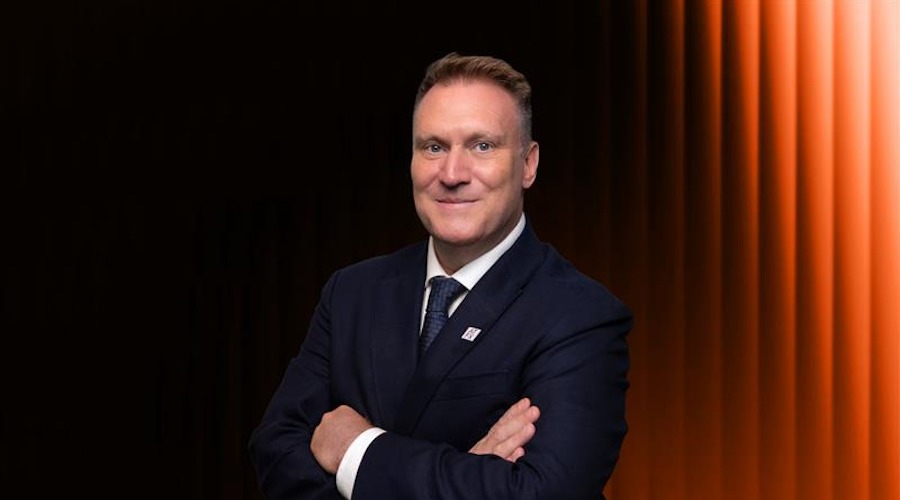
Sylwester is a graduate of the Warsaw School of Economics, holding an MA in Finance and Banking. He currently serves as Head of the Insights & Reporting Hub at Finance Magnates. He is also a former minority partner in an NFA-registered US forex broker and has been involved in numerous forex and trading industry projects since 2003.
Privately, Sylwester is a husband and father to a 7-year-old daughter, as well as an enthusiast of trading and Formula 1.
Italy’s Consob Tightens Net on AI-Fueled Scams With Fresh Website Bans
FP Markets Winner Spotlight 🏆 | Global Broker of the Year 2025 #Trading #Broker #Innovation #Shorts
FP Markets Winner Spotlight 🏆 | Global Broker of the Year 2025 #Trading #Broker #Innovation #Shorts
FP Markets takes the spotlight as Global Broker of the Year 2025 at the Finance Magnates Awards.
Martin Stoilov, Head of Client Experience, shares that trust, innovation, and people played a key role in the company’s success, supported by a strong foundation of integrity and client-centricity.
Following this milestone, FP Markets continues to focus on growth, technology investment, and its core values of transparency and excellence.
👉 Be part of FM Awards 2026: https://awards.financemagnates.com/#nominate
FP Markets takes the spotlight as Global Broker of the Year 2025 at the Finance Magnates Awards.
Martin Stoilov, Head of Client Experience, shares that trust, innovation, and people played a key role in the company’s success, supported by a strong foundation of integrity and client-centricity.
Following this milestone, FP Markets continues to focus on growth, technology investment, and its core values of transparency and excellence.
👉 Be part of FM Awards 2026: https://awards.financemagnates.com/#nominate
In this video, we review @HolaPrimeMarketsOfficial, a multi-asset forex and CFDs broker offering different account types, trading platforms, and flexible trading conditions.
We cover the broker’s overall offering, including account options, trading environment, platforms like MT4 and MT5, and additional services such as managed accounts and fast withdrawals.
Watch the full video to see if Hola Prime Markets fits your trading needs.
📣 Stay up to date with the latest in finance and trading. Follow Finance Magnates for industry news, insights, and global event coverage.
Connect with us:
🔗 LinkedIn: /financemagnates
👍 Facebook: /financemagnates
📸 Instagram: https://www.instagram.com/financemagnates
🐦 X: https://x.com/financemagnates
🎥 TikTok: https://www.tiktok.com/tag/financemagnates
▶️ YouTube: /@financemagnates_official
#HolaPrime #ForexBroker #CFDTrading #FinanceMagnates #Trading #Forex #BrokerReview
In this video, we review @HolaPrimeMarketsOfficial, a multi-asset forex and CFDs broker offering different account types, trading platforms, and flexible trading conditions.
We cover the broker’s overall offering, including account options, trading environment, platforms like MT4 and MT5, and additional services such as managed accounts and fast withdrawals.
Watch the full video to see if Hola Prime Markets fits your trading needs.
📣 Stay up to date with the latest in finance and trading. Follow Finance Magnates for industry news, insights, and global event coverage.
Connect with us:
🔗 LinkedIn: /financemagnates
👍 Facebook: /financemagnates
📸 Instagram: https://www.instagram.com/financemagnates
🐦 X: https://x.com/financemagnates
🎥 TikTok: https://www.tiktok.com/tag/financemagnates
▶️ YouTube: /@financemagnates_official
#HolaPrime #ForexBroker #CFDTrading #FinanceMagnates #Trading #Forex #BrokerReview
Hola Prime Review: What You Need to Know | Full Breakdown by Finance Magnates
Hola Prime Review: What You Need to Know | Full Breakdown by Finance Magnates
In this video, we review @HolaPrime_Global, a proprietary trading firm offering evaluation programs and performance-based payouts in simulated market environments.
We cover how the challenge model works, including account types, profit splits (up to 95%), trading rules, and what it takes to reach a funded account. You’ll also learn about available platforms like MT4, MT5, cTrader, and more, along with insights into payouts, support, and trading conditions.
Watch the full video to see if Hola Prime fits your trading style.
📣 Stay up to date with the latest in finance and trading. Follow Finance Magnates for industry news, insights, and global event coverage.
Connect with us:
🔗 LinkedIn: /financemagnates
👍 Facebook: /financemagnates
📸 Instagram: https://www.instagram.com/financemagnates
🐦 X: https://x.com/financemagnates
🎥 TikTok: https://www.tiktok.com/tag/financemagnates
▶️ YouTube: /@financemagnates_official
#HolaPrime #PropFirm #Trading #FinanceMagnates #Forex #FuturesTrading #TradingReview #PropFirmReview
In this video, we review @HolaPrime_Global, a proprietary trading firm offering evaluation programs and performance-based payouts in simulated market environments.
We cover how the challenge model works, including account types, profit splits (up to 95%), trading rules, and what it takes to reach a funded account. You’ll also learn about available platforms like MT4, MT5, cTrader, and more, along with insights into payouts, support, and trading conditions.
Watch the full video to see if Hola Prime fits your trading style.
📣 Stay up to date with the latest in finance and trading. Follow Finance Magnates for industry news, insights, and global event coverage.
Connect with us:
🔗 LinkedIn: /financemagnates
👍 Facebook: /financemagnates
📸 Instagram: https://www.instagram.com/financemagnates
🐦 X: https://x.com/financemagnates
🎥 TikTok: https://www.tiktok.com/tag/financemagnates
▶️ YouTube: /@financemagnates_official
#HolaPrime #PropFirm #Trading #FinanceMagnates #Forex #FuturesTrading #TradingReview #PropFirmReview
Axi Winner Spotlight 🏆 | Global Most Innovative Broker 2025 #Innovation #Trading #Fintech #Broker
Axi Winner Spotlight 🏆 | Global Most Innovative Broker 2025 #Innovation #Trading #Fintech #Broker
Axi takes the spotlight at the Finance Magnates Awards, winning Global Most Innovative Broker 2025.
Olivia Xenofontos and Ivanna Openko share how the team will feel: proud, motivated, and ready to keep delivering.
They also describe the night as well-organized, focused, and enjoyable for all.
👉 Be part of FM Awards 2026.
Axi takes the spotlight at the Finance Magnates Awards, winning Global Most Innovative Broker 2025.
Olivia Xenofontos and Ivanna Openko share how the team will feel: proud, motivated, and ready to keep delivering.
They also describe the night as well-organized, focused, and enjoyable for all.
👉 Be part of FM Awards 2026.
Recognition that matters.
Built on transparency.
Driven by the industry.
The Finance Magnates Awards 2026.
Nominations are now open.
🔗 https://awards.financemagnates.com/?utm_source=SM&utm_medium=social&utm_campaign=recognition-matters
Recognition that matters.
Built on transparency.
Driven by the industry.
The Finance Magnates Awards 2026.
Nominations are now open.
🔗 https://awards.financemagnates.com/?utm_source=SM&utm_medium=social&utm_campaign=recognition-matters