A survey by AMF and OECD showed that ETFs have gained popularity, especially among investors under 35.
Social media platforms like YouTube and Instagram are shaping the investment choices of younger generations.
The French investment landscape is experiencing new trends
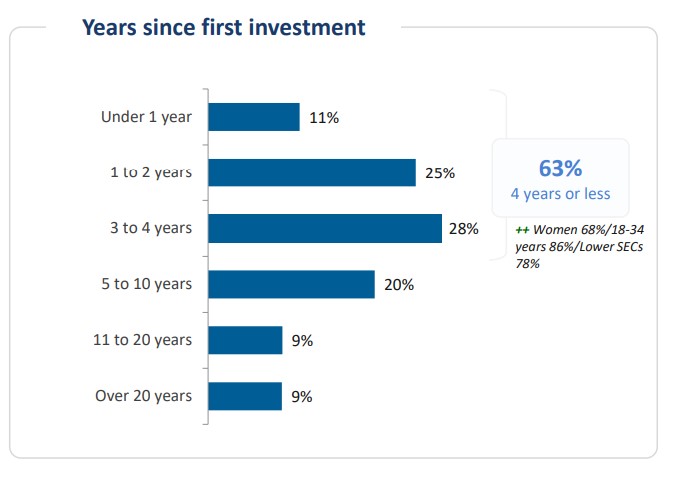
that are driving younger and more active investors into the market. A study revealed that 40% of French investors made their
first investment in the last four years.
The research by the AMF and OECD also highlighted the
rise of independent, self-directed investors. This new trend points to a shift
from traditional assets towards more innovative options, including ETFs,
crypto-assets, and crowdfunding.
A New Wave of Investors
According to the study, 24% of French people identify
as independent and active investors. These investors take control of their
portfolios, opting not to delegate management. This group is predominantly
male, younger, and hails from higher socio-economic backgrounds.
Interestingly, over half of these investors entered
the markets within the past four years, with a growing number under the age of
35 choosing ETFs as their preferred investment vehicle.
Source: AMF
The study also disclosed that investment practices are
growing beyond traditional shares and bonds. Only 18% of investors hold only
listed shares, while many prefer to diversify, holding multiple products such
as funds, open-end investment companies, crypto-assets, and crowdfunding
securities.
Exchange-traded Funds (ETFs) have rapidly gained
popularity in France, particularly among younger investors. Half of the
investors in ETFs have invested less than €10,000, with a focus on medium- to
long-term equity and sustainable ETFs.
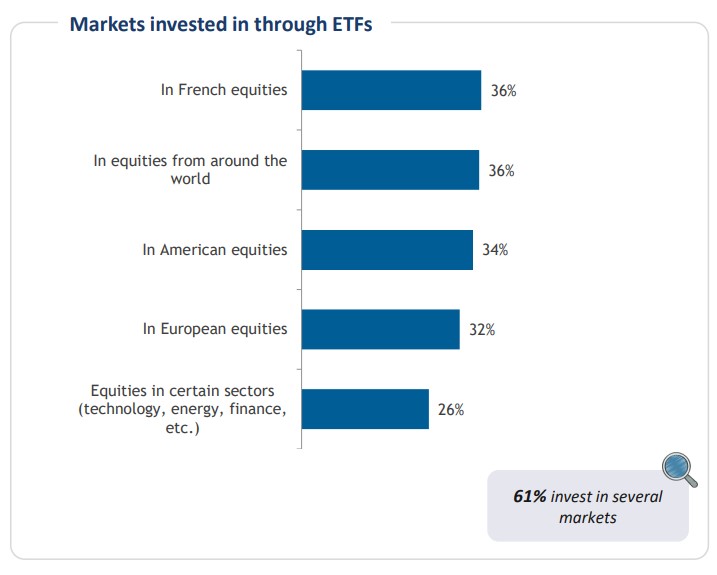
The appeal of ETFs lies in their ability to provide
diversified exposure to different markets and sectors at a lower cost compared
to traditional mutual funds. Furthermore, 60% of ETF investors are choosing to
spread their investments across multiple markets, reflecting an appetite for
global exposure.
Source: AMF
Social media platforms, including YouTube and
Instagram, have become pivotal in shaping the opinions of younger investors,
while older generations prefer more traditional media outlets that cover the
stock market.
Crowdfunding platforms have also seen increased
participation, especially among middle-aged investors (35-49). These investors
tend to look for alternative investment opportunities beyond listed shares.
Real estate projects and local community ventures are particularly popular.
Crypto Assets
While still not as widely held, crypto-assets are
also making inroads. Younger investors are more open to these digital assets,
seeing them as high-risk but high-reward opportunities. For many, investing in crypto offers a way to
diversify portfolios and access potential gains outside the scope of
traditional markets.
The rise of technology has made investing more
accessible than ever. Three-quarters of investors log into their investment
accounts at least once a week, and smartphones are the primary devices for
managing portfolios.
Fractional investments and copy-trading, where
investors replicate the trades of others, are becoming increasingly popular. These activities provide new ways for inexperienced or smaller investors to engage with the
market.
The French investment landscape is experiencing new trends
that are driving younger and more active investors into the market. A study revealed that 40% of French investors made their
first investment in the last four years.
The research by the AMF and OECD also highlighted the
rise of independent, self-directed investors. This new trend points to a shift
from traditional assets towards more innovative options, including ETFs,
crypto-assets, and crowdfunding.
A New Wave of Investors
According to the study, 24% of French people identify
as independent and active investors. These investors take control of their
portfolios, opting not to delegate management. This group is predominantly
male, younger, and hails from higher socio-economic backgrounds.
Interestingly, over half of these investors entered
the markets within the past four years, with a growing number under the age of
35 choosing ETFs as their preferred investment vehicle.
Source: AMF
The study also disclosed that investment practices are
growing beyond traditional shares and bonds. Only 18% of investors hold only
listed shares, while many prefer to diversify, holding multiple products such
as funds, open-end investment companies, crypto-assets, and crowdfunding
securities.
Exchange-traded Funds (ETFs) have rapidly gained
popularity in France, particularly among younger investors. Half of the
investors in ETFs have invested less than €10,000, with a focus on medium- to
long-term equity and sustainable ETFs.
The appeal of ETFs lies in their ability to provide
diversified exposure to different markets and sectors at a lower cost compared
to traditional mutual funds. Furthermore, 60% of ETF investors are choosing to
spread their investments across multiple markets, reflecting an appetite for
global exposure.
Source: AMF
Social media platforms, including YouTube and
Instagram, have become pivotal in shaping the opinions of younger investors,
while older generations prefer more traditional media outlets that cover the
stock market.
Crowdfunding platforms have also seen increased
participation, especially among middle-aged investors (35-49). These investors
tend to look for alternative investment opportunities beyond listed shares.
Real estate projects and local community ventures are particularly popular.
Crypto Assets
While still not as widely held, crypto-assets are
also making inroads. Younger investors are more open to these digital assets,
seeing them as high-risk but high-reward opportunities. For many, investing in crypto offers a way to
diversify portfolios and access potential gains outside the scope of
traditional markets.
The rise of technology has made investing more
accessible than ever. Three-quarters of investors log into their investment
accounts at least once a week, and smartphones are the primary devices for
managing portfolios.
Fractional investments and copy-trading, where
investors replicate the trades of others, are becoming increasingly popular. These activities provide new ways for inexperienced or smaller investors to engage with the
market.
Jared Kirui is an Editor at Finance Magnates with more than five years of experience in financial journalism. He covers online trading, fintech, payments, and crypto industries with a focus on companies, regulation and compliance, executive moves, trading technology, and market analysis.
His work has been featured in other media outlets, including Benzinga, ZyCrypto, The Distributed, and The Daily Hodl.
Education:
Bachelor of Commerce degree (Finance option), University of Nairobi
Retail Traders Can Now Access Prediction Markets Through Binance Wallet
FP Markets Winner Spotlight 🏆 | Global Broker of the Year 2025 #Trading #Broker #Innovation #Shorts
FP Markets Winner Spotlight 🏆 | Global Broker of the Year 2025 #Trading #Broker #Innovation #Shorts
FP Markets takes the spotlight as Global Broker of the Year 2025 at the Finance Magnates Awards.
Martin Stoilov, Head of Client Experience, shares that trust, innovation, and people played a key role in the company’s success, supported by a strong foundation of integrity and client-centricity.
Following this milestone, FP Markets continues to focus on growth, technology investment, and its core values of transparency and excellence.
👉 Be part of FM Awards 2026: https://awards.financemagnates.com/#nominate
FP Markets takes the spotlight as Global Broker of the Year 2025 at the Finance Magnates Awards.
Martin Stoilov, Head of Client Experience, shares that trust, innovation, and people played a key role in the company’s success, supported by a strong foundation of integrity and client-centricity.
Following this milestone, FP Markets continues to focus on growth, technology investment, and its core values of transparency and excellence.
👉 Be part of FM Awards 2026: https://awards.financemagnates.com/#nominate
In this video, we review @HolaPrimeMarketsOfficial, a multi-asset forex and CFDs broker offering different account types, trading platforms, and flexible trading conditions.
We cover the broker’s overall offering, including account options, trading environment, platforms like MT4 and MT5, and additional services such as managed accounts and fast withdrawals.
Watch the full video to see if Hola Prime Markets fits your trading needs.
📣 Stay up to date with the latest in finance and trading. Follow Finance Magnates for industry news, insights, and global event coverage.
Connect with us:
🔗 LinkedIn: /financemagnates
👍 Facebook: /financemagnates
📸 Instagram: https://www.instagram.com/financemagnates
🐦 X: https://x.com/financemagnates
🎥 TikTok: https://www.tiktok.com/tag/financemagnates
▶️ YouTube: /@financemagnates_official
#HolaPrime #ForexBroker #CFDTrading #FinanceMagnates #Trading #Forex #BrokerReview
In this video, we review @HolaPrimeMarketsOfficial, a multi-asset forex and CFDs broker offering different account types, trading platforms, and flexible trading conditions.
We cover the broker’s overall offering, including account options, trading environment, platforms like MT4 and MT5, and additional services such as managed accounts and fast withdrawals.
Watch the full video to see if Hola Prime Markets fits your trading needs.
📣 Stay up to date with the latest in finance and trading. Follow Finance Magnates for industry news, insights, and global event coverage.
Connect with us:
🔗 LinkedIn: /financemagnates
👍 Facebook: /financemagnates
📸 Instagram: https://www.instagram.com/financemagnates
🐦 X: https://x.com/financemagnates
🎥 TikTok: https://www.tiktok.com/tag/financemagnates
▶️ YouTube: /@financemagnates_official
#HolaPrime #ForexBroker #CFDTrading #FinanceMagnates #Trading #Forex #BrokerReview
Hola Prime Review: What You Need to Know | Full Breakdown by Finance Magnates
Hola Prime Review: What You Need to Know | Full Breakdown by Finance Magnates
In this video, we review @HolaPrime_Global, a proprietary trading firm offering evaluation programs and performance-based payouts in simulated market environments.
We cover how the challenge model works, including account types, profit splits (up to 95%), trading rules, and what it takes to reach a funded account. You’ll also learn about available platforms like MT4, MT5, cTrader, and more, along with insights into payouts, support, and trading conditions.
Watch the full video to see if Hola Prime fits your trading style.
📣 Stay up to date with the latest in finance and trading. Follow Finance Magnates for industry news, insights, and global event coverage.
Connect with us:
🔗 LinkedIn: /financemagnates
👍 Facebook: /financemagnates
📸 Instagram: https://www.instagram.com/financemagnates
🐦 X: https://x.com/financemagnates
🎥 TikTok: https://www.tiktok.com/tag/financemagnates
▶️ YouTube: /@financemagnates_official
#HolaPrime #PropFirm #Trading #FinanceMagnates #Forex #FuturesTrading #TradingReview #PropFirmReview
In this video, we review @HolaPrime_Global, a proprietary trading firm offering evaluation programs and performance-based payouts in simulated market environments.
We cover how the challenge model works, including account types, profit splits (up to 95%), trading rules, and what it takes to reach a funded account. You’ll also learn about available platforms like MT4, MT5, cTrader, and more, along with insights into payouts, support, and trading conditions.
Watch the full video to see if Hola Prime fits your trading style.
📣 Stay up to date with the latest in finance and trading. Follow Finance Magnates for industry news, insights, and global event coverage.
Connect with us:
🔗 LinkedIn: /financemagnates
👍 Facebook: /financemagnates
📸 Instagram: https://www.instagram.com/financemagnates
🐦 X: https://x.com/financemagnates
🎥 TikTok: https://www.tiktok.com/tag/financemagnates
▶️ YouTube: /@financemagnates_official
#HolaPrime #PropFirm #Trading #FinanceMagnates #Forex #FuturesTrading #TradingReview #PropFirmReview
Axi Winner Spotlight 🏆 | Global Most Innovative Broker 2025 #Innovation #Trading #Fintech #Broker
Axi Winner Spotlight 🏆 | Global Most Innovative Broker 2025 #Innovation #Trading #Fintech #Broker
Axi takes the spotlight at the Finance Magnates Awards, winning Global Most Innovative Broker 2025.
Olivia Xenofontos and Ivanna Openko share how the team will feel: proud, motivated, and ready to keep delivering.
They also describe the night as well-organized, focused, and enjoyable for all.
👉 Be part of FM Awards 2026.
Axi takes the spotlight at the Finance Magnates Awards, winning Global Most Innovative Broker 2025.
Olivia Xenofontos and Ivanna Openko share how the team will feel: proud, motivated, and ready to keep delivering.
They also describe the night as well-organized, focused, and enjoyable for all.
👉 Be part of FM Awards 2026.
Recognition that matters.
Built on transparency.
Driven by the industry.
The Finance Magnates Awards 2026.
Nominations are now open.
🔗 https://awards.financemagnates.com/?utm_source=SM&utm_medium=social&utm_campaign=recognition-matters
Recognition that matters.
Built on transparency.
Driven by the industry.
The Finance Magnates Awards 2026.
Nominations are now open.
🔗 https://awards.financemagnates.com/?utm_source=SM&utm_medium=social&utm_campaign=recognition-matters