The fine came as Monzo added those “high-risk” customers between August 2020 and June 2022.
The digital bank, however, agreed to resolve the lapses in its financial crime controls.
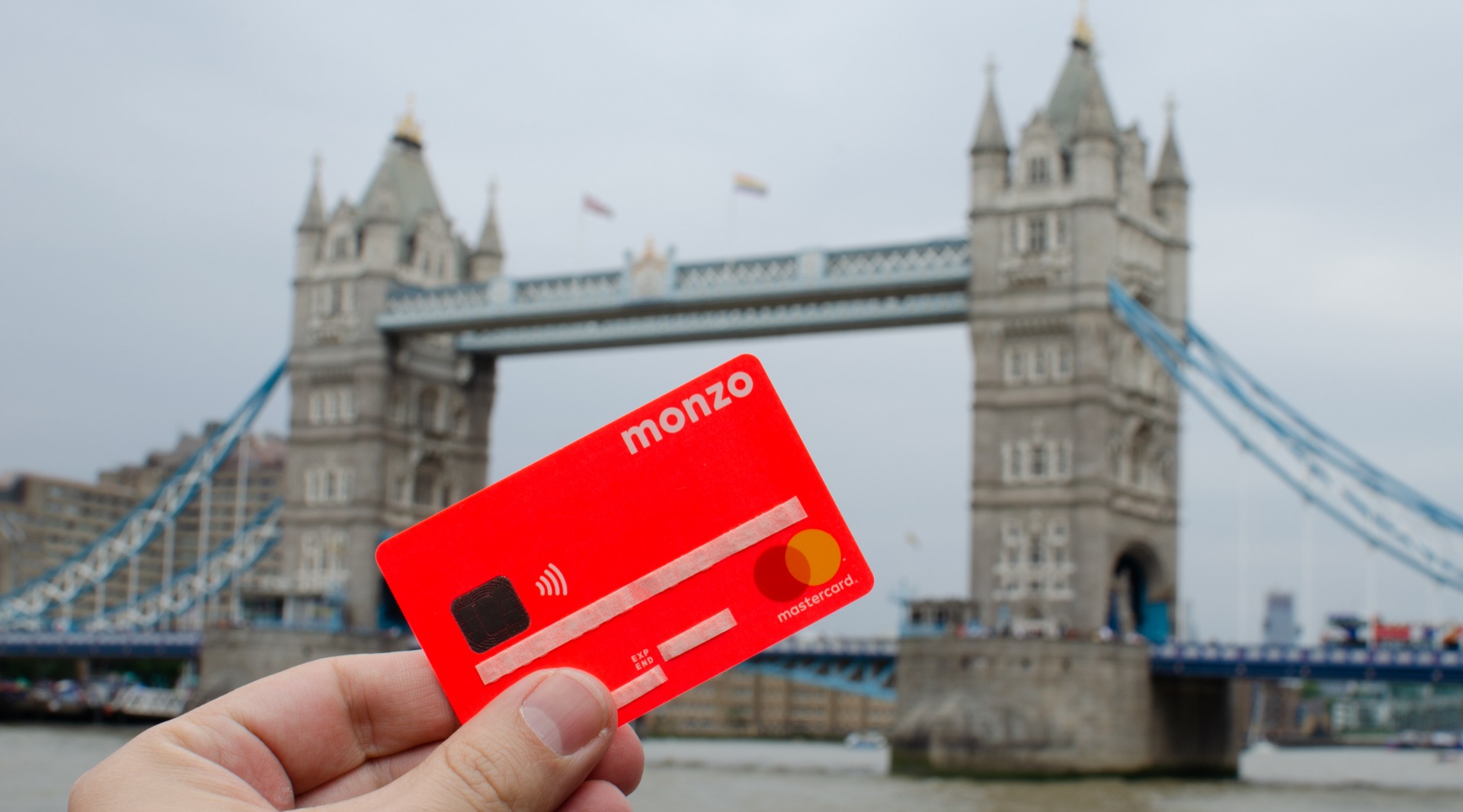
The Financial Conduct Authority (FCA) in the United Kingdom has imposed an almost £21.1 million fine on digital banking giant Monzo for opening accounts for “high-risk” customers, thus “repeatedly” breaching requirements around financial crime controls.
Crime Control Lapses Cost Monzo Heavily
The regulator announced today (Tuesday) that its review found the digital bank had inadequate anti–financial crime systems and controls between October 2018 and August 2020.
Furthermore, it “repeatedly failed to comply with the terms” around onboarding high-risk customers between August 2020 and June 2022, and signed up more than 34,000 of such clients.
Therese Chambers, the FCA’s Joint Executive Director of Enforcement and Market Oversight
“Monzo onboarded customers on the basis of limited, and in some cases, obviously implausible information—such as customers using well-known London landmarks as an address,” said Therese Chambers, the FCA’s Joint Executive Director of Enforcement and Market Oversight.
“This illustrates how lacking Monzo's financial crime controls were,” she added. “This was compounded by its inability to properly comply with the requirement not to onboard high-risk customers.”
Interestingly, Monzo’s customer base jumped tenfold from around 600,000 in 2018 to over 5.8 million in 2022.
The company reported its first annual profit in 2023 and continued to grow in 2024–25, with revenue reaching over £1.2 billion. About one-third of its customers now use it as their main bank.
TS Anil, Monzo’s Group CEO
The British regulator further highlighted that Monzo has now established and completed a financial crime change programme to fix and improve its broader financial crime control framework, in line with recommendations made in the independent review.
The FCA originally decided to impose a fine of over £30.1 million on Monzo but reduced the amount by 30 per cent as the challenger bank agreed to resolve the matter.
“The FCA’s findings relate to a historical period that ended three years ago,” said TS Anil, Monzo’s Group CEO, adding: “[They] draw a line under issues that have been resolved and are firmly in the past—with our learnings at the time leading to substantial improvements in our controls.”
However, Monzo is not the only British challenger bank to be caught onboarding high-risk customers. Last year, the FCA imposed a £29 million fine on Sterling Bank for opening more than 54,000 accounts for 49,000 “high-risk customers” between September 2021 and November 2022, calling its financial crime controls “shockingly lax.”
The Financial Conduct Authority (FCA) in the United Kingdom has imposed an almost £21.1 million fine on digital banking giant Monzo for opening accounts for “high-risk” customers, thus “repeatedly” breaching requirements around financial crime controls.
Crime Control Lapses Cost Monzo Heavily
The regulator announced today (Tuesday) that its review found the digital bank had inadequate anti–financial crime systems and controls between October 2018 and August 2020.
Furthermore, it “repeatedly failed to comply with the terms” around onboarding high-risk customers between August 2020 and June 2022, and signed up more than 34,000 of such clients.
Therese Chambers, the FCA’s Joint Executive Director of Enforcement and Market Oversight
“Monzo onboarded customers on the basis of limited, and in some cases, obviously implausible information—such as customers using well-known London landmarks as an address,” said Therese Chambers, the FCA’s Joint Executive Director of Enforcement and Market Oversight.
“This illustrates how lacking Monzo's financial crime controls were,” she added. “This was compounded by its inability to properly comply with the requirement not to onboard high-risk customers.”
Interestingly, Monzo’s customer base jumped tenfold from around 600,000 in 2018 to over 5.8 million in 2022.
The company reported its first annual profit in 2023 and continued to grow in 2024–25, with revenue reaching over £1.2 billion. About one-third of its customers now use it as their main bank.
TS Anil, Monzo’s Group CEO
The British regulator further highlighted that Monzo has now established and completed a financial crime change programme to fix and improve its broader financial crime control framework, in line with recommendations made in the independent review.
The FCA originally decided to impose a fine of over £30.1 million on Monzo but reduced the amount by 30 per cent as the challenger bank agreed to resolve the matter.
“The FCA’s findings relate to a historical period that ended three years ago,” said TS Anil, Monzo’s Group CEO, adding: “[They] draw a line under issues that have been resolved and are firmly in the past—with our learnings at the time leading to substantial improvements in our controls.”
However, Monzo is not the only British challenger bank to be caught onboarding high-risk customers. Last year, the FCA imposed a £29 million fine on Sterling Bank for opening more than 54,000 accounts for 49,000 “high-risk customers” between September 2021 and November 2022, calling its financial crime controls “shockingly lax.”
Arnab Shome is an electronics engineer-turned-financial editor. He holds a Bachelor of Technology from the National Institute of Technology, Agartala. He entered the retail trading industry about a decade ago, covering the cryptocurrency market for Finance Magnates, and later expanded his coverage to include forex and CFDs as well.
His work at Finance Magnates includes C-level interviews, data-driven analysis, opinion pieces, and scoops of industry exclusives. He also contributes to Finance Magnates’ quarterly industry report.
Area of coverage:
1. CFD broker-related news
2. Industry-related Regulatory updates and developments
3. New retail trading trends
4. Prop trading industry updates
5. Executive interviews
Education:
Bachelor of Technology - National Institute of Technology, Agartala (India)
Polymarket Replaces Bridged USDC Aiming for a U.S. Relaunch
FP Markets Winner Spotlight 🏆 | Global Broker of the Year 2025 #Trading #Broker #Innovation #Shorts
FP Markets Winner Spotlight 🏆 | Global Broker of the Year 2025 #Trading #Broker #Innovation #Shorts
FP Markets takes the spotlight as Global Broker of the Year 2025 at the Finance Magnates Awards.
Martin Stoilov, Head of Client Experience, shares that trust, innovation, and people played a key role in the company’s success, supported by a strong foundation of integrity and client-centricity.
Following this milestone, FP Markets continues to focus on growth, technology investment, and its core values of transparency and excellence.
👉 Be part of FM Awards 2026: https://awards.financemagnates.com/#nominate
FP Markets takes the spotlight as Global Broker of the Year 2025 at the Finance Magnates Awards.
Martin Stoilov, Head of Client Experience, shares that trust, innovation, and people played a key role in the company’s success, supported by a strong foundation of integrity and client-centricity.
Following this milestone, FP Markets continues to focus on growth, technology investment, and its core values of transparency and excellence.
👉 Be part of FM Awards 2026: https://awards.financemagnates.com/#nominate
In this video, we review @HolaPrimeMarketsOfficial, a multi-asset forex and CFDs broker offering different account types, trading platforms, and flexible trading conditions.
We cover the broker’s overall offering, including account options, trading environment, platforms like MT4 and MT5, and additional services such as managed accounts and fast withdrawals.
Watch the full video to see if Hola Prime Markets fits your trading needs.
📣 Stay up to date with the latest in finance and trading. Follow Finance Magnates for industry news, insights, and global event coverage.
Connect with us:
🔗 LinkedIn: /financemagnates
👍 Facebook: /financemagnates
📸 Instagram: https://www.instagram.com/financemagnates
🐦 X: https://x.com/financemagnates
🎥 TikTok: https://www.tiktok.com/tag/financemagnates
▶️ YouTube: /@financemagnates_official
#HolaPrime #ForexBroker #CFDTrading #FinanceMagnates #Trading #Forex #BrokerReview
In this video, we review @HolaPrimeMarketsOfficial, a multi-asset forex and CFDs broker offering different account types, trading platforms, and flexible trading conditions.
We cover the broker’s overall offering, including account options, trading environment, platforms like MT4 and MT5, and additional services such as managed accounts and fast withdrawals.
Watch the full video to see if Hola Prime Markets fits your trading needs.
📣 Stay up to date with the latest in finance and trading. Follow Finance Magnates for industry news, insights, and global event coverage.
Connect with us:
🔗 LinkedIn: /financemagnates
👍 Facebook: /financemagnates
📸 Instagram: https://www.instagram.com/financemagnates
🐦 X: https://x.com/financemagnates
🎥 TikTok: https://www.tiktok.com/tag/financemagnates
▶️ YouTube: /@financemagnates_official
#HolaPrime #ForexBroker #CFDTrading #FinanceMagnates #Trading #Forex #BrokerReview
Hola Prime Review: What You Need to Know | Full Breakdown by Finance Magnates
Hola Prime Review: What You Need to Know | Full Breakdown by Finance Magnates
In this video, we review @HolaPrime_Global, a proprietary trading firm offering evaluation programs and performance-based payouts in simulated market environments.
We cover how the challenge model works, including account types, profit splits (up to 95%), trading rules, and what it takes to reach a funded account. You’ll also learn about available platforms like MT4, MT5, cTrader, and more, along with insights into payouts, support, and trading conditions.
Watch the full video to see if Hola Prime fits your trading style.
📣 Stay up to date with the latest in finance and trading. Follow Finance Magnates for industry news, insights, and global event coverage.
Connect with us:
🔗 LinkedIn: /financemagnates
👍 Facebook: /financemagnates
📸 Instagram: https://www.instagram.com/financemagnates
🐦 X: https://x.com/financemagnates
🎥 TikTok: https://www.tiktok.com/tag/financemagnates
▶️ YouTube: /@financemagnates_official
#HolaPrime #PropFirm #Trading #FinanceMagnates #Forex #FuturesTrading #TradingReview #PropFirmReview
In this video, we review @HolaPrime_Global, a proprietary trading firm offering evaluation programs and performance-based payouts in simulated market environments.
We cover how the challenge model works, including account types, profit splits (up to 95%), trading rules, and what it takes to reach a funded account. You’ll also learn about available platforms like MT4, MT5, cTrader, and more, along with insights into payouts, support, and trading conditions.
Watch the full video to see if Hola Prime fits your trading style.
📣 Stay up to date with the latest in finance and trading. Follow Finance Magnates for industry news, insights, and global event coverage.
Connect with us:
🔗 LinkedIn: /financemagnates
👍 Facebook: /financemagnates
📸 Instagram: https://www.instagram.com/financemagnates
🐦 X: https://x.com/financemagnates
🎥 TikTok: https://www.tiktok.com/tag/financemagnates
▶️ YouTube: /@financemagnates_official
#HolaPrime #PropFirm #Trading #FinanceMagnates #Forex #FuturesTrading #TradingReview #PropFirmReview
Axi Winner Spotlight 🏆 | Global Most Innovative Broker 2025 #Innovation #Trading #Fintech #Broker
Axi Winner Spotlight 🏆 | Global Most Innovative Broker 2025 #Innovation #Trading #Fintech #Broker
Axi takes the spotlight at the Finance Magnates Awards, winning Global Most Innovative Broker 2025.
Olivia Xenofontos and Ivanna Openko share how the team will feel: proud, motivated, and ready to keep delivering.
They also describe the night as well-organized, focused, and enjoyable for all.
👉 Be part of FM Awards 2026.
Axi takes the spotlight at the Finance Magnates Awards, winning Global Most Innovative Broker 2025.
Olivia Xenofontos and Ivanna Openko share how the team will feel: proud, motivated, and ready to keep delivering.
They also describe the night as well-organized, focused, and enjoyable for all.
👉 Be part of FM Awards 2026.
Recognition that matters.
Built on transparency.
Driven by the industry.
The Finance Magnates Awards 2026.
Nominations are now open.
🔗 https://awards.financemagnates.com/?utm_source=SM&utm_medium=social&utm_campaign=recognition-matters
Recognition that matters.
Built on transparency.
Driven by the industry.
The Finance Magnates Awards 2026.
Nominations are now open.
🔗 https://awards.financemagnates.com/?utm_source=SM&utm_medium=social&utm_campaign=recognition-matters