In this week's Fintech Spotlight, we delve into how virtual reality could become a big data tool of the future in the finance industry.
It’s been several weeks since our last Fintech Spotlight column so I thought it was about time to fire up again what should be a weekly column. As usual, the column’s focus is on featuring interesting trends or startups in the fintech world. For this week, the column is less about the current fintech scene, but about future technology which may take a few more years to really develop.
Walking around the halls of Web Summit last week, the event was a showcase of both the present and future of technology. If you like ed-tech, there were at least 100 startups presenting their wares. The same was true for nearly every sector such as eCommerce, ad-tech, design, social and software development. Fintech also made itself present, most notably with the Money Summit panels and talks on the last day. Sadly though, fintech startups were in the minority (my assumption is that as a tech conference, many fintech startups probably saw little value in attending the event and are more focused on industry specific conferences centered around trading or banking).
Among the emerging technologies, arguably the ones with the greatest buzz were virtual reality. In addition to startups showcasing their virtual reality wares, Ford, Audi, Google and Facebook all had long lines of attendees wanting to try out their virtual reality devices.
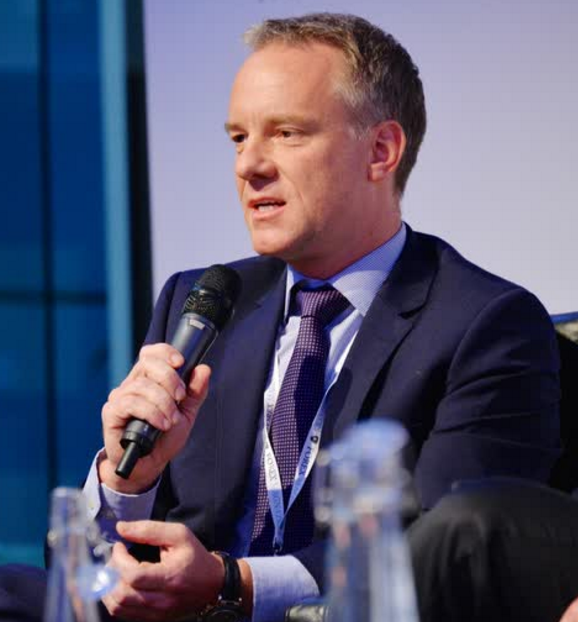
Andrew Rossiter, CTO of ADS Securities
In terms of fintech, it remains to be seen how virtual reality will be integrated within the industry, but the first few seeds are beginning to be sown. Use cases that are currently being discussed have revolved around education and data visualization. Even though we are arguably still years away from when virtual reality has a noticeable impact on the industry, early adopters and technologists are already experimenting with the technology.
Among early examples of virtual reality being noted as a potential game changer for finance was at last year’s Finance Magnates' London Summit. During the 2014 event’s Technology Panel, when asked about examples of technology that the panelists were excited about, Andrew Rossiter, CTO of ADS Securities hinted to the potential of virtual reality. He stated that he believed the technology would have a similar impact to that of the internet.
Data Visualization
Taking a closer look at data visualization, the use of virtual reality would simply be a continuation of current trends in the market. While much of finance and trading is being controlled by algorithms and automatic processes, as more data is being consumed by computers, it has made it harder for humans to analyze what is really going on. As a result, data visualization products have become more popular.
So what does this foundation of visual data mean for the future of finance and virtual reality? The natural extension of technology is expected to yield products that allow for virtual or augmented reality experiences where data is not only presented in 3D, but that can be easily analyzed to better study quirks of information.
As an example, one can picture visual data for hundreds of derivatives. On a 2D screen, viewing them simultaneously is nearly impossible without sacrificing details. Add to that time sequences of historical and forecasted data and it becomes impossible to view visually.
With virtual reality, the potential is that all these data sets can be presented on one plane. The user can take the 10,000 foot approach and view the data on a general level, or quickly dig deeper to more specific areas. In addition, by pressing a few buttons to alter assumptions about the future, the data changes, providing a visual way of seeing the changes.
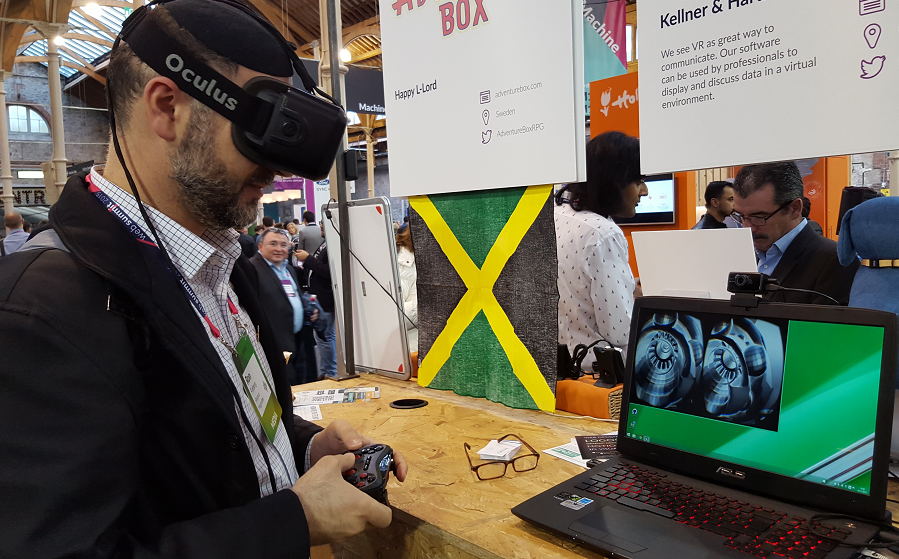
Demoing Konstrukt3's VR tech at the Web Summit
An example of this future was described by Konstrukt3. The firm was at the Web Summit showcasing their virtual reality product for architects. A German firm, Konstrukt3, built a platform to allow for architects to build virtual reality examples of their work and share it with other architects or clients. In real-time, an architect can receive comments from a customer and make changes such as higher ceilings or different color schemes.
The founders explained that in addition to architecture, they had received requests from the financial industry to create solutions that could be used to help them view data more visually. The use cases being discussed were ways that virtual reality could help to more easily identify outliers of data that was being inputted.
Education
Along with data, education for trading is expected to be an area of opportunity for finance and virtual reality. Explaining the potential, Sebastian J. Kuhnert, Founder and CEO of Tradimo Interactive, whose firm is creating games to educate new traders stated to Finance Magnates that "I believe education will be one of the top 3 applications of virtual reality and therefore also have an impact on financial education". He explained that "If we can design one ultimate immersive educational experience, mankind can afford to invest as much as tens of thousands of individual "teacher years" into it, because it has the potential to replace the majority of these other classroom experiences where millions of teachers deliver essentially the same education in a million slight variations from each other".
In regards to how virtual reality compares to existing forms of online based education, Kuhnert described that "The biggest difference between today's education and the one in the future will be that it'll feel more like a game than studying and this will be truly disruptive. If you think of the additional entertainment value of an animated video versus a book, then maybe it's 2x as good. Virtual reality games will be a 1000x as good. Therefore, I believe that the majority of trading and financial education will be an immersive game"
Anytime Soon?
While virtual reality in some form or another is bound to converge with the financial field, the reality is that we are still probably years away from any mainstream product hitting the market. Most virtual reality headsets have issues with latency when one moves their head around. Also, due to the weight of headsets and the latency of images, wearing the gear for more than ten minutes produces headaches in many people.
Nonetheless, these are problems that are experienced by the greater virtual reality industry and startups, as well as giants like Facebook with its Oculus Rift unit it's working on. For the financial industry, this means virtual reality banking, sifting through 3D visual data, or immersive interactive trading education courses are more likely than not a reality we will soon be hearing more about.
Fintech Spotlight is a new column on Finance Magnates devoted to reviewing innovative financial technology companies and sector trends.
It’s been several weeks since our last Fintech Spotlight column so I thought it was about time to fire up again what should be a weekly column. As usual, the column’s focus is on featuring interesting trends or startups in the fintech world. For this week, the column is less about the current fintech scene, but about future technology which may take a few more years to really develop.
Walking around the halls of Web Summit last week, the event was a showcase of both the present and future of technology. If you like ed-tech, there were at least 100 startups presenting their wares. The same was true for nearly every sector such as eCommerce, ad-tech, design, social and software development. Fintech also made itself present, most notably with the Money Summit panels and talks on the last day. Sadly though, fintech startups were in the minority (my assumption is that as a tech conference, many fintech startups probably saw little value in attending the event and are more focused on industry specific conferences centered around trading or banking).
Among the emerging technologies, arguably the ones with the greatest buzz were virtual reality. In addition to startups showcasing their virtual reality wares, Ford, Audi, Google and Facebook all had long lines of attendees wanting to try out their virtual reality devices.
Andrew Rossiter, CTO of ADS Securities
In terms of fintech, it remains to be seen how virtual reality will be integrated within the industry, but the first few seeds are beginning to be sown. Use cases that are currently being discussed have revolved around education and data visualization. Even though we are arguably still years away from when virtual reality has a noticeable impact on the industry, early adopters and technologists are already experimenting with the technology.
Among early examples of virtual reality being noted as a potential game changer for finance was at last year’s Finance Magnates' London Summit. During the 2014 event’s Technology Panel, when asked about examples of technology that the panelists were excited about, Andrew Rossiter, CTO of ADS Securities hinted to the potential of virtual reality. He stated that he believed the technology would have a similar impact to that of the internet.
Data Visualization
Taking a closer look at data visualization, the use of virtual reality would simply be a continuation of current trends in the market. While much of finance and trading is being controlled by algorithms and automatic processes, as more data is being consumed by computers, it has made it harder for humans to analyze what is really going on. As a result, data visualization products have become more popular.
So what does this foundation of visual data mean for the future of finance and virtual reality? The natural extension of technology is expected to yield products that allow for virtual or augmented reality experiences where data is not only presented in 3D, but that can be easily analyzed to better study quirks of information.
As an example, one can picture visual data for hundreds of derivatives. On a 2D screen, viewing them simultaneously is nearly impossible without sacrificing details. Add to that time sequences of historical and forecasted data and it becomes impossible to view visually.
With virtual reality, the potential is that all these data sets can be presented on one plane. The user can take the 10,000 foot approach and view the data on a general level, or quickly dig deeper to more specific areas. In addition, by pressing a few buttons to alter assumptions about the future, the data changes, providing a visual way of seeing the changes.
Demoing Konstrukt3's VR tech at the Web Summit
An example of this future was described by Konstrukt3. The firm was at the Web Summit showcasing their virtual reality product for architects. A German firm, Konstrukt3, built a platform to allow for architects to build virtual reality examples of their work and share it with other architects or clients. In real-time, an architect can receive comments from a customer and make changes such as higher ceilings or different color schemes.
The founders explained that in addition to architecture, they had received requests from the financial industry to create solutions that could be used to help them view data more visually. The use cases being discussed were ways that virtual reality could help to more easily identify outliers of data that was being inputted.
Education
Along with data, education for trading is expected to be an area of opportunity for finance and virtual reality. Explaining the potential, Sebastian J. Kuhnert, Founder and CEO of Tradimo Interactive, whose firm is creating games to educate new traders stated to Finance Magnates that "I believe education will be one of the top 3 applications of virtual reality and therefore also have an impact on financial education". He explained that "If we can design one ultimate immersive educational experience, mankind can afford to invest as much as tens of thousands of individual "teacher years" into it, because it has the potential to replace the majority of these other classroom experiences where millions of teachers deliver essentially the same education in a million slight variations from each other".
In regards to how virtual reality compares to existing forms of online based education, Kuhnert described that "The biggest difference between today's education and the one in the future will be that it'll feel more like a game than studying and this will be truly disruptive. If you think of the additional entertainment value of an animated video versus a book, then maybe it's 2x as good. Virtual reality games will be a 1000x as good. Therefore, I believe that the majority of trading and financial education will be an immersive game"
Anytime Soon?
While virtual reality in some form or another is bound to converge with the financial field, the reality is that we are still probably years away from any mainstream product hitting the market. Most virtual reality headsets have issues with latency when one moves their head around. Also, due to the weight of headsets and the latency of images, wearing the gear for more than ten minutes produces headaches in many people.
Nonetheless, these are problems that are experienced by the greater virtual reality industry and startups, as well as giants like Facebook with its Oculus Rift unit it's working on. For the financial industry, this means virtual reality banking, sifting through 3D visual data, or immersive interactive trading education courses are more likely than not a reality we will soon be hearing more about.
Fintech Spotlight is a new column on Finance Magnates devoted to reviewing innovative financial technology companies and sector trends.
IG Group Alumni Raise $1.2 Million for AI Search Startup
Featured Videos
CXM Group to Buy TD Markets; Interactive Brokers Raises Dividend
CXM Group to Buy TD Markets; Interactive Brokers Raises Dividend
CXM Group to Buy TD Markets; Interactive Brokers Raises Dividend
CXM Group to Buy TD Markets; Interactive Brokers Raises Dividend
Today’s financial news recap covers CXM Group agrees to acquire TD Markets, Interactive Brokers raises its dividend, Your Bourse and 4XPORTAL formalise a technology partnership, and IC completes its rebranding from IC Markets.
Finance Magnates Daily Recap brings you the latest news from forex and CFD brokers, fintech, payments, cryptocurrency, digital assets, trading platforms, financial regulation and global markets.
Get the key company news, executive moves, deals, regulatory updates and market developments of the day, in just a few minutes. New episodes published every weekday.
Read more: https://www.financemagnates.com
#FinanceMagnates #ForexNews #FintechNews
Today’s financial news recap covers CXM Group agrees to acquire TD Markets, Interactive Brokers raises its dividend, Your Bourse and 4XPORTAL formalise a technology partnership, and IC completes its rebranding from IC Markets.
Finance Magnates Daily Recap brings you the latest news from forex and CFD brokers, fintech, payments, cryptocurrency, digital assets, trading platforms, financial regulation and global markets.
Get the key company news, executive moves, deals, regulatory updates and market developments of the day, in just a few minutes. New episodes published every weekday.
Read more: https://www.financemagnates.com
#FinanceMagnates #ForexNews #FintechNews
Today’s financial news recap covers CXM Group agrees to acquire TD Markets, Interactive Brokers raises its dividend, Your Bourse and 4XPORTAL formalise a technology partnership, and IC completes its rebranding from IC Markets.
Finance Magnates Daily Recap brings you the latest news from forex and CFD brokers, fintech, payments, cryptocurrency, digital assets, trading platforms, financial regulation and global markets.
Get the key company news, executive moves, deals, regulatory updates and market developments of the day, in just a few minutes. New episodes published every weekday.
Read more: https://www.financemagnates.com
#FinanceMagnates #ForexNews #FintechNews
Today’s financial news recap covers CXM Group agrees to acquire TD Markets, Interactive Brokers raises its dividend, Your Bourse and 4XPORTAL formalise a technology partnership, and IC completes its rebranding from IC Markets.
Finance Magnates Daily Recap brings you the latest news from forex and CFD brokers, fintech, payments, cryptocurrency, digital assets, trading platforms, financial regulation and global markets.
Get the key company news, executive moves, deals, regulatory updates and market developments of the day, in just a few minutes. New episodes published every weekday.
Read more: https://www.financemagnates.com
#FinanceMagnates #ForexNews #FintechNews
Trade Nation Enters Poland; FCA Finds Gaps at Seven Brokers
Trade Nation Enters Poland; FCA Finds Gaps at Seven Brokers
Trade Nation Enters Poland; FCA Finds Gaps at Seven Brokers
Trade Nation Enters Poland; FCA Finds Gaps at Seven Brokers
Trade Nation Enters Poland; FCA Finds Gaps at Seven Brokers
Trade Nation Enters Poland; FCA Finds Gaps at Seven Brokers
Today’s financial news recap covers Trade Nation expands into Poland, the FCA finds surveillance gaps at seven UK retail brokers, perpetual futures on US stocks could launch within weeks, and Australia's crypto platforms face a new regulatory deadline.
Finance Magnates Daily Recap brings you the latest news from forex and CFD brokers, fintech, payments, cryptocurrency, digital assets, trading platforms, financial regulation and global markets.
Get the key company news, executive moves, deals, regulatory updates and market developments of the day, in just a few minutes. New episodes published every weekday.
Read more: https://www.financemagnates.com
#FinanceMagnates #ForexNews #FintechNews
Today’s financial news recap covers Trade Nation expands into Poland, the FCA finds surveillance gaps at seven UK retail brokers, perpetual futures on US stocks could launch within weeks, and Australia's crypto platforms face a new regulatory deadline.
Finance Magnates Daily Recap brings you the latest news from forex and CFD brokers, fintech, payments, cryptocurrency, digital assets, trading platforms, financial regulation and global markets.
Get the key company news, executive moves, deals, regulatory updates and market developments of the day, in just a few minutes. New episodes published every weekday.
Read more: https://www.financemagnates.com
#FinanceMagnates #ForexNews #FintechNews
Today’s financial news recap covers Trade Nation expands into Poland, the FCA finds surveillance gaps at seven UK retail brokers, perpetual futures on US stocks could launch within weeks, and Australia's crypto platforms face a new regulatory deadline.
Finance Magnates Daily Recap brings you the latest news from forex and CFD brokers, fintech, payments, cryptocurrency, digital assets, trading platforms, financial regulation and global markets.
Get the key company news, executive moves, deals, regulatory updates and market developments of the day, in just a few minutes. New episodes published every weekday.
Read more: https://www.financemagnates.com
#FinanceMagnates #ForexNews #FintechNews
Today’s financial news recap covers Trade Nation expands into Poland, the FCA finds surveillance gaps at seven UK retail brokers, perpetual futures on US stocks could launch within weeks, and Australia's crypto platforms face a new regulatory deadline.
Finance Magnates Daily Recap brings you the latest news from forex and CFD brokers, fintech, payments, cryptocurrency, digital assets, trading platforms, financial regulation and global markets.
Get the key company news, executive moves, deals, regulatory updates and market developments of the day, in just a few minutes. New episodes published every weekday.
Read more: https://www.financemagnates.com
#FinanceMagnates #ForexNews #FintechNews
Today’s financial news recap covers Trade Nation expands into Poland, the FCA finds surveillance gaps at seven UK retail brokers, perpetual futures on US stocks could launch within weeks, and Australia's crypto platforms face a new regulatory deadline.
Finance Magnates Daily Recap brings you the latest news from forex and CFD brokers, fintech, payments, cryptocurrency, digital assets, trading platforms, financial regulation and global markets.
Get the key company news, executive moves, deals, regulatory updates and market developments of the day, in just a few minutes. New episodes published every weekday.
Read more: https://www.financemagnates.com
#FinanceMagnates #ForexNews #FintechNews
Today’s financial news recap covers Trade Nation expands into Poland, the FCA finds surveillance gaps at seven UK retail brokers, perpetual futures on US stocks could launch within weeks, and Australia's crypto platforms face a new regulatory deadline.
Finance Magnates Daily Recap brings you the latest news from forex and CFD brokers, fintech, payments, cryptocurrency, digital assets, trading platforms, financial regulation and global markets.
Get the key company news, executive moves, deals, regulatory updates and market developments of the day, in just a few minutes. New episodes published every weekday.
Read more: https://www.financemagnates.com
#FinanceMagnates #ForexNews #FintechNews
FxPro Sells EU Clients to Capital.com; NAGA H1 Profit Revised
FxPro Sells EU Clients to Capital.com; NAGA H1 Profit Revised
FxPro Sells EU Clients to Capital.com; NAGA H1 Profit Revised
FxPro Sells EU Clients to Capital.com; NAGA H1 Profit Revised
FxPro Sells EU Clients to Capital.com; NAGA H1 Profit Revised
FxPro Sells EU Clients to Capital.com; NAGA H1 Profit Revised
Today’s financial news recap covers FxPro agrees to sell its European client book to Capital.com, NAGA raises its first-half profit estimate, Trade Republic prepares a fee-free pension account, and Interactive Brokers introduces Ether staking.
Finance Magnates Daily Recap brings you the latest news from forex and CFD brokers, fintech, payments, cryptocurrency, digital assets, trading platforms, financial regulation and global markets.
Get the key company news, executive moves, deals, regulatory updates and market developments of the day, in just a few minutes. New episodes published every weekday.
Read more: https://www.financemagnates.com
#FinanceMagnates #ForexNews #FintechNews
Today’s financial news recap covers FxPro agrees to sell its European client book to Capital.com, NAGA raises its first-half profit estimate, Trade Republic prepares a fee-free pension account, and Interactive Brokers introduces Ether staking.
Finance Magnates Daily Recap brings you the latest news from forex and CFD brokers, fintech, payments, cryptocurrency, digital assets, trading platforms, financial regulation and global markets.
Get the key company news, executive moves, deals, regulatory updates and market developments of the day, in just a few minutes. New episodes published every weekday.
Read more: https://www.financemagnates.com
#FinanceMagnates #ForexNews #FintechNews
Today’s financial news recap covers FxPro agrees to sell its European client book to Capital.com, NAGA raises its first-half profit estimate, Trade Republic prepares a fee-free pension account, and Interactive Brokers introduces Ether staking.
Finance Magnates Daily Recap brings you the latest news from forex and CFD brokers, fintech, payments, cryptocurrency, digital assets, trading platforms, financial regulation and global markets.
Get the key company news, executive moves, deals, regulatory updates and market developments of the day, in just a few minutes. New episodes published every weekday.
Read more: https://www.financemagnates.com
#FinanceMagnates #ForexNews #FintechNews
Today’s financial news recap covers FxPro agrees to sell its European client book to Capital.com, NAGA raises its first-half profit estimate, Trade Republic prepares a fee-free pension account, and Interactive Brokers introduces Ether staking.
Finance Magnates Daily Recap brings you the latest news from forex and CFD brokers, fintech, payments, cryptocurrency, digital assets, trading platforms, financial regulation and global markets.
Get the key company news, executive moves, deals, regulatory updates and market developments of the day, in just a few minutes. New episodes published every weekday.
Read more: https://www.financemagnates.com
#FinanceMagnates #ForexNews #FintechNews
Today’s financial news recap covers FxPro agrees to sell its European client book to Capital.com, NAGA raises its first-half profit estimate, Trade Republic prepares a fee-free pension account, and Interactive Brokers introduces Ether staking.
Finance Magnates Daily Recap brings you the latest news from forex and CFD brokers, fintech, payments, cryptocurrency, digital assets, trading platforms, financial regulation and global markets.
Get the key company news, executive moves, deals, regulatory updates and market developments of the day, in just a few minutes. New episodes published every weekday.
Read more: https://www.financemagnates.com
#FinanceMagnates #ForexNews #FintechNews
Today’s financial news recap covers FxPro agrees to sell its European client book to Capital.com, NAGA raises its first-half profit estimate, Trade Republic prepares a fee-free pension account, and Interactive Brokers introduces Ether staking.
Finance Magnates Daily Recap brings you the latest news from forex and CFD brokers, fintech, payments, cryptocurrency, digital assets, trading platforms, financial regulation and global markets.
Get the key company news, executive moves, deals, regulatory updates and market developments of the day, in just a few minutes. New episodes published every weekday.
Read more: https://www.financemagnates.com
#FinanceMagnates #ForexNews #FintechNews
Plus500 Plans US Super-App; Investec to Offer IG Platform
Plus500 Plans US Super-App; Investec to Offer IG Platform
Plus500 Plans US Super-App; Investec to Offer IG Platform
Plus500 Plans US Super-App; Investec to Offer IG Platform
Plus500 Plans US Super-App; Investec to Offer IG Platform
Plus500 Plans US Super-App; Investec to Offer IG Platform
Today’s financial news recap covers Plus500 plans a US trading super-app, Investec partners with IG, Trade Republic reports a sevenfold profit jump, and BingX adds thousands of US stocks.
Finance Magnates Daily Recap brings you the latest news from forex and CFD brokers, fintech, payments, cryptocurrency, digital assets, trading platforms, financial regulation and global markets.
Get the key company news, executive moves, deals, regulatory updates and market developments of the day, in just a few minutes. New episodes published every weekday.
Read more: https://www.financemagnates.com
#FinanceMagnates #ForexNews #FintechNews
Today’s financial news recap covers Plus500 plans a US trading super-app, Investec partners with IG, Trade Republic reports a sevenfold profit jump, and BingX adds thousands of US stocks.
Finance Magnates Daily Recap brings you the latest news from forex and CFD brokers, fintech, payments, cryptocurrency, digital assets, trading platforms, financial regulation and global markets.
Get the key company news, executive moves, deals, regulatory updates and market developments of the day, in just a few minutes. New episodes published every weekday.
Read more: https://www.financemagnates.com
#FinanceMagnates #ForexNews #FintechNews
Today’s financial news recap covers Plus500 plans a US trading super-app, Investec partners with IG, Trade Republic reports a sevenfold profit jump, and BingX adds thousands of US stocks.
Finance Magnates Daily Recap brings you the latest news from forex and CFD brokers, fintech, payments, cryptocurrency, digital assets, trading platforms, financial regulation and global markets.
Get the key company news, executive moves, deals, regulatory updates and market developments of the day, in just a few minutes. New episodes published every weekday.
Read more: https://www.financemagnates.com
#FinanceMagnates #ForexNews #FintechNews
Today’s financial news recap covers Plus500 plans a US trading super-app, Investec partners with IG, Trade Republic reports a sevenfold profit jump, and BingX adds thousands of US stocks.
Finance Magnates Daily Recap brings you the latest news from forex and CFD brokers, fintech, payments, cryptocurrency, digital assets, trading platforms, financial regulation and global markets.
Get the key company news, executive moves, deals, regulatory updates and market developments of the day, in just a few minutes. New episodes published every weekday.
Read more: https://www.financemagnates.com
#FinanceMagnates #ForexNews #FintechNews
Today’s financial news recap covers Plus500 plans a US trading super-app, Investec partners with IG, Trade Republic reports a sevenfold profit jump, and BingX adds thousands of US stocks.
Finance Magnates Daily Recap brings you the latest news from forex and CFD brokers, fintech, payments, cryptocurrency, digital assets, trading platforms, financial regulation and global markets.
Get the key company news, executive moves, deals, regulatory updates and market developments of the day, in just a few minutes. New episodes published every weekday.
Read more: https://www.financemagnates.com
#FinanceMagnates #ForexNews #FintechNews
Today’s financial news recap covers Plus500 plans a US trading super-app, Investec partners with IG, Trade Republic reports a sevenfold profit jump, and BingX adds thousands of US stocks.
Finance Magnates Daily Recap brings you the latest news from forex and CFD brokers, fintech, payments, cryptocurrency, digital assets, trading platforms, financial regulation and global markets.
Get the key company news, executive moves, deals, regulatory updates and market developments of the day, in just a few minutes. New episodes published every weekday.
Read more: https://www.financemagnates.com
#FinanceMagnates #ForexNews #FintechNews
FXCM UK Holds $110m in Client Money; IG CEO Questions Prediction Market Volumes
FXCM UK Holds $110m in Client Money; IG CEO Questions Prediction Market Volumes
FXCM UK Holds $110m in Client Money; IG CEO Questions Prediction Market Volumes
FXCM UK Holds $110m in Client Money; IG CEO Questions Prediction Market Volumes
FXCM UK Holds $110m in Client Money; IG CEO Questions Prediction Market Volumes
FXCM UK Holds $110m in Client Money; IG CEO Questions Prediction Market Volumes
Today’s financial news recap covers FXCM's UK arm holds $110 million in client money ahead of its sale to Trade Nation, Citadel Securities' UK profit falls 38 per cent, and Kraken secures its final Dubai crypto licence.
Finance Magnates Daily Recap brings you the latest news from forex and CFD brokers, fintech, payments, cryptocurrency, digital assets, trading platforms, financial regulation and global markets.
Get the key company news, executive moves, deals, regulatory updates and market developments of the day, in just a few minutes. New episodes published every weekday.
Read more: https://www.financemagnates.com
#FinanceMagnates #ForexNews #FintechNews
Today’s financial news recap covers FXCM's UK arm holds $110 million in client money ahead of its sale to Trade Nation, Citadel Securities' UK profit falls 38 per cent, and Kraken secures its final Dubai crypto licence.
Finance Magnates Daily Recap brings you the latest news from forex and CFD brokers, fintech, payments, cryptocurrency, digital assets, trading platforms, financial regulation and global markets.
Get the key company news, executive moves, deals, regulatory updates and market developments of the day, in just a few minutes. New episodes published every weekday.
Read more: https://www.financemagnates.com
#FinanceMagnates #ForexNews #FintechNews
Today’s financial news recap covers FXCM's UK arm holds $110 million in client money ahead of its sale to Trade Nation, Citadel Securities' UK profit falls 38 per cent, and Kraken secures its final Dubai crypto licence.
Finance Magnates Daily Recap brings you the latest news from forex and CFD brokers, fintech, payments, cryptocurrency, digital assets, trading platforms, financial regulation and global markets.
Get the key company news, executive moves, deals, regulatory updates and market developments of the day, in just a few minutes. New episodes published every weekday.
Read more: https://www.financemagnates.com
#FinanceMagnates #ForexNews #FintechNews
Today’s financial news recap covers FXCM's UK arm holds $110 million in client money ahead of its sale to Trade Nation, Citadel Securities' UK profit falls 38 per cent, and Kraken secures its final Dubai crypto licence.
Finance Magnates Daily Recap brings you the latest news from forex and CFD brokers, fintech, payments, cryptocurrency, digital assets, trading platforms, financial regulation and global markets.
Get the key company news, executive moves, deals, regulatory updates and market developments of the day, in just a few minutes. New episodes published every weekday.
Read more: https://www.financemagnates.com
#FinanceMagnates #ForexNews #FintechNews
Today’s financial news recap covers FXCM's UK arm holds $110 million in client money ahead of its sale to Trade Nation, Citadel Securities' UK profit falls 38 per cent, and Kraken secures its final Dubai crypto licence.
Finance Magnates Daily Recap brings you the latest news from forex and CFD brokers, fintech, payments, cryptocurrency, digital assets, trading platforms, financial regulation and global markets.
Get the key company news, executive moves, deals, regulatory updates and market developments of the day, in just a few minutes. New episodes published every weekday.
Read more: https://www.financemagnates.com
#FinanceMagnates #ForexNews #FintechNews
Today’s financial news recap covers FXCM's UK arm holds $110 million in client money ahead of its sale to Trade Nation, Citadel Securities' UK profit falls 38 per cent, and Kraken secures its final Dubai crypto licence.
Finance Magnates Daily Recap brings you the latest news from forex and CFD brokers, fintech, payments, cryptocurrency, digital assets, trading platforms, financial regulation and global markets.
Get the key company news, executive moves, deals, regulatory updates and market developments of the day, in just a few minutes. New episodes published every weekday.
Read more: https://www.financemagnates.com
#FinanceMagnates #ForexNews #FintechNews