Financial and Business News

“The Worst Decision Is Not Having a Decision”: CBO of Bridgewise on AI Adoption, Broker Growth, and Vertical Models

Monday, 12/01/2026 | 15:38 GMT by Tanya Chepkova
  • Dor Eligula, Co-Founder and CBO of Bridgewise, spoke about how brokers can translate AI adoption into measurable growth.
  • Watch the full video interview from Finance Magnates London Summit 2025.

“Those brokers and technology providers who have taken a step can see the impact with real tangible use cases,” said Dor Eligula, Co-Founder and Chief Business Officer of Bridgewise.

At the Finance Magnates London Summit 2025, Eligula spoke in an interview with Finance Magnates, conducted by Jonathan Fine, about how brokers can unlock growth by acting decisively on AI adoption rather than waiting for the technology to fully mature.

He also shared insights from Bridgewise’s work with brokers across Asia and globally, outlined how AI is being applied in real trading environments, and detailed the firm’s roadmap for 2026.

Bridgewise is an investment intelligence provider founded in 2019. The company develops AI-driven tools for equity and fund analysis, multilingual market insights, and data-supported investment workflows.

Acting on AI, Not Waiting for Certainty

Asked about growth opportunities for brokers in 2026, Eligula cautioned against hesitation in adopting new technologies, particularly AI. “The worst decision you can make is not having a decision,” he said, referring to firms that remain on the sidelines due to uncertainty about how AI will evolve.

According to Eligula, Bridgewise sees a clear divide between firms that actively experiment with AI-driven tools and those that delay adoption waiting for clarity. “From the partners we work with, I can see how those brokers and technology providers who have taken a step can see the impact with real tangible use cases,” he said.

Rather than positioning AI as a future bet, Eligula framed it as a present-day operational tool, particularly for brokers seeking to differentiate through engagement and analytics.
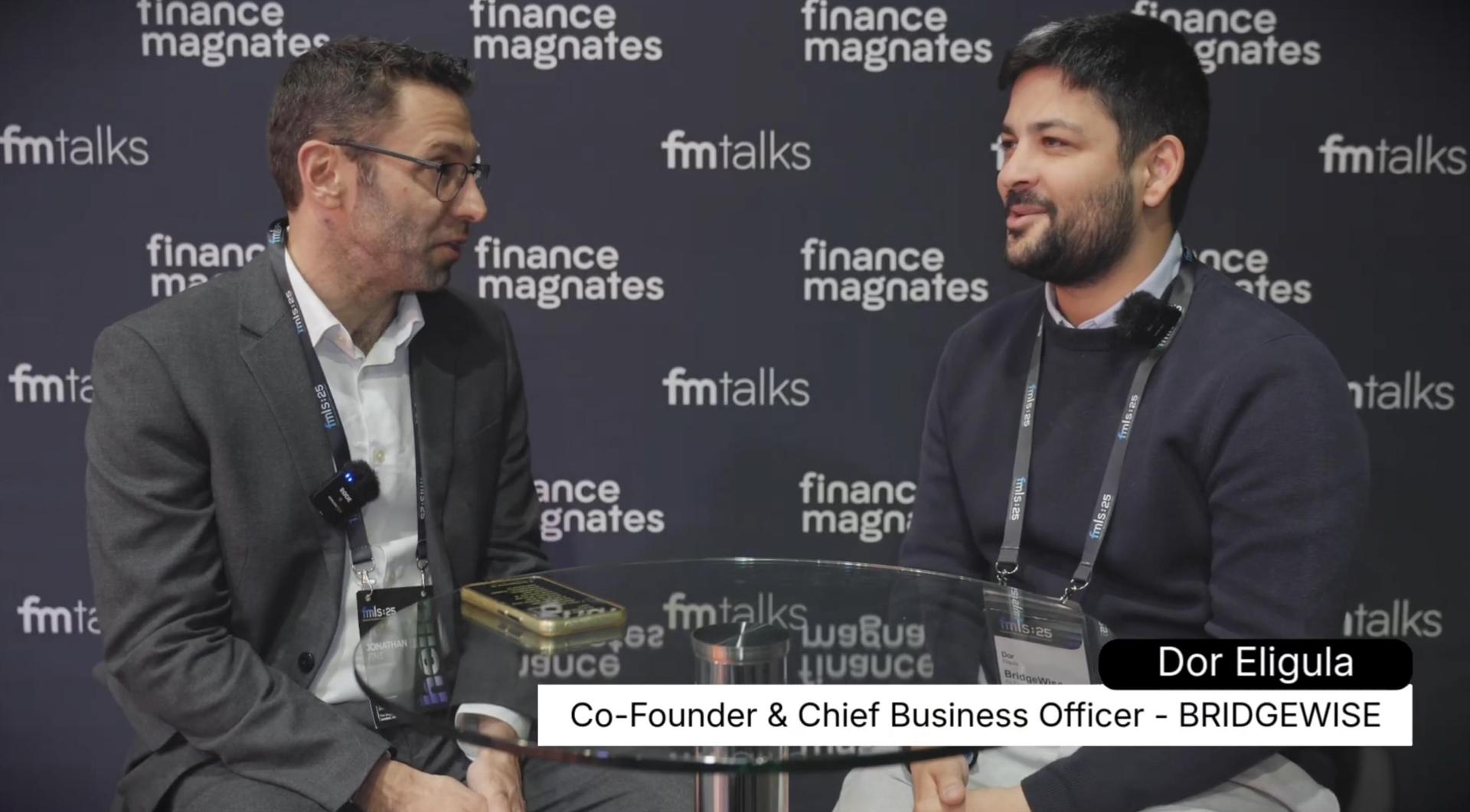
Dor Eligula, Co-Founder and Chief Business Officer of Bridgewise

Measuring Impact Beyond Trading Volume

While revenue and trading volume remain central performance indicators, Eligula said brokers are increasingly measuring success through a wider set of metrics. “It depends on your KPI,” he said.

“In the end of the day, it can be the bottom line — ARPU or trading volume — but also net promoter scores, engagement rates, session bounces, and more granular indicators.”

The ability to track both financial and behavioural metrics, he noted, allows brokers to better understand how technology influences trader confidence and decision-making.

Asia: From Blue Ocean to Competitive Market

Bridgewise has a strong footprint in Asia, working with partners such as Rakuten Securities. Eligula noted that while the region once represented a relatively untapped opportunity, rapid AI adoption has made the landscape increasingly competitive.

“Naturally, it used to be bluer,” he said, adding that the pace of AI development has since crowded the space. What now differentiates providers, according to Eligula, is the ability to demonstrate proven outcomes rather than theoretical capabilities.

“Looking at how others have been successfully doing it helps brokers make a decision,” he said, pointing to live deployments and published case studies as key confidence drivers.

AI Scaled from Analyst Support to Market Coverage

Discussing the interaction between AI and human judgement, Eligula highlighted Bridgewise’s deployment with Rakuten Securities as a concrete example. “More than three million reports are being generated by Rakuten Securities clients every day,” he said, referring to on-the-fly reports created by users.

He noted that Rakuten has publicly stated that clients feel more confident in their trading decisions following Bridgewise’s integration — a claim disclosed during the firm’s earnings call. Bridgewise’s technology aggregates multiple data sets, including fundamentals, news, sentiment, macroeconomic inputs, and technical indicators, allowing AI models to analyse markets continuously.

“You can compare Bridgewise to an army of 50,000 analysts,” Eligula said. Unlike human analysts, who typically revisit instruments periodically, AI systems can reassess markets daily and at scale, while also reducing emotional bias in analysis.

Why Large Language Models Fall Short in Finance

Looking ahead to 2026, Eligula identified Bridgewise’s flagship project, Genie, as the firm’s primary development focus. “We are building an AI agent, an AI advisor, that can help any trader or investor in their day-to-day,” he said, describing applications ranging from portfolio construction to behavioural analysis.

Crucially, Eligula said Bridgewise does not rely on general-purpose large language models (LLMs). “LLMs are not good enough for the financial industry,” he said, arguing that compliance, domain specificity, and regulatory constraints require a different approach.

Instead, Bridgewise is investing in smaller, vertically focused AI models designed specifically for financial markets. “Vertical AI would be way stronger for brokers, banks, and others in the value chain,” he said, citing the need for tailored know-how and governance.

AI as a Support Tool for Individual Traders

While Bridgewise primarily serves institutional clients, Eligula also offered guidance for individual traders experimenting with AI tools. “I would not use AI for specific investment decisions,” he said, but suggested it can be valuable for analysing past trades, portfolio structure, and behavioural patterns.

According to Eligula, using AI as a reflective and analytical tool — rather than a decision-maker — can help traders better understand their own performance and risk tendencies.

“Those brokers and technology providers who have taken a step can see the impact with real tangible use cases,” said Dor Eligula, Co-Founder and Chief Business Officer of Bridgewise.

At the Finance Magnates London Summit 2025, Eligula spoke in an interview with Finance Magnates, conducted by Jonathan Fine, about how brokers can unlock growth by acting decisively on AI adoption rather than waiting for the technology to fully mature.

He also shared insights from Bridgewise’s work with brokers across Asia and globally, outlined how AI is being applied in real trading environments, and detailed the firm’s roadmap for 2026.

Bridgewise is an investment intelligence provider founded in 2019. The company develops AI-driven tools for equity and fund analysis, multilingual market insights, and data-supported investment workflows.

Acting on AI, Not Waiting for Certainty

Asked about growth opportunities for brokers in 2026, Eligula cautioned against hesitation in adopting new technologies, particularly AI. “The worst decision you can make is not having a decision,” he said, referring to firms that remain on the sidelines due to uncertainty about how AI will evolve.

According to Eligula, Bridgewise sees a clear divide between firms that actively experiment with AI-driven tools and those that delay adoption waiting for clarity. “From the partners we work with, I can see how those brokers and technology providers who have taken a step can see the impact with real tangible use cases,” he said.

Rather than positioning AI as a future bet, Eligula framed it as a present-day operational tool, particularly for brokers seeking to differentiate through engagement and analytics.

Dor Eligula, Co-Founder and Chief Business Officer of Bridgewise

Measuring Impact Beyond Trading Volume

While revenue and trading volume remain central performance indicators, Eligula said brokers are increasingly measuring success through a wider set of metrics. “It depends on your KPI,” he said.

“In the end of the day, it can be the bottom line — ARPU or trading volume — but also net promoter scores, engagement rates, session bounces, and more granular indicators.”

The ability to track both financial and behavioural metrics, he noted, allows brokers to better understand how technology influences trader confidence and decision-making.

Asia: From Blue Ocean to Competitive Market

Bridgewise has a strong footprint in Asia, working with partners such as Rakuten Securities. Eligula noted that while the region once represented a relatively untapped opportunity, rapid AI adoption has made the landscape increasingly competitive.

“Naturally, it used to be bluer,” he said, adding that the pace of AI development has since crowded the space. What now differentiates providers, according to Eligula, is the ability to demonstrate proven outcomes rather than theoretical capabilities.

“Looking at how others have been successfully doing it helps brokers make a decision,” he said, pointing to live deployments and published case studies as key confidence drivers.

AI Scaled from Analyst Support to Market Coverage

Discussing the interaction between AI and human judgement, Eligula highlighted Bridgewise’s deployment with Rakuten Securities as a concrete example. “More than three million reports are being generated by Rakuten Securities clients every day,” he said, referring to on-the-fly reports created by users.

He noted that Rakuten has publicly stated that clients feel more confident in their trading decisions following Bridgewise’s integration — a claim disclosed during the firm’s earnings call. Bridgewise’s technology aggregates multiple data sets, including fundamentals, news, sentiment, macroeconomic inputs, and technical indicators, allowing AI models to analyse markets continuously.

“You can compare Bridgewise to an army of 50,000 analysts,” Eligula said. Unlike human analysts, who typically revisit instruments periodically, AI systems can reassess markets daily and at scale, while also reducing emotional bias in analysis.

Why Large Language Models Fall Short in Finance

Looking ahead to 2026, Eligula identified Bridgewise’s flagship project, Genie, as the firm’s primary development focus. “We are building an AI agent, an AI advisor, that can help any trader or investor in their day-to-day,” he said, describing applications ranging from portfolio construction to behavioural analysis.

Crucially, Eligula said Bridgewise does not rely on general-purpose large language models (LLMs). “LLMs are not good enough for the financial industry,” he said, arguing that compliance, domain specificity, and regulatory constraints require a different approach.

Instead, Bridgewise is investing in smaller, vertically focused AI models designed specifically for financial markets. “Vertical AI would be way stronger for brokers, banks, and others in the value chain,” he said, citing the need for tailored know-how and governance.

AI as a Support Tool for Individual Traders

While Bridgewise primarily serves institutional clients, Eligula also offered guidance for individual traders experimenting with AI tools. “I would not use AI for specific investment decisions,” he said, but suggested it can be valuable for analysing past trades, portfolio structure, and behavioural patterns.

According to Eligula, using AI as a reflective and analytical tool — rather than a decision-maker — can help traders better understand their own performance and risk tendencies.

About the Author: Tanya Chepkova
Tanya Chepkova
  • 62 Articles

More from the Author

Executives