The FIX Trading Community has established itself as a key to unlocking trading on SEFs after post-Dodd Frank implementation confusion
Photo: Bloomberg
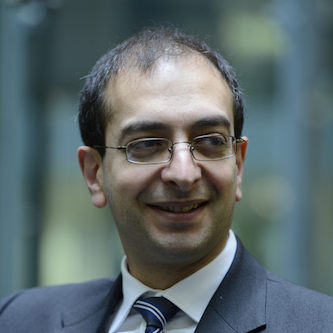
Sassan Danesh, Co-Chair, FIX Trading Community
In its latest series of Executive Interviews, Forex Magnates' reporters have reached out to the FIX Trading Community, which has successfully managed to establish itself as an industry standard for OTC Derivatives trading on Swap Execution Facilities (SEFs). We interviewed Sassan Danesh, who is Co-Chair of the FIX Trading Community Global Fixed Income Subcommittee and Managing Partner at Etrading Software, who shared his expertise on SEFs and FIX Trading Community’s Global Marketing and Communications Manager, Tim Healy, who explained what the FIX Trading Community is about.
Let’s start with a general question - explain to our readers what the FIX Trading Community is in a nutshell?
TH- We’re an industry driven standards body and a non-profit organization. Our mandate is to gather together a number of different members of the trading community - vendors, buy-side, sell-side, exchanges, consultants. These members then form different working groups - equities, OTC derivatives, foreign exchange, futures, etc. The working groups address business needs - for example, regulation or ongoing market developments, trying to determine how best to meet the requirements of the market.
How many working groups do you currently have?
TH- We have somewhere in the region of 40 to 50 active working groups and committees. The work is done on a voluntary basis by the members. We currently have about 270 different members covering all kinds of different markets and activities. We have a global reach with representatives from the US, EMEA and Asia-Pacific as well.
How did FIX become involved with the Swap Execution Facilities (SEFs) initially?
As the market went electronic after the implementation of Dodd-Frank through the use of SEFs, we looked at the feasibility of creating a global standard for the electronic trading of swaps, which could then be leveraged by the SEFs.
What were the main benefits to the SEFs who got on board with the FIX Trading Community?
The other aspect is from a dealer or buy-side perspective. One of the key challenges with the introduction of new regulations was which SEFs would end up gaining traction and gaining the liquidity. With such a big market structure change, what usually happens is that there is an increase, in fact an explosion of new trading venues. Over time the market consolidates into a few venues which actually manage to have the right business models to succeed to attract liquidity flows there. So we thought that the use of a standard such as FIX would be a center, around which the industry could coalesce. So from both the buy-side and the sell-side perspectives, what’s most important is to be easily able to connect to whichever SEFs look to be gaining traction.
How did you engage to onboard SEFs to join the FIX Protocol?
SD- Especially in the OTC markets, there is a lot of sensitivity around what is a proprietary advantage and what isn't. Transparency is typically less and initially a lot of what we did was to make the community comfortable that actually connectivity should be seen as an overall advantage for everybody and it made sense to drive down costs to add benefits to everyone, while competition and innovation could occur on top of that.
That was where we started, and once there was a general acceptance that it all made sense, we then kicked off a series of working groups. The dominant actors were the SEFs and also the sell-side, however there was representation from the buy-side and from software vendors to look to creating a sort of a SEF API.
In terms of different regulation, is your protocol scalable?
SD- We did it in a way that can have a global applicability. For example, MiFid 2 in Europe is a few years behind Dodd-Frank, but it’s coming along and since its principles are very similar to Dodd-Frank, we were looking to make sure that the solution is easy to port across to other global markets. Currently the SEF API has been adopted by pretty much everyone, which is quite an achievement.
Rumor has it, that trading volumes on the OTC markets have been largely restored. How has the expected liquidity challenges been addressed?
SD- When SEFs first went live there was a drop in liquidity, as everybody started to get accustomed to the new trading paradigm. Now most people are comfortable to trade and there is a lot more comfort also about what should be traded on SEF and what can be traded off SEF. Today package transactions such as switch or spread products for example, are outside of the scope of the CFTC mandate. They are coming into scope by November so there are other types of swaps that are starting to be on-boarded, but everybody now is certainly more comfortable as to which trading paradigms should be on SEF and which off SEF and how that works. It took a while for that to settle down since there are a lot of moving parts.
One of the key design considerations for the new swap execution facilities was to make sure that any trade that occurs is going to be cleared to remove the bilateral counterpart risk, but the CFTC wanted to make sure that there was a guarantee at the pre trade level that if the trade does occur, i.e. if the SEF says - done, and the trade message is generated that there would be confidence that it would go all the way into the clearing house and be accepted.
So what does that mean - the key takeaway is that there are additional workflows at a pre-trade level to check whether there is enough margin in the clearing house to guarantee that this trade is going to succeed and would not be bounced because of lack of margin. Some of the workflows that historically have been seen as a post-trade workflow (will this trade actually clear in the clearing house) have been brought into the pre-trade space. During the pre-trade negotiation of an order, the SEF has to validate that it will clear further down the line if a trade is done.
There are lots of moving parts and lots of different types of entities have to be invoked - the futures commission merchants, the CCPs, the SEFs, the executing broker, the clearing broker, etc. So it did take some time for the whole system to settle down and everybody to be comfortable that volumes could be pushed through the system and it will work properly.
What are the main issues now?
SD- The big issues now are related to the various jurisdictions - for example, how does a European entity access US liquidity? etc. The key point is to establish a global market place. Given where we are with different regulations, there has been fragmentation of liquidity, so going forward we have to try and minimize the danger, which this fragmentation brings across jurisdictions.
How has the FIX protocol helped address that?
SD- If we look at a regional level, actually the challenges associated with internal fragmentation have been significantly mitigated by the use of FIX. It’s very easy now for both the buy-side and the sell-side to deploy their technology for different asset classes through the use of aggregation tools or smart order routing to effectively rebuild and reintegrate that market, even if there are individual liquidity pools in different SEFs. We've done a pretty good job within each regulatory environment, maximizing the integration and making sure that internal fragmentation can be re-aggregated very easily through cross asset technologies that exist today.
Tim Healy, Global Marketing and Communications Manager FIX Trading Community
Would you say that eventually we would get regulators across the world to cooperate and establish a global OTC derivatives market?
SD- It’s much better to ask a regulatory body, but from a practical perspective I am relatively positive on this matter. At a detail level from our conversations with regulators in Europe, what we see is a willingness to work with the industry to make sure that as far as possible the European regulators learn their lessons from the US. While it doesn't mean that they are going to do things in exactly the same way, it does show that there is a willingness to understand what the US has done. Looking further ahead at Asia, those regulators are observing what’s happening with both Dodd-Frank and MiFid. Overall, it looks like a lot of good interaction is starting to happen at the grassroots.
So, how have the SEFs implemented the FIX Protocol?
TH- We have defined a set of specifications that any API needs to conform to - about 80 different workflows within the SEF concert. Our job was to set the standard, which allows each SEF to implement something and then all the interested parties to be able to code up to that standard, and feel comfortable that if they did it for one SEF, that implementation could be leveraged for the other SEFs as well. We deliberately wanted to stay away from building a network ourselves, so the specification allows interested parties to build their own technology in an open world. Our specification is an open standard.
Sassan Danesh, Co-Chair, FIX Trading Community
In its latest series of Executive Interviews, Forex Magnates' reporters have reached out to the FIX Trading Community, which has successfully managed to establish itself as an industry standard for OTC Derivatives trading on Swap Execution Facilities (SEFs). We interviewed Sassan Danesh, who is Co-Chair of the FIX Trading Community Global Fixed Income Subcommittee and Managing Partner at Etrading Software, who shared his expertise on SEFs and FIX Trading Community’s Global Marketing and Communications Manager, Tim Healy, who explained what the FIX Trading Community is about.
Let’s start with a general question - explain to our readers what the FIX Trading Community is in a nutshell?
TH- We’re an industry driven standards body and a non-profit organization. Our mandate is to gather together a number of different members of the trading community - vendors, buy-side, sell-side, exchanges, consultants. These members then form different working groups - equities, OTC derivatives, foreign exchange, futures, etc. The working groups address business needs - for example, regulation or ongoing market developments, trying to determine how best to meet the requirements of the market.
How many working groups do you currently have?
TH- We have somewhere in the region of 40 to 50 active working groups and committees. The work is done on a voluntary basis by the members. We currently have about 270 different members covering all kinds of different markets and activities. We have a global reach with representatives from the US, EMEA and Asia-Pacific as well.
How did FIX become involved with the Swap Execution Facilities (SEFs) initially?
As the market went electronic after the implementation of Dodd-Frank through the use of SEFs, we looked at the feasibility of creating a global standard for the electronic trading of swaps, which could then be leveraged by the SEFs.
What were the main benefits to the SEFs who got on board with the FIX Trading Community?
The other aspect is from a dealer or buy-side perspective. One of the key challenges with the introduction of new regulations was which SEFs would end up gaining traction and gaining the liquidity. With such a big market structure change, what usually happens is that there is an increase, in fact an explosion of new trading venues. Over time the market consolidates into a few venues which actually manage to have the right business models to succeed to attract liquidity flows there. So we thought that the use of a standard such as FIX would be a center, around which the industry could coalesce. So from both the buy-side and the sell-side perspectives, what’s most important is to be easily able to connect to whichever SEFs look to be gaining traction.
How did you engage to onboard SEFs to join the FIX Protocol?
SD- Especially in the OTC markets, there is a lot of sensitivity around what is a proprietary advantage and what isn't. Transparency is typically less and initially a lot of what we did was to make the community comfortable that actually connectivity should be seen as an overall advantage for everybody and it made sense to drive down costs to add benefits to everyone, while competition and innovation could occur on top of that.
That was where we started, and once there was a general acceptance that it all made sense, we then kicked off a series of working groups. The dominant actors were the SEFs and also the sell-side, however there was representation from the buy-side and from software vendors to look to creating a sort of a SEF API.
In terms of different regulation, is your protocol scalable?
SD- We did it in a way that can have a global applicability. For example, MiFid 2 in Europe is a few years behind Dodd-Frank, but it’s coming along and since its principles are very similar to Dodd-Frank, we were looking to make sure that the solution is easy to port across to other global markets. Currently the SEF API has been adopted by pretty much everyone, which is quite an achievement.
Rumor has it, that trading volumes on the OTC markets have been largely restored. How has the expected liquidity challenges been addressed?
SD- When SEFs first went live there was a drop in liquidity, as everybody started to get accustomed to the new trading paradigm. Now most people are comfortable to trade and there is a lot more comfort also about what should be traded on SEF and what can be traded off SEF. Today package transactions such as switch or spread products for example, are outside of the scope of the CFTC mandate. They are coming into scope by November so there are other types of swaps that are starting to be on-boarded, but everybody now is certainly more comfortable as to which trading paradigms should be on SEF and which off SEF and how that works. It took a while for that to settle down since there are a lot of moving parts.
One of the key design considerations for the new swap execution facilities was to make sure that any trade that occurs is going to be cleared to remove the bilateral counterpart risk, but the CFTC wanted to make sure that there was a guarantee at the pre trade level that if the trade does occur, i.e. if the SEF says - done, and the trade message is generated that there would be confidence that it would go all the way into the clearing house and be accepted.
So what does that mean - the key takeaway is that there are additional workflows at a pre-trade level to check whether there is enough margin in the clearing house to guarantee that this trade is going to succeed and would not be bounced because of lack of margin. Some of the workflows that historically have been seen as a post-trade workflow (will this trade actually clear in the clearing house) have been brought into the pre-trade space. During the pre-trade negotiation of an order, the SEF has to validate that it will clear further down the line if a trade is done.
There are lots of moving parts and lots of different types of entities have to be invoked - the futures commission merchants, the CCPs, the SEFs, the executing broker, the clearing broker, etc. So it did take some time for the whole system to settle down and everybody to be comfortable that volumes could be pushed through the system and it will work properly.
What are the main issues now?
SD- The big issues now are related to the various jurisdictions - for example, how does a European entity access US liquidity? etc. The key point is to establish a global market place. Given where we are with different regulations, there has been fragmentation of liquidity, so going forward we have to try and minimize the danger, which this fragmentation brings across jurisdictions.
How has the FIX protocol helped address that?
SD- If we look at a regional level, actually the challenges associated with internal fragmentation have been significantly mitigated by the use of FIX. It’s very easy now for both the buy-side and the sell-side to deploy their technology for different asset classes through the use of aggregation tools or smart order routing to effectively rebuild and reintegrate that market, even if there are individual liquidity pools in different SEFs. We've done a pretty good job within each regulatory environment, maximizing the integration and making sure that internal fragmentation can be re-aggregated very easily through cross asset technologies that exist today.
Tim Healy, Global Marketing and Communications Manager FIX Trading Community
Would you say that eventually we would get regulators across the world to cooperate and establish a global OTC derivatives market?
SD- It’s much better to ask a regulatory body, but from a practical perspective I am relatively positive on this matter. At a detail level from our conversations with regulators in Europe, what we see is a willingness to work with the industry to make sure that as far as possible the European regulators learn their lessons from the US. While it doesn't mean that they are going to do things in exactly the same way, it does show that there is a willingness to understand what the US has done. Looking further ahead at Asia, those regulators are observing what’s happening with both Dodd-Frank and MiFid. Overall, it looks like a lot of good interaction is starting to happen at the grassroots.
So, how have the SEFs implemented the FIX Protocol?
TH- We have defined a set of specifications that any API needs to conform to - about 80 different workflows within the SEF concert. Our job was to set the standard, which allows each SEF to implement something and then all the interested parties to be able to code up to that standard, and feel comfortable that if they did it for one SEF, that implementation could be leveraged for the other SEFs as well. We deliberately wanted to stay away from building a network ourselves, so the specification allows interested parties to build their own technology in an open world. Our specification is an open standard.
Former Finalto Trading CEO Andrew Biggs Joins IG to Lead Trading Operations
Featured Videos
FP Markets Winner Spotlight 🏆 | Global Broker of the Year 2025 #Trading #Broker #Innovation #Shorts
FP Markets Winner Spotlight 🏆 | Global Broker of the Year 2025 #Trading #Broker #Innovation #Shorts
FP Markets Winner Spotlight 🏆 | Global Broker of the Year 2025 #Trading #Broker #Innovation #Shorts
FP Markets Winner Spotlight 🏆 | Global Broker of the Year 2025 #Trading #Broker #Innovation #Shorts
FP Markets takes the spotlight as Global Broker of the Year 2025 at the Finance Magnates Awards.
Martin Stoilov, Head of Client Experience, shares that trust, innovation, and people played a key role in the company’s success, supported by a strong foundation of integrity and client-centricity.
Following this milestone, FP Markets continues to focus on growth, technology investment, and its core values of transparency and excellence.
👉 Be part of FM Awards 2026: https://awards.financemagnates.com/#nominate
FP Markets takes the spotlight as Global Broker of the Year 2025 at the Finance Magnates Awards.
Martin Stoilov, Head of Client Experience, shares that trust, innovation, and people played a key role in the company’s success, supported by a strong foundation of integrity and client-centricity.
Following this milestone, FP Markets continues to focus on growth, technology investment, and its core values of transparency and excellence.
👉 Be part of FM Awards 2026: https://awards.financemagnates.com/#nominate
FP Markets takes the spotlight as Global Broker of the Year 2025 at the Finance Magnates Awards.
Martin Stoilov, Head of Client Experience, shares that trust, innovation, and people played a key role in the company’s success, supported by a strong foundation of integrity and client-centricity.
Following this milestone, FP Markets continues to focus on growth, technology investment, and its core values of transparency and excellence.
👉 Be part of FM Awards 2026: https://awards.financemagnates.com/#nominate
FP Markets takes the spotlight as Global Broker of the Year 2025 at the Finance Magnates Awards.
Martin Stoilov, Head of Client Experience, shares that trust, innovation, and people played a key role in the company’s success, supported by a strong foundation of integrity and client-centricity.
Following this milestone, FP Markets continues to focus on growth, technology investment, and its core values of transparency and excellence.
👉 Be part of FM Awards 2026: https://awards.financemagnates.com/#nominate
In this video, we review @HolaPrimeMarketsOfficial, a multi-asset forex and CFDs broker offering different account types, trading platforms, and flexible trading conditions.
We cover the broker’s overall offering, including account options, trading environment, platforms like MT4 and MT5, and additional services such as managed accounts and fast withdrawals.
Watch the full video to see if Hola Prime Markets fits your trading needs.
📣 Stay up to date with the latest in finance and trading. Follow Finance Magnates for industry news, insights, and global event coverage.
Connect with us:
🔗 LinkedIn: /financemagnates
👍 Facebook: /financemagnates
📸 Instagram: https://www.instagram.com/financemagnates
🐦 X: https://x.com/financemagnates
🎥 TikTok: https://www.tiktok.com/tag/financemagnates
▶️ YouTube: /@financemagnates_official
#HolaPrime #ForexBroker #CFDTrading #FinanceMagnates #Trading #Forex #BrokerReview
In this video, we review @HolaPrimeMarketsOfficial, a multi-asset forex and CFDs broker offering different account types, trading platforms, and flexible trading conditions.
We cover the broker’s overall offering, including account options, trading environment, platforms like MT4 and MT5, and additional services such as managed accounts and fast withdrawals.
Watch the full video to see if Hola Prime Markets fits your trading needs.
📣 Stay up to date with the latest in finance and trading. Follow Finance Magnates for industry news, insights, and global event coverage.
Connect with us:
🔗 LinkedIn: /financemagnates
👍 Facebook: /financemagnates
📸 Instagram: https://www.instagram.com/financemagnates
🐦 X: https://x.com/financemagnates
🎥 TikTok: https://www.tiktok.com/tag/financemagnates
▶️ YouTube: /@financemagnates_official
#HolaPrime #ForexBroker #CFDTrading #FinanceMagnates #Trading #Forex #BrokerReview
In this video, we review @HolaPrimeMarketsOfficial, a multi-asset forex and CFDs broker offering different account types, trading platforms, and flexible trading conditions.
We cover the broker’s overall offering, including account options, trading environment, platforms like MT4 and MT5, and additional services such as managed accounts and fast withdrawals.
Watch the full video to see if Hola Prime Markets fits your trading needs.
📣 Stay up to date with the latest in finance and trading. Follow Finance Magnates for industry news, insights, and global event coverage.
Connect with us:
🔗 LinkedIn: /financemagnates
👍 Facebook: /financemagnates
📸 Instagram: https://www.instagram.com/financemagnates
🐦 X: https://x.com/financemagnates
🎥 TikTok: https://www.tiktok.com/tag/financemagnates
▶️ YouTube: /@financemagnates_official
#HolaPrime #ForexBroker #CFDTrading #FinanceMagnates #Trading #Forex #BrokerReview
In this video, we review @HolaPrimeMarketsOfficial, a multi-asset forex and CFDs broker offering different account types, trading platforms, and flexible trading conditions.
We cover the broker’s overall offering, including account options, trading environment, platforms like MT4 and MT5, and additional services such as managed accounts and fast withdrawals.
Watch the full video to see if Hola Prime Markets fits your trading needs.
📣 Stay up to date with the latest in finance and trading. Follow Finance Magnates for industry news, insights, and global event coverage.
Connect with us:
🔗 LinkedIn: /financemagnates
👍 Facebook: /financemagnates
📸 Instagram: https://www.instagram.com/financemagnates
🐦 X: https://x.com/financemagnates
🎥 TikTok: https://www.tiktok.com/tag/financemagnates
▶️ YouTube: /@financemagnates_official
#HolaPrime #ForexBroker #CFDTrading #FinanceMagnates #Trading #Forex #BrokerReview
In this video, we review @HolaPrimeMarketsOfficial, a multi-asset forex and CFDs broker offering different account types, trading platforms, and flexible trading conditions.
We cover the broker’s overall offering, including account options, trading environment, platforms like MT4 and MT5, and additional services such as managed accounts and fast withdrawals.
Watch the full video to see if Hola Prime Markets fits your trading needs.
📣 Stay up to date with the latest in finance and trading. Follow Finance Magnates for industry news, insights, and global event coverage.
Connect with us:
🔗 LinkedIn: /financemagnates
👍 Facebook: /financemagnates
📸 Instagram: https://www.instagram.com/financemagnates
🐦 X: https://x.com/financemagnates
🎥 TikTok: https://www.tiktok.com/tag/financemagnates
▶️ YouTube: /@financemagnates_official
#HolaPrime #ForexBroker #CFDTrading #FinanceMagnates #Trading #Forex #BrokerReview
In this video, we review @HolaPrimeMarketsOfficial, a multi-asset forex and CFDs broker offering different account types, trading platforms, and flexible trading conditions.
We cover the broker’s overall offering, including account options, trading environment, platforms like MT4 and MT5, and additional services such as managed accounts and fast withdrawals.
Watch the full video to see if Hola Prime Markets fits your trading needs.
📣 Stay up to date with the latest in finance and trading. Follow Finance Magnates for industry news, insights, and global event coverage.
Connect with us:
🔗 LinkedIn: /financemagnates
👍 Facebook: /financemagnates
📸 Instagram: https://www.instagram.com/financemagnates
🐦 X: https://x.com/financemagnates
🎥 TikTok: https://www.tiktok.com/tag/financemagnates
▶️ YouTube: /@financemagnates_official
#HolaPrime #ForexBroker #CFDTrading #FinanceMagnates #Trading #Forex #BrokerReview
Hola Prime Review: What You Need to Know | Full Breakdown by Finance Magnates
Hola Prime Review: What You Need to Know | Full Breakdown by Finance Magnates
Hola Prime Review: What You Need to Know | Full Breakdown by Finance Magnates
Hola Prime Review: What You Need to Know | Full Breakdown by Finance Magnates
Hola Prime Review: What You Need to Know | Full Breakdown by Finance Magnates
Hola Prime Review: What You Need to Know | Full Breakdown by Finance Magnates
In this video, we review @HolaPrime_Global, a proprietary trading firm offering evaluation programs and performance-based payouts in simulated market environments.
We cover how the challenge model works, including account types, profit splits (up to 95%), trading rules, and what it takes to reach a funded account. You’ll also learn about available platforms like MT4, MT5, cTrader, and more, along with insights into payouts, support, and trading conditions.
Watch the full video to see if Hola Prime fits your trading style.
📣 Stay up to date with the latest in finance and trading. Follow Finance Magnates for industry news, insights, and global event coverage.
Connect with us:
🔗 LinkedIn: /financemagnates
👍 Facebook: /financemagnates
📸 Instagram: https://www.instagram.com/financemagnates
🐦 X: https://x.com/financemagnates
🎥 TikTok: https://www.tiktok.com/tag/financemagnates
▶️ YouTube: /@financemagnates_official
#HolaPrime #PropFirm #Trading #FinanceMagnates #Forex #FuturesTrading #TradingReview #PropFirmReview
In this video, we review @HolaPrime_Global, a proprietary trading firm offering evaluation programs and performance-based payouts in simulated market environments.
We cover how the challenge model works, including account types, profit splits (up to 95%), trading rules, and what it takes to reach a funded account. You’ll also learn about available platforms like MT4, MT5, cTrader, and more, along with insights into payouts, support, and trading conditions.
Watch the full video to see if Hola Prime fits your trading style.
📣 Stay up to date with the latest in finance and trading. Follow Finance Magnates for industry news, insights, and global event coverage.
Connect with us:
🔗 LinkedIn: /financemagnates
👍 Facebook: /financemagnates
📸 Instagram: https://www.instagram.com/financemagnates
🐦 X: https://x.com/financemagnates
🎥 TikTok: https://www.tiktok.com/tag/financemagnates
▶️ YouTube: /@financemagnates_official
#HolaPrime #PropFirm #Trading #FinanceMagnates #Forex #FuturesTrading #TradingReview #PropFirmReview
In this video, we review @HolaPrime_Global, a proprietary trading firm offering evaluation programs and performance-based payouts in simulated market environments.
We cover how the challenge model works, including account types, profit splits (up to 95%), trading rules, and what it takes to reach a funded account. You’ll also learn about available platforms like MT4, MT5, cTrader, and more, along with insights into payouts, support, and trading conditions.
Watch the full video to see if Hola Prime fits your trading style.
📣 Stay up to date with the latest in finance and trading. Follow Finance Magnates for industry news, insights, and global event coverage.
Connect with us:
🔗 LinkedIn: /financemagnates
👍 Facebook: /financemagnates
📸 Instagram: https://www.instagram.com/financemagnates
🐦 X: https://x.com/financemagnates
🎥 TikTok: https://www.tiktok.com/tag/financemagnates
▶️ YouTube: /@financemagnates_official
#HolaPrime #PropFirm #Trading #FinanceMagnates #Forex #FuturesTrading #TradingReview #PropFirmReview
In this video, we review @HolaPrime_Global, a proprietary trading firm offering evaluation programs and performance-based payouts in simulated market environments.
We cover how the challenge model works, including account types, profit splits (up to 95%), trading rules, and what it takes to reach a funded account. You’ll also learn about available platforms like MT4, MT5, cTrader, and more, along with insights into payouts, support, and trading conditions.
Watch the full video to see if Hola Prime fits your trading style.
📣 Stay up to date with the latest in finance and trading. Follow Finance Magnates for industry news, insights, and global event coverage.
Connect with us:
🔗 LinkedIn: /financemagnates
👍 Facebook: /financemagnates
📸 Instagram: https://www.instagram.com/financemagnates
🐦 X: https://x.com/financemagnates
🎥 TikTok: https://www.tiktok.com/tag/financemagnates
▶️ YouTube: /@financemagnates_official
#HolaPrime #PropFirm #Trading #FinanceMagnates #Forex #FuturesTrading #TradingReview #PropFirmReview
In this video, we review @HolaPrime_Global, a proprietary trading firm offering evaluation programs and performance-based payouts in simulated market environments.
We cover how the challenge model works, including account types, profit splits (up to 95%), trading rules, and what it takes to reach a funded account. You’ll also learn about available platforms like MT4, MT5, cTrader, and more, along with insights into payouts, support, and trading conditions.
Watch the full video to see if Hola Prime fits your trading style.
📣 Stay up to date with the latest in finance and trading. Follow Finance Magnates for industry news, insights, and global event coverage.
Connect with us:
🔗 LinkedIn: /financemagnates
👍 Facebook: /financemagnates
📸 Instagram: https://www.instagram.com/financemagnates
🐦 X: https://x.com/financemagnates
🎥 TikTok: https://www.tiktok.com/tag/financemagnates
▶️ YouTube: /@financemagnates_official
#HolaPrime #PropFirm #Trading #FinanceMagnates #Forex #FuturesTrading #TradingReview #PropFirmReview
In this video, we review @HolaPrime_Global, a proprietary trading firm offering evaluation programs and performance-based payouts in simulated market environments.
We cover how the challenge model works, including account types, profit splits (up to 95%), trading rules, and what it takes to reach a funded account. You’ll also learn about available platforms like MT4, MT5, cTrader, and more, along with insights into payouts, support, and trading conditions.
Watch the full video to see if Hola Prime fits your trading style.
📣 Stay up to date with the latest in finance and trading. Follow Finance Magnates for industry news, insights, and global event coverage.
Connect with us:
🔗 LinkedIn: /financemagnates
👍 Facebook: /financemagnates
📸 Instagram: https://www.instagram.com/financemagnates
🐦 X: https://x.com/financemagnates
🎥 TikTok: https://www.tiktok.com/tag/financemagnates
▶️ YouTube: /@financemagnates_official
#HolaPrime #PropFirm #Trading #FinanceMagnates #Forex #FuturesTrading #TradingReview #PropFirmReview
Axi Winner Spotlight 🏆 | Global Most Innovative Broker 2025 #Innovation #Trading #Fintech #Broker
Axi Winner Spotlight 🏆 | Global Most Innovative Broker 2025 #Innovation #Trading #Fintech #Broker
Axi Winner Spotlight 🏆 | Global Most Innovative Broker 2025 #Innovation #Trading #Fintech #Broker
Axi Winner Spotlight 🏆 | Global Most Innovative Broker 2025 #Innovation #Trading #Fintech #Broker
Axi Winner Spotlight 🏆 | Global Most Innovative Broker 2025 #Innovation #Trading #Fintech #Broker
Axi Winner Spotlight 🏆 | Global Most Innovative Broker 2025 #Innovation #Trading #Fintech #Broker
Axi takes the spotlight at the Finance Magnates Awards, winning Global Most Innovative Broker 2025.
Olivia Xenofontos and Ivanna Openko share how the team will feel: proud, motivated, and ready to keep delivering.
They also describe the night as well-organized, focused, and enjoyable for all.
👉 Be part of FM Awards 2026.
Axi takes the spotlight at the Finance Magnates Awards, winning Global Most Innovative Broker 2025.
Olivia Xenofontos and Ivanna Openko share how the team will feel: proud, motivated, and ready to keep delivering.
They also describe the night as well-organized, focused, and enjoyable for all.
👉 Be part of FM Awards 2026.
Axi takes the spotlight at the Finance Magnates Awards, winning Global Most Innovative Broker 2025.
Olivia Xenofontos and Ivanna Openko share how the team will feel: proud, motivated, and ready to keep delivering.
They also describe the night as well-organized, focused, and enjoyable for all.
👉 Be part of FM Awards 2026.
Axi takes the spotlight at the Finance Magnates Awards, winning Global Most Innovative Broker 2025.
Olivia Xenofontos and Ivanna Openko share how the team will feel: proud, motivated, and ready to keep delivering.
They also describe the night as well-organized, focused, and enjoyable for all.
👉 Be part of FM Awards 2026.
Axi takes the spotlight at the Finance Magnates Awards, winning Global Most Innovative Broker 2025.
Olivia Xenofontos and Ivanna Openko share how the team will feel: proud, motivated, and ready to keep delivering.
They also describe the night as well-organized, focused, and enjoyable for all.
👉 Be part of FM Awards 2026.
Axi takes the spotlight at the Finance Magnates Awards, winning Global Most Innovative Broker 2025.
Olivia Xenofontos and Ivanna Openko share how the team will feel: proud, motivated, and ready to keep delivering.
They also describe the night as well-organized, focused, and enjoyable for all.
👉 Be part of FM Awards 2026.
Recognition that matters.
Built on transparency.
Driven by the industry.
The Finance Magnates Awards 2026.
Nominations are now open.
🔗 https://awards.financemagnates.com/?utm_source=SM&utm_medium=social&utm_campaign=recognition-matters
Recognition that matters.
Built on transparency.
Driven by the industry.
The Finance Magnates Awards 2026.
Nominations are now open.
🔗 https://awards.financemagnates.com/?utm_source=SM&utm_medium=social&utm_campaign=recognition-matters
Recognition that matters.
Built on transparency.
Driven by the industry.
The Finance Magnates Awards 2026.
Nominations are now open.
🔗 https://awards.financemagnates.com/?utm_source=SM&utm_medium=social&utm_campaign=recognition-matters
Recognition that matters.
Built on transparency.
Driven by the industry.
The Finance Magnates Awards 2026.
Nominations are now open.
🔗 https://awards.financemagnates.com/?utm_source=SM&utm_medium=social&utm_campaign=recognition-matters
Recognition that matters.
Built on transparency.
Driven by the industry.
The Finance Magnates Awards 2026.
Nominations are now open.
🔗 https://awards.financemagnates.com/?utm_source=SM&utm_medium=social&utm_campaign=recognition-matters
Recognition that matters.
Built on transparency.
Driven by the industry.
The Finance Magnates Awards 2026.
Nominations are now open.
🔗 https://awards.financemagnates.com/?utm_source=SM&utm_medium=social&utm_campaign=recognition-matters