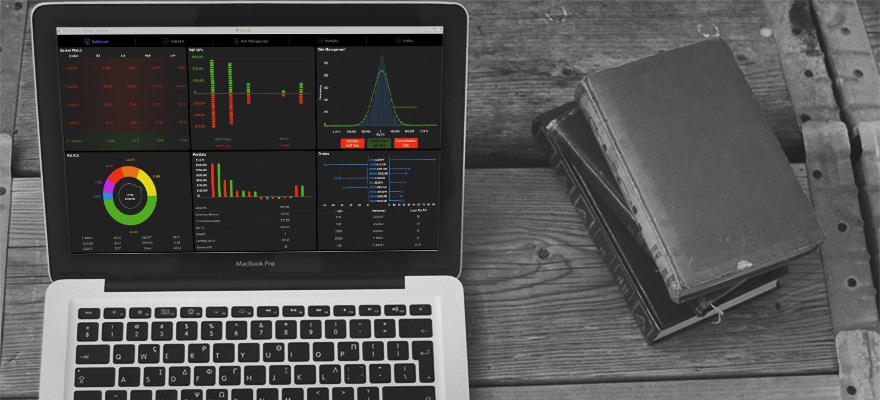
The product launch comes as there has been demand from online brokers for solutions that can abstract data from their trading reports into an accepted format to meet EMIR reporting requirements. Rani Sawaf, CEO and Founder of Centroid24 explained to Finance Magnates that although the firm focuses on risk management, changing regulations are an "essential part of risk management”. He said: “We decided to incorporate EMIR reporting which was highly anticipated due to market demand”.
For Centroid24, the EMIR reporting tool expands the firm’s product line as it is being made available as both a standalone solution as well as integrated within their existing risk management system. According to Sawaf, the EMIR reporting tool went live in Q2 on a private basis with limited basis and is now being used with existing customers of the risk management solution as well as standalone by other brokers.
Connecting with Sawaf about the product launch, Finance Magnates took the occasion to learn more about the current state of affairs of broker risk management and changes since January’s Swiss franc move caused a ripple in the industry.
FM: Has risk management among forex brokers changed since the Swiss franc crisis?
The past months, during my many visits at FX brokers and conferences, a popular question that managers often asked me in particular as a Swiss Company, is how our software solution could have prevented the losses that many brokers suffered at the unpegging of the EURCHF?
The majority of FX brokers operate without computation of a real-time risk measurement
The question in my opinion already reveals that for many brokers – at least for the ones that fortunately are still in place- not much has changed in terms of risk management thinking. My first answer tends to be that there is no magic system that can anticipate market moves and that this is not the role of a risk management tool to do so in the first place. Risk management should be a mind-set to start with, a discipline on its own.
The first goal of risk management is to bring transparency to the top management level, identify where the company could be damaged, and propose measures to mitigate the risks. When it comes to transparency, it become apparent that many brokers lack of a methodology, tools and sometimes the know-how to point out where the risks are.
Today, still the majority of FX brokers operate without computation of real-time risk measurement and often manage position by position rather than having a portfolio approach.
FM: What is the difference between risk management practices between forex and CFDs?
Herewith I mean additional elements - besides the financial performance of company - that can influence the price of a stock such as a future fine (e.g. Volkswagen, Transocean) or the death of the CEO/Founder of a company (e.g. Apple) or the loss of a major potential deal, etc.; all those elements can hardly be anticipated in the same way as news on interest rates by the Fed.
So in terms of risk management, a constant assessment of the company’s market and financial situation along with analysis of the underlying industry is essential as part of the risk management strategy. Typically, portfolio managers work with recommendations that translate in the end to weights and percentages reflecting different sectors and single stocks, that can be assessed in what you should or should not keep in your book.
FM: What trading products do you currently believe are providing the best risk/reward opportunity for market making brokers?
RS: In general, instruments with high volatility are likely to generate the highest returns for the market makers, such as silver or oil. Nevertheless market makers with a portfolio approach do not really decide on what positions their clients should take. They can to some extend influence the choice of trades by promoting certain types of instruments with e.g. lower spread, bonuses, but at the end this influence remains marginal.
Normally, the higher diversity on instruments a market maker offers, the better risk-return it can achieve
Normally, the higher diversity on instruments a market maker offers, the better risk-return it can achieve. In addition, using risk measures such as portfolio Value-at-Risk (VaR) enables a broker to leverage the potential of diversification effects by carrying different asset classes and thus engaging in more positions. So the engagement of additional volume, still within the defined risk limits, is more likely to generate higher revenues.
Rani Sawaf, Founder and CEO, Centroid24
This is what our customers are experiencing using the Centroid24 solution. With a diversification effect that can amount up to 20 to 30% of the total VaR, a broker can keep positions in their book and generate additional volume and thus revenues; while maintaining their risk limits as well as complying with the capital adequacy ratio requirements.
FM: Where do you see the forex brokerage market moving?
RS: It is incontestable that in the past 2 years, the forex brokerage industry has seen an increasing pressure in their profit margin.
First, the level of competition has dramatically increased, with a high number of brokers entering the market in the last 3-4 years, which had as a consequence a direct negative impact on the spreads and commissions. On the client side, brokers now face more experienced traders and sophisticated trading systems. Finally, the increased local and international regulation lead a bottom line to higher costs.
As a result, brokers have to produce more, put more efforts and take more risks to maintain the same return.
In the case of pure A-Book brokers, the trading volume requirement to reach an acceptable return will continue to rise. If not possible, some brokers probably will consider to opt next to an A-Book a B-Book activity.
As a conclusion, brokers will need to take more risks to maintain the same amount of return. I believe that we will see an increase in awareness for the risk management practice that will lead to a better management of the increasing risks.
The product launch comes as there has been demand from online brokers for solutions that can abstract data from their trading reports into an accepted format to meet EMIR reporting requirements. Rani Sawaf, CEO and Founder of Centroid24 explained to Finance Magnates that although the firm focuses on risk management, changing regulations are an "essential part of risk management”. He said: “We decided to incorporate EMIR reporting which was highly anticipated due to market demand”.
For Centroid24, the EMIR reporting tool expands the firm’s product line as it is being made available as both a standalone solution as well as integrated within their existing risk management system. According to Sawaf, the EMIR reporting tool went live in Q2 on a private basis with limited basis and is now being used with existing customers of the risk management solution as well as standalone by other brokers.
Connecting with Sawaf about the product launch, Finance Magnates took the occasion to learn more about the current state of affairs of broker risk management and changes since January’s Swiss franc move caused a ripple in the industry.
FM: Has risk management among forex brokers changed since the Swiss franc crisis?
The past months, during my many visits at FX brokers and conferences, a popular question that managers often asked me in particular as a Swiss Company, is how our software solution could have prevented the losses that many brokers suffered at the unpegging of the EURCHF?
The majority of FX brokers operate without computation of a real-time risk measurement
The question in my opinion already reveals that for many brokers – at least for the ones that fortunately are still in place- not much has changed in terms of risk management thinking. My first answer tends to be that there is no magic system that can anticipate market moves and that this is not the role of a risk management tool to do so in the first place. Risk management should be a mind-set to start with, a discipline on its own.
The first goal of risk management is to bring transparency to the top management level, identify where the company could be damaged, and propose measures to mitigate the risks. When it comes to transparency, it become apparent that many brokers lack of a methodology, tools and sometimes the know-how to point out where the risks are.
Today, still the majority of FX brokers operate without computation of real-time risk measurement and often manage position by position rather than having a portfolio approach.
FM: What is the difference between risk management practices between forex and CFDs?
Herewith I mean additional elements - besides the financial performance of company - that can influence the price of a stock such as a future fine (e.g. Volkswagen, Transocean) or the death of the CEO/Founder of a company (e.g. Apple) or the loss of a major potential deal, etc.; all those elements can hardly be anticipated in the same way as news on interest rates by the Fed.
So in terms of risk management, a constant assessment of the company’s market and financial situation along with analysis of the underlying industry is essential as part of the risk management strategy. Typically, portfolio managers work with recommendations that translate in the end to weights and percentages reflecting different sectors and single stocks, that can be assessed in what you should or should not keep in your book.
FM: What trading products do you currently believe are providing the best risk/reward opportunity for market making brokers?
RS: In general, instruments with high volatility are likely to generate the highest returns for the market makers, such as silver or oil. Nevertheless market makers with a portfolio approach do not really decide on what positions their clients should take. They can to some extend influence the choice of trades by promoting certain types of instruments with e.g. lower spread, bonuses, but at the end this influence remains marginal.
Normally, the higher diversity on instruments a market maker offers, the better risk-return it can achieve
Normally, the higher diversity on instruments a market maker offers, the better risk-return it can achieve. In addition, using risk measures such as portfolio Value-at-Risk (VaR) enables a broker to leverage the potential of diversification effects by carrying different asset classes and thus engaging in more positions. So the engagement of additional volume, still within the defined risk limits, is more likely to generate higher revenues.
Rani Sawaf, Founder and CEO, Centroid24
This is what our customers are experiencing using the Centroid24 solution. With a diversification effect that can amount up to 20 to 30% of the total VaR, a broker can keep positions in their book and generate additional volume and thus revenues; while maintaining their risk limits as well as complying with the capital adequacy ratio requirements.
FM: Where do you see the forex brokerage market moving?
RS: It is incontestable that in the past 2 years, the forex brokerage industry has seen an increasing pressure in their profit margin.
First, the level of competition has dramatically increased, with a high number of brokers entering the market in the last 3-4 years, which had as a consequence a direct negative impact on the spreads and commissions. On the client side, brokers now face more experienced traders and sophisticated trading systems. Finally, the increased local and international regulation lead a bottom line to higher costs.
As a result, brokers have to produce more, put more efforts and take more risks to maintain the same return.
In the case of pure A-Book brokers, the trading volume requirement to reach an acceptable return will continue to rise. If not possible, some brokers probably will consider to opt next to an A-Book a B-Book activity.
As a conclusion, brokers will need to take more risks to maintain the same amount of return. I believe that we will see an increase in awareness for the risk management practice that will lead to a better management of the increasing risks.
Another IG Executive Joins OANDA After Four Years as Global Compliance Officer
Featured Videos
FXCM UK Holds $110m in Client Money; IG CEO Questions Prediction Market Volumes
FXCM UK Holds $110m in Client Money; IG CEO Questions Prediction Market Volumes
FXCM UK Holds $110m in Client Money; IG CEO Questions Prediction Market Volumes
FXCM UK Holds $110m in Client Money; IG CEO Questions Prediction Market Volumes
Today’s financial news recap covers FXCM's UK arm holds $110 million in client money ahead of its sale to Trade Nation, Citadel Securities' UK profit falls 38 per cent, and Kraken secures its final Dubai crypto licence.
Finance Magnates Daily Recap brings you the latest news from forex and CFD brokers, fintech, payments, cryptocurrency, digital assets, trading platforms, financial regulation and global markets.
Get the key company news, executive moves, deals, regulatory updates and market developments of the day, in just a few minutes. New episodes published every weekday.
Read more: https://www.financemagnates.com
#FinanceMagnates #ForexNews #FintechNews
Today’s financial news recap covers FXCM's UK arm holds $110 million in client money ahead of its sale to Trade Nation, Citadel Securities' UK profit falls 38 per cent, and Kraken secures its final Dubai crypto licence.
Finance Magnates Daily Recap brings you the latest news from forex and CFD brokers, fintech, payments, cryptocurrency, digital assets, trading platforms, financial regulation and global markets.
Get the key company news, executive moves, deals, regulatory updates and market developments of the day, in just a few minutes. New episodes published every weekday.
Read more: https://www.financemagnates.com
#FinanceMagnates #ForexNews #FintechNews
Today’s financial news recap covers FXCM's UK arm holds $110 million in client money ahead of its sale to Trade Nation, Citadel Securities' UK profit falls 38 per cent, and Kraken secures its final Dubai crypto licence.
Finance Magnates Daily Recap brings you the latest news from forex and CFD brokers, fintech, payments, cryptocurrency, digital assets, trading platforms, financial regulation and global markets.
Get the key company news, executive moves, deals, regulatory updates and market developments of the day, in just a few minutes. New episodes published every weekday.
Read more: https://www.financemagnates.com
#FinanceMagnates #ForexNews #FintechNews
Today’s financial news recap covers FXCM's UK arm holds $110 million in client money ahead of its sale to Trade Nation, Citadel Securities' UK profit falls 38 per cent, and Kraken secures its final Dubai crypto licence.
Finance Magnates Daily Recap brings you the latest news from forex and CFD brokers, fintech, payments, cryptocurrency, digital assets, trading platforms, financial regulation and global markets.
Get the key company news, executive moves, deals, regulatory updates and market developments of the day, in just a few minutes. New episodes published every weekday.
Read more: https://www.financemagnates.com
#FinanceMagnates #ForexNews #FintechNews
Today’s financial news recap covers AvaTrade agrees to acquire most of FXCM, NAGA secures eight million dollars in new financing, and Wise seeks a tax settlement in the UK.
Finance Magnates Daily Recap brings you the latest news from forex and CFD brokers, fintech, payments, cryptocurrency, digital assets, trading platforms, financial regulation and global markets.
Get the key company news, executive moves, deals, regulatory updates and market developments of the day, in just a few minutes. New episodes published every weekday.
Read more: https://www.financemagnates.com
#FinanceMagnates #ForexNews #FintechNews
Today’s financial news recap covers AvaTrade agrees to acquire most of FXCM, NAGA secures eight million dollars in new financing, and Wise seeks a tax settlement in the UK.
Finance Magnates Daily Recap brings you the latest news from forex and CFD brokers, fintech, payments, cryptocurrency, digital assets, trading platforms, financial regulation and global markets.
Get the key company news, executive moves, deals, regulatory updates and market developments of the day, in just a few minutes. New episodes published every weekday.
Read more: https://www.financemagnates.com
#FinanceMagnates #ForexNews #FintechNews
Today’s financial news recap covers AvaTrade agrees to acquire most of FXCM, NAGA secures eight million dollars in new financing, and Wise seeks a tax settlement in the UK.
Finance Magnates Daily Recap brings you the latest news from forex and CFD brokers, fintech, payments, cryptocurrency, digital assets, trading platforms, financial regulation and global markets.
Get the key company news, executive moves, deals, regulatory updates and market developments of the day, in just a few minutes. New episodes published every weekday.
Read more: https://www.financemagnates.com
#FinanceMagnates #ForexNews #FintechNews
Today’s financial news recap covers AvaTrade agrees to acquire most of FXCM, NAGA secures eight million dollars in new financing, and Wise seeks a tax settlement in the UK.
Finance Magnates Daily Recap brings you the latest news from forex and CFD brokers, fintech, payments, cryptocurrency, digital assets, trading platforms, financial regulation and global markets.
Get the key company news, executive moves, deals, regulatory updates and market developments of the day, in just a few minutes. New episodes published every weekday.
Read more: https://www.financemagnates.com
#FinanceMagnates #ForexNews #FintechNews
Today’s financial news recap covers AvaTrade agrees to acquire most of FXCM, NAGA secures eight million dollars in new financing, and Wise seeks a tax settlement in the UK.
Finance Magnates Daily Recap brings you the latest news from forex and CFD brokers, fintech, payments, cryptocurrency, digital assets, trading platforms, financial regulation and global markets.
Get the key company news, executive moves, deals, regulatory updates and market developments of the day, in just a few minutes. New episodes published every weekday.
Read more: https://www.financemagnates.com
#FinanceMagnates #ForexNews #FintechNews
Today’s financial news recap covers AvaTrade agrees to acquire most of FXCM, NAGA secures eight million dollars in new financing, and Wise seeks a tax settlement in the UK.
Finance Magnates Daily Recap brings you the latest news from forex and CFD brokers, fintech, payments, cryptocurrency, digital assets, trading platforms, financial regulation and global markets.
Get the key company news, executive moves, deals, regulatory updates and market developments of the day, in just a few minutes. New episodes published every weekday.
Read more: https://www.financemagnates.com
#FinanceMagnates #ForexNews #FintechNews
XTB Adds Overnight US Stock Trading; Nasdaq Ventures Invests in One Trading
XTB Adds Overnight US Stock Trading; Nasdaq Ventures Invests in One Trading
XTB Adds Overnight US Stock Trading; Nasdaq Ventures Invests in One Trading
XTB Adds Overnight US Stock Trading; Nasdaq Ventures Invests in One Trading
XTB Adds Overnight US Stock Trading; Nasdaq Ventures Invests in One Trading
XTB Adds Overnight US Stock Trading; Nasdaq Ventures Invests in One Trading
Today’s financial news recap covers XTB expands overnight US stock trading, Fortrade reports higher revenue, Nasdaq backs One Trading, and Vest Labs raises 13 million dollars.
Finance Magnates Daily Recap brings you the latest news from forex and CFD brokers, fintech, payments, cryptocurrency, digital assets, trading platforms, financial regulation and global markets.
Get the key company news, executive moves, deals, regulatory updates and market developments of the day, in just a few minutes. New episodes published every weekday.
Read more: https://www.financemagnates.com
#FinanceMagnates #ForexNews #FintechNews
Today’s financial news recap covers XTB expands overnight US stock trading, Fortrade reports higher revenue, Nasdaq backs One Trading, and Vest Labs raises 13 million dollars.
Finance Magnates Daily Recap brings you the latest news from forex and CFD brokers, fintech, payments, cryptocurrency, digital assets, trading platforms, financial regulation and global markets.
Get the key company news, executive moves, deals, regulatory updates and market developments of the day, in just a few minutes. New episodes published every weekday.
Read more: https://www.financemagnates.com
#FinanceMagnates #ForexNews #FintechNews
Today’s financial news recap covers XTB expands overnight US stock trading, Fortrade reports higher revenue, Nasdaq backs One Trading, and Vest Labs raises 13 million dollars.
Finance Magnates Daily Recap brings you the latest news from forex and CFD brokers, fintech, payments, cryptocurrency, digital assets, trading platforms, financial regulation and global markets.
Get the key company news, executive moves, deals, regulatory updates and market developments of the day, in just a few minutes. New episodes published every weekday.
Read more: https://www.financemagnates.com
#FinanceMagnates #ForexNews #FintechNews
Today’s financial news recap covers XTB expands overnight US stock trading, Fortrade reports higher revenue, Nasdaq backs One Trading, and Vest Labs raises 13 million dollars.
Finance Magnates Daily Recap brings you the latest news from forex and CFD brokers, fintech, payments, cryptocurrency, digital assets, trading platforms, financial regulation and global markets.
Get the key company news, executive moves, deals, regulatory updates and market developments of the day, in just a few minutes. New episodes published every weekday.
Read more: https://www.financemagnates.com
#FinanceMagnates #ForexNews #FintechNews
Today’s financial news recap covers XTB expands overnight US stock trading, Fortrade reports higher revenue, Nasdaq backs One Trading, and Vest Labs raises 13 million dollars.
Finance Magnates Daily Recap brings you the latest news from forex and CFD brokers, fintech, payments, cryptocurrency, digital assets, trading platforms, financial regulation and global markets.
Get the key company news, executive moves, deals, regulatory updates and market developments of the day, in just a few minutes. New episodes published every weekday.
Read more: https://www.financemagnates.com
#FinanceMagnates #ForexNews #FintechNews
Today’s financial news recap covers XTB expands overnight US stock trading, Fortrade reports higher revenue, Nasdaq backs One Trading, and Vest Labs raises 13 million dollars.
Finance Magnates Daily Recap brings you the latest news from forex and CFD brokers, fintech, payments, cryptocurrency, digital assets, trading platforms, financial regulation and global markets.
Get the key company news, executive moves, deals, regulatory updates and market developments of the day, in just a few minutes. New episodes published every weekday.
Read more: https://www.financemagnates.com
#FinanceMagnates #ForexNews #FintechNews
CMC Founder Downplays Volatility Hit; Devexperts Names CEO
CMC Founder Downplays Volatility Hit; Devexperts Names CEO
CMC Founder Downplays Volatility Hit; Devexperts Names CEO
CMC Founder Downplays Volatility Hit; Devexperts Names CEO
CMC Founder Downplays Volatility Hit; Devexperts Names CEO
CMC Founder Downplays Volatility Hit; Devexperts Names CEO
Today’s financial news recap covers low volatility pressures brokers, Devexperts names a new CEO, Saxo cuts onboarding time, and OKX reaches a 25 billion dollar valuation.
Finance Magnates Daily Recap brings you the latest news from forex and CFD brokers, fintech, payments, cryptocurrency, digital assets, trading platforms, financial regulation and global markets.
Get the key company news, executive moves, deals, regulatory updates and market developments of the day, in just a few minutes. New episodes published every weekday.
Read more: https://www.financemagnates.com
#FinanceMagnates #ForexNews #FintechNews
Today’s financial news recap covers low volatility pressures brokers, Devexperts names a new CEO, Saxo cuts onboarding time, and OKX reaches a 25 billion dollar valuation.
Finance Magnates Daily Recap brings you the latest news from forex and CFD brokers, fintech, payments, cryptocurrency, digital assets, trading platforms, financial regulation and global markets.
Get the key company news, executive moves, deals, regulatory updates and market developments of the day, in just a few minutes. New episodes published every weekday.
Read more: https://www.financemagnates.com
#FinanceMagnates #ForexNews #FintechNews
Today’s financial news recap covers low volatility pressures brokers, Devexperts names a new CEO, Saxo cuts onboarding time, and OKX reaches a 25 billion dollar valuation.
Finance Magnates Daily Recap brings you the latest news from forex and CFD brokers, fintech, payments, cryptocurrency, digital assets, trading platforms, financial regulation and global markets.
Get the key company news, executive moves, deals, regulatory updates and market developments of the day, in just a few minutes. New episodes published every weekday.
Read more: https://www.financemagnates.com
#FinanceMagnates #ForexNews #FintechNews
Today’s financial news recap covers low volatility pressures brokers, Devexperts names a new CEO, Saxo cuts onboarding time, and OKX reaches a 25 billion dollar valuation.
Finance Magnates Daily Recap brings you the latest news from forex and CFD brokers, fintech, payments, cryptocurrency, digital assets, trading platforms, financial regulation and global markets.
Get the key company news, executive moves, deals, regulatory updates and market developments of the day, in just a few minutes. New episodes published every weekday.
Read more: https://www.financemagnates.com
#FinanceMagnates #ForexNews #FintechNews
Today’s financial news recap covers low volatility pressures brokers, Devexperts names a new CEO, Saxo cuts onboarding time, and OKX reaches a 25 billion dollar valuation.
Finance Magnates Daily Recap brings you the latest news from forex and CFD brokers, fintech, payments, cryptocurrency, digital assets, trading platforms, financial regulation and global markets.
Get the key company news, executive moves, deals, regulatory updates and market developments of the day, in just a few minutes. New episodes published every weekday.
Read more: https://www.financemagnates.com
#FinanceMagnates #ForexNews #FintechNews
Today’s financial news recap covers low volatility pressures brokers, Devexperts names a new CEO, Saxo cuts onboarding time, and OKX reaches a 25 billion dollar valuation.
Finance Magnates Daily Recap brings you the latest news from forex and CFD brokers, fintech, payments, cryptocurrency, digital assets, trading platforms, financial regulation and global markets.
Get the key company news, executive moves, deals, regulatory updates and market developments of the day, in just a few minutes. New episodes published every weekday.
Read more: https://www.financemagnates.com
#FinanceMagnates #ForexNews #FintechNews
Today’s financial news recap covers Trade Nation buys FXCM's UK client book, Trading 212 reports higher revenue, the CFTC's move to allow perpetual index futures.
Finance Magnates Daily Recap brings you the latest news from forex and CFD brokers, fintech, payments, cryptocurrency, digital assets, trading platforms, financial regulation and global markets.
Get the key company news, executive moves, deals, regulatory updates and market developments of the day, in just a few minutes. New episodes published every weekday.
Read more: https://www.financemagnates.com
#FinanceMagnates #ForexNews #FintechNews
Today’s financial news recap covers Trade Nation buys FXCM's UK client book, Trading 212 reports higher revenue, the CFTC's move to allow perpetual index futures.
Finance Magnates Daily Recap brings you the latest news from forex and CFD brokers, fintech, payments, cryptocurrency, digital assets, trading platforms, financial regulation and global markets.
Get the key company news, executive moves, deals, regulatory updates and market developments of the day, in just a few minutes. New episodes published every weekday.
Read more: https://www.financemagnates.com
#FinanceMagnates #ForexNews #FintechNews
Today’s financial news recap covers Trade Nation buys FXCM's UK client book, Trading 212 reports higher revenue, the CFTC's move to allow perpetual index futures.
Finance Magnates Daily Recap brings you the latest news from forex and CFD brokers, fintech, payments, cryptocurrency, digital assets, trading platforms, financial regulation and global markets.
Get the key company news, executive moves, deals, regulatory updates and market developments of the day, in just a few minutes. New episodes published every weekday.
Read more: https://www.financemagnates.com
#FinanceMagnates #ForexNews #FintechNews
Today’s financial news recap covers Trade Nation buys FXCM's UK client book, Trading 212 reports higher revenue, the CFTC's move to allow perpetual index futures.
Finance Magnates Daily Recap brings you the latest news from forex and CFD brokers, fintech, payments, cryptocurrency, digital assets, trading platforms, financial regulation and global markets.
Get the key company news, executive moves, deals, regulatory updates and market developments of the day, in just a few minutes. New episodes published every weekday.
Read more: https://www.financemagnates.com
#FinanceMagnates #ForexNews #FintechNews
Today’s financial news recap covers Trade Nation buys FXCM's UK client book, Trading 212 reports higher revenue, the CFTC's move to allow perpetual index futures.
Finance Magnates Daily Recap brings you the latest news from forex and CFD brokers, fintech, payments, cryptocurrency, digital assets, trading platforms, financial regulation and global markets.
Get the key company news, executive moves, deals, regulatory updates and market developments of the day, in just a few minutes. New episodes published every weekday.
Read more: https://www.financemagnates.com
#FinanceMagnates #ForexNews #FintechNews
Today’s financial news recap covers Trade Nation buys FXCM's UK client book, Trading 212 reports higher revenue, the CFTC's move to allow perpetual index futures.
Finance Magnates Daily Recap brings you the latest news from forex and CFD brokers, fintech, payments, cryptocurrency, digital assets, trading platforms, financial regulation and global markets.
Get the key company news, executive moves, deals, regulatory updates and market developments of the day, in just a few minutes. New episodes published every weekday.
Read more: https://www.financemagnates.com
#FinanceMagnates #ForexNews #FintechNews