Financial and Business News

“Every Design Choice in Prop Trading Creates a Corresponding Risk”: Arizet Labs’ CEO

Wednesday, 12/11/2025 | 10:00 GMT by Arnab Shome
  • David Davtyan believes that prop firms must consider “daily drawdown limits, maximum loss limits, moving high-water marks, and other nuances” when evaluating risks.
  • “If you continue evaluating or passing traders based solely on simplistic metrics, then you’re not really doing the job properly.”
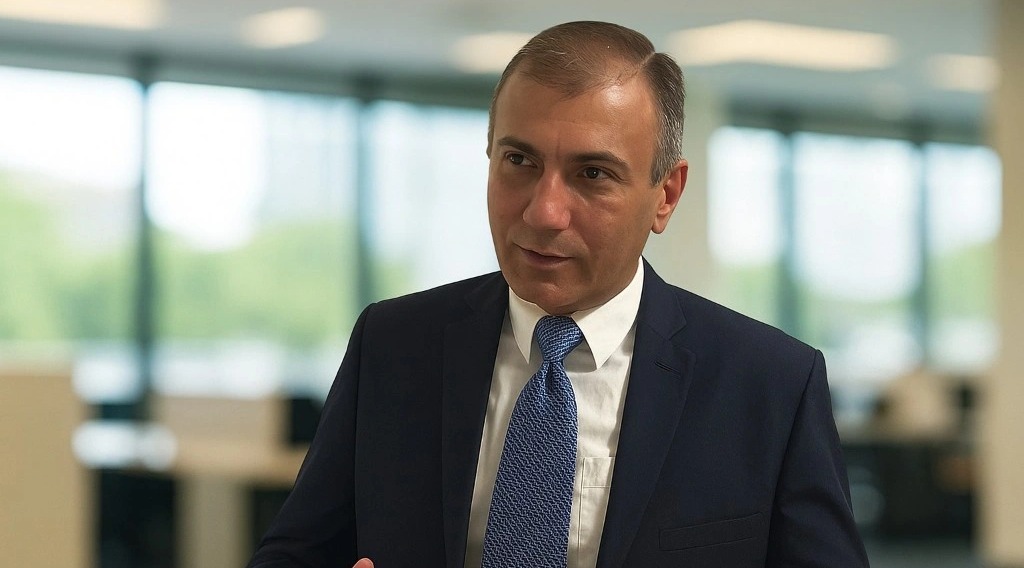
David Davtyan, CEO of Arizet Labs

“In prop trading, risk starts much earlier — from how the evaluation product itself is designed,” David Davtyan, CEO of Arizet Labs, told FinanceMagnates.com. “The rules, the instruments offered, and the trading experience all form part of the overall risk structure.”

“To make that more concrete, every design choice — daily drawdown limits, maximum loss limits, moving high-water marks, and so on — creates a corresponding risk that needs to be managed. Different firms approach this differently, as it is directly tied to their products. Many firms, however, don’t initially think about risk this way.”

Join IG, CMC, and Robinhood in London’s leading trading industry event!

“As the Number of Accounts Grows, the Monitoring Time Lapse Increases Exponentially”

Arizet’s offering for prop firms focuses on risk management solutions. The company also claims to be one of the few platforms in the industry with real-time account monitoring, including equity, drawdown, and all rule enforcement — all of which occur in real time.

“Everyone else just pings account equities at intervals — one minute, five minutes, two minutes, 15 seconds — depending on the number of accounts,” Davtyan said. “If you are a small prop firm with a few hundred traders, the monitoring might be within 30 seconds. But as the number of accounts grows, the time lapse increases exponentially.”

“With 500 traders, you might get 30-second updates; with 5,000 traders, five minutes; with 20,000, it becomes almost impossible. Updates can lag 10 to 15 minutes.”

“It’s not just about risk,” the Arizet CEO continued. “It’s about the simple ability to monitor rules, equities, and balances in real time. Once that’s in place, real-time risk management sits on top. You can aggregate exposures, unrealised P&L, and the dynamic changes in deltas, giving a 360-degree real-time view of what’s happening across all accounts. If something changes, the firm can act quickly.”

“Too Many Firms Simply Replicate What 200 Others Are Already Offering”

When it comes to technology, many firms are offering an end-to-end stack to prop traders. Some even claim their stack is simply plug-and-play, enabling prop firms to go live in days, if not hours. However, Davtyan believes that the existing CRMs for prop platforms in the market do not offer proper risk management solutions.

Read more on prop tech stack: White Label, Big Bill? The Hidden Costs of Going Plug-and-Play in Prop Trading

“Many firms rely solely on standard CRM systems,” Davtyan pointed out, “when in reality, what they need are comprehensive, structurally strong technological solutions capable of sustaining their operations over time.” According to him, a proper solution should “touch every aspect of the business”, including risk management, product design, marketing, client communication, and more.

“The transformation requires moving beyond the old model of copying products. Too many firms simply replicate what 200 others are already offering, launch aggressive promotions, rely on basic CRM systems, and hope for success. That approach doesn’t work. Only a small number of companies that take every component seriously — from technology and risk to client experience — manage to build sustainable operations.”

“Ultimately, it’s about creating a truly comprehensive customer experience. It’s not just about telling traders, ‘Pass this evaluation and we’ll give you funding.’ It’s about ensuring the business itself is durable enough to deliver on that promise consistently, rather than disappearing a few months later.”

Influencers Are “Good at Marketing”, Not Risk Management

According to Finance Magnates Intelligence, between 80 and 100 prop firms shuttered in 2024. Many others have also permanently or temporarily closed their operations this year.

“Most of these firms were founded by influencers,” Shervin Arian, Arizet’s Chief Strategy Officer, elaborated. “And what influencers do is, well, they influence the people who follow them. They’re good at marketing.”
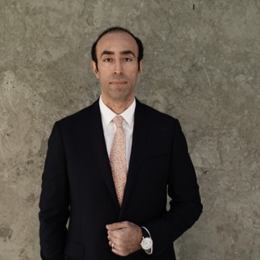
Shervin Arian, Chief Strategy Officer at Arizet Labs

“But in the social media age, people can be very unforgiving. If you’re an influencer and you open a prop firm but mismanage it or fail, you risk losing everything you spent months or even years building — your followers, your credibility, your brand.”

He also believes that the reason behind the shuttering of a massive number of prop firms “isn’t the influencers themselves or the CRM systems they use. The real problem is risk management.”

Although prop firms are closely connected to the brokerage industry, they are not brokers. In a brokerage, whether you’re A-booking, B-booking, or running a hybrid model, there’s always a dealing desk and a risk management team.

“With prop firms, the challenge is different,” Shervin explained. “Imagine you’re a new prop firm and you sell 1,000 challenges. The average pass rate across the industry is around 13–15 per cent. Even at 15 per cent, that’s 150 funded accounts. Let’s assume 50 of those traders reach the payout stage. If each account is $10,000, that’s $500,000 in exposure that you need to be ready to hedge.”

“The reality is that 90 per cent of prop firms don’t have that kind of cash available. And even if they do, they often lack a proper risk management team or structure. They don’t know how to hedge, who to hedge, or when to hedge.”

He believes that the sales-centric models of prop firms are effective when operational costs are approximately $200,000, with payouts around $300,000. However, once the payouts reach $1 million, “the model collapses without proper risk management.”

According to Davtyan, “what’s really missing in this industry is transparency,” which comes from “well-established rules and clear operational processes.”

“If we were to revisit this conversation 18 months from now, I believe the industry would look very different. Three elements will become crucial: educational experiences, social and entertaining experiences, and the move from gambling-style trading to more professional trading practices.”

The Three Levels of Identifying Cheaters

The prop trading industry is also facing the menace of cheating traders, who usually try to game the prop model by arbitrage on different platforms. It has also become a priority for risk management teams to identify and stop these cheating traders.

Davtyan explained that they have three levels to identify cheating and genuine prop traders.

“Level one is the most basic, almost black-and-white approach,” he said. “They try to engage in reverse trading or copy trading when it’s not allowed. And they’re getting smarter. Instead of executing exact copy trades or exact reverse trades, they now spread those trades across multiple accounts, splitting them in different ways.”

“We’ve built technology that collects tens of millions of trades daily and analyses them to identify suspicious trading behaviours based on strict black-and-white rules.”

Read more on the menace of cheater traders on prop platforms: Coordinated Groups Are Exploiting Prop Trading Models with Arbitrage

Level two, on the other hand, is a more complex level that involves data mining and statistical analysis. “We call it trading anomaly detection,” the Arizet CEO said. “It’s designed for early detection of abnormal trading behaviour. We have vast amounts of historical trading data, and our system builds a model of what we consider ‘normal’ trading behaviour. For example, if I’m a regular trader, this is how I typically behave on average. The system continuously monitors and flags any behaviour that falls outside those normal boundaries.”

“This isn’t a black-and-white mechanism. It doesn’t automatically block or pause an account; instead, it sends a signal to the firm, recommending closer attention to a specific trader or group.”

Then comes the third level, which involves “customisation” of the decision regarding the suspicious behaviour of the traders. “That’s where all the fine-tuning comes in,” Davtyan said. “We provide different ranking systems for different firms, as well as various notification mechanisms and escalation options — so each firm can handle flagged behaviour according to its own risk policies.”

A-Booking “Will Be Sustainable” If…

Another debate surrounding risk management in the prop industry centres on A-booking of traders. While the majority of the industry is committed to B-booking as the only sustainable model for most prop business models, some also vouch for A-booking.

Interestingly, prop firm Funded Unicorn wanted to bring transparency into prop by A-booking all trades. Still, when the platform shuttered its operations, it cited that it was “precisely the A-booking approach that ultimately brought us to our knees” as it shuttered its operations.

“It will be sustainable, but the evaluation metrics need to change,” Davtyan said on A-booking prop trades, adding that his firm is talking with several prop firms about what can be done to make that switch.

“Our strong belief is that if you continue evaluating or passing traders based solely on simplistic metrics like profit targets, daily drawdown, or maximum drawdown, then you’re not really doing the job properly,” he added. “You’re not identifying the most talented or potentially alpha-generating traders.”

“A-booking those traders without proper evaluation creates a lot of risk. But if you adjust that approach — and this is something we’ve been suggesting to a few companies — you could introduce a separate programme, something like a ‘Pro’ or ‘Professional’ tier. Under that, you apply more advanced metrics. For example, evaluate traders based on information ratio, Sharpe ratio, or other professional performance indicators. Once they pass those challenges, they effectively become your traders.”

“So you can A-book them, and it becomes much closer to how traditional prop trading firms used to operate — and those firms were successful because of it.”

“In prop trading, risk starts much earlier — from how the evaluation product itself is designed,” David Davtyan, CEO of Arizet Labs, told FinanceMagnates.com. “The rules, the instruments offered, and the trading experience all form part of the overall risk structure.”

“To make that more concrete, every design choice — daily drawdown limits, maximum loss limits, moving high-water marks, and so on — creates a corresponding risk that needs to be managed. Different firms approach this differently, as it is directly tied to their products. Many firms, however, don’t initially think about risk this way.”

Join IG, CMC, and Robinhood in London’s leading trading industry event!

“As the Number of Accounts Grows, the Monitoring Time Lapse Increases Exponentially”

Arizet’s offering for prop firms focuses on risk management solutions. The company also claims to be one of the few platforms in the industry with real-time account monitoring, including equity, drawdown, and all rule enforcement — all of which occur in real time.

“Everyone else just pings account equities at intervals — one minute, five minutes, two minutes, 15 seconds — depending on the number of accounts,” Davtyan said. “If you are a small prop firm with a few hundred traders, the monitoring might be within 30 seconds. But as the number of accounts grows, the time lapse increases exponentially.”

“With 500 traders, you might get 30-second updates; with 5,000 traders, five minutes; with 20,000, it becomes almost impossible. Updates can lag 10 to 15 minutes.”

“It’s not just about risk,” the Arizet CEO continued. “It’s about the simple ability to monitor rules, equities, and balances in real time. Once that’s in place, real-time risk management sits on top. You can aggregate exposures, unrealised P&L, and the dynamic changes in deltas, giving a 360-degree real-time view of what’s happening across all accounts. If something changes, the firm can act quickly.”

“Too Many Firms Simply Replicate What 200 Others Are Already Offering”

When it comes to technology, many firms are offering an end-to-end stack to prop traders. Some even claim their stack is simply plug-and-play, enabling prop firms to go live in days, if not hours. However, Davtyan believes that the existing CRMs for prop platforms in the market do not offer proper risk management solutions.

Read more on prop tech stack: White Label, Big Bill? The Hidden Costs of Going Plug-and-Play in Prop Trading

“Many firms rely solely on standard CRM systems,” Davtyan pointed out, “when in reality, what they need are comprehensive, structurally strong technological solutions capable of sustaining their operations over time.” According to him, a proper solution should “touch every aspect of the business”, including risk management, product design, marketing, client communication, and more.

“The transformation requires moving beyond the old model of copying products. Too many firms simply replicate what 200 others are already offering, launch aggressive promotions, rely on basic CRM systems, and hope for success. That approach doesn’t work. Only a small number of companies that take every component seriously — from technology and risk to client experience — manage to build sustainable operations.”

“Ultimately, it’s about creating a truly comprehensive customer experience. It’s not just about telling traders, ‘Pass this evaluation and we’ll give you funding.’ It’s about ensuring the business itself is durable enough to deliver on that promise consistently, rather than disappearing a few months later.”

Influencers Are “Good at Marketing”, Not Risk Management

According to Finance Magnates Intelligence, between 80 and 100 prop firms shuttered in 2024. Many others have also permanently or temporarily closed their operations this year.

“Most of these firms were founded by influencers,” Shervin Arian, Arizet’s Chief Strategy Officer, elaborated. “And what influencers do is, well, they influence the people who follow them. They’re good at marketing.”

Shervin Arian, Chief Strategy Officer at Arizet Labs

“But in the social media age, people can be very unforgiving. If you’re an influencer and you open a prop firm but mismanage it or fail, you risk losing everything you spent months or even years building — your followers, your credibility, your brand.”

He also believes that the reason behind the shuttering of a massive number of prop firms “isn’t the influencers themselves or the CRM systems they use. The real problem is risk management.”

Although prop firms are closely connected to the brokerage industry, they are not brokers. In a brokerage, whether you’re A-booking, B-booking, or running a hybrid model, there’s always a dealing desk and a risk management team.

“With prop firms, the challenge is different,” Shervin explained. “Imagine you’re a new prop firm and you sell 1,000 challenges. The average pass rate across the industry is around 13–15 per cent. Even at 15 per cent, that’s 150 funded accounts. Let’s assume 50 of those traders reach the payout stage. If each account is $10,000, that’s $500,000 in exposure that you need to be ready to hedge.”

“The reality is that 90 per cent of prop firms don’t have that kind of cash available. And even if they do, they often lack a proper risk management team or structure. They don’t know how to hedge, who to hedge, or when to hedge.”

He believes that the sales-centric models of prop firms are effective when operational costs are approximately $200,000, with payouts around $300,000. However, once the payouts reach $1 million, “the model collapses without proper risk management.”

According to Davtyan, “what’s really missing in this industry is transparency,” which comes from “well-established rules and clear operational processes.”

“If we were to revisit this conversation 18 months from now, I believe the industry would look very different. Three elements will become crucial: educational experiences, social and entertaining experiences, and the move from gambling-style trading to more professional trading practices.”

The Three Levels of Identifying Cheaters

The prop trading industry is also facing the menace of cheating traders, who usually try to game the prop model by arbitrage on different platforms. It has also become a priority for risk management teams to identify and stop these cheating traders.

Davtyan explained that they have three levels to identify cheating and genuine prop traders.

“Level one is the most basic, almost black-and-white approach,” he said. “They try to engage in reverse trading or copy trading when it’s not allowed. And they’re getting smarter. Instead of executing exact copy trades or exact reverse trades, they now spread those trades across multiple accounts, splitting them in different ways.”

“We’ve built technology that collects tens of millions of trades daily and analyses them to identify suspicious trading behaviours based on strict black-and-white rules.”

Read more on the menace of cheater traders on prop platforms: Coordinated Groups Are Exploiting Prop Trading Models with Arbitrage

Level two, on the other hand, is a more complex level that involves data mining and statistical analysis. “We call it trading anomaly detection,” the Arizet CEO said. “It’s designed for early detection of abnormal trading behaviour. We have vast amounts of historical trading data, and our system builds a model of what we consider ‘normal’ trading behaviour. For example, if I’m a regular trader, this is how I typically behave on average. The system continuously monitors and flags any behaviour that falls outside those normal boundaries.”

“This isn’t a black-and-white mechanism. It doesn’t automatically block or pause an account; instead, it sends a signal to the firm, recommending closer attention to a specific trader or group.”

Then comes the third level, which involves “customisation” of the decision regarding the suspicious behaviour of the traders. “That’s where all the fine-tuning comes in,” Davtyan said. “We provide different ranking systems for different firms, as well as various notification mechanisms and escalation options — so each firm can handle flagged behaviour according to its own risk policies.”

A-Booking “Will Be Sustainable” If…

Another debate surrounding risk management in the prop industry centres on A-booking of traders. While the majority of the industry is committed to B-booking as the only sustainable model for most prop business models, some also vouch for A-booking.

Interestingly, prop firm Funded Unicorn wanted to bring transparency into prop by A-booking all trades. Still, when the platform shuttered its operations, it cited that it was “precisely the A-booking approach that ultimately brought us to our knees” as it shuttered its operations.

“It will be sustainable, but the evaluation metrics need to change,” Davtyan said on A-booking prop trades, adding that his firm is talking with several prop firms about what can be done to make that switch.

“Our strong belief is that if you continue evaluating or passing traders based solely on simplistic metrics like profit targets, daily drawdown, or maximum drawdown, then you’re not really doing the job properly,” he added. “You’re not identifying the most talented or potentially alpha-generating traders.”

“A-booking those traders without proper evaluation creates a lot of risk. But if you adjust that approach — and this is something we’ve been suggesting to a few companies — you could introduce a separate programme, something like a ‘Pro’ or ‘Professional’ tier. Under that, you apply more advanced metrics. For example, evaluate traders based on information ratio, Sharpe ratio, or other professional performance indicators. Once they pass those challenges, they effectively become your traders.”

“So you can A-book them, and it becomes much closer to how traditional prop trading firms used to operate — and those firms were successful because of it.”

About the Author: Arnab Shome
Arnab Shome
  • 7210 Articles
  • 130 Followers
Arnab is an electronics engineer-turned-financial editor. He entered the industry covering the cryptocurrency market for Finance Magnates and later expanded his reach to forex as well. He is passionate about the changing regulatory landscape on financial markets and keenly follows the disruptions in the industry with new-age technologies.

More from the Author

Executives