Days after the regulator dropped its appeal against the firm, the company announced that it would withdraw its cross-appeal.
Ripple reportedly spent $150 million in legal fees but set a major precedent by challenging and winning on key legal issues.
After more than four years of legal battles, Ripple
Labs is officially closing the chapter on its lawsuit with the U.S. Securities
and Exchange Commission (SEC).
In what may be the final update on the case, Ripple
Chief Legal Officer Stuart Alderoty announced that the company will drop its
cross-appeal and secure a $75 million refund from a prior judgment.
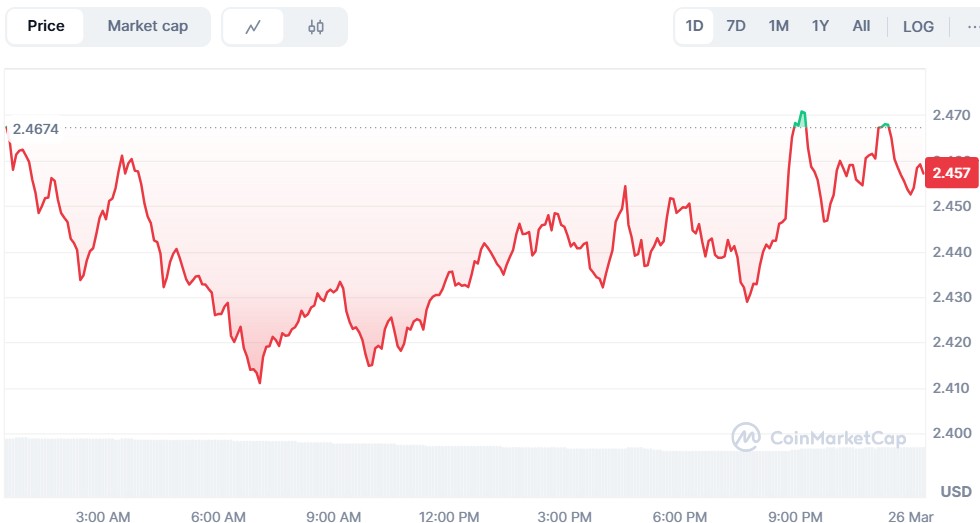
Despite the positive development, XRP’s price has yet to jump in the daily chart. At the time of this publication, the price had little change in the daily chart at $2.45, despite an 8% rise in the weekly
chart.
Ripple and SEC Drop Appeals, Finalizing Settlement
Ripple’s legal team confirmed that the firm will
withdraw its cross-appeal against the SEC in the U.S. Court of Appeals for the
Second Circuit. The August 2024 ruling from the Southern District of New York,
which found Ripple liable for $125 million, will stand.
However, instead of paying the full amount, the SEC
will retain only $50 million in escrow, while Ripple will receive a refund of
the remaining balance. The agency will also request the court lift a previously imposed injunction, finalizing the case's resolution.
Alderoty stated that all agreements are subject to
final documentation, court approval, and an official vote by the SEC
commissioners. The move followed last week’s announcement from Ripple CEO Brad Garlinghouse that the SEC had decided to drop its appeal over the judgment,
signaling a mutual resolution between both parties.
The SEC’s lawsuit against Ripple, first filed in
December 2020, was one of the longest-running enforcement actions against a
major U.S. crypto firm. The agency had accused Ripple of raising $1.3 billion
through the sale of its XRP token without registering it as a security.
The legal battle reportedly cost Ripple an estimated
$150 million in legal fees, but it also set a major precedent for the crypto
industry. Ripple emerged as one of the few crypto firms that challenged the
SEC’s enforcement approach—and won on key legal questions.
XRP Daily Chart, Source: CoinMarketCap
Political and Regulatory Implications
With the SEC withdrawing its appeal and settling with
Ripple, the agency’s broader approach to crypto regulation appears to be
shifting. On March 27, the Senate Banking Committee is set to consider the nomination of former SEC Commissioner Paul Atkins as the agency's next chair.
Atkins, known for his more industry-friendly stance,
is expected to face questions on his regulatory approach and potential
conflicts of interest. As Ripple closes the book on its legal fight with the
SEC, the crypto industry is watching closely to see how regulatory policy
evolves under new leadership.
After more than four years of legal battles, Ripple
Labs is officially closing the chapter on its lawsuit with the U.S. Securities
and Exchange Commission (SEC).
In what may be the final update on the case, Ripple
Chief Legal Officer Stuart Alderoty announced that the company will drop its
cross-appeal and secure a $75 million refund from a prior judgment.
Despite the positive development, XRP’s price has yet to jump in the daily chart. At the time of this publication, the price had little change in the daily chart at $2.45, despite an 8% rise in the weekly
chart.
Ripple and SEC Drop Appeals, Finalizing Settlement
Ripple’s legal team confirmed that the firm will
withdraw its cross-appeal against the SEC in the U.S. Court of Appeals for the
Second Circuit. The August 2024 ruling from the Southern District of New York,
which found Ripple liable for $125 million, will stand.
However, instead of paying the full amount, the SEC
will retain only $50 million in escrow, while Ripple will receive a refund of
the remaining balance. The agency will also request the court lift a previously imposed injunction, finalizing the case's resolution.
Alderoty stated that all agreements are subject to
final documentation, court approval, and an official vote by the SEC
commissioners. The move followed last week’s announcement from Ripple CEO Brad Garlinghouse that the SEC had decided to drop its appeal over the judgment,
signaling a mutual resolution between both parties.
The SEC’s lawsuit against Ripple, first filed in
December 2020, was one of the longest-running enforcement actions against a
major U.S. crypto firm. The agency had accused Ripple of raising $1.3 billion
through the sale of its XRP token without registering it as a security.
The legal battle reportedly cost Ripple an estimated
$150 million in legal fees, but it also set a major precedent for the crypto
industry. Ripple emerged as one of the few crypto firms that challenged the
SEC’s enforcement approach—and won on key legal questions.
XRP Daily Chart, Source: CoinMarketCap
Political and Regulatory Implications
With the SEC withdrawing its appeal and settling with
Ripple, the agency’s broader approach to crypto regulation appears to be
shifting. On March 27, the Senate Banking Committee is set to consider the nomination of former SEC Commissioner Paul Atkins as the agency's next chair.
Atkins, known for his more industry-friendly stance,
is expected to face questions on his regulatory approach and potential
conflicts of interest. As Ripple closes the book on its legal fight with the
SEC, the crypto industry is watching closely to see how regulatory policy
evolves under new leadership.
Jared Kirui is an Editor at Finance Magnates with more than five years of experience in financial journalism. He covers online trading, fintech, payments, and crypto industries with a focus on companies, regulation and compliance, executive moves, trading technology, and market analysis.
His work has been featured in other media outlets, including Benzinga, ZyCrypto, The Distributed, and The Daily Hodl.
Education:
Bachelor of Commerce degree (Finance option), University of Nairobi
WhiteBIT secures brokerage license in Georgia to launch regulated crypto derivatives
FP Markets Winner Spotlight 🏆 | Global Broker of the Year 2025 #Trading #Broker #Innovation #Shorts
FP Markets Winner Spotlight 🏆 | Global Broker of the Year 2025 #Trading #Broker #Innovation #Shorts
FP Markets takes the spotlight as Global Broker of the Year 2025 at the Finance Magnates Awards.
Martin Stoilov, Head of Client Experience, shares that trust, innovation, and people played a key role in the company’s success, supported by a strong foundation of integrity and client-centricity.
Following this milestone, FP Markets continues to focus on growth, technology investment, and its core values of transparency and excellence.
👉 Be part of FM Awards 2026: https://awards.financemagnates.com/#nominate
FP Markets takes the spotlight as Global Broker of the Year 2025 at the Finance Magnates Awards.
Martin Stoilov, Head of Client Experience, shares that trust, innovation, and people played a key role in the company’s success, supported by a strong foundation of integrity and client-centricity.
Following this milestone, FP Markets continues to focus on growth, technology investment, and its core values of transparency and excellence.
👉 Be part of FM Awards 2026: https://awards.financemagnates.com/#nominate
In this video, we review @HolaPrimeMarketsOfficial, a multi-asset forex and CFDs broker offering different account types, trading platforms, and flexible trading conditions.
We cover the broker’s overall offering, including account options, trading environment, platforms like MT4 and MT5, and additional services such as managed accounts and fast withdrawals.
Watch the full video to see if Hola Prime Markets fits your trading needs.
📣 Stay up to date with the latest in finance and trading. Follow Finance Magnates for industry news, insights, and global event coverage.
Connect with us:
🔗 LinkedIn: /financemagnates
👍 Facebook: /financemagnates
📸 Instagram: https://www.instagram.com/financemagnates
🐦 X: https://x.com/financemagnates
🎥 TikTok: https://www.tiktok.com/tag/financemagnates
▶️ YouTube: /@financemagnates_official
#HolaPrime #ForexBroker #CFDTrading #FinanceMagnates #Trading #Forex #BrokerReview
In this video, we review @HolaPrimeMarketsOfficial, a multi-asset forex and CFDs broker offering different account types, trading platforms, and flexible trading conditions.
We cover the broker’s overall offering, including account options, trading environment, platforms like MT4 and MT5, and additional services such as managed accounts and fast withdrawals.
Watch the full video to see if Hola Prime Markets fits your trading needs.
📣 Stay up to date with the latest in finance and trading. Follow Finance Magnates for industry news, insights, and global event coverage.
Connect with us:
🔗 LinkedIn: /financemagnates
👍 Facebook: /financemagnates
📸 Instagram: https://www.instagram.com/financemagnates
🐦 X: https://x.com/financemagnates
🎥 TikTok: https://www.tiktok.com/tag/financemagnates
▶️ YouTube: /@financemagnates_official
#HolaPrime #ForexBroker #CFDTrading #FinanceMagnates #Trading #Forex #BrokerReview
Hola Prime Review: What You Need to Know | Full Breakdown by Finance Magnates
Hola Prime Review: What You Need to Know | Full Breakdown by Finance Magnates
In this video, we review @HolaPrime_Global, a proprietary trading firm offering evaluation programs and performance-based payouts in simulated market environments.
We cover how the challenge model works, including account types, profit splits (up to 95%), trading rules, and what it takes to reach a funded account. You’ll also learn about available platforms like MT4, MT5, cTrader, and more, along with insights into payouts, support, and trading conditions.
Watch the full video to see if Hola Prime fits your trading style.
📣 Stay up to date with the latest in finance and trading. Follow Finance Magnates for industry news, insights, and global event coverage.
Connect with us:
🔗 LinkedIn: /financemagnates
👍 Facebook: /financemagnates
📸 Instagram: https://www.instagram.com/financemagnates
🐦 X: https://x.com/financemagnates
🎥 TikTok: https://www.tiktok.com/tag/financemagnates
▶️ YouTube: /@financemagnates_official
#HolaPrime #PropFirm #Trading #FinanceMagnates #Forex #FuturesTrading #TradingReview #PropFirmReview
In this video, we review @HolaPrime_Global, a proprietary trading firm offering evaluation programs and performance-based payouts in simulated market environments.
We cover how the challenge model works, including account types, profit splits (up to 95%), trading rules, and what it takes to reach a funded account. You’ll also learn about available platforms like MT4, MT5, cTrader, and more, along with insights into payouts, support, and trading conditions.
Watch the full video to see if Hola Prime fits your trading style.
📣 Stay up to date with the latest in finance and trading. Follow Finance Magnates for industry news, insights, and global event coverage.
Connect with us:
🔗 LinkedIn: /financemagnates
👍 Facebook: /financemagnates
📸 Instagram: https://www.instagram.com/financemagnates
🐦 X: https://x.com/financemagnates
🎥 TikTok: https://www.tiktok.com/tag/financemagnates
▶️ YouTube: /@financemagnates_official
#HolaPrime #PropFirm #Trading #FinanceMagnates #Forex #FuturesTrading #TradingReview #PropFirmReview
Axi Winner Spotlight 🏆 | Global Most Innovative Broker 2025 #Innovation #Trading #Fintech #Broker
Axi Winner Spotlight 🏆 | Global Most Innovative Broker 2025 #Innovation #Trading #Fintech #Broker
Axi takes the spotlight at the Finance Magnates Awards, winning Global Most Innovative Broker 2025.
Olivia Xenofontos and Ivanna Openko share how the team will feel: proud, motivated, and ready to keep delivering.
They also describe the night as well-organized, focused, and enjoyable for all.
👉 Be part of FM Awards 2026.
Axi takes the spotlight at the Finance Magnates Awards, winning Global Most Innovative Broker 2025.
Olivia Xenofontos and Ivanna Openko share how the team will feel: proud, motivated, and ready to keep delivering.
They also describe the night as well-organized, focused, and enjoyable for all.
👉 Be part of FM Awards 2026.
Recognition that matters.
Built on transparency.
Driven by the industry.
The Finance Magnates Awards 2026.
Nominations are now open.
🔗 https://awards.financemagnates.com/?utm_source=SM&utm_medium=social&utm_campaign=recognition-matters
Recognition that matters.
Built on transparency.
Driven by the industry.
The Finance Magnates Awards 2026.
Nominations are now open.
🔗 https://awards.financemagnates.com/?utm_source=SM&utm_medium=social&utm_campaign=recognition-matters