The fund recovery rate surged from 2% in 2022 to an impressive 10% in the latest figures.
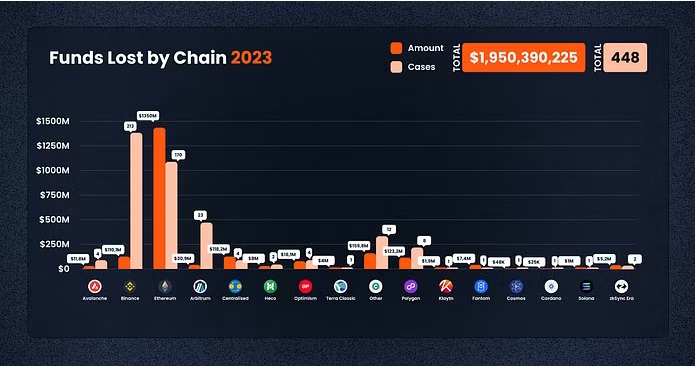
Ethereum faced substantial losses, losing about $1.35 billion in 170 incidents.
In a recent report released by security app De.Fi,
researchers revealed that cryptocurrency users lost nearly $2 billion to scams,
rug pulls, and hacks in 2023. Although this represented a significant reduction
from the previous year, it underscores the ongoing vulnerability of the
industry to security risks.
Market Decline and Improved Awareness Contribute to Lowered
Crypto Risks
The decrease in losses is largely attributed to the
implementation of enhanced security protocols, increased awareness within the
community, and an overall decline in market activity. Notably, this reduction
becomes even more substantial when factoring in the $40 billion lost to the
collapses of the stablecoin issuer Terraform Labs, the crypto lender Celsius, and the
FTX exchange.
This positive trend coincides with a bear market where
major alternative tokens experienced significant slumps before recovering in
recent months amid more bullish conditions. Additionally, the recovery rate of
funds saw a significant improvement, rising to around 10%, up from a mere 2% in
2022, according to De.Fi.
Breakdown by Chain 2023, Source: De.Fi
“This amount, though dispersed across various incidents,
underscores the persistent vulnerabilities and challenges within the DeFi
ecosystem,” De.Fi wrote in its report, which the firm shared with TechCrunch.
“2023 stood as a testament to both the ongoing vulnerabilities and the strides
made in addressing them, even as interest in the space was relatively muted by
the ongoing bear market in the first half of the year.”
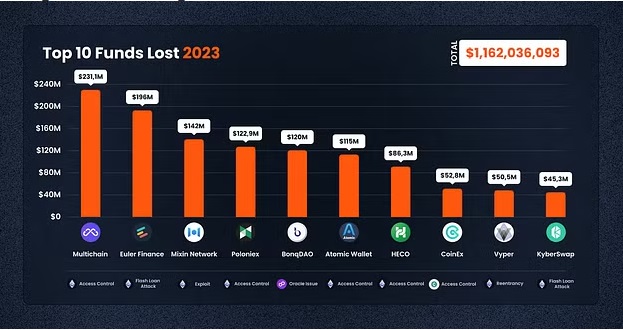
Top 10 Funds Lost, Source: De.Fi
Ethereum, the largest blockchain by active users and value
locked, bore the highest losses, with approximately $1.35 billion erased in an
estimated 170 incidents. This highlights Ethereum's attractiveness to malicious
actors due to its extensive ecosystem and high-profile projects, with the most
substantial exploit being the $230 million attack on the cross-chain platform
Multichain in July.
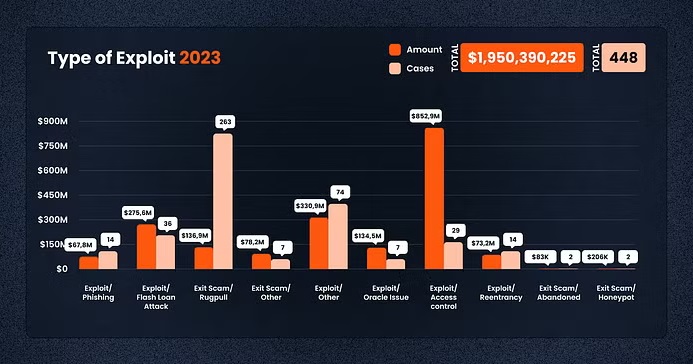
Type of Exploit 2023, Source: De.Fi
BNB Chain also emerged as a target, witnessing a loss of
$110.12 million across 213 incidents. The zkSync Era network lost $5.2 million
in two incidents, while Solana experienced a loss of $1 million in a single
attack.
🚨 ~$2B WAS STOLEN in 2023 🚨
Since 2020, the hackers tend to grab significantly less in various incidents
The biggest hack - Multichain, with $231M stolen due to unauthorized access to the system, according to @DeFi - security leader by @TechCrunchhttps://t.co/0IMARz9Sjn
Losses on centralized platforms, including exchanges and
trading platforms, totaled around $256 million across seven cases. The largest
of these incidents occurred in November when an attack on Poloniex resulted in
a net loss of $122 million.
Access control exploits proved to be the most damaging, with
attackers exploiting weaknesses in how permissions and access rights are
managed within smart contracts or platforms. Such exploits, totaling more than
$852 million in losses from 29 instances, often grant unauthorized access to
funds or critical functionalities.
While the cryptocurrency
industry has made strides in bolstering security measures, the report
highlights the persistent challenges and underscores the importance of ongoing
vigilance and innovation to safeguard users and their assets.
Vulnerabilities Exposed: Implications for Traditional Cold
Wallet Security
Ledger confirmed that hackers inserted malicious code into
the GitHub library for Connect Kit, a widely used javascript library enabling
decentralized finance (DeFi) protocols to connect with hardware wallets. This
has put several DeFi platforms, including Sushi, Lido, Metamask, and Coinbase,
at risk.
While Ledger swiftly removed the malicious code, users
remain at risk. All protocols using Connect Kit must manually update their
versions to address the security threat. Ledger's CEO emphasized the need for
continuous security improvement, acknowledging the incident as a reminder of
the dynamic nature of security.
The attack questions the previously perceived safety of cold
wallets, typically considered secure due to their offline nature. Ledger is
actively cooperating with authorities, vowing to support affected users and aid
in the investigation to apprehend the hacker and recover stolen assets.
In a recent report released by security app De.Fi,
researchers revealed that cryptocurrency users lost nearly $2 billion to scams,
rug pulls, and hacks in 2023. Although this represented a significant reduction
from the previous year, it underscores the ongoing vulnerability of the
industry to security risks.
Market Decline and Improved Awareness Contribute to Lowered
Crypto Risks
The decrease in losses is largely attributed to the
implementation of enhanced security protocols, increased awareness within the
community, and an overall decline in market activity. Notably, this reduction
becomes even more substantial when factoring in the $40 billion lost to the
collapses of the stablecoin issuer Terraform Labs, the crypto lender Celsius, and the
FTX exchange.
This positive trend coincides with a bear market where
major alternative tokens experienced significant slumps before recovering in
recent months amid more bullish conditions. Additionally, the recovery rate of
funds saw a significant improvement, rising to around 10%, up from a mere 2% in
2022, according to De.Fi.
Breakdown by Chain 2023, Source: De.Fi
“This amount, though dispersed across various incidents,
underscores the persistent vulnerabilities and challenges within the DeFi
ecosystem,” De.Fi wrote in its report, which the firm shared with TechCrunch.
“2023 stood as a testament to both the ongoing vulnerabilities and the strides
made in addressing them, even as interest in the space was relatively muted by
the ongoing bear market in the first half of the year.”
Top 10 Funds Lost, Source: De.Fi
Ethereum, the largest blockchain by active users and value
locked, bore the highest losses, with approximately $1.35 billion erased in an
estimated 170 incidents. This highlights Ethereum's attractiveness to malicious
actors due to its extensive ecosystem and high-profile projects, with the most
substantial exploit being the $230 million attack on the cross-chain platform
Multichain in July.
Type of Exploit 2023, Source: De.Fi
BNB Chain also emerged as a target, witnessing a loss of
$110.12 million across 213 incidents. The zkSync Era network lost $5.2 million
in two incidents, while Solana experienced a loss of $1 million in a single
attack.
🚨 ~$2B WAS STOLEN in 2023 🚨
Since 2020, the hackers tend to grab significantly less in various incidents
The biggest hack - Multichain, with $231M stolen due to unauthorized access to the system, according to @DeFi - security leader by @TechCrunchhttps://t.co/0IMARz9Sjn
Losses on centralized platforms, including exchanges and
trading platforms, totaled around $256 million across seven cases. The largest
of these incidents occurred in November when an attack on Poloniex resulted in
a net loss of $122 million.
Access control exploits proved to be the most damaging, with
attackers exploiting weaknesses in how permissions and access rights are
managed within smart contracts or platforms. Such exploits, totaling more than
$852 million in losses from 29 instances, often grant unauthorized access to
funds or critical functionalities.
While the cryptocurrency
industry has made strides in bolstering security measures, the report
highlights the persistent challenges and underscores the importance of ongoing
vigilance and innovation to safeguard users and their assets.
Vulnerabilities Exposed: Implications for Traditional Cold
Wallet Security
Ledger confirmed that hackers inserted malicious code into
the GitHub library for Connect Kit, a widely used javascript library enabling
decentralized finance (DeFi) protocols to connect with hardware wallets. This
has put several DeFi platforms, including Sushi, Lido, Metamask, and Coinbase,
at risk.
While Ledger swiftly removed the malicious code, users
remain at risk. All protocols using Connect Kit must manually update their
versions to address the security threat. Ledger's CEO emphasized the need for
continuous security improvement, acknowledging the incident as a reminder of
the dynamic nature of security.
The attack questions the previously perceived safety of cold
wallets, typically considered secure due to their offline nature. Ledger is
actively cooperating with authorities, vowing to support affected users and aid
in the investigation to apprehend the hacker and recover stolen assets.
Tareq is a financial writer with 15 years of experience covering global markets. His work spans technical analysis, forex broker reviews, and market sentiment, with a focus on topics relevant to retail traders. He joined Finance Magnates in 2023.
At Finance Magnates, he serves as News Editor, covering retail forex and CFD brokers, cryptocurrency exchanges, fintech firms, and regulatory developments shaping the trading industry. He holds an Honours degree in Information Technology from Anfell College, London.
Education:
Honours degree Information Technology, Anfell College, London
Binance Launches Retail AI Assistant, Repackages Existing Trading Tools
Featured Videos
AvaTrade to Acquire Most of FXCM; NAGA Raises $8M
AvaTrade to Acquire Most of FXCM; NAGA Raises $8M
AvaTrade to Acquire Most of FXCM; NAGA Raises $8M
AvaTrade to Acquire Most of FXCM; NAGA Raises $8M
Today’s financial news recap covers AvaTrade agrees to acquire most of FXCM, NAGA secures eight million dollars in new financing, and Wise seeks a tax settlement in the UK.
Finance Magnates Daily Recap brings you the latest news from forex and CFD brokers, fintech, payments, cryptocurrency, digital assets, trading platforms, financial regulation and global markets.
Get the key company news, executive moves, deals, regulatory updates and market developments of the day, in just a few minutes. New episodes published every weekday.
Read more: https://www.financemagnates.com
#FinanceMagnates #ForexNews #FintechNews
Today’s financial news recap covers AvaTrade agrees to acquire most of FXCM, NAGA secures eight million dollars in new financing, and Wise seeks a tax settlement in the UK.
Finance Magnates Daily Recap brings you the latest news from forex and CFD brokers, fintech, payments, cryptocurrency, digital assets, trading platforms, financial regulation and global markets.
Get the key company news, executive moves, deals, regulatory updates and market developments of the day, in just a few minutes. New episodes published every weekday.
Read more: https://www.financemagnates.com
#FinanceMagnates #ForexNews #FintechNews
Today’s financial news recap covers AvaTrade agrees to acquire most of FXCM, NAGA secures eight million dollars in new financing, and Wise seeks a tax settlement in the UK.
Finance Magnates Daily Recap brings you the latest news from forex and CFD brokers, fintech, payments, cryptocurrency, digital assets, trading platforms, financial regulation and global markets.
Get the key company news, executive moves, deals, regulatory updates and market developments of the day, in just a few minutes. New episodes published every weekday.
Read more: https://www.financemagnates.com
#FinanceMagnates #ForexNews #FintechNews
Today’s financial news recap covers AvaTrade agrees to acquire most of FXCM, NAGA secures eight million dollars in new financing, and Wise seeks a tax settlement in the UK.
Finance Magnates Daily Recap brings you the latest news from forex and CFD brokers, fintech, payments, cryptocurrency, digital assets, trading platforms, financial regulation and global markets.
Get the key company news, executive moves, deals, regulatory updates and market developments of the day, in just a few minutes. New episodes published every weekday.
Read more: https://www.financemagnates.com
#FinanceMagnates #ForexNews #FintechNews
XTB Adds Overnight US Stock Trading; Nasdaq Ventures Invests in One Trading
XTB Adds Overnight US Stock Trading; Nasdaq Ventures Invests in One Trading
XTB Adds Overnight US Stock Trading; Nasdaq Ventures Invests in One Trading
XTB Adds Overnight US Stock Trading; Nasdaq Ventures Invests in One Trading
XTB Adds Overnight US Stock Trading; Nasdaq Ventures Invests in One Trading
XTB Adds Overnight US Stock Trading; Nasdaq Ventures Invests in One Trading
Today’s financial news recap covers XTB expands overnight US stock trading, Fortrade reports higher revenue, Nasdaq backs One Trading, and Vest Labs raises 13 million dollars.
Finance Magnates Daily Recap brings you the latest news from forex and CFD brokers, fintech, payments, cryptocurrency, digital assets, trading platforms, financial regulation and global markets.
Get the key company news, executive moves, deals, regulatory updates and market developments of the day, in just a few minutes. New episodes published every weekday.
Read more: https://www.financemagnates.com
#FinanceMagnates #ForexNews #FintechNews
Today’s financial news recap covers XTB expands overnight US stock trading, Fortrade reports higher revenue, Nasdaq backs One Trading, and Vest Labs raises 13 million dollars.
Finance Magnates Daily Recap brings you the latest news from forex and CFD brokers, fintech, payments, cryptocurrency, digital assets, trading platforms, financial regulation and global markets.
Get the key company news, executive moves, deals, regulatory updates and market developments of the day, in just a few minutes. New episodes published every weekday.
Read more: https://www.financemagnates.com
#FinanceMagnates #ForexNews #FintechNews
Today’s financial news recap covers XTB expands overnight US stock trading, Fortrade reports higher revenue, Nasdaq backs One Trading, and Vest Labs raises 13 million dollars.
Finance Magnates Daily Recap brings you the latest news from forex and CFD brokers, fintech, payments, cryptocurrency, digital assets, trading platforms, financial regulation and global markets.
Get the key company news, executive moves, deals, regulatory updates and market developments of the day, in just a few minutes. New episodes published every weekday.
Read more: https://www.financemagnates.com
#FinanceMagnates #ForexNews #FintechNews
Today’s financial news recap covers XTB expands overnight US stock trading, Fortrade reports higher revenue, Nasdaq backs One Trading, and Vest Labs raises 13 million dollars.
Finance Magnates Daily Recap brings you the latest news from forex and CFD brokers, fintech, payments, cryptocurrency, digital assets, trading platforms, financial regulation and global markets.
Get the key company news, executive moves, deals, regulatory updates and market developments of the day, in just a few minutes. New episodes published every weekday.
Read more: https://www.financemagnates.com
#FinanceMagnates #ForexNews #FintechNews
Today’s financial news recap covers XTB expands overnight US stock trading, Fortrade reports higher revenue, Nasdaq backs One Trading, and Vest Labs raises 13 million dollars.
Finance Magnates Daily Recap brings you the latest news from forex and CFD brokers, fintech, payments, cryptocurrency, digital assets, trading platforms, financial regulation and global markets.
Get the key company news, executive moves, deals, regulatory updates and market developments of the day, in just a few minutes. New episodes published every weekday.
Read more: https://www.financemagnates.com
#FinanceMagnates #ForexNews #FintechNews
Today’s financial news recap covers XTB expands overnight US stock trading, Fortrade reports higher revenue, Nasdaq backs One Trading, and Vest Labs raises 13 million dollars.
Finance Magnates Daily Recap brings you the latest news from forex and CFD brokers, fintech, payments, cryptocurrency, digital assets, trading platforms, financial regulation and global markets.
Get the key company news, executive moves, deals, regulatory updates and market developments of the day, in just a few minutes. New episodes published every weekday.
Read more: https://www.financemagnates.com
#FinanceMagnates #ForexNews #FintechNews
CMC Founder Downplays Volatility Hit; Devexperts Names CEO
CMC Founder Downplays Volatility Hit; Devexperts Names CEO
CMC Founder Downplays Volatility Hit; Devexperts Names CEO
CMC Founder Downplays Volatility Hit; Devexperts Names CEO
CMC Founder Downplays Volatility Hit; Devexperts Names CEO
CMC Founder Downplays Volatility Hit; Devexperts Names CEO
Today’s financial news recap covers low volatility pressures brokers, Devexperts names a new CEO, Saxo cuts onboarding time, and OKX reaches a 25 billion dollar valuation.
Finance Magnates Daily Recap brings you the latest news from forex and CFD brokers, fintech, payments, cryptocurrency, digital assets, trading platforms, financial regulation and global markets.
Get the key company news, executive moves, deals, regulatory updates and market developments of the day, in just a few minutes. New episodes published every weekday.
Read more: https://www.financemagnates.com
#FinanceMagnates #ForexNews #FintechNews
Today’s financial news recap covers low volatility pressures brokers, Devexperts names a new CEO, Saxo cuts onboarding time, and OKX reaches a 25 billion dollar valuation.
Finance Magnates Daily Recap brings you the latest news from forex and CFD brokers, fintech, payments, cryptocurrency, digital assets, trading platforms, financial regulation and global markets.
Get the key company news, executive moves, deals, regulatory updates and market developments of the day, in just a few minutes. New episodes published every weekday.
Read more: https://www.financemagnates.com
#FinanceMagnates #ForexNews #FintechNews
Today’s financial news recap covers low volatility pressures brokers, Devexperts names a new CEO, Saxo cuts onboarding time, and OKX reaches a 25 billion dollar valuation.
Finance Magnates Daily Recap brings you the latest news from forex and CFD brokers, fintech, payments, cryptocurrency, digital assets, trading platforms, financial regulation and global markets.
Get the key company news, executive moves, deals, regulatory updates and market developments of the day, in just a few minutes. New episodes published every weekday.
Read more: https://www.financemagnates.com
#FinanceMagnates #ForexNews #FintechNews
Today’s financial news recap covers low volatility pressures brokers, Devexperts names a new CEO, Saxo cuts onboarding time, and OKX reaches a 25 billion dollar valuation.
Finance Magnates Daily Recap brings you the latest news from forex and CFD brokers, fintech, payments, cryptocurrency, digital assets, trading platforms, financial regulation and global markets.
Get the key company news, executive moves, deals, regulatory updates and market developments of the day, in just a few minutes. New episodes published every weekday.
Read more: https://www.financemagnates.com
#FinanceMagnates #ForexNews #FintechNews
Today’s financial news recap covers low volatility pressures brokers, Devexperts names a new CEO, Saxo cuts onboarding time, and OKX reaches a 25 billion dollar valuation.
Finance Magnates Daily Recap brings you the latest news from forex and CFD brokers, fintech, payments, cryptocurrency, digital assets, trading platforms, financial regulation and global markets.
Get the key company news, executive moves, deals, regulatory updates and market developments of the day, in just a few minutes. New episodes published every weekday.
Read more: https://www.financemagnates.com
#FinanceMagnates #ForexNews #FintechNews
Today’s financial news recap covers low volatility pressures brokers, Devexperts names a new CEO, Saxo cuts onboarding time, and OKX reaches a 25 billion dollar valuation.
Finance Magnates Daily Recap brings you the latest news from forex and CFD brokers, fintech, payments, cryptocurrency, digital assets, trading platforms, financial regulation and global markets.
Get the key company news, executive moves, deals, regulatory updates and market developments of the day, in just a few minutes. New episodes published every weekday.
Read more: https://www.financemagnates.com
#FinanceMagnates #ForexNews #FintechNews
Today’s financial news recap covers Trade Nation buys FXCM's UK client book, Trading 212 reports higher revenue, the CFTC's move to allow perpetual index futures.
Finance Magnates Daily Recap brings you the latest news from forex and CFD brokers, fintech, payments, cryptocurrency, digital assets, trading platforms, financial regulation and global markets.
Get the key company news, executive moves, deals, regulatory updates and market developments of the day, in just a few minutes. New episodes published every weekday.
Read more: https://www.financemagnates.com
#FinanceMagnates #ForexNews #FintechNews
Today’s financial news recap covers Trade Nation buys FXCM's UK client book, Trading 212 reports higher revenue, the CFTC's move to allow perpetual index futures.
Finance Magnates Daily Recap brings you the latest news from forex and CFD brokers, fintech, payments, cryptocurrency, digital assets, trading platforms, financial regulation and global markets.
Get the key company news, executive moves, deals, regulatory updates and market developments of the day, in just a few minutes. New episodes published every weekday.
Read more: https://www.financemagnates.com
#FinanceMagnates #ForexNews #FintechNews
Today’s financial news recap covers Trade Nation buys FXCM's UK client book, Trading 212 reports higher revenue, the CFTC's move to allow perpetual index futures.
Finance Magnates Daily Recap brings you the latest news from forex and CFD brokers, fintech, payments, cryptocurrency, digital assets, trading platforms, financial regulation and global markets.
Get the key company news, executive moves, deals, regulatory updates and market developments of the day, in just a few minutes. New episodes published every weekday.
Read more: https://www.financemagnates.com
#FinanceMagnates #ForexNews #FintechNews
Today’s financial news recap covers Trade Nation buys FXCM's UK client book, Trading 212 reports higher revenue, the CFTC's move to allow perpetual index futures.
Finance Magnates Daily Recap brings you the latest news from forex and CFD brokers, fintech, payments, cryptocurrency, digital assets, trading platforms, financial regulation and global markets.
Get the key company news, executive moves, deals, regulatory updates and market developments of the day, in just a few minutes. New episodes published every weekday.
Read more: https://www.financemagnates.com
#FinanceMagnates #ForexNews #FintechNews
Today’s financial news recap covers Trade Nation buys FXCM's UK client book, Trading 212 reports higher revenue, the CFTC's move to allow perpetual index futures.
Finance Magnates Daily Recap brings you the latest news from forex and CFD brokers, fintech, payments, cryptocurrency, digital assets, trading platforms, financial regulation and global markets.
Get the key company news, executive moves, deals, regulatory updates and market developments of the day, in just a few minutes. New episodes published every weekday.
Read more: https://www.financemagnates.com
#FinanceMagnates #ForexNews #FintechNews
Today’s financial news recap covers Trade Nation buys FXCM's UK client book, Trading 212 reports higher revenue, the CFTC's move to allow perpetual index futures.
Finance Magnates Daily Recap brings you the latest news from forex and CFD brokers, fintech, payments, cryptocurrency, digital assets, trading platforms, financial regulation and global markets.
Get the key company news, executive moves, deals, regulatory updates and market developments of the day, in just a few minutes. New episodes published every weekday.
Read more: https://www.financemagnates.com
#FinanceMagnates #ForexNews #FintechNews
Your career isn’t a linear path.
Your career isn’t a linear path.
Your career isn’t a linear path.
Your career isn’t a linear path.
Your career isn’t a linear path.
Your career isn’t a linear path.
Roles change. Career goals change. Sometimes you want a completely new challenge.
But the skills and knowledge you build along the way can stay with you and give you something to build on.
For Jeff Patterson, that continued growth is key to long-term career development.
You bring the skills. FM Academy helps you build the knowledge.
#FMAcademy #FinanceMagnates #FinanceCareers #ProfessionalDevelopment #Fintech
Roles change. Career goals change. Sometimes you want a completely new challenge.
But the skills and knowledge you build along the way can stay with you and give you something to build on.
For Jeff Patterson, that continued growth is key to long-term career development.
You bring the skills. FM Academy helps you build the knowledge.
#FMAcademy #FinanceMagnates #FinanceCareers #ProfessionalDevelopment #Fintech
Roles change. Career goals change. Sometimes you want a completely new challenge.
But the skills and knowledge you build along the way can stay with you and give you something to build on.
For Jeff Patterson, that continued growth is key to long-term career development.
You bring the skills. FM Academy helps you build the knowledge.
#FMAcademy #FinanceMagnates #FinanceCareers #ProfessionalDevelopment #Fintech
Roles change. Career goals change. Sometimes you want a completely new challenge.
But the skills and knowledge you build along the way can stay with you and give you something to build on.
For Jeff Patterson, that continued growth is key to long-term career development.
You bring the skills. FM Academy helps you build the knowledge.
#FMAcademy #FinanceMagnates #FinanceCareers #ProfessionalDevelopment #Fintech
Roles change. Career goals change. Sometimes you want a completely new challenge.
But the skills and knowledge you build along the way can stay with you and give you something to build on.
For Jeff Patterson, that continued growth is key to long-term career development.
You bring the skills. FM Academy helps you build the knowledge.
#FMAcademy #FinanceMagnates #FinanceCareers #ProfessionalDevelopment #Fintech
Roles change. Career goals change. Sometimes you want a completely new challenge.
But the skills and knowledge you build along the way can stay with you and give you something to build on.
For Jeff Patterson, that continued growth is key to long-term career development.
You bring the skills. FM Academy helps you build the knowledge.
#FMAcademy #FinanceMagnates #FinanceCareers #ProfessionalDevelopment #Fintech