Alon Muroch took part in a panel discussion at The Floor's crypto conference in Tel Aviv.
FM
This evening The Floor in Tel Aviv hosted a cryptocurrency-themed event. The event featured a panel discussion between a number of industry experts and a keynote speech delivered by Yonni Assia of eToro.
Panel discussion: "Cryptocurrency in the maturity phase - what's next for crypto trading and ICOs?"
The panel featured: Shlomo Landress, a partner at law firm Gornitzky & Co; Dorel Blitz, Head of Fintech at KPMG Israel; Oron Lonz, Security Solution Architect at Intel Cyber Security Division; Gil Devora; and Alon Muroch, CEO of Blox.io. It was chaired by Michael Pearl of Finance Magnates.
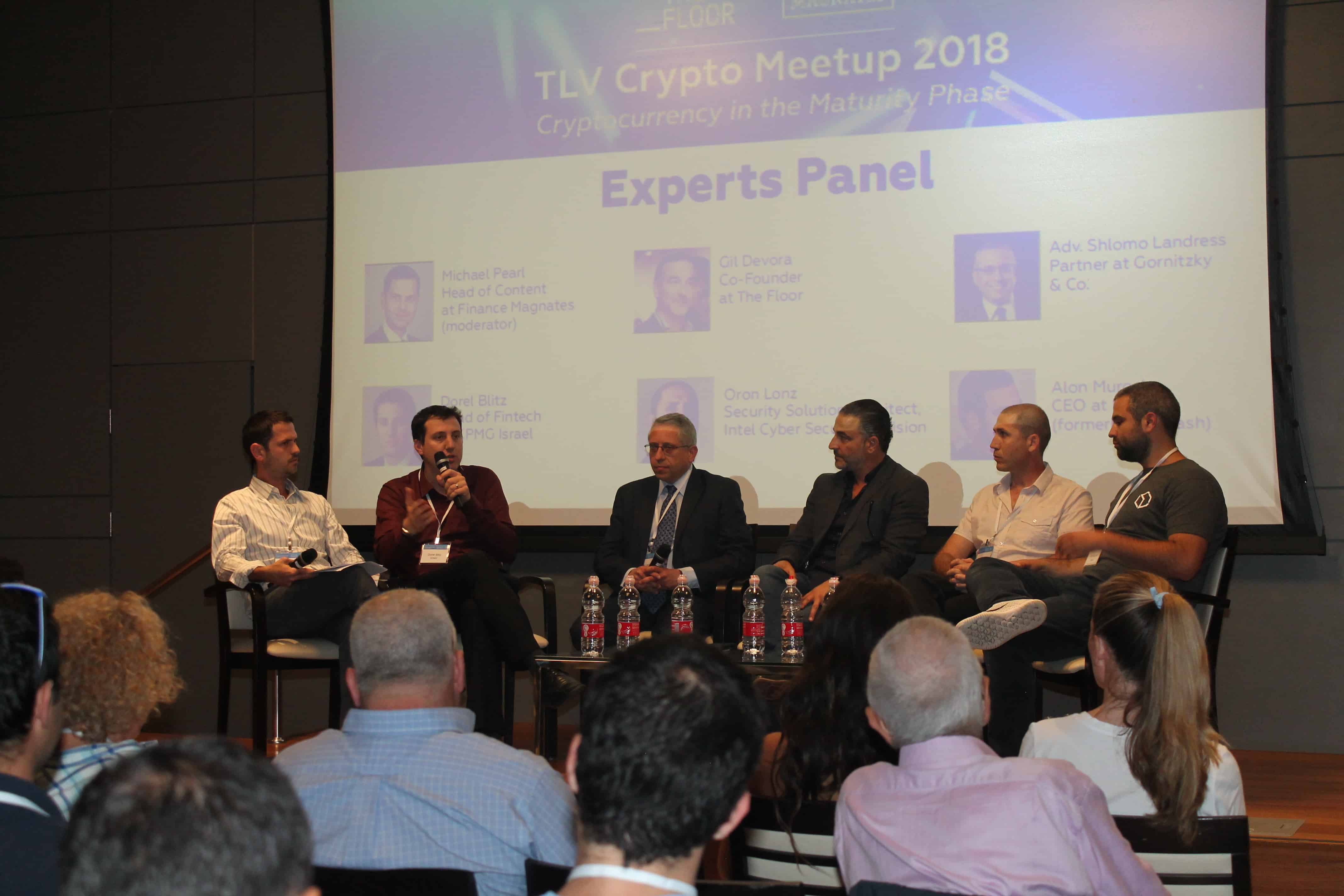
After a lively panel, here is a selection of comments from the participants:
Dorel Blitz
"I am a true believer in trust. Banks sell trust, not money, and because there are issues with blockchain. Swift is at the moment working on a worldwide blockchain implementation, and only when large companies like this start using blockchain will we gain a sufficient amount of trust."
"I had a meeting with the CTO of the largest bank in Israel and I was amazed to see how these people are building use cases around blockchain technology. I met the global president of Blackhawk, the largest asset management company in the world, and they are looking at blockchain not just in terms of cryptocurrency as an asset class they can play with, but at blockchain technology on a global basis."
Shlomo Landress
"You may think that regulation is a terrible thing that is going to stifle innovation, but I beg to differ. lack of regulation is a bad thing because the stigma of fraud and hacks is bad."
"Many authorities came up with a whole load of regulations that came from a good place but ended up not making a lot of sense. I think Israel is not at the front of this in any way - we are behind. There is a concern as to whether Israel will be able to maintain its place in terms of being a leader in startups if the regulations don't catch up."
"We are seeing a lot of use cases coming from the healthcare space. The Israeli government just confirmed a one billion dollar fund for healthcare services, and they are looking at using blockchain technology exactly for that. I think that these kinds of investments will fuel the industry, and there are all kinds of entrepreneurs that want a new place to invest their money, and I think that blockchain after 5 - 7 years of playing with use cases and 2018-2020 will see validations as it scales up."
"Self-regulation can point regulators to what can actually work. The industry itself can influence the regulation process, and I think that they are thirsty for involvement. Cryptocurrency no longer means that the rules don't apply to you anymore."
Gil Devora
"I believe that once ICOs are regulated, it will be a great thing. Its a shame to see that companies are taking their money elsewhere because of Israeli regulation, I hope they get on with it."
"It's not the next step, it's another step. I think that an ICO is a great way of making capital but I don't think that it will replace VCs. A lot of companies look for smart investors, and sometimes companies want to progress in a traditional way, benefiting from the advice of experienced investors and so on."
"In investments, technological developments change behavior but the target is always the same."
Alon Muroch
"Tax is very different to regulations when it comes to securities. The ITA is the fastest moving regulator in the world."
"In 5 to 10 years we won't see any equity investments anymore. Tokens are just too good to pass up."
"Up until the end of 2016, most of the talk in the industry was around infrastructure. 2018-2020 will be about consumer-facing products. You need to develop the infrastructure to bring people on board."
"Talking about trust, blockchain is trustless - ICOs are so far away from Bitcoin and Ethereum, which are completely accepted. These are the Microsoft and Google of the next 30 years."
This evening The Floor in Tel Aviv hosted a cryptocurrency-themed event. The event featured a panel discussion between a number of industry experts and a keynote speech delivered by Yonni Assia of eToro.
Panel discussion: "Cryptocurrency in the maturity phase - what's next for crypto trading and ICOs?"
The panel featured: Shlomo Landress, a partner at law firm Gornitzky & Co; Dorel Blitz, Head of Fintech at KPMG Israel; Oron Lonz, Security Solution Architect at Intel Cyber Security Division; Gil Devora; and Alon Muroch, CEO of Blox.io. It was chaired by Michael Pearl of Finance Magnates.
After a lively panel, here is a selection of comments from the participants:
Dorel Blitz
"I am a true believer in trust. Banks sell trust, not money, and because there are issues with blockchain. Swift is at the moment working on a worldwide blockchain implementation, and only when large companies like this start using blockchain will we gain a sufficient amount of trust."
"I had a meeting with the CTO of the largest bank in Israel and I was amazed to see how these people are building use cases around blockchain technology. I met the global president of Blackhawk, the largest asset management company in the world, and they are looking at blockchain not just in terms of cryptocurrency as an asset class they can play with, but at blockchain technology on a global basis."
Shlomo Landress
"You may think that regulation is a terrible thing that is going to stifle innovation, but I beg to differ. lack of regulation is a bad thing because the stigma of fraud and hacks is bad."
"Many authorities came up with a whole load of regulations that came from a good place but ended up not making a lot of sense. I think Israel is not at the front of this in any way - we are behind. There is a concern as to whether Israel will be able to maintain its place in terms of being a leader in startups if the regulations don't catch up."
"We are seeing a lot of use cases coming from the healthcare space. The Israeli government just confirmed a one billion dollar fund for healthcare services, and they are looking at using blockchain technology exactly for that. I think that these kinds of investments will fuel the industry, and there are all kinds of entrepreneurs that want a new place to invest their money, and I think that blockchain after 5 - 7 years of playing with use cases and 2018-2020 will see validations as it scales up."
"Self-regulation can point regulators to what can actually work. The industry itself can influence the regulation process, and I think that they are thirsty for involvement. Cryptocurrency no longer means that the rules don't apply to you anymore."
Gil Devora
"I believe that once ICOs are regulated, it will be a great thing. Its a shame to see that companies are taking their money elsewhere because of Israeli regulation, I hope they get on with it."
"It's not the next step, it's another step. I think that an ICO is a great way of making capital but I don't think that it will replace VCs. A lot of companies look for smart investors, and sometimes companies want to progress in a traditional way, benefiting from the advice of experienced investors and so on."
"In investments, technological developments change behavior but the target is always the same."
Alon Muroch
"Tax is very different to regulations when it comes to securities. The ITA is the fastest moving regulator in the world."
"In 5 to 10 years we won't see any equity investments anymore. Tokens are just too good to pass up."
"Up until the end of 2016, most of the talk in the industry was around infrastructure. 2018-2020 will be about consumer-facing products. You need to develop the infrastructure to bring people on board."
"Talking about trust, blockchain is trustless - ICOs are so far away from Bitcoin and Ethereum, which are completely accepted. These are the Microsoft and Google of the next 30 years."
Schwab Aims Crypto Custody at Its $5 Trillion Advisor Channel by 2027
Featured Videos
FM Daily Brief – 9 June 2026
Today’s Tuesday, the 9th of June 2026, and these are our main stories: eToro’s customer assets climbed back above $20 billion, Prop trading model in prediction markets, and Leverate launched a new AI assistant for brokers and traders.
War Stories: Lessons from 20 Years in Markets (the pain, the pitfalls and the profits)
The trades that taught me the most aren't the ones that worked. They're the ones that didn't — or the ones I almost caught and didn't have the nerve to ride. In this session, I'll tell you about the Brexit miss, the SNB shocker that nearly handed me a 5400% return, the BoJ surprise that punched me in the gut, and a few wins along the way. Each story carries a lesson, but the lessons aren't the point. Everyone who trades long enough collects a portfolio of moments like these; what separates the people who stay in the game is what they do with them.
The Engine and the Fuel: How AI & Data Drives African Future
If AI is the engine, data is the fuel. Without quality, accessible data, AI cannot work well; and without the right mindset, data remains just numbers instead of insight. In this session, leading experts will explore how AI and data are democratizing opportunities for businesses and personal growth. Discover practical ways to make AI accessible today, anticipate its transformative impact on African markets, and learn actionable steps to prepare for what's next. Let's talk about:
-How AI and data drive business efficiency and innovation in trading and fintech
-AI tools to elevate trading or business strategies
-How to access and maximise the power of data and AI
-Emerging AI and data trends in Africa and their economic ripple effects
If AI is the engine, data is the fuel. Without quality, accessible data, AI cannot work well; and without the right mindset, data remains just numbers instead of insight. In this session, leading experts will explore how AI and data are democratizing opportunities for businesses and personal growth. Discover practical ways to make AI accessible today, anticipate its transformative impact on African markets, and learn actionable steps to prepare for what's next. Let's talk about:
-How AI and data drive business efficiency and innovation in trading and fintech
-AI tools to elevate trading or business strategies
-How to access and maximise the power of data and AI
-Emerging AI and data trends in Africa and their economic ripple effects
If AI is the engine, data is the fuel. Without quality, accessible data, AI cannot work well; and without the right mindset, data remains just numbers instead of insight. In this session, leading experts will explore how AI and data are democratizing opportunities for businesses and personal growth. Discover practical ways to make AI accessible today, anticipate its transformative impact on African markets, and learn actionable steps to prepare for what's next. Let's talk about:
-How AI and data drive business efficiency and innovation in trading and fintech
-AI tools to elevate trading or business strategies
-How to access and maximise the power of data and AI
-Emerging AI and data trends in Africa and their economic ripple effects
If AI is the engine, data is the fuel. Without quality, accessible data, AI cannot work well; and without the right mindset, data remains just numbers instead of insight. In this session, leading experts will explore how AI and data are democratizing opportunities for businesses and personal growth. Discover practical ways to make AI accessible today, anticipate its transformative impact on African markets, and learn actionable steps to prepare for what's next. Let's talk about:
-How AI and data drive business efficiency and innovation in trading and fintech
-AI tools to elevate trading or business strategies
-How to access and maximise the power of data and AI
-Emerging AI and data trends in Africa and their economic ripple effects
If AI is the engine, data is the fuel. Without quality, accessible data, AI cannot work well; and without the right mindset, data remains just numbers instead of insight. In this session, leading experts will explore how AI and data are democratizing opportunities for businesses and personal growth. Discover practical ways to make AI accessible today, anticipate its transformative impact on African markets, and learn actionable steps to prepare for what's next. Let's talk about:
-How AI and data drive business efficiency and innovation in trading and fintech
-AI tools to elevate trading or business strategies
-How to access and maximise the power of data and AI
-Emerging AI and data trends in Africa and their economic ripple effects
If AI is the engine, data is the fuel. Without quality, accessible data, AI cannot work well; and without the right mindset, data remains just numbers instead of insight. In this session, leading experts will explore how AI and data are democratizing opportunities for businesses and personal growth. Discover practical ways to make AI accessible today, anticipate its transformative impact on African markets, and learn actionable steps to prepare for what's next. Let's talk about:
-How AI and data drive business efficiency and innovation in trading and fintech
-AI tools to elevate trading or business strategies
-How to access and maximise the power of data and AI
-Emerging AI and data trends in Africa and their economic ripple effects
Inside My Best Trade with Jimmy Moyaha
Most market post-mortems describe what happened to prices. Few describe what happened in the trading room while the position was open: the entry conviction, the moments that tested it, and the exit decision that closed the book.
This session brings one seasoned trader to the stage for an unfiltered account of the position that still defines how they think about markets.
Attendees will walk away with:
-A first-hand account of how a conviction trade is built, from thesis and entry through position management and exit
-Understanding of what turns a market observation into a live position, and what holds it when conditions shift
-Insight into how timing, execution quality, and market structure shaped the final result
-Perspective on what the trade revealed about edge, risk tolerance, and when to hold through a position moving against you
-Clarity on what separates a well-built trade from a well-timed one
Most market post-mortems describe what happened to prices. Few describe what happened in the trading room while the position was open: the entry conviction, the moments that tested it, and the exit decision that closed the book.
This session brings one seasoned trader to the stage for an unfiltered account of the position that still defines how they think about markets.
Attendees will walk away with:
-A first-hand account of how a conviction trade is built, from thesis and entry through position management and exit
-Understanding of what turns a market observation into a live position, and what holds it when conditions shift
-Insight into how timing, execution quality, and market structure shaped the final result
-Perspective on what the trade revealed about edge, risk tolerance, and when to hold through a position moving against you
-Clarity on what separates a well-built trade from a well-timed one
Most market post-mortems describe what happened to prices. Few describe what happened in the trading room while the position was open: the entry conviction, the moments that tested it, and the exit decision that closed the book.
This session brings one seasoned trader to the stage for an unfiltered account of the position that still defines how they think about markets.
Attendees will walk away with:
-A first-hand account of how a conviction trade is built, from thesis and entry through position management and exit
-Understanding of what turns a market observation into a live position, and what holds it when conditions shift
-Insight into how timing, execution quality, and market structure shaped the final result
-Perspective on what the trade revealed about edge, risk tolerance, and when to hold through a position moving against you
-Clarity on what separates a well-built trade from a well-timed one
Most market post-mortems describe what happened to prices. Few describe what happened in the trading room while the position was open: the entry conviction, the moments that tested it, and the exit decision that closed the book.
This session brings one seasoned trader to the stage for an unfiltered account of the position that still defines how they think about markets.
Attendees will walk away with:
-A first-hand account of how a conviction trade is built, from thesis and entry through position management and exit
-Understanding of what turns a market observation into a live position, and what holds it when conditions shift
-Insight into how timing, execution quality, and market structure shaped the final result
-Perspective on what the trade revealed about edge, risk tolerance, and when to hold through a position moving against you
-Clarity on what separates a well-built trade from a well-timed one
Most market post-mortems describe what happened to prices. Few describe what happened in the trading room while the position was open: the entry conviction, the moments that tested it, and the exit decision that closed the book.
This session brings one seasoned trader to the stage for an unfiltered account of the position that still defines how they think about markets.
Attendees will walk away with:
-A first-hand account of how a conviction trade is built, from thesis and entry through position management and exit
-Understanding of what turns a market observation into a live position, and what holds it when conditions shift
-Insight into how timing, execution quality, and market structure shaped the final result
-Perspective on what the trade revealed about edge, risk tolerance, and when to hold through a position moving against you
-Clarity on what separates a well-built trade from a well-timed one
Most market post-mortems describe what happened to prices. Few describe what happened in the trading room while the position was open: the entry conviction, the moments that tested it, and the exit decision that closed the book.
This session brings one seasoned trader to the stage for an unfiltered account of the position that still defines how they think about markets.
Attendees will walk away with:
-A first-hand account of how a conviction trade is built, from thesis and entry through position management and exit
-Understanding of what turns a market observation into a live position, and what holds it when conditions shift
-Insight into how timing, execution quality, and market structure shaped the final result
-Perspective on what the trade revealed about edge, risk tolerance, and when to hold through a position moving against you
-Clarity on what separates a well-built trade from a well-timed one
Agentic Inequality: Democratizing Financial Access Through AI & Blockchain
As crypto and CFD trading continue to expand across Africa, access to advanced tools and market insights remains uneven. This session explores how AI and blockchain can bridge that gap by empowering informal traders and underserved communities to participate more effectively in digital financial markets. The discussion will focus on practical applications of technology to improve accessibility, education, and investment outcomes in both formal and informal sectors.
In this discussion, we will explore:
-The role of AI in democratizing access to trading tools, insights, and strategy development
-How crypto and blockchain can enable broader participation beyond traditional financial systems
-Addressing access barriers: infrastructure, education, and affordability in underserved communities
-Opportunities for brokers and platforms to tap into the informal trading economy
As crypto and CFD trading continue to expand across Africa, access to advanced tools and market insights remains uneven. This session explores how AI and blockchain can bridge that gap by empowering informal traders and underserved communities to participate more effectively in digital financial markets. The discussion will focus on practical applications of technology to improve accessibility, education, and investment outcomes in both formal and informal sectors.
In this discussion, we will explore:
-The role of AI in democratizing access to trading tools, insights, and strategy development
-How crypto and blockchain can enable broader participation beyond traditional financial systems
-Addressing access barriers: infrastructure, education, and affordability in underserved communities
-Opportunities for brokers and platforms to tap into the informal trading economy
As crypto and CFD trading continue to expand across Africa, access to advanced tools and market insights remains uneven. This session explores how AI and blockchain can bridge that gap by empowering informal traders and underserved communities to participate more effectively in digital financial markets. The discussion will focus on practical applications of technology to improve accessibility, education, and investment outcomes in both formal and informal sectors.
In this discussion, we will explore:
-The role of AI in democratizing access to trading tools, insights, and strategy development
-How crypto and blockchain can enable broader participation beyond traditional financial systems
-Addressing access barriers: infrastructure, education, and affordability in underserved communities
-Opportunities for brokers and platforms to tap into the informal trading economy
As crypto and CFD trading continue to expand across Africa, access to advanced tools and market insights remains uneven. This session explores how AI and blockchain can bridge that gap by empowering informal traders and underserved communities to participate more effectively in digital financial markets. The discussion will focus on practical applications of technology to improve accessibility, education, and investment outcomes in both formal and informal sectors.
In this discussion, we will explore:
-The role of AI in democratizing access to trading tools, insights, and strategy development
-How crypto and blockchain can enable broader participation beyond traditional financial systems
-Addressing access barriers: infrastructure, education, and affordability in underserved communities
-Opportunities for brokers and platforms to tap into the informal trading economy
As crypto and CFD trading continue to expand across Africa, access to advanced tools and market insights remains uneven. This session explores how AI and blockchain can bridge that gap by empowering informal traders and underserved communities to participate more effectively in digital financial markets. The discussion will focus on practical applications of technology to improve accessibility, education, and investment outcomes in both formal and informal sectors.
In this discussion, we will explore:
-The role of AI in democratizing access to trading tools, insights, and strategy development
-How crypto and blockchain can enable broader participation beyond traditional financial systems
-Addressing access barriers: infrastructure, education, and affordability in underserved communities
-Opportunities for brokers and platforms to tap into the informal trading economy
As crypto and CFD trading continue to expand across Africa, access to advanced tools and market insights remains uneven. This session explores how AI and blockchain can bridge that gap by empowering informal traders and underserved communities to participate more effectively in digital financial markets. The discussion will focus on practical applications of technology to improve accessibility, education, and investment outcomes in both formal and informal sectors.
In this discussion, we will explore:
-The role of AI in democratizing access to trading tools, insights, and strategy development
-How crypto and blockchain can enable broader participation beyond traditional financial systems
-Addressing access barriers: infrastructure, education, and affordability in underserved communities
-Opportunities for brokers and platforms to tap into the informal trading economy