Ripple reportedly offered $1 million to Gemini and $100 million to GDAX.
Bloomberg
Ripple would really like to be listed on Gemini and Coinbase, two major US cryptocurrency exchanges, and is willing to pay for the privilege according to a report in Bloomberg.
Gemini is a cryptocurrency exchange owned by twins Cameron and Tyler Winklevoss. It offers Bitcoin and Ethereum trading and registers around $70 million in daily volumes.
The power of rumours
In January of this year, rumours that XRP was going to appear on GDAX caused the price of the cryptocurrency to jump. It was big news because it came at a time when GDAX was experiencing a surge of new users following the groundbreaking adoption of Bitcoin futures trading on the two biggest traditional financial exchanges in the US - at one point it claimed 100,000 new users per day.
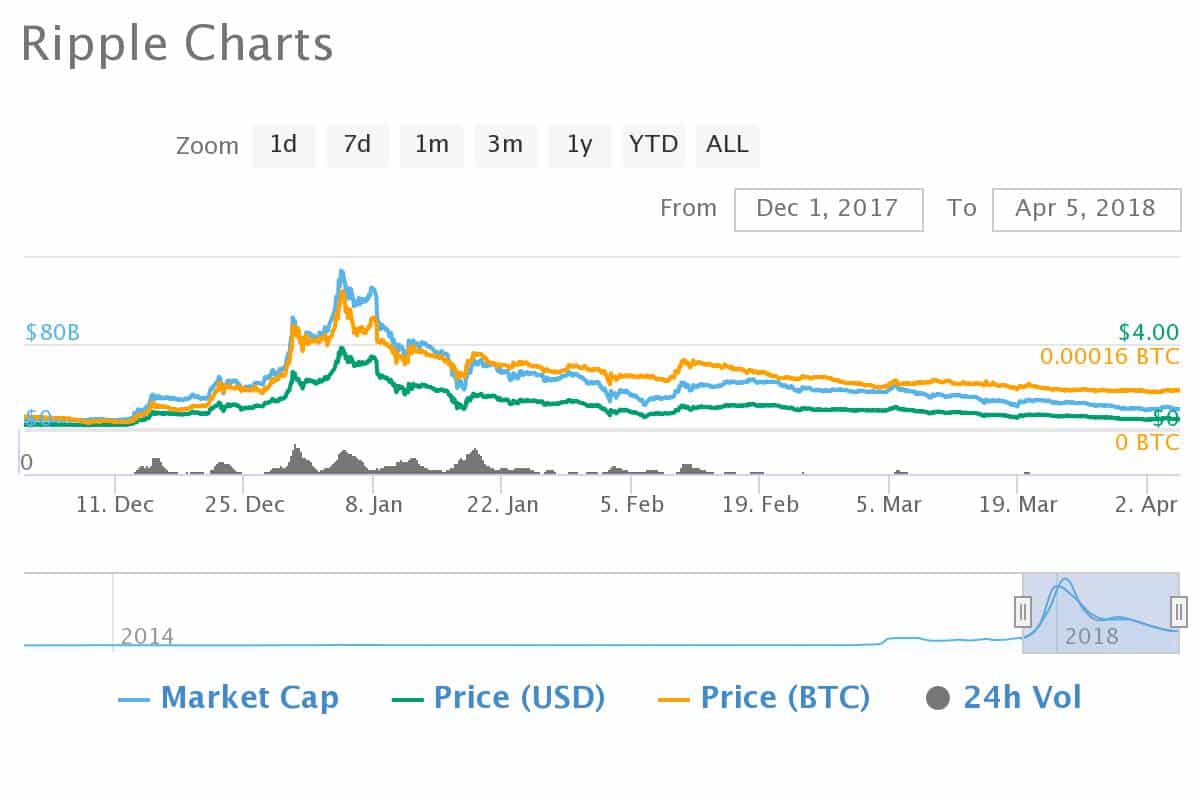
After the exchanged nixed the rumours, the price of Ripple dropped from $148 billion to $126 billion.
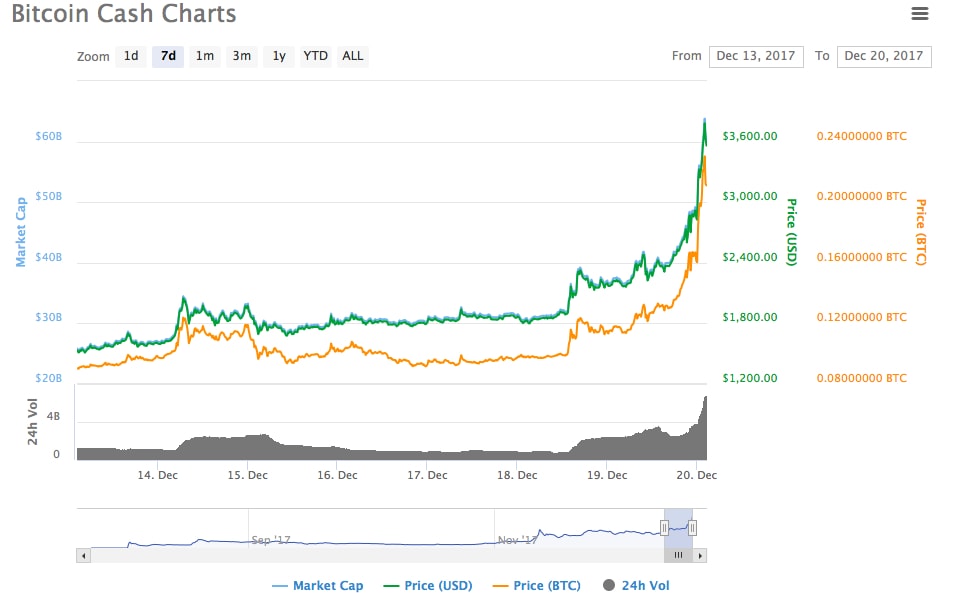
To understand why Ripple wants to be listed on the exchanges, take a look at what happened to the price of Bitcoin Cash after GDAX accepted it in December 2017:
In the following chart, the rise and fall of the price of Ripple around the time of the aforementioned rumours and their debunking is dramatic:
Paying to join the club
Anonymous sources told Bloomberg that last year, Ripple offered a cash payment of $1 million to Gemini and to "lend" more than $100 million in XRP tokens to Coinbase in return for listing. The offers were declined. Bloomberg reports that a Ripple spokeswoman said that this was "inaccurate" but did not specify why.
Ripple is listed on almost all major cryptocurrency exchanges, so the the exclusion from two major American ones may seem strange. However there is a simple explanation.
Centralisation
XRP is one of the most centralised cryptocurrencies out there, with more than half of its tokens controlled by Ripple. This has led to criticism because the enormous value of the blockchain means that the management of Ripple is now unspeakably rich. We reported in January that former CEO Chris Larsen was technically worth $44.16 billion, making him one of the 20 wealthiest people on the planet.
This is in conflict with the GDAX digital asset framework of November 2017, which specifies that accepted coins must be public, decentralized, and enable trustless consensus.
More importantly, Ripple's setup could also put it at odds with the US Securities and Exchange Commission were it be listed, because the regulator has warned that tokens that could be deemed securities shouldn't be listed on unlicensed exchanges.
Jesse Overall, an attorney at Clifford Chance, told Bloomberg: "Listing on an exchange is the integral part of the process of facilitating an unregistered, unlawful, illegal securities issuance to people who are not allowed to buy.”
XRP's level of central control means that it could very well be considered a security, and the American watchdog is getting serious about these things.
Ripple would really like to be listed on Gemini and Coinbase, two major US cryptocurrency exchanges, and is willing to pay for the privilege according to a report in Bloomberg.
Gemini is a cryptocurrency exchange owned by twins Cameron and Tyler Winklevoss. It offers Bitcoin and Ethereum trading and registers around $70 million in daily volumes.
The power of rumours
In January of this year, rumours that XRP was going to appear on GDAX caused the price of the cryptocurrency to jump. It was big news because it came at a time when GDAX was experiencing a surge of new users following the groundbreaking adoption of Bitcoin futures trading on the two biggest traditional financial exchanges in the US - at one point it claimed 100,000 new users per day.
After the exchanged nixed the rumours, the price of Ripple dropped from $148 billion to $126 billion.
To understand why Ripple wants to be listed on the exchanges, take a look at what happened to the price of Bitcoin Cash after GDAX accepted it in December 2017:
In the following chart, the rise and fall of the price of Ripple around the time of the aforementioned rumours and their debunking is dramatic:
Paying to join the club
Anonymous sources told Bloomberg that last year, Ripple offered a cash payment of $1 million to Gemini and to "lend" more than $100 million in XRP tokens to Coinbase in return for listing. The offers were declined. Bloomberg reports that a Ripple spokeswoman said that this was "inaccurate" but did not specify why.
Ripple is listed on almost all major cryptocurrency exchanges, so the the exclusion from two major American ones may seem strange. However there is a simple explanation.
Centralisation
XRP is one of the most centralised cryptocurrencies out there, with more than half of its tokens controlled by Ripple. This has led to criticism because the enormous value of the blockchain means that the management of Ripple is now unspeakably rich. We reported in January that former CEO Chris Larsen was technically worth $44.16 billion, making him one of the 20 wealthiest people on the planet.
This is in conflict with the GDAX digital asset framework of November 2017, which specifies that accepted coins must be public, decentralized, and enable trustless consensus.
More importantly, Ripple's setup could also put it at odds with the US Securities and Exchange Commission were it be listed, because the regulator has warned that tokens that could be deemed securities shouldn't be listed on unlicensed exchanges.
Jesse Overall, an attorney at Clifford Chance, told Bloomberg: "Listing on an exchange is the integral part of the process of facilitating an unregistered, unlawful, illegal securities issuance to people who are not allowed to buy.”
XRP's level of central control means that it could very well be considered a security, and the American watchdog is getting serious about these things.
Schwab Aims Crypto Custody at Its $5 Trillion Advisor Channel by 2027
Featured Videos
Buying The Deep: Digital Asset Adoption in APAC and Beyond
The persisting price drops test the industry's commitment to crypto adoption. While on-chain innovation is making headway across market mechanics, from stablecoins to tokenization, investors remains cautious.
This session brings together market structure experts and institutional investors to explore how a prolonged bear market affects their long-term strategy, and where the opportunities lie ahead of the next cycle.
Attendees will walk away with:
First-hand account of the bear market's impact on various industry players
Understanding of what custody, connectivity, and settlement gaps still hamper growth in APAC
Insight into how client mandates and operational readiness are shaping who moves and who waits
Perspective on what institutional investors need to move toward actual digital asset capital deployment
The persisting price drops test the industry's commitment to crypto adoption. While on-chain innovation is making headway across market mechanics, from stablecoins to tokenization, investors remains cautious.
This session brings together market structure experts and institutional investors to explore how a prolonged bear market affects their long-term strategy, and where the opportunities lie ahead of the next cycle.
Attendees will walk away with:
First-hand account of the bear market's impact on various industry players
Understanding of what custody, connectivity, and settlement gaps still hamper growth in APAC
Insight into how client mandates and operational readiness are shaping who moves and who waits
Perspective on what institutional investors need to move toward actual digital asset capital deployment
The persisting price drops test the industry's commitment to crypto adoption. While on-chain innovation is making headway across market mechanics, from stablecoins to tokenization, investors remains cautious.
This session brings together market structure experts and institutional investors to explore how a prolonged bear market affects their long-term strategy, and where the opportunities lie ahead of the next cycle.
Attendees will walk away with:
First-hand account of the bear market's impact on various industry players
Understanding of what custody, connectivity, and settlement gaps still hamper growth in APAC
Insight into how client mandates and operational readiness are shaping who moves and who waits
Perspective on what institutional investors need to move toward actual digital asset capital deployment
The persisting price drops test the industry's commitment to crypto adoption. While on-chain innovation is making headway across market mechanics, from stablecoins to tokenization, investors remains cautious.
This session brings together market structure experts and institutional investors to explore how a prolonged bear market affects their long-term strategy, and where the opportunities lie ahead of the next cycle.
Attendees will walk away with:
First-hand account of the bear market's impact on various industry players
Understanding of what custody, connectivity, and settlement gaps still hamper growth in APAC
Insight into how client mandates and operational readiness are shaping who moves and who waits
Perspective on what institutional investors need to move toward actual digital asset capital deployment
This panel explores the key insights and emerging trends shaping modern trading behavior, examining how user expectations are evolving across global markets and what these shifts mean for industry participants.
Funding & Exit in Singapore from Pre-Seed to Liquidity
Singapore's capital infrastructure is wider than its reputation for stability suggests.
Sovereign backing from Temasek and GIC, a growing family office network, sector-specialized venture funds, and a public market pathway through the Singapore Exchange, the city-state supports capital formation at every stage of the lifecycle.
Held in partnership with 8Circle, this session gathers practitioners across the capital stack to examine how Singapore functions as both an investment and an exit destination.
Attendees will walk away with:
Understanding of what makes SGX a credible listing pathway for high-growth companies in 2026
Insight into alternative exit channels: private secondary markets, digital marketplace exits, and strategic acquisitions
Perspective on what founders and capital allocators should be doing at each stage to preserve exit optionality
Singapore's capital infrastructure is wider than its reputation for stability suggests.
Sovereign backing from Temasek and GIC, a growing family office network, sector-specialized venture funds, and a public market pathway through the Singapore Exchange, the city-state supports capital formation at every stage of the lifecycle.
Held in partnership with 8Circle, this session gathers practitioners across the capital stack to examine how Singapore functions as both an investment and an exit destination.
Attendees will walk away with:
Understanding of what makes SGX a credible listing pathway for high-growth companies in 2026
Insight into alternative exit channels: private secondary markets, digital marketplace exits, and strategic acquisitions
Perspective on what founders and capital allocators should be doing at each stage to preserve exit optionality
Singapore's capital infrastructure is wider than its reputation for stability suggests.
Sovereign backing from Temasek and GIC, a growing family office network, sector-specialized venture funds, and a public market pathway through the Singapore Exchange, the city-state supports capital formation at every stage of the lifecycle.
Held in partnership with 8Circle, this session gathers practitioners across the capital stack to examine how Singapore functions as both an investment and an exit destination.
Attendees will walk away with:
Understanding of what makes SGX a credible listing pathway for high-growth companies in 2026
Insight into alternative exit channels: private secondary markets, digital marketplace exits, and strategic acquisitions
Perspective on what founders and capital allocators should be doing at each stage to preserve exit optionality
Singapore's capital infrastructure is wider than its reputation for stability suggests.
Sovereign backing from Temasek and GIC, a growing family office network, sector-specialized venture funds, and a public market pathway through the Singapore Exchange, the city-state supports capital formation at every stage of the lifecycle.
Held in partnership with 8Circle, this session gathers practitioners across the capital stack to examine how Singapore functions as both an investment and an exit destination.
Attendees will walk away with:
Understanding of what makes SGX a credible listing pathway for high-growth companies in 2026
Insight into alternative exit channels: private secondary markets, digital marketplace exits, and strategic acquisitions
Perspective on what founders and capital allocators should be doing at each stage to preserve exit optionality
Singapore's capital infrastructure is wider than its reputation for stability suggests.
Sovereign backing from Temasek and GIC, a growing family office network, sector-specialized venture funds, and a public market pathway through the Singapore Exchange, the city-state supports capital formation at every stage of the lifecycle.
Held in partnership with 8Circle, this session gathers practitioners across the capital stack to examine how Singapore functions as both an investment and an exit destination.
Attendees will walk away with:
Understanding of what makes SGX a credible listing pathway for high-growth companies in 2026
Insight into alternative exit channels: private secondary markets, digital marketplace exits, and strategic acquisitions
Perspective on what founders and capital allocators should be doing at each stage to preserve exit optionality
Singapore's capital infrastructure is wider than its reputation for stability suggests.
Sovereign backing from Temasek and GIC, a growing family office network, sector-specialized venture funds, and a public market pathway through the Singapore Exchange, the city-state supports capital formation at every stage of the lifecycle.
Held in partnership with 8Circle, this session gathers practitioners across the capital stack to examine how Singapore functions as both an investment and an exit destination.
Attendees will walk away with:
Understanding of what makes SGX a credible listing pathway for high-growth companies in 2026
Insight into alternative exit channels: private secondary markets, digital marketplace exits, and strategic acquisitions
Perspective on what founders and capital allocators should be doing at each stage to preserve exit optionality
FM Daily Brief – 10 June 2026
Today’s Wednesday, the 10th of June 2026, and these are our main stories: Bybit’s zero-fee stock CFD push, prop trading access to SpaceX shares, and TradeStation’s European expansion into US markets.
AI Getting Real for Brokers
Brokers and providers moved from the noise phase to treating AI tools as a core product question, with implications on anything from hiring priorities to acquisition strategy.
This session gathers retail brokers, platform builders, and AI tool providers to examine how LLMs change affect client trust, results, and risk.
Attendees will walk away with:
A first-hand account of where AI-driven trading tools generate real client value
Insight into how institutional adoption is raising client expectations and what brokers need to do to keep pace
Clarity on the liability question: when an AI-driven recommendation leads to a bad trade, where does responsibility
Brokers and providers moved from the noise phase to treating AI tools as a core product question, with implications on anything from hiring priorities to acquisition strategy.
This session gathers retail brokers, platform builders, and AI tool providers to examine how LLMs change affect client trust, results, and risk.
Attendees will walk away with:
A first-hand account of where AI-driven trading tools generate real client value
Insight into how institutional adoption is raising client expectations and what brokers need to do to keep pace
Clarity on the liability question: when an AI-driven recommendation leads to a bad trade, where does responsibility
Brokers and providers moved from the noise phase to treating AI tools as a core product question, with implications on anything from hiring priorities to acquisition strategy.
This session gathers retail brokers, platform builders, and AI tool providers to examine how LLMs change affect client trust, results, and risk.
Attendees will walk away with:
A first-hand account of where AI-driven trading tools generate real client value
Insight into how institutional adoption is raising client expectations and what brokers need to do to keep pace
Clarity on the liability question: when an AI-driven recommendation leads to a bad trade, where does responsibility
Brokers and providers moved from the noise phase to treating AI tools as a core product question, with implications on anything from hiring priorities to acquisition strategy.
This session gathers retail brokers, platform builders, and AI tool providers to examine how LLMs change affect client trust, results, and risk.
Attendees will walk away with:
A first-hand account of where AI-driven trading tools generate real client value
Insight into how institutional adoption is raising client expectations and what brokers need to do to keep pace
Clarity on the liability question: when an AI-driven recommendation leads to a bad trade, where does responsibility
Brokers and providers moved from the noise phase to treating AI tools as a core product question, with implications on anything from hiring priorities to acquisition strategy.
This session gathers retail brokers, platform builders, and AI tool providers to examine how LLMs change affect client trust, results, and risk.
Attendees will walk away with:
A first-hand account of where AI-driven trading tools generate real client value
Insight into how institutional adoption is raising client expectations and what brokers need to do to keep pace
Clarity on the liability question: when an AI-driven recommendation leads to a bad trade, where does responsibility
Brokers and providers moved from the noise phase to treating AI tools as a core product question, with implications on anything from hiring priorities to acquisition strategy.
This session gathers retail brokers, platform builders, and AI tool providers to examine how LLMs change affect client trust, results, and risk.
Attendees will walk away with:
A first-hand account of where AI-driven trading tools generate real client value
Insight into how institutional adoption is raising client expectations and what brokers need to do to keep pace
Clarity on the liability question: when an AI-driven recommendation leads to a bad trade, where does responsibility