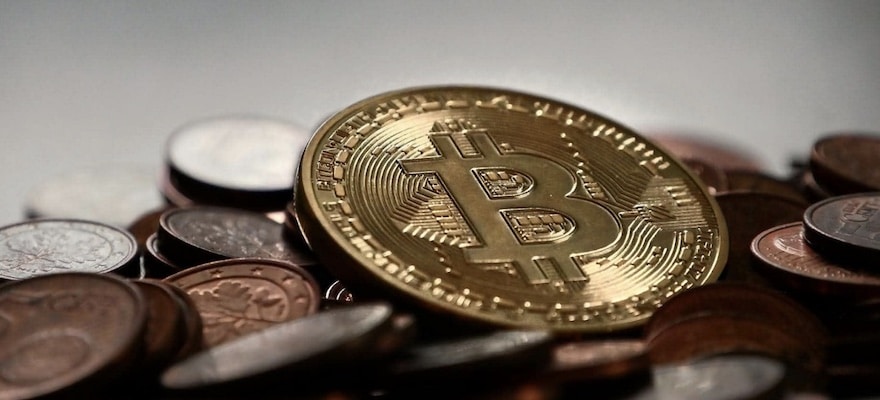
Bitcoin is continuing to meander between $30K and $40K.
FM
At times, Bitcoin looks as though it may be moving towards recapturing the $40K support line. But then, only a few hours later, Bitcoin seems to take a turn in the opposite direction. Still, the price of BTC seems to have developed some fairly resilient support around the $30K line. The only time Bitcoin managed to dip below $30K over the past few weeks, and then it quickly snapped back up.
Since that point, Bitcoin continued along the same meandering trajectory, wandering around $32K-$34K, occasionally visiting the neighbourhood of $35K-$39K. In comparison to the astronomical journey of swells and dips that Bitcoin went on earlier this year, it seems as though Bitcoin is taking it easy.
Mixed Messages from Bitcoin
So, the big question is all about what is going to come next. Will BTC crash through $30K after all? Will it surge past $40K, $50K and reach new heights above $60K? What gives?
(The answer, of course, depends on who you ask.)
Cointelegraph reported this morning that the number of active addresses on the Bitcoin network fell sharply over the course of the past several weeks, from 1.3 million to approximately 500,000, roughly 60%. The drop caused the number of active wallets on Ethereum to take the lead over Bitcoin for the third time in a month. Before this, the last time that the Ethereum network had more active wallet addresses than Bitcoin was in early 2017.
A Twitter analyst known as 'Mr Whale' pointed out that based on a weekly moving average, active addresses on the Bitcoin network have fallen to their lowest point since April of 2020, a point at which many analysts tie to BTC’s run to $60K earlier this year.
The dip in the number of active Bitcoin addresses could indicate several things. However, it is likely that this change has much to do with the exodus or dormancy of retail investors who entered the market for the first time during BTC’s big rally throughout 2020 and earlier in 2021. If these retail investors fail to actively re-enter the market, it is unclear what the long-term consequences could be.
“Bitcoin Is like a Spring. We Stretch It Too Much and We Put Too Much Leverage.”
Some analysts do not seem to be too concerned about the dip in active wallet activity. Alex Mashinsky, Chief Executive of Celsius and renowned crypto commentator, told CoinTelegraph at the Miami Bitcoin 2021 conference in June that he sees Bitcoin reaching as high as $160,000 this year. “We haven’t seen the highs yet for 2021,” he said.
Mashinsky believes that the Bitcoin market correction that took place in May was just another step along the path to new heights.
Alex Mashinsky, Founder and CEO of Celsius.
“When you go too high, too fast, you are bound for a correction,” he said, adding that “You can see my tweets in both March and February saying ‘we’re going to have a crash, we’re going to have a correction.’ I predicted $30,000.”
Mashinsky cited over-leveraged markets as the reason for Bitcoin’s volatility earlier in the year: “Bitcoin is like a spring,” he said. “We stretch it too much, and we put too much leverage. Too many people got greedy.”
Shortly after the crash in May, CNBC reported that: “Traders taking excessive risk in unregulated cryptocurrency markets” were forced to sell when prices started to drop. Therefore, what may have been a minor correction in the price of Bitcoin spiralled into a price drop of roughly 30 percent.
Leverage is not unique to Bitcoin. It can be practised across capital markets. However, the difference between leverage in Bitcoin and leverage in traditional markets is the fact that it is so unregulated. Some cryptocurrency exchanges allow their customers to take extreme risks. For example, BitMEX allows any one of its users, no matter their level of trading experience, as much as 100-to-1 leverage for cryptocurrency trades.
When Bitcoin crashed in May, $12 billion was liquidated across 800,000 leveraged Bitcoin positions. Therefore, rebuilding the price of Bitcoin in a sustainable way cannot include high amounts of leverage, lest history repeats itself.
A More Balanced Future for BTC?
Now that leverage has been rinsed from the markets, Bitcoin may indeed have an opportunity to rebuild in a healthier way.
There is some evidence to show that this growth could come from the developing world.
#Bitcoin has a market cap of $680 billion dollars.
If 1% of it is invested in El Salvador, that would increase our GDP by 25%.
On the other side, #Bitcoin will have 10 million potential new users and the fastest growing way to transfer 6 billion dollars a year in remittances.
— Nayib Bukele ?? (@nayibbukele) June 6, 2021
Additionally, Tanzanian President Suluhu Hassan told the nation’s financial chiefs to prepare for cryptocurrency: “We have witnessed the emergence of a new journey through the internet,” she declared. “I know that throughout the nation, including Tanzania, they have not accepted or started using these routes. However, my call to the Central Bank is that you should start working on that development.”
At times, Bitcoin looks as though it may be moving towards recapturing the $40K support line. But then, only a few hours later, Bitcoin seems to take a turn in the opposite direction. Still, the price of BTC seems to have developed some fairly resilient support around the $30K line. The only time Bitcoin managed to dip below $30K over the past few weeks, and then it quickly snapped back up.
Since that point, Bitcoin continued along the same meandering trajectory, wandering around $32K-$34K, occasionally visiting the neighbourhood of $35K-$39K. In comparison to the astronomical journey of swells and dips that Bitcoin went on earlier this year, it seems as though Bitcoin is taking it easy.
Mixed Messages from Bitcoin
So, the big question is all about what is going to come next. Will BTC crash through $30K after all? Will it surge past $40K, $50K and reach new heights above $60K? What gives?
(The answer, of course, depends on who you ask.)
Cointelegraph reported this morning that the number of active addresses on the Bitcoin network fell sharply over the course of the past several weeks, from 1.3 million to approximately 500,000, roughly 60%. The drop caused the number of active wallets on Ethereum to take the lead over Bitcoin for the third time in a month. Before this, the last time that the Ethereum network had more active wallet addresses than Bitcoin was in early 2017.
A Twitter analyst known as 'Mr Whale' pointed out that based on a weekly moving average, active addresses on the Bitcoin network have fallen to their lowest point since April of 2020, a point at which many analysts tie to BTC’s run to $60K earlier this year.
The dip in the number of active Bitcoin addresses could indicate several things. However, it is likely that this change has much to do with the exodus or dormancy of retail investors who entered the market for the first time during BTC’s big rally throughout 2020 and earlier in 2021. If these retail investors fail to actively re-enter the market, it is unclear what the long-term consequences could be.
“Bitcoin Is like a Spring. We Stretch It Too Much and We Put Too Much Leverage.”
Some analysts do not seem to be too concerned about the dip in active wallet activity. Alex Mashinsky, Chief Executive of Celsius and renowned crypto commentator, told CoinTelegraph at the Miami Bitcoin 2021 conference in June that he sees Bitcoin reaching as high as $160,000 this year. “We haven’t seen the highs yet for 2021,” he said.
Mashinsky believes that the Bitcoin market correction that took place in May was just another step along the path to new heights.
Alex Mashinsky, Founder and CEO of Celsius.
“When you go too high, too fast, you are bound for a correction,” he said, adding that “You can see my tweets in both March and February saying ‘we’re going to have a crash, we’re going to have a correction.’ I predicted $30,000.”
Mashinsky cited over-leveraged markets as the reason for Bitcoin’s volatility earlier in the year: “Bitcoin is like a spring,” he said. “We stretch it too much, and we put too much leverage. Too many people got greedy.”
Shortly after the crash in May, CNBC reported that: “Traders taking excessive risk in unregulated cryptocurrency markets” were forced to sell when prices started to drop. Therefore, what may have been a minor correction in the price of Bitcoin spiralled into a price drop of roughly 30 percent.
Leverage is not unique to Bitcoin. It can be practised across capital markets. However, the difference between leverage in Bitcoin and leverage in traditional markets is the fact that it is so unregulated. Some cryptocurrency exchanges allow their customers to take extreme risks. For example, BitMEX allows any one of its users, no matter their level of trading experience, as much as 100-to-1 leverage for cryptocurrency trades.
When Bitcoin crashed in May, $12 billion was liquidated across 800,000 leveraged Bitcoin positions. Therefore, rebuilding the price of Bitcoin in a sustainable way cannot include high amounts of leverage, lest history repeats itself.
A More Balanced Future for BTC?
Now that leverage has been rinsed from the markets, Bitcoin may indeed have an opportunity to rebuild in a healthier way.
There is some evidence to show that this growth could come from the developing world.
#Bitcoin has a market cap of $680 billion dollars.
If 1% of it is invested in El Salvador, that would increase our GDP by 25%.
On the other side, #Bitcoin will have 10 million potential new users and the fastest growing way to transfer 6 billion dollars a year in remittances.
— Nayib Bukele ?? (@nayibbukele) June 6, 2021
Additionally, Tanzanian President Suluhu Hassan told the nation’s financial chiefs to prepare for cryptocurrency: “We have witnessed the emergence of a new journey through the internet,” she declared. “I know that throughout the nation, including Tanzania, they have not accepted or started using these routes. However, my call to the Central Bank is that you should start working on that development.”
Rachel is a self-taught crypto geek and a passionate writer. She believes in the power that the written word has to educate, connect and empower individuals to make positive and powerful financial choices. She is the Podcast Host and a Cryptocurrency Editor at Finance Magnates.
Crypto Built More Rails, but the Next Battle Is Over How Much Work a Dollar Can Do
Featured Videos
FP Markets Winner Spotlight 🏆 | Global Broker of the Year 2025 #Trading #Broker #Innovation #Shorts
FP Markets Winner Spotlight 🏆 | Global Broker of the Year 2025 #Trading #Broker #Innovation #Shorts
FP Markets Winner Spotlight 🏆 | Global Broker of the Year 2025 #Trading #Broker #Innovation #Shorts
FP Markets Winner Spotlight 🏆 | Global Broker of the Year 2025 #Trading #Broker #Innovation #Shorts
FP Markets takes the spotlight as Global Broker of the Year 2025 at the Finance Magnates Awards.
Martin Stoilov, Head of Client Experience, shares that trust, innovation, and people played a key role in the company’s success, supported by a strong foundation of integrity and client-centricity.
Following this milestone, FP Markets continues to focus on growth, technology investment, and its core values of transparency and excellence.
👉 Be part of FM Awards 2026: https://awards.financemagnates.com/#nominate
FP Markets takes the spotlight as Global Broker of the Year 2025 at the Finance Magnates Awards.
Martin Stoilov, Head of Client Experience, shares that trust, innovation, and people played a key role in the company’s success, supported by a strong foundation of integrity and client-centricity.
Following this milestone, FP Markets continues to focus on growth, technology investment, and its core values of transparency and excellence.
👉 Be part of FM Awards 2026: https://awards.financemagnates.com/#nominate
FP Markets takes the spotlight as Global Broker of the Year 2025 at the Finance Magnates Awards.
Martin Stoilov, Head of Client Experience, shares that trust, innovation, and people played a key role in the company’s success, supported by a strong foundation of integrity and client-centricity.
Following this milestone, FP Markets continues to focus on growth, technology investment, and its core values of transparency and excellence.
👉 Be part of FM Awards 2026: https://awards.financemagnates.com/#nominate
FP Markets takes the spotlight as Global Broker of the Year 2025 at the Finance Magnates Awards.
Martin Stoilov, Head of Client Experience, shares that trust, innovation, and people played a key role in the company’s success, supported by a strong foundation of integrity and client-centricity.
Following this milestone, FP Markets continues to focus on growth, technology investment, and its core values of transparency and excellence.
👉 Be part of FM Awards 2026: https://awards.financemagnates.com/#nominate
In this video, we review @HolaPrimeMarketsOfficial, a multi-asset forex and CFDs broker offering different account types, trading platforms, and flexible trading conditions.
We cover the broker’s overall offering, including account options, trading environment, platforms like MT4 and MT5, and additional services such as managed accounts and fast withdrawals.
Watch the full video to see if Hola Prime Markets fits your trading needs.
📣 Stay up to date with the latest in finance and trading. Follow Finance Magnates for industry news, insights, and global event coverage.
Connect with us:
🔗 LinkedIn: /financemagnates
👍 Facebook: /financemagnates
📸 Instagram: https://www.instagram.com/financemagnates
🐦 X: https://x.com/financemagnates
🎥 TikTok: https://www.tiktok.com/tag/financemagnates
▶️ YouTube: /@financemagnates_official
#HolaPrime #ForexBroker #CFDTrading #FinanceMagnates #Trading #Forex #BrokerReview
In this video, we review @HolaPrimeMarketsOfficial, a multi-asset forex and CFDs broker offering different account types, trading platforms, and flexible trading conditions.
We cover the broker’s overall offering, including account options, trading environment, platforms like MT4 and MT5, and additional services such as managed accounts and fast withdrawals.
Watch the full video to see if Hola Prime Markets fits your trading needs.
📣 Stay up to date with the latest in finance and trading. Follow Finance Magnates for industry news, insights, and global event coverage.
Connect with us:
🔗 LinkedIn: /financemagnates
👍 Facebook: /financemagnates
📸 Instagram: https://www.instagram.com/financemagnates
🐦 X: https://x.com/financemagnates
🎥 TikTok: https://www.tiktok.com/tag/financemagnates
▶️ YouTube: /@financemagnates_official
#HolaPrime #ForexBroker #CFDTrading #FinanceMagnates #Trading #Forex #BrokerReview
In this video, we review @HolaPrimeMarketsOfficial, a multi-asset forex and CFDs broker offering different account types, trading platforms, and flexible trading conditions.
We cover the broker’s overall offering, including account options, trading environment, platforms like MT4 and MT5, and additional services such as managed accounts and fast withdrawals.
Watch the full video to see if Hola Prime Markets fits your trading needs.
📣 Stay up to date with the latest in finance and trading. Follow Finance Magnates for industry news, insights, and global event coverage.
Connect with us:
🔗 LinkedIn: /financemagnates
👍 Facebook: /financemagnates
📸 Instagram: https://www.instagram.com/financemagnates
🐦 X: https://x.com/financemagnates
🎥 TikTok: https://www.tiktok.com/tag/financemagnates
▶️ YouTube: /@financemagnates_official
#HolaPrime #ForexBroker #CFDTrading #FinanceMagnates #Trading #Forex #BrokerReview
In this video, we review @HolaPrimeMarketsOfficial, a multi-asset forex and CFDs broker offering different account types, trading platforms, and flexible trading conditions.
We cover the broker’s overall offering, including account options, trading environment, platforms like MT4 and MT5, and additional services such as managed accounts and fast withdrawals.
Watch the full video to see if Hola Prime Markets fits your trading needs.
📣 Stay up to date with the latest in finance and trading. Follow Finance Magnates for industry news, insights, and global event coverage.
Connect with us:
🔗 LinkedIn: /financemagnates
👍 Facebook: /financemagnates
📸 Instagram: https://www.instagram.com/financemagnates
🐦 X: https://x.com/financemagnates
🎥 TikTok: https://www.tiktok.com/tag/financemagnates
▶️ YouTube: /@financemagnates_official
#HolaPrime #ForexBroker #CFDTrading #FinanceMagnates #Trading #Forex #BrokerReview
In this video, we review @HolaPrimeMarketsOfficial, a multi-asset forex and CFDs broker offering different account types, trading platforms, and flexible trading conditions.
We cover the broker’s overall offering, including account options, trading environment, platforms like MT4 and MT5, and additional services such as managed accounts and fast withdrawals.
Watch the full video to see if Hola Prime Markets fits your trading needs.
📣 Stay up to date with the latest in finance and trading. Follow Finance Magnates for industry news, insights, and global event coverage.
Connect with us:
🔗 LinkedIn: /financemagnates
👍 Facebook: /financemagnates
📸 Instagram: https://www.instagram.com/financemagnates
🐦 X: https://x.com/financemagnates
🎥 TikTok: https://www.tiktok.com/tag/financemagnates
▶️ YouTube: /@financemagnates_official
#HolaPrime #ForexBroker #CFDTrading #FinanceMagnates #Trading #Forex #BrokerReview
In this video, we review @HolaPrimeMarketsOfficial, a multi-asset forex and CFDs broker offering different account types, trading platforms, and flexible trading conditions.
We cover the broker’s overall offering, including account options, trading environment, platforms like MT4 and MT5, and additional services such as managed accounts and fast withdrawals.
Watch the full video to see if Hola Prime Markets fits your trading needs.
📣 Stay up to date with the latest in finance and trading. Follow Finance Magnates for industry news, insights, and global event coverage.
Connect with us:
🔗 LinkedIn: /financemagnates
👍 Facebook: /financemagnates
📸 Instagram: https://www.instagram.com/financemagnates
🐦 X: https://x.com/financemagnates
🎥 TikTok: https://www.tiktok.com/tag/financemagnates
▶️ YouTube: /@financemagnates_official
#HolaPrime #ForexBroker #CFDTrading #FinanceMagnates #Trading #Forex #BrokerReview
Hola Prime Review: What You Need to Know | Full Breakdown by Finance Magnates
Hola Prime Review: What You Need to Know | Full Breakdown by Finance Magnates
Hola Prime Review: What You Need to Know | Full Breakdown by Finance Magnates
Hola Prime Review: What You Need to Know | Full Breakdown by Finance Magnates
Hola Prime Review: What You Need to Know | Full Breakdown by Finance Magnates
Hola Prime Review: What You Need to Know | Full Breakdown by Finance Magnates
In this video, we review @HolaPrime_Global, a proprietary trading firm offering evaluation programs and performance-based payouts in simulated market environments.
We cover how the challenge model works, including account types, profit splits (up to 95%), trading rules, and what it takes to reach a funded account. You’ll also learn about available platforms like MT4, MT5, cTrader, and more, along with insights into payouts, support, and trading conditions.
Watch the full video to see if Hola Prime fits your trading style.
📣 Stay up to date with the latest in finance and trading. Follow Finance Magnates for industry news, insights, and global event coverage.
Connect with us:
🔗 LinkedIn: /financemagnates
👍 Facebook: /financemagnates
📸 Instagram: https://www.instagram.com/financemagnates
🐦 X: https://x.com/financemagnates
🎥 TikTok: https://www.tiktok.com/tag/financemagnates
▶️ YouTube: /@financemagnates_official
#HolaPrime #PropFirm #Trading #FinanceMagnates #Forex #FuturesTrading #TradingReview #PropFirmReview
In this video, we review @HolaPrime_Global, a proprietary trading firm offering evaluation programs and performance-based payouts in simulated market environments.
We cover how the challenge model works, including account types, profit splits (up to 95%), trading rules, and what it takes to reach a funded account. You’ll also learn about available platforms like MT4, MT5, cTrader, and more, along with insights into payouts, support, and trading conditions.
Watch the full video to see if Hola Prime fits your trading style.
📣 Stay up to date with the latest in finance and trading. Follow Finance Magnates for industry news, insights, and global event coverage.
Connect with us:
🔗 LinkedIn: /financemagnates
👍 Facebook: /financemagnates
📸 Instagram: https://www.instagram.com/financemagnates
🐦 X: https://x.com/financemagnates
🎥 TikTok: https://www.tiktok.com/tag/financemagnates
▶️ YouTube: /@financemagnates_official
#HolaPrime #PropFirm #Trading #FinanceMagnates #Forex #FuturesTrading #TradingReview #PropFirmReview
In this video, we review @HolaPrime_Global, a proprietary trading firm offering evaluation programs and performance-based payouts in simulated market environments.
We cover how the challenge model works, including account types, profit splits (up to 95%), trading rules, and what it takes to reach a funded account. You’ll also learn about available platforms like MT4, MT5, cTrader, and more, along with insights into payouts, support, and trading conditions.
Watch the full video to see if Hola Prime fits your trading style.
📣 Stay up to date with the latest in finance and trading. Follow Finance Magnates for industry news, insights, and global event coverage.
Connect with us:
🔗 LinkedIn: /financemagnates
👍 Facebook: /financemagnates
📸 Instagram: https://www.instagram.com/financemagnates
🐦 X: https://x.com/financemagnates
🎥 TikTok: https://www.tiktok.com/tag/financemagnates
▶️ YouTube: /@financemagnates_official
#HolaPrime #PropFirm #Trading #FinanceMagnates #Forex #FuturesTrading #TradingReview #PropFirmReview
In this video, we review @HolaPrime_Global, a proprietary trading firm offering evaluation programs and performance-based payouts in simulated market environments.
We cover how the challenge model works, including account types, profit splits (up to 95%), trading rules, and what it takes to reach a funded account. You’ll also learn about available platforms like MT4, MT5, cTrader, and more, along with insights into payouts, support, and trading conditions.
Watch the full video to see if Hola Prime fits your trading style.
📣 Stay up to date with the latest in finance and trading. Follow Finance Magnates for industry news, insights, and global event coverage.
Connect with us:
🔗 LinkedIn: /financemagnates
👍 Facebook: /financemagnates
📸 Instagram: https://www.instagram.com/financemagnates
🐦 X: https://x.com/financemagnates
🎥 TikTok: https://www.tiktok.com/tag/financemagnates
▶️ YouTube: /@financemagnates_official
#HolaPrime #PropFirm #Trading #FinanceMagnates #Forex #FuturesTrading #TradingReview #PropFirmReview
In this video, we review @HolaPrime_Global, a proprietary trading firm offering evaluation programs and performance-based payouts in simulated market environments.
We cover how the challenge model works, including account types, profit splits (up to 95%), trading rules, and what it takes to reach a funded account. You’ll also learn about available platforms like MT4, MT5, cTrader, and more, along with insights into payouts, support, and trading conditions.
Watch the full video to see if Hola Prime fits your trading style.
📣 Stay up to date with the latest in finance and trading. Follow Finance Magnates for industry news, insights, and global event coverage.
Connect with us:
🔗 LinkedIn: /financemagnates
👍 Facebook: /financemagnates
📸 Instagram: https://www.instagram.com/financemagnates
🐦 X: https://x.com/financemagnates
🎥 TikTok: https://www.tiktok.com/tag/financemagnates
▶️ YouTube: /@financemagnates_official
#HolaPrime #PropFirm #Trading #FinanceMagnates #Forex #FuturesTrading #TradingReview #PropFirmReview
In this video, we review @HolaPrime_Global, a proprietary trading firm offering evaluation programs and performance-based payouts in simulated market environments.
We cover how the challenge model works, including account types, profit splits (up to 95%), trading rules, and what it takes to reach a funded account. You’ll also learn about available platforms like MT4, MT5, cTrader, and more, along with insights into payouts, support, and trading conditions.
Watch the full video to see if Hola Prime fits your trading style.
📣 Stay up to date with the latest in finance and trading. Follow Finance Magnates for industry news, insights, and global event coverage.
Connect with us:
🔗 LinkedIn: /financemagnates
👍 Facebook: /financemagnates
📸 Instagram: https://www.instagram.com/financemagnates
🐦 X: https://x.com/financemagnates
🎥 TikTok: https://www.tiktok.com/tag/financemagnates
▶️ YouTube: /@financemagnates_official
#HolaPrime #PropFirm #Trading #FinanceMagnates #Forex #FuturesTrading #TradingReview #PropFirmReview
Axi Winner Spotlight 🏆 | Global Most Innovative Broker 2025 #Innovation #Trading #Fintech #Broker
Axi Winner Spotlight 🏆 | Global Most Innovative Broker 2025 #Innovation #Trading #Fintech #Broker
Axi Winner Spotlight 🏆 | Global Most Innovative Broker 2025 #Innovation #Trading #Fintech #Broker
Axi Winner Spotlight 🏆 | Global Most Innovative Broker 2025 #Innovation #Trading #Fintech #Broker
Axi Winner Spotlight 🏆 | Global Most Innovative Broker 2025 #Innovation #Trading #Fintech #Broker
Axi Winner Spotlight 🏆 | Global Most Innovative Broker 2025 #Innovation #Trading #Fintech #Broker
Axi takes the spotlight at the Finance Magnates Awards, winning Global Most Innovative Broker 2025.
Olivia Xenofontos and Ivanna Openko share how the team will feel: proud, motivated, and ready to keep delivering.
They also describe the night as well-organized, focused, and enjoyable for all.
👉 Be part of FM Awards 2026.
Axi takes the spotlight at the Finance Magnates Awards, winning Global Most Innovative Broker 2025.
Olivia Xenofontos and Ivanna Openko share how the team will feel: proud, motivated, and ready to keep delivering.
They also describe the night as well-organized, focused, and enjoyable for all.
👉 Be part of FM Awards 2026.
Axi takes the spotlight at the Finance Magnates Awards, winning Global Most Innovative Broker 2025.
Olivia Xenofontos and Ivanna Openko share how the team will feel: proud, motivated, and ready to keep delivering.
They also describe the night as well-organized, focused, and enjoyable for all.
👉 Be part of FM Awards 2026.
Axi takes the spotlight at the Finance Magnates Awards, winning Global Most Innovative Broker 2025.
Olivia Xenofontos and Ivanna Openko share how the team will feel: proud, motivated, and ready to keep delivering.
They also describe the night as well-organized, focused, and enjoyable for all.
👉 Be part of FM Awards 2026.
Axi takes the spotlight at the Finance Magnates Awards, winning Global Most Innovative Broker 2025.
Olivia Xenofontos and Ivanna Openko share how the team will feel: proud, motivated, and ready to keep delivering.
They also describe the night as well-organized, focused, and enjoyable for all.
👉 Be part of FM Awards 2026.
Axi takes the spotlight at the Finance Magnates Awards, winning Global Most Innovative Broker 2025.
Olivia Xenofontos and Ivanna Openko share how the team will feel: proud, motivated, and ready to keep delivering.
They also describe the night as well-organized, focused, and enjoyable for all.
👉 Be part of FM Awards 2026.
Recognition that matters.
Built on transparency.
Driven by the industry.
The Finance Magnates Awards 2026.
Nominations are now open.
🔗 https://awards.financemagnates.com/?utm_source=SM&utm_medium=social&utm_campaign=recognition-matters
Recognition that matters.
Built on transparency.
Driven by the industry.
The Finance Magnates Awards 2026.
Nominations are now open.
🔗 https://awards.financemagnates.com/?utm_source=SM&utm_medium=social&utm_campaign=recognition-matters
Recognition that matters.
Built on transparency.
Driven by the industry.
The Finance Magnates Awards 2026.
Nominations are now open.
🔗 https://awards.financemagnates.com/?utm_source=SM&utm_medium=social&utm_campaign=recognition-matters
Recognition that matters.
Built on transparency.
Driven by the industry.
The Finance Magnates Awards 2026.
Nominations are now open.
🔗 https://awards.financemagnates.com/?utm_source=SM&utm_medium=social&utm_campaign=recognition-matters
Recognition that matters.
Built on transparency.
Driven by the industry.
The Finance Magnates Awards 2026.
Nominations are now open.
🔗 https://awards.financemagnates.com/?utm_source=SM&utm_medium=social&utm_campaign=recognition-matters
Recognition that matters.
Built on transparency.
Driven by the industry.
The Finance Magnates Awards 2026.
Nominations are now open.
🔗 https://awards.financemagnates.com/?utm_source=SM&utm_medium=social&utm_campaign=recognition-matters