As the week draws to a close, the distribution of value in crypto markets is continuing to shift toward altcoins.
FM
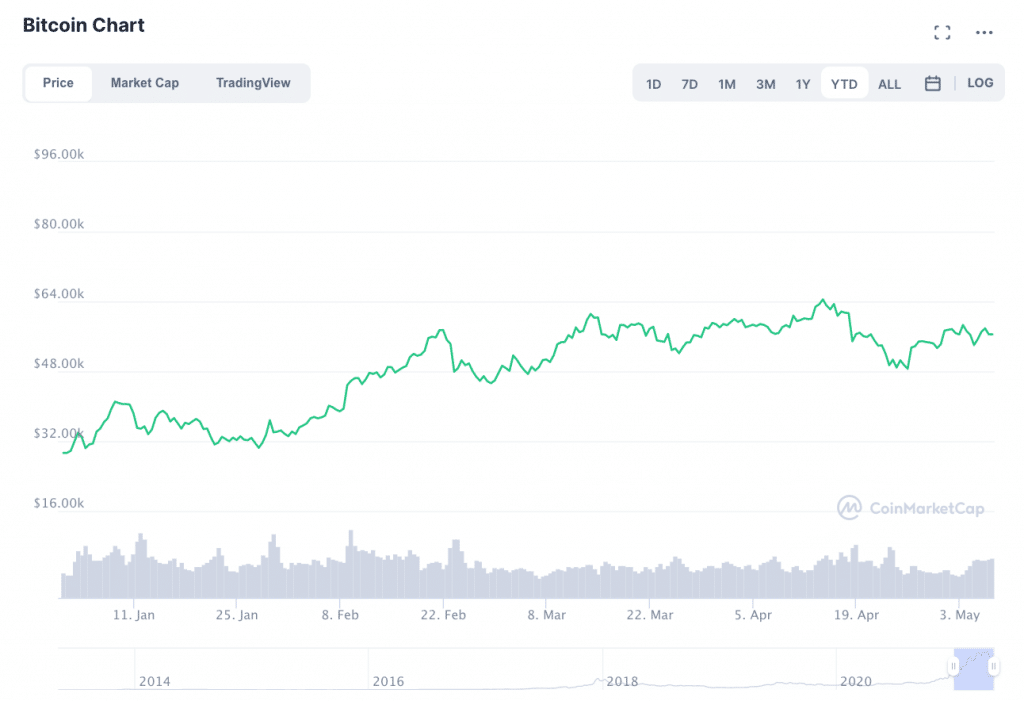
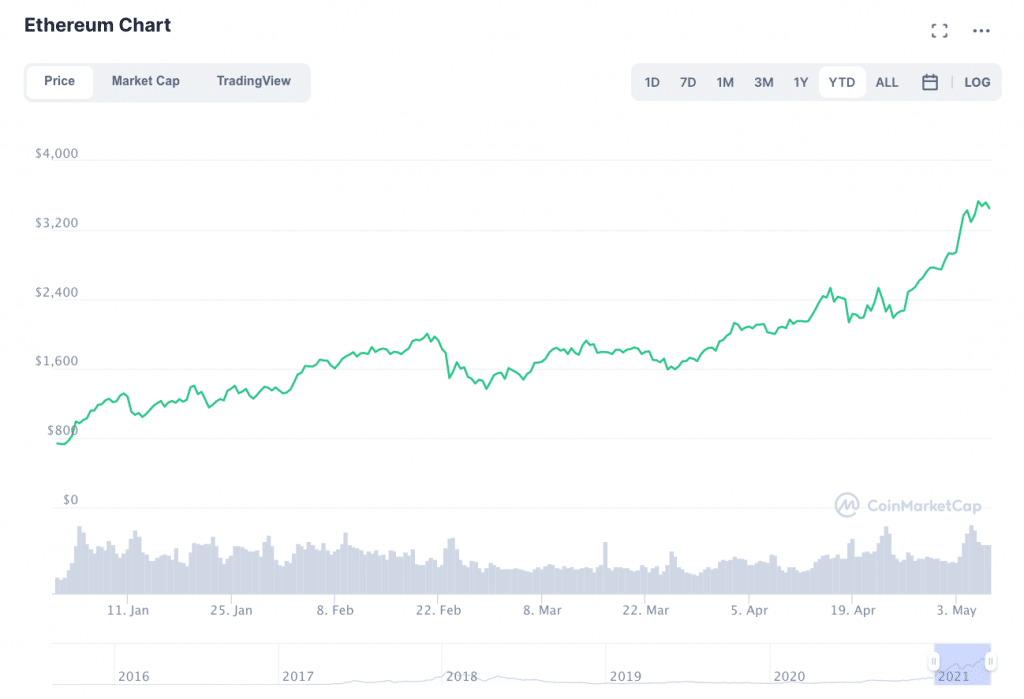
Bitcoin continued to trade sideways this week as Ether and other altcoins took the spotlight. ETH’s most recent all-time high (ATH) of $3,541.46 took place on Wednesday; by Friday, the price had settled at around $3,460.27. Dogecoin (DOGE) also hit a new ATH yesterday of roughly $0.69; CoinTelegraph called DOGE’s rise “the leading indicator for alt season.”
Matthew Unger, the Founder of iComply, told Finance Magnates that DOGE’s rise is “the biggest news of the past 3 months.”
“We can expect to see DOGE become a major contender as it enters the top 3 cryptos. The network continues to be underestimated because it was ‘made as a joke,” he said, adding that: “Fundamentally, DOGE has a lot going for it and that simply has not yet been priced in.”
Everyone wants to know where we are at in my "Path to Altseason" chart.
We're in the Phase 2-3 overlap. Large caps are starting to move. Phase 2 has heated up and we're seeing early signs of Phase 3. PHASE 3 incoming! pic.twitter.com/tCZdNx995c
For one thing, the wealth distribution of cryptocurrency markets seems to be shifting. Michael Dalesandro, Founder and Chief Executive of Chicago-based RockItCoin, told Finance Magnates that he believes that: “we are starting to see a maturing of the crypto marketplace.”
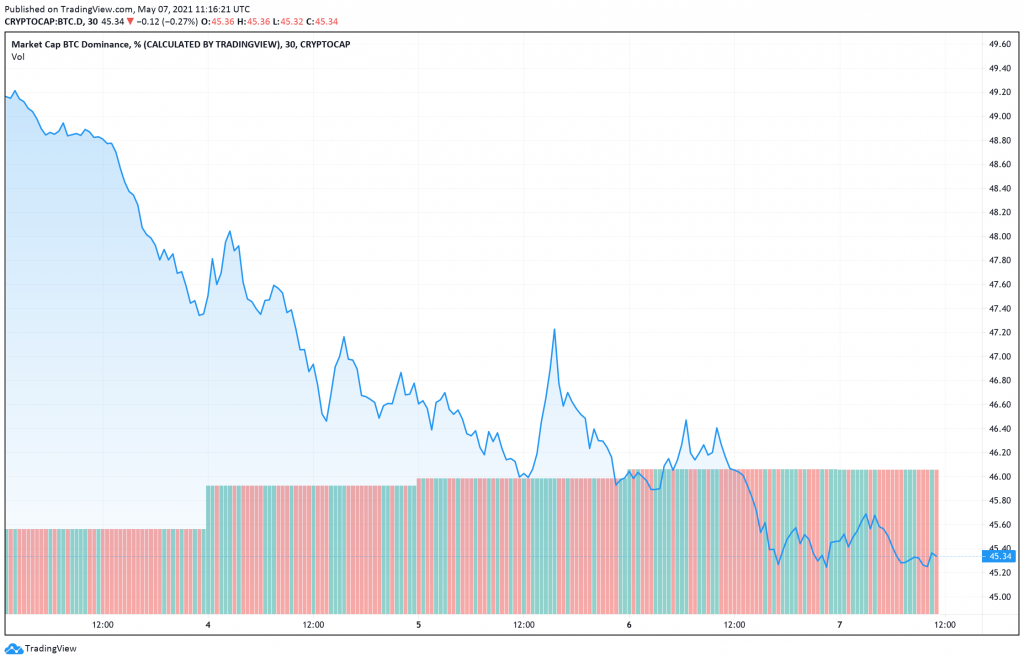
“Bitcoin's dominance by market cap has dropped from 75% to below 50% in 2021 so more capital is flowing to the opportunities that exist in altcoins which have shown dramatic increases,” he added. “But, I think this is just the usual cooling-off we have seen with Bitcoin in the past; I fully expect it to continue its climb.”
Still, the dynamics in the market are shifting so much so that some analysts believe that crypto markets are in an 'alt season'. Chad Steinglass, Head of Trading at CrossTower, told Finance Magnates that: “as BTC has been struggling to find direction for weeks, ETH and many other altcoins have taken over traders’ attention.”
“After consolidation in BTC towards the end of April, bulls got their hopes up for an announcement of another company adding BTC to currency reserves during the heart of tech earnings season,” he said. “However, earnings reports came and went with no mention of BTC, and in fact, of the major companies that had already been involved, TSLA trimmed their holdings somewhat and MSTR did not add during the recent dip.”
Still, there was “some positive news for BTC this week” when NYDIG and Fidelity announced that they would be “partnering to offer crypto services to retail bank customers,” a factor that Steinglass believes will “further the narrative of mass adoption.”
Bitcoin Trades Sideways as Altcoins Soak Up Investor Capital in Crypto Markets
Benjamin Leff, Chief Operating Officer of Sheesha Finance, told Finance Magnates that: “Bitcoin has taken a backseat while altcoin season picks up.”
In other words, the strong performances of many altcoins over the last several weeks seem to have drawn an increasing number of investors.
What are the other cryptocurrencies that may have a higher earning potential than Bitcoin? All eyes this week were on Ether (ETH). The native token of the Ethereum network reached yet another all-time high.
Indeed, this whole year has been a series of new ATHs for ETH, and, as such, ETH has outperformed BTC several times over. Dalesandro told Finance Magnates that: “Bitcoin is purely a cryptocurrency, whereas Ethereum is a cryptocurrency and a decentralised software platform.”
“It also supports many ERC20 tokens, which I believe is drawing funds away from Bitcoin and toward Ethereum,” he added.
“The value of ETH that is locked in DeFi staking pools has reduced the supply of coins available for trading, which has increased its scarcity,” he said. Combined with the anticipation of the move to Eth2.0, “which will move the network away from Proof-of-Work and towards Proof-of-Stake and deflationary characteristics, and many investors are looking to accumulate ETH in advance of the changes in the network.”
“Lastly, purely from a technical standpoint, any crypto that is making new highs is generating its own buzz and the move can become a self-reinforcing phenomenon, at least for a little while,” Steinglass added.
CrossTower’s Chad Steinglass.
Ripple’s Court Battle with the SEC Continues
As ETH continues to surge, XRP, another popular altcoin, is continuing to trade sideways. Some analysts believe that this may be because of the ongoing battle that the currency’s creato, Ripple Labs, is fighting against the U.S. Securities and Exchange Commission.
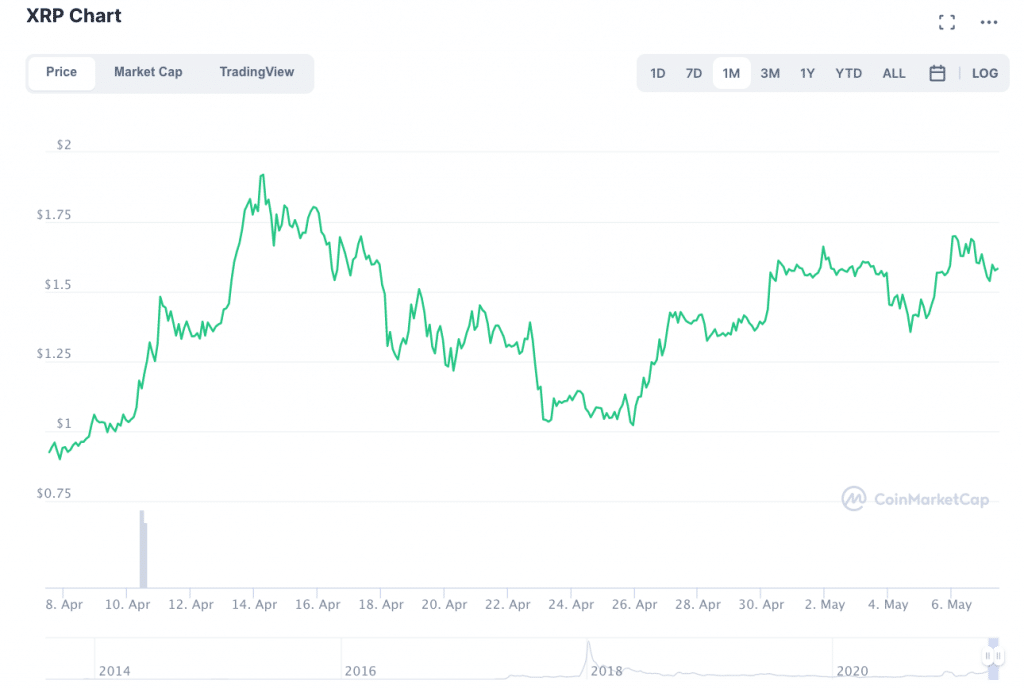
Throughout the duration of the case, Ripple Labs has maintained that Ripple remains a currency, and, at times, it seems that Ripple may be leading in the legal battle. Analysts have claimed that several court victories may have boosted the price of XRP throughout 2020: when the lawsuit hit in December, XRP’s value fell to roughly $0.20. At press time, the price had increased to $1.58.
However, the outcome of the case is still unclear, and it could be that investors are biding their time before making big decisions about what to do with their holdings. After a peak of $1.91 in April, XRP has traded sideways for most of the last three weeks.
What could the future hold for XRP? Benjamin Leff, Chief Operating Officer of Sheesha Finance, told Finance Magnates that: “there has been discussion that Ripple may go public once the case with the SEC settles.”
Leff also pointed to recent reports of large purchases of XRP. Citing data from Santiment, CryptoSlate reported on April 29th that the number of addresses holding more than 1,000,000 XRP, colloquially known as 'XRP whales', had increased 1.25%. This equated to approximately 19 new 'whales'.
What’s Next for XRP?
However, the fate of XRP still hangs in the balance of what happens next in court. Steinglass explained to Finance Magnates that: “XRP has had its ups and downs for quite some time, with a strong cohort of fierce defenders on one side, and often the SEC and the long arm of the law on the other side.”
Additionally, Dalesandro pointed out that the leadership of the SEC changed hands after the Commission brought the lawsuit. “Now we have a somewhat crypto-friendly chairman,” he said. Additionally, he believes that: “the SEC’s recent announcement that it may take enforcement action against XRP investors makes them look amateur and reinforces the sense that their case is weakening.”
Do you agree or disagree? Let us know in the comments below.
Bitcoin continued to trade sideways this week as Ether and other altcoins took the spotlight. ETH’s most recent all-time high (ATH) of $3,541.46 took place on Wednesday; by Friday, the price had settled at around $3,460.27. Dogecoin (DOGE) also hit a new ATH yesterday of roughly $0.69; CoinTelegraph called DOGE’s rise “the leading indicator for alt season.”
Matthew Unger, the Founder of iComply, told Finance Magnates that DOGE’s rise is “the biggest news of the past 3 months.”
“We can expect to see DOGE become a major contender as it enters the top 3 cryptos. The network continues to be underestimated because it was ‘made as a joke,” he said, adding that: “Fundamentally, DOGE has a lot going for it and that simply has not yet been priced in.”
Everyone wants to know where we are at in my "Path to Altseason" chart.
We're in the Phase 2-3 overlap. Large caps are starting to move. Phase 2 has heated up and we're seeing early signs of Phase 3. PHASE 3 incoming! pic.twitter.com/tCZdNx995c
For one thing, the wealth distribution of cryptocurrency markets seems to be shifting. Michael Dalesandro, Founder and Chief Executive of Chicago-based RockItCoin, told Finance Magnates that he believes that: “we are starting to see a maturing of the crypto marketplace.”
“Bitcoin's dominance by market cap has dropped from 75% to below 50% in 2021 so more capital is flowing to the opportunities that exist in altcoins which have shown dramatic increases,” he added. “But, I think this is just the usual cooling-off we have seen with Bitcoin in the past; I fully expect it to continue its climb.”
Still, the dynamics in the market are shifting so much so that some analysts believe that crypto markets are in an 'alt season'. Chad Steinglass, Head of Trading at CrossTower, told Finance Magnates that: “as BTC has been struggling to find direction for weeks, ETH and many other altcoins have taken over traders’ attention.”
“After consolidation in BTC towards the end of April, bulls got their hopes up for an announcement of another company adding BTC to currency reserves during the heart of tech earnings season,” he said. “However, earnings reports came and went with no mention of BTC, and in fact, of the major companies that had already been involved, TSLA trimmed their holdings somewhat and MSTR did not add during the recent dip.”
Still, there was “some positive news for BTC this week” when NYDIG and Fidelity announced that they would be “partnering to offer crypto services to retail bank customers,” a factor that Steinglass believes will “further the narrative of mass adoption.”
Bitcoin Trades Sideways as Altcoins Soak Up Investor Capital in Crypto Markets
Benjamin Leff, Chief Operating Officer of Sheesha Finance, told Finance Magnates that: “Bitcoin has taken a backseat while altcoin season picks up.”
In other words, the strong performances of many altcoins over the last several weeks seem to have drawn an increasing number of investors.
What are the other cryptocurrencies that may have a higher earning potential than Bitcoin? All eyes this week were on Ether (ETH). The native token of the Ethereum network reached yet another all-time high.
Indeed, this whole year has been a series of new ATHs for ETH, and, as such, ETH has outperformed BTC several times over. Dalesandro told Finance Magnates that: “Bitcoin is purely a cryptocurrency, whereas Ethereum is a cryptocurrency and a decentralised software platform.”
“It also supports many ERC20 tokens, which I believe is drawing funds away from Bitcoin and toward Ethereum,” he added.
“The value of ETH that is locked in DeFi staking pools has reduced the supply of coins available for trading, which has increased its scarcity,” he said. Combined with the anticipation of the move to Eth2.0, “which will move the network away from Proof-of-Work and towards Proof-of-Stake and deflationary characteristics, and many investors are looking to accumulate ETH in advance of the changes in the network.”
“Lastly, purely from a technical standpoint, any crypto that is making new highs is generating its own buzz and the move can become a self-reinforcing phenomenon, at least for a little while,” Steinglass added.
CrossTower’s Chad Steinglass.
Ripple’s Court Battle with the SEC Continues
As ETH continues to surge, XRP, another popular altcoin, is continuing to trade sideways. Some analysts believe that this may be because of the ongoing battle that the currency’s creato, Ripple Labs, is fighting against the U.S. Securities and Exchange Commission.
Throughout the duration of the case, Ripple Labs has maintained that Ripple remains a currency, and, at times, it seems that Ripple may be leading in the legal battle. Analysts have claimed that several court victories may have boosted the price of XRP throughout 2020: when the lawsuit hit in December, XRP’s value fell to roughly $0.20. At press time, the price had increased to $1.58.
However, the outcome of the case is still unclear, and it could be that investors are biding their time before making big decisions about what to do with their holdings. After a peak of $1.91 in April, XRP has traded sideways for most of the last three weeks.
What could the future hold for XRP? Benjamin Leff, Chief Operating Officer of Sheesha Finance, told Finance Magnates that: “there has been discussion that Ripple may go public once the case with the SEC settles.”
Leff also pointed to recent reports of large purchases of XRP. Citing data from Santiment, CryptoSlate reported on April 29th that the number of addresses holding more than 1,000,000 XRP, colloquially known as 'XRP whales', had increased 1.25%. This equated to approximately 19 new 'whales'.
What’s Next for XRP?
However, the fate of XRP still hangs in the balance of what happens next in court. Steinglass explained to Finance Magnates that: “XRP has had its ups and downs for quite some time, with a strong cohort of fierce defenders on one side, and often the SEC and the long arm of the law on the other side.”
Additionally, Dalesandro pointed out that the leadership of the SEC changed hands after the Commission brought the lawsuit. “Now we have a somewhat crypto-friendly chairman,” he said. Additionally, he believes that: “the SEC’s recent announcement that it may take enforcement action against XRP investors makes them look amateur and reinforces the sense that their case is weakening.”
Do you agree or disagree? Let us know in the comments below.
Rachel is a self-taught crypto geek and a passionate writer. She believes in the power that the written word has to educate, connect and empower individuals to make positive and powerful financial choices. She is the Podcast Host and a Cryptocurrency Editor at Finance Magnates.
Moomoo Adds Crossover’s Crypto Execution Network for US Retail Traders
Featured Videos
AvaTrade to Acquire Most of FXCM; NAGA Raises $8M
AvaTrade to Acquire Most of FXCM; NAGA Raises $8M
AvaTrade to Acquire Most of FXCM; NAGA Raises $8M
AvaTrade to Acquire Most of FXCM; NAGA Raises $8M
Today’s financial news recap covers AvaTrade agrees to acquire most of FXCM, NAGA secures eight million dollars in new financing, and Wise seeks a tax settlement in the UK.
Finance Magnates Daily Recap brings you the latest news from forex and CFD brokers, fintech, payments, cryptocurrency, digital assets, trading platforms, financial regulation and global markets.
Get the key company news, executive moves, deals, regulatory updates and market developments of the day, in just a few minutes. New episodes published every weekday.
Read more: https://www.financemagnates.com
#FinanceMagnates #ForexNews #FintechNews
Today’s financial news recap covers AvaTrade agrees to acquire most of FXCM, NAGA secures eight million dollars in new financing, and Wise seeks a tax settlement in the UK.
Finance Magnates Daily Recap brings you the latest news from forex and CFD brokers, fintech, payments, cryptocurrency, digital assets, trading platforms, financial regulation and global markets.
Get the key company news, executive moves, deals, regulatory updates and market developments of the day, in just a few minutes. New episodes published every weekday.
Read more: https://www.financemagnates.com
#FinanceMagnates #ForexNews #FintechNews
Today’s financial news recap covers AvaTrade agrees to acquire most of FXCM, NAGA secures eight million dollars in new financing, and Wise seeks a tax settlement in the UK.
Finance Magnates Daily Recap brings you the latest news from forex and CFD brokers, fintech, payments, cryptocurrency, digital assets, trading platforms, financial regulation and global markets.
Get the key company news, executive moves, deals, regulatory updates and market developments of the day, in just a few minutes. New episodes published every weekday.
Read more: https://www.financemagnates.com
#FinanceMagnates #ForexNews #FintechNews
Today’s financial news recap covers AvaTrade agrees to acquire most of FXCM, NAGA secures eight million dollars in new financing, and Wise seeks a tax settlement in the UK.
Finance Magnates Daily Recap brings you the latest news from forex and CFD brokers, fintech, payments, cryptocurrency, digital assets, trading platforms, financial regulation and global markets.
Get the key company news, executive moves, deals, regulatory updates and market developments of the day, in just a few minutes. New episodes published every weekday.
Read more: https://www.financemagnates.com
#FinanceMagnates #ForexNews #FintechNews
XTB Adds Overnight US Stock Trading; Nasdaq Ventures Invests in One Trading
XTB Adds Overnight US Stock Trading; Nasdaq Ventures Invests in One Trading
XTB Adds Overnight US Stock Trading; Nasdaq Ventures Invests in One Trading
XTB Adds Overnight US Stock Trading; Nasdaq Ventures Invests in One Trading
XTB Adds Overnight US Stock Trading; Nasdaq Ventures Invests in One Trading
XTB Adds Overnight US Stock Trading; Nasdaq Ventures Invests in One Trading
Today’s financial news recap covers XTB expands overnight US stock trading, Fortrade reports higher revenue, Nasdaq backs One Trading, and Vest Labs raises 13 million dollars.
Finance Magnates Daily Recap brings you the latest news from forex and CFD brokers, fintech, payments, cryptocurrency, digital assets, trading platforms, financial regulation and global markets.
Get the key company news, executive moves, deals, regulatory updates and market developments of the day, in just a few minutes. New episodes published every weekday.
Read more: https://www.financemagnates.com
#FinanceMagnates #ForexNews #FintechNews
Today’s financial news recap covers XTB expands overnight US stock trading, Fortrade reports higher revenue, Nasdaq backs One Trading, and Vest Labs raises 13 million dollars.
Finance Magnates Daily Recap brings you the latest news from forex and CFD brokers, fintech, payments, cryptocurrency, digital assets, trading platforms, financial regulation and global markets.
Get the key company news, executive moves, deals, regulatory updates and market developments of the day, in just a few minutes. New episodes published every weekday.
Read more: https://www.financemagnates.com
#FinanceMagnates #ForexNews #FintechNews
Today’s financial news recap covers XTB expands overnight US stock trading, Fortrade reports higher revenue, Nasdaq backs One Trading, and Vest Labs raises 13 million dollars.
Finance Magnates Daily Recap brings you the latest news from forex and CFD brokers, fintech, payments, cryptocurrency, digital assets, trading platforms, financial regulation and global markets.
Get the key company news, executive moves, deals, regulatory updates and market developments of the day, in just a few minutes. New episodes published every weekday.
Read more: https://www.financemagnates.com
#FinanceMagnates #ForexNews #FintechNews
Today’s financial news recap covers XTB expands overnight US stock trading, Fortrade reports higher revenue, Nasdaq backs One Trading, and Vest Labs raises 13 million dollars.
Finance Magnates Daily Recap brings you the latest news from forex and CFD brokers, fintech, payments, cryptocurrency, digital assets, trading platforms, financial regulation and global markets.
Get the key company news, executive moves, deals, regulatory updates and market developments of the day, in just a few minutes. New episodes published every weekday.
Read more: https://www.financemagnates.com
#FinanceMagnates #ForexNews #FintechNews
Today’s financial news recap covers XTB expands overnight US stock trading, Fortrade reports higher revenue, Nasdaq backs One Trading, and Vest Labs raises 13 million dollars.
Finance Magnates Daily Recap brings you the latest news from forex and CFD brokers, fintech, payments, cryptocurrency, digital assets, trading platforms, financial regulation and global markets.
Get the key company news, executive moves, deals, regulatory updates and market developments of the day, in just a few minutes. New episodes published every weekday.
Read more: https://www.financemagnates.com
#FinanceMagnates #ForexNews #FintechNews
Today’s financial news recap covers XTB expands overnight US stock trading, Fortrade reports higher revenue, Nasdaq backs One Trading, and Vest Labs raises 13 million dollars.
Finance Magnates Daily Recap brings you the latest news from forex and CFD brokers, fintech, payments, cryptocurrency, digital assets, trading platforms, financial regulation and global markets.
Get the key company news, executive moves, deals, regulatory updates and market developments of the day, in just a few minutes. New episodes published every weekday.
Read more: https://www.financemagnates.com
#FinanceMagnates #ForexNews #FintechNews
CMC Founder Downplays Volatility Hit; Devexperts Names CEO
CMC Founder Downplays Volatility Hit; Devexperts Names CEO
CMC Founder Downplays Volatility Hit; Devexperts Names CEO
CMC Founder Downplays Volatility Hit; Devexperts Names CEO
CMC Founder Downplays Volatility Hit; Devexperts Names CEO
CMC Founder Downplays Volatility Hit; Devexperts Names CEO
Today’s financial news recap covers low volatility pressures brokers, Devexperts names a new CEO, Saxo cuts onboarding time, and OKX reaches a 25 billion dollar valuation.
Finance Magnates Daily Recap brings you the latest news from forex and CFD brokers, fintech, payments, cryptocurrency, digital assets, trading platforms, financial regulation and global markets.
Get the key company news, executive moves, deals, regulatory updates and market developments of the day, in just a few minutes. New episodes published every weekday.
Read more: https://www.financemagnates.com
#FinanceMagnates #ForexNews #FintechNews
Today’s financial news recap covers low volatility pressures brokers, Devexperts names a new CEO, Saxo cuts onboarding time, and OKX reaches a 25 billion dollar valuation.
Finance Magnates Daily Recap brings you the latest news from forex and CFD brokers, fintech, payments, cryptocurrency, digital assets, trading platforms, financial regulation and global markets.
Get the key company news, executive moves, deals, regulatory updates and market developments of the day, in just a few minutes. New episodes published every weekday.
Read more: https://www.financemagnates.com
#FinanceMagnates #ForexNews #FintechNews
Today’s financial news recap covers low volatility pressures brokers, Devexperts names a new CEO, Saxo cuts onboarding time, and OKX reaches a 25 billion dollar valuation.
Finance Magnates Daily Recap brings you the latest news from forex and CFD brokers, fintech, payments, cryptocurrency, digital assets, trading platforms, financial regulation and global markets.
Get the key company news, executive moves, deals, regulatory updates and market developments of the day, in just a few minutes. New episodes published every weekday.
Read more: https://www.financemagnates.com
#FinanceMagnates #ForexNews #FintechNews
Today’s financial news recap covers low volatility pressures brokers, Devexperts names a new CEO, Saxo cuts onboarding time, and OKX reaches a 25 billion dollar valuation.
Finance Magnates Daily Recap brings you the latest news from forex and CFD brokers, fintech, payments, cryptocurrency, digital assets, trading platforms, financial regulation and global markets.
Get the key company news, executive moves, deals, regulatory updates and market developments of the day, in just a few minutes. New episodes published every weekday.
Read more: https://www.financemagnates.com
#FinanceMagnates #ForexNews #FintechNews
Today’s financial news recap covers low volatility pressures brokers, Devexperts names a new CEO, Saxo cuts onboarding time, and OKX reaches a 25 billion dollar valuation.
Finance Magnates Daily Recap brings you the latest news from forex and CFD brokers, fintech, payments, cryptocurrency, digital assets, trading platforms, financial regulation and global markets.
Get the key company news, executive moves, deals, regulatory updates and market developments of the day, in just a few minutes. New episodes published every weekday.
Read more: https://www.financemagnates.com
#FinanceMagnates #ForexNews #FintechNews
Today’s financial news recap covers low volatility pressures brokers, Devexperts names a new CEO, Saxo cuts onboarding time, and OKX reaches a 25 billion dollar valuation.
Finance Magnates Daily Recap brings you the latest news from forex and CFD brokers, fintech, payments, cryptocurrency, digital assets, trading platforms, financial regulation and global markets.
Get the key company news, executive moves, deals, regulatory updates and market developments of the day, in just a few minutes. New episodes published every weekday.
Read more: https://www.financemagnates.com
#FinanceMagnates #ForexNews #FintechNews
Today’s financial news recap covers Trade Nation buys FXCM's UK client book, Trading 212 reports higher revenue, the CFTC's move to allow perpetual index futures.
Finance Magnates Daily Recap brings you the latest news from forex and CFD brokers, fintech, payments, cryptocurrency, digital assets, trading platforms, financial regulation and global markets.
Get the key company news, executive moves, deals, regulatory updates and market developments of the day, in just a few minutes. New episodes published every weekday.
Read more: https://www.financemagnates.com
#FinanceMagnates #ForexNews #FintechNews
Today’s financial news recap covers Trade Nation buys FXCM's UK client book, Trading 212 reports higher revenue, the CFTC's move to allow perpetual index futures.
Finance Magnates Daily Recap brings you the latest news from forex and CFD brokers, fintech, payments, cryptocurrency, digital assets, trading platforms, financial regulation and global markets.
Get the key company news, executive moves, deals, regulatory updates and market developments of the day, in just a few minutes. New episodes published every weekday.
Read more: https://www.financemagnates.com
#FinanceMagnates #ForexNews #FintechNews
Today’s financial news recap covers Trade Nation buys FXCM's UK client book, Trading 212 reports higher revenue, the CFTC's move to allow perpetual index futures.
Finance Magnates Daily Recap brings you the latest news from forex and CFD brokers, fintech, payments, cryptocurrency, digital assets, trading platforms, financial regulation and global markets.
Get the key company news, executive moves, deals, regulatory updates and market developments of the day, in just a few minutes. New episodes published every weekday.
Read more: https://www.financemagnates.com
#FinanceMagnates #ForexNews #FintechNews
Today’s financial news recap covers Trade Nation buys FXCM's UK client book, Trading 212 reports higher revenue, the CFTC's move to allow perpetual index futures.
Finance Magnates Daily Recap brings you the latest news from forex and CFD brokers, fintech, payments, cryptocurrency, digital assets, trading platforms, financial regulation and global markets.
Get the key company news, executive moves, deals, regulatory updates and market developments of the day, in just a few minutes. New episodes published every weekday.
Read more: https://www.financemagnates.com
#FinanceMagnates #ForexNews #FintechNews
Today’s financial news recap covers Trade Nation buys FXCM's UK client book, Trading 212 reports higher revenue, the CFTC's move to allow perpetual index futures.
Finance Magnates Daily Recap brings you the latest news from forex and CFD brokers, fintech, payments, cryptocurrency, digital assets, trading platforms, financial regulation and global markets.
Get the key company news, executive moves, deals, regulatory updates and market developments of the day, in just a few minutes. New episodes published every weekday.
Read more: https://www.financemagnates.com
#FinanceMagnates #ForexNews #FintechNews
Today’s financial news recap covers Trade Nation buys FXCM's UK client book, Trading 212 reports higher revenue, the CFTC's move to allow perpetual index futures.
Finance Magnates Daily Recap brings you the latest news from forex and CFD brokers, fintech, payments, cryptocurrency, digital assets, trading platforms, financial regulation and global markets.
Get the key company news, executive moves, deals, regulatory updates and market developments of the day, in just a few minutes. New episodes published every weekday.
Read more: https://www.financemagnates.com
#FinanceMagnates #ForexNews #FintechNews
Your career isn’t a linear path.
Your career isn’t a linear path.
Your career isn’t a linear path.
Your career isn’t a linear path.
Your career isn’t a linear path.
Your career isn’t a linear path.
Roles change. Career goals change. Sometimes you want a completely new challenge.
But the skills and knowledge you build along the way can stay with you and give you something to build on.
For Jeff Patterson, that continued growth is key to long-term career development.
You bring the skills. FM Academy helps you build the knowledge.
#FMAcademy #FinanceMagnates #FinanceCareers #ProfessionalDevelopment #Fintech
Roles change. Career goals change. Sometimes you want a completely new challenge.
But the skills and knowledge you build along the way can stay with you and give you something to build on.
For Jeff Patterson, that continued growth is key to long-term career development.
You bring the skills. FM Academy helps you build the knowledge.
#FMAcademy #FinanceMagnates #FinanceCareers #ProfessionalDevelopment #Fintech
Roles change. Career goals change. Sometimes you want a completely new challenge.
But the skills and knowledge you build along the way can stay with you and give you something to build on.
For Jeff Patterson, that continued growth is key to long-term career development.
You bring the skills. FM Academy helps you build the knowledge.
#FMAcademy #FinanceMagnates #FinanceCareers #ProfessionalDevelopment #Fintech
Roles change. Career goals change. Sometimes you want a completely new challenge.
But the skills and knowledge you build along the way can stay with you and give you something to build on.
For Jeff Patterson, that continued growth is key to long-term career development.
You bring the skills. FM Academy helps you build the knowledge.
#FMAcademy #FinanceMagnates #FinanceCareers #ProfessionalDevelopment #Fintech
Roles change. Career goals change. Sometimes you want a completely new challenge.
But the skills and knowledge you build along the way can stay with you and give you something to build on.
For Jeff Patterson, that continued growth is key to long-term career development.
You bring the skills. FM Academy helps you build the knowledge.
#FMAcademy #FinanceMagnates #FinanceCareers #ProfessionalDevelopment #Fintech
Roles change. Career goals change. Sometimes you want a completely new challenge.
But the skills and knowledge you build along the way can stay with you and give you something to build on.
For Jeff Patterson, that continued growth is key to long-term career development.
You bring the skills. FM Academy helps you build the knowledge.
#FMAcademy #FinanceMagnates #FinanceCareers #ProfessionalDevelopment #Fintech