The Anarcho Capitalist thinks Bitcoin will be the panacea to the problems of the current monetary system.
Jeff Berwick
Money, in its various forms and modifications, is at the core of the argument between socialists and capitalists, between libertarians and authoritarians, and so on.
Ayn Rand, the Jewish-American Philosopher and writer, and the guru of many economical liberals had a very specific definition of money in her book Philosophy: Who Needs It?: “Money is not merely a tool of exchange: much more importantly, it is a tool of saving, which permits delayed consumption and buys time for future production. To fulfil this requirement, money has to be some material commodity which is imperishable, rare, homogeneous, easily stored, not subject to wide fluctuations of value, and always in demand among those you trade with.”
The current form of money we hold in our pockets or bank accounts doesn’t really fulfil those requirements. Many libertarians have voiced their discontent with the current monetary system and the institutions – governmental or private – that are processing our money.
Some are claiming that fiat money is virtually worthless, given it has no intrinsic value - thus its price is subdued to extreme volatility and even a total collapse. Other claims are focusing on the limitations on storing, moving, and spending our money. The main culprits in this case are the banks and regulators, who made the currency centralized and nullified factors like privacy, anonymity, and even the mere sense of ownership.
Several libertarian-leaning economists, reminisce on the good old gold-standard days, when money was money and value was value. Keith Weiner, the president of the Gold Standard Institute USA, and CEO of Monetary Metals, as well as the CEO of Euro Pacific Capital Peter Schiff, for instance, believe that the answer is either physical gold or gold-based financial products.
Digital Gold
Others, see comfort in cryptocurrency. It is no wonder that cryptocurrency, which is often referred to as ‘digital gold,’ was a breath of fresh air for the libertarian community. Presumably, this new decentralized and anonymized monetary system is the ultimate solution to fiat’s shortcomings.
"In five years, if you try to use fiat currency they will laugh at you," said crypto entrepreneur Tim Draper during the 2017 Forbes Websummit conference. "Bitcoin and other Cryptocurrencies will be so relevant, there will be no reason to have the fiat currencies."
However, as regulators sink their teeth into the crypto firms, and as the industry becomes more consolidated around a small number of players, this dream seems to be overshadowed by reality.
Optimistic Anarchist
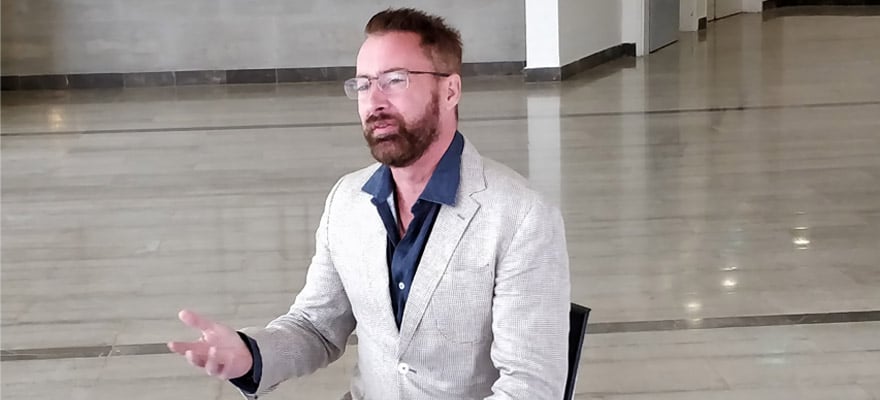
Finance Magnates sat down with the Canadian anarcho-capitalist Jeff Berwick during the Israeli Bitcoin Summit that was held at the Tel Aviv University, to examine whether cryptocurrency should still be considered the libertarian panacea.
“Bitcoin has changed quite a bit over the last few years and it’s been regulated. However, it still is a currency totally outside of the control of central banks or governments. That truly is a libertarian dream,” says Berwick, who also founded the well-known blog The Dollar Vigilante.
“Our money is government controlled, central bank printed… all these sort of communist ideas. So, in this reality, to have a currency that is really limited in supply and that can be transferred very easily, for a very low cost and quite quickly – is indeed a gamechanger.”
Berwick believes that most of Bitcoin's problems are temporary and will change in time. “We are still in a very early stage. It’s pretty much like the internet in 1996 – an idea that people are catching on to but most don’t really know what this is. Once even 1% of the world population gets cryptocurrency gets into cryptocurrency – the market will explode.”
Safe Haven
As the discussion around a possible market crash intensifies, many view cryptocurrency as the safe haven for investors when all hell breaks loose. Nick Szabo even suggested recently that central banks will soon trade physical gold reserves for cryptocurrency. Berwick believes that we are indeed headed for “a major market crash that will be worse than all that we’ve seen before.”
In his view, the only assets that will survive in this crisis and in its aftermath are precious metals and cryptocurrencies. And given that it is quite difficult to transact with gold and move it around the world, he believes crypto will take precedence. “You can send a billion dollars in just minutes to China with a click of a button – no questions asked. That will definitely be of value in such a chaotic situation.”
No CEO for Bitcoin
According to Berwick, Bitcoin’s advantages, like decentralization, are also its disadvantages when it comes to scaling and expanding. “Bitcoin doesn’t have a marketing department – there are no TV ads or on-site banners. It doesn’t have a CEO or CMO. It’s a market-driven product. However, like every good idea it will eventually catch on.”
He compares the cryptocurrency to Uber’s business model. “People have been using it for almost 10 years because the product was good – even without proper marketing. Bitcoin is still not there.”
National Digital Currencies Will Boost Decentralized Currencies
Berwick believes that in the near future, many governments will start issuing national cryptocurrencies. “This is very good news for the crypto industry. Once the regular people start using digital currencies, it will be much easier to move to a better – more decentralized – cryptocurrency.”
He explains that national currencies will harness all the benefits of Blockchain, such as the accuracy and trustworthiness of the ledger, to use it for their own good. “This will only increase government’s control of our money. Now it will be easier for them to tax you or track where you move your money, not to mention them keeping their ability to ‘print money’,” says Berwick, whose LinkedIn tagline says "Freedom Fighter Against Mankind's Two Biggest Enemies: The State & The Central Banks",
This process will prompt the ‘ordinary people’ to become both aware of the problems in their national currencies and more crypto-savvy. It is then, he believes, that the masses will start shifting to Bitcoin and other cryptocurrencies in droves.
Anonymity is of the essence
Despite his keenness on Bitcoin, Berwick acknowledges the shortcomings of the currency. “When Bitcoin first came on, a lot of us [libertarians] thought it was anonymous. But we realized along the years that it’s not at all anonymous. A lot of governments have figured this out and are using that.”
The lack of anonymity and privacy is one of the main issues that crypto developers need to tackle in order for the industry to scale and evolve. Therefore, Berwick is closely tracking privacy oriented currencies, such as Monero. “That’s the hope in the future for us.”
Money, in its various forms and modifications, is at the core of the argument between socialists and capitalists, between libertarians and authoritarians, and so on.
Ayn Rand, the Jewish-American Philosopher and writer, and the guru of many economical liberals had a very specific definition of money in her book Philosophy: Who Needs It?: “Money is not merely a tool of exchange: much more importantly, it is a tool of saving, which permits delayed consumption and buys time for future production. To fulfil this requirement, money has to be some material commodity which is imperishable, rare, homogeneous, easily stored, not subject to wide fluctuations of value, and always in demand among those you trade with.”
The current form of money we hold in our pockets or bank accounts doesn’t really fulfil those requirements. Many libertarians have voiced their discontent with the current monetary system and the institutions – governmental or private – that are processing our money.
Some are claiming that fiat money is virtually worthless, given it has no intrinsic value - thus its price is subdued to extreme volatility and even a total collapse. Other claims are focusing on the limitations on storing, moving, and spending our money. The main culprits in this case are the banks and regulators, who made the currency centralized and nullified factors like privacy, anonymity, and even the mere sense of ownership.
Several libertarian-leaning economists, reminisce on the good old gold-standard days, when money was money and value was value. Keith Weiner, the president of the Gold Standard Institute USA, and CEO of Monetary Metals, as well as the CEO of Euro Pacific Capital Peter Schiff, for instance, believe that the answer is either physical gold or gold-based financial products.
Digital Gold
Others, see comfort in cryptocurrency. It is no wonder that cryptocurrency, which is often referred to as ‘digital gold,’ was a breath of fresh air for the libertarian community. Presumably, this new decentralized and anonymized monetary system is the ultimate solution to fiat’s shortcomings.
"In five years, if you try to use fiat currency they will laugh at you," said crypto entrepreneur Tim Draper during the 2017 Forbes Websummit conference. "Bitcoin and other Cryptocurrencies will be so relevant, there will be no reason to have the fiat currencies."
However, as regulators sink their teeth into the crypto firms, and as the industry becomes more consolidated around a small number of players, this dream seems to be overshadowed by reality.
Optimistic Anarchist
Finance Magnates sat down with the Canadian anarcho-capitalist Jeff Berwick during the Israeli Bitcoin Summit that was held at the Tel Aviv University, to examine whether cryptocurrency should still be considered the libertarian panacea.
“Bitcoin has changed quite a bit over the last few years and it’s been regulated. However, it still is a currency totally outside of the control of central banks or governments. That truly is a libertarian dream,” says Berwick, who also founded the well-known blog The Dollar Vigilante.
“Our money is government controlled, central bank printed… all these sort of communist ideas. So, in this reality, to have a currency that is really limited in supply and that can be transferred very easily, for a very low cost and quite quickly – is indeed a gamechanger.”
Berwick believes that most of Bitcoin's problems are temporary and will change in time. “We are still in a very early stage. It’s pretty much like the internet in 1996 – an idea that people are catching on to but most don’t really know what this is. Once even 1% of the world population gets cryptocurrency gets into cryptocurrency – the market will explode.”
Safe Haven
As the discussion around a possible market crash intensifies, many view cryptocurrency as the safe haven for investors when all hell breaks loose. Nick Szabo even suggested recently that central banks will soon trade physical gold reserves for cryptocurrency. Berwick believes that we are indeed headed for “a major market crash that will be worse than all that we’ve seen before.”
In his view, the only assets that will survive in this crisis and in its aftermath are precious metals and cryptocurrencies. And given that it is quite difficult to transact with gold and move it around the world, he believes crypto will take precedence. “You can send a billion dollars in just minutes to China with a click of a button – no questions asked. That will definitely be of value in such a chaotic situation.”
No CEO for Bitcoin
According to Berwick, Bitcoin’s advantages, like decentralization, are also its disadvantages when it comes to scaling and expanding. “Bitcoin doesn’t have a marketing department – there are no TV ads or on-site banners. It doesn’t have a CEO or CMO. It’s a market-driven product. However, like every good idea it will eventually catch on.”
He compares the cryptocurrency to Uber’s business model. “People have been using it for almost 10 years because the product was good – even without proper marketing. Bitcoin is still not there.”
National Digital Currencies Will Boost Decentralized Currencies
Berwick believes that in the near future, many governments will start issuing national cryptocurrencies. “This is very good news for the crypto industry. Once the regular people start using digital currencies, it will be much easier to move to a better – more decentralized – cryptocurrency.”
He explains that national currencies will harness all the benefits of Blockchain, such as the accuracy and trustworthiness of the ledger, to use it for their own good. “This will only increase government’s control of our money. Now it will be easier for them to tax you or track where you move your money, not to mention them keeping their ability to ‘print money’,” says Berwick, whose LinkedIn tagline says "Freedom Fighter Against Mankind's Two Biggest Enemies: The State & The Central Banks",
This process will prompt the ‘ordinary people’ to become both aware of the problems in their national currencies and more crypto-savvy. It is then, he believes, that the masses will start shifting to Bitcoin and other cryptocurrencies in droves.
Anonymity is of the essence
Despite his keenness on Bitcoin, Berwick acknowledges the shortcomings of the currency. “When Bitcoin first came on, a lot of us [libertarians] thought it was anonymous. But we realized along the years that it’s not at all anonymous. A lot of governments have figured this out and are using that.”
The lack of anonymity and privacy is one of the main issues that crypto developers need to tackle in order for the industry to scale and evolve. Therefore, Berwick is closely tracking privacy oriented currencies, such as Monero. “That’s the hope in the future for us.”
Crypto Built More Rails, but the Next Battle Is Over How Much Work a Dollar Can Do
FP Markets Winner Spotlight 🏆 | Global Broker of the Year 2025 #Trading #Broker #Innovation #Shorts
FP Markets Winner Spotlight 🏆 | Global Broker of the Year 2025 #Trading #Broker #Innovation #Shorts
FP Markets takes the spotlight as Global Broker of the Year 2025 at the Finance Magnates Awards.
Martin Stoilov, Head of Client Experience, shares that trust, innovation, and people played a key role in the company’s success, supported by a strong foundation of integrity and client-centricity.
Following this milestone, FP Markets continues to focus on growth, technology investment, and its core values of transparency and excellence.
👉 Be part of FM Awards 2026: https://awards.financemagnates.com/#nominate
FP Markets takes the spotlight as Global Broker of the Year 2025 at the Finance Magnates Awards.
Martin Stoilov, Head of Client Experience, shares that trust, innovation, and people played a key role in the company’s success, supported by a strong foundation of integrity and client-centricity.
Following this milestone, FP Markets continues to focus on growth, technology investment, and its core values of transparency and excellence.
👉 Be part of FM Awards 2026: https://awards.financemagnates.com/#nominate
In this video, we review @HolaPrimeMarketsOfficial, a multi-asset forex and CFDs broker offering different account types, trading platforms, and flexible trading conditions.
We cover the broker’s overall offering, including account options, trading environment, platforms like MT4 and MT5, and additional services such as managed accounts and fast withdrawals.
Watch the full video to see if Hola Prime Markets fits your trading needs.
📣 Stay up to date with the latest in finance and trading. Follow Finance Magnates for industry news, insights, and global event coverage.
Connect with us:
🔗 LinkedIn: /financemagnates
👍 Facebook: /financemagnates
📸 Instagram: https://www.instagram.com/financemagnates
🐦 X: https://x.com/financemagnates
🎥 TikTok: https://www.tiktok.com/tag/financemagnates
▶️ YouTube: /@financemagnates_official
#HolaPrime #ForexBroker #CFDTrading #FinanceMagnates #Trading #Forex #BrokerReview
In this video, we review @HolaPrimeMarketsOfficial, a multi-asset forex and CFDs broker offering different account types, trading platforms, and flexible trading conditions.
We cover the broker’s overall offering, including account options, trading environment, platforms like MT4 and MT5, and additional services such as managed accounts and fast withdrawals.
Watch the full video to see if Hola Prime Markets fits your trading needs.
📣 Stay up to date with the latest in finance and trading. Follow Finance Magnates for industry news, insights, and global event coverage.
Connect with us:
🔗 LinkedIn: /financemagnates
👍 Facebook: /financemagnates
📸 Instagram: https://www.instagram.com/financemagnates
🐦 X: https://x.com/financemagnates
🎥 TikTok: https://www.tiktok.com/tag/financemagnates
▶️ YouTube: /@financemagnates_official
#HolaPrime #ForexBroker #CFDTrading #FinanceMagnates #Trading #Forex #BrokerReview
Hola Prime Review: What You Need to Know | Full Breakdown by Finance Magnates
Hola Prime Review: What You Need to Know | Full Breakdown by Finance Magnates
In this video, we review @HolaPrime_Global, a proprietary trading firm offering evaluation programs and performance-based payouts in simulated market environments.
We cover how the challenge model works, including account types, profit splits (up to 95%), trading rules, and what it takes to reach a funded account. You’ll also learn about available platforms like MT4, MT5, cTrader, and more, along with insights into payouts, support, and trading conditions.
Watch the full video to see if Hola Prime fits your trading style.
📣 Stay up to date with the latest in finance and trading. Follow Finance Magnates for industry news, insights, and global event coverage.
Connect with us:
🔗 LinkedIn: /financemagnates
👍 Facebook: /financemagnates
📸 Instagram: https://www.instagram.com/financemagnates
🐦 X: https://x.com/financemagnates
🎥 TikTok: https://www.tiktok.com/tag/financemagnates
▶️ YouTube: /@financemagnates_official
#HolaPrime #PropFirm #Trading #FinanceMagnates #Forex #FuturesTrading #TradingReview #PropFirmReview
In this video, we review @HolaPrime_Global, a proprietary trading firm offering evaluation programs and performance-based payouts in simulated market environments.
We cover how the challenge model works, including account types, profit splits (up to 95%), trading rules, and what it takes to reach a funded account. You’ll also learn about available platforms like MT4, MT5, cTrader, and more, along with insights into payouts, support, and trading conditions.
Watch the full video to see if Hola Prime fits your trading style.
📣 Stay up to date with the latest in finance and trading. Follow Finance Magnates for industry news, insights, and global event coverage.
Connect with us:
🔗 LinkedIn: /financemagnates
👍 Facebook: /financemagnates
📸 Instagram: https://www.instagram.com/financemagnates
🐦 X: https://x.com/financemagnates
🎥 TikTok: https://www.tiktok.com/tag/financemagnates
▶️ YouTube: /@financemagnates_official
#HolaPrime #PropFirm #Trading #FinanceMagnates #Forex #FuturesTrading #TradingReview #PropFirmReview
Axi Winner Spotlight 🏆 | Global Most Innovative Broker 2025 #Innovation #Trading #Fintech #Broker
Axi Winner Spotlight 🏆 | Global Most Innovative Broker 2025 #Innovation #Trading #Fintech #Broker
Axi takes the spotlight at the Finance Magnates Awards, winning Global Most Innovative Broker 2025.
Olivia Xenofontos and Ivanna Openko share how the team will feel: proud, motivated, and ready to keep delivering.
They also describe the night as well-organized, focused, and enjoyable for all.
👉 Be part of FM Awards 2026.
Axi takes the spotlight at the Finance Magnates Awards, winning Global Most Innovative Broker 2025.
Olivia Xenofontos and Ivanna Openko share how the team will feel: proud, motivated, and ready to keep delivering.
They also describe the night as well-organized, focused, and enjoyable for all.
👉 Be part of FM Awards 2026.
Recognition that matters.
Built on transparency.
Driven by the industry.
The Finance Magnates Awards 2026.
Nominations are now open.
🔗 https://awards.financemagnates.com/?utm_source=SM&utm_medium=social&utm_campaign=recognition-matters
Recognition that matters.
Built on transparency.
Driven by the industry.
The Finance Magnates Awards 2026.
Nominations are now open.
🔗 https://awards.financemagnates.com/?utm_source=SM&utm_medium=social&utm_campaign=recognition-matters