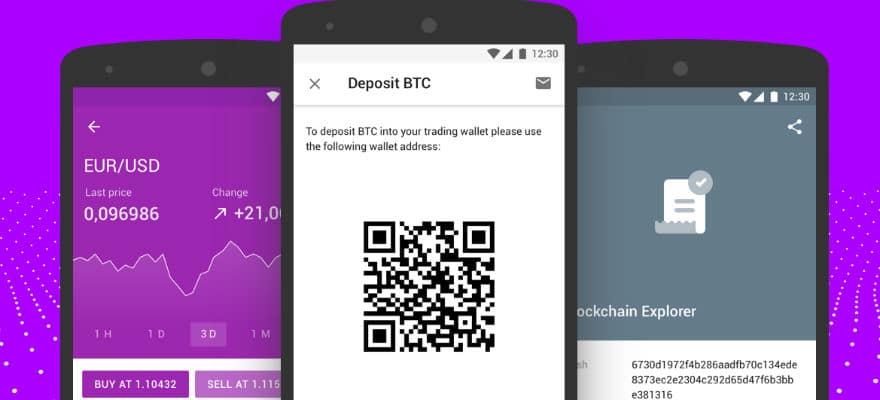
Meinhard Benn, the founder of SatoshiPay, talks about how cryptocurrency payments can revolutionize online advertising.
FM
In recent years the online publishing business has faced serious disruptions. With a business model heavily reliant on targeted ads, which pay per click or per eyeball, the spread of ad blockers wrought havoc on many websites and required the industry to think up new and innovative ways to make money without scaring away users.
Blockchain entrepreneurs saw this as an opportunity to for cryptocurrencies to create a new market and startups such as SatoshiPay, the Brave browser and the Steem social network were born.
Finance Magnates talked with Meinhard Benn, the founder of SatoshiPay, about his company's approach to the matter and how it compares with the competition.
How did you get to your position in the cryptocurrency scene?
I discovered Bitcoin in 2011 through a news article following its $27 price spike. I became immediately excited because I had researched alternative currencies for many years and started mining it on my work computer's GPU straight away.
Two years later, after bitcoin's second big price spike I got more involved with the underlying blockchain technology and started working with early startups in the space. In 2014 I started SatoshiPay, aiming to make bitcoin payment integration as easy as possible.
Why did you decide to refocus SatoshiPay on online nanopayments?
Our initial product was a white-label bitcoin payment processing service for traditional payment companies. The initial surge in merchant adoption of bitcoin as a payment method quickly plateaued, so we looked for different applications of our technology.
With the help of Coinsilium, our new investor at the time, we identified nanopayments as an exciting field to focus on.
Can the bitcoin blockchain handle millions of paid pageviews a day across the world?
Meinhard Benn, Founder, SatoshiPay
No, Bitcoin was not designed to handle nanopayments. That's why we are using payment channels, which are simple smart contracts that allow off-chain Payments in a trustless way.
We see payment channel technology as a potential solution to scaling issues, because they allow a transaction through-put similar to and higher than credit card networks, without bloating the blockchain. The lightning network adds a layer for even higher scalability and we are keeping a keen eye on it.
How do you see the field of online publishing developing in light of new trends?
With an adblocker rate of up to 66% (Indonesia) and growing, it becomes evident that publishers need to quickly think of other ways of monetisation in order to generate profits.
We don't believe individual subscriptions are the best way for this, because web users don't usually feel comfortable with making many parallel commitments. The only options remaining are micropayments or cross-website subscriptions.
Do you anticipate that in a few years all websites will be supported by nanopayments?
The demise of web ads hits all sites, so yes, we'll see more paid content. Hopefully with our help the payment process will be transparent and automatic, not disturbing the user's attention.
I also imagine a wider acceptance of freemium models, where a news article is available for free, but bonus material like videos or high-res images cost a small fee.
How would you compare your service and that of Brave browser?
We work closely with publishers and allow them to control prices and what content they want to monetize. So their income becomes relatively predictable. Brave at this point is an ad blocker with a donation function, similar to Flattr Plus. Brave requires users to install a new browser with a completely new browsing experience, which I think is a high ask.
We have a low friction approach, work across all browsers and devices, don't require a login or download. In future we expect to be more of a universal infrastructure for nanopayments, and not so much a content paywall.
What is your take on the approach of Steem.it?
Generally, the idea of rewarding authors of social media content directly is fantastic. I'm not sure however if this requires yet another cryptocurrency, which in this case is largely owned by the creators of Steem.
Their system is currently focused on one central platform or website, but we believe to create a sustainable impact on value transfer on the web, it needs a technology available across all public websites and closed systems.
You have recently started collaborating with Visa Europe, how did that come about?
Towards the end of 2015 Visa's innovation department "Collab" actively reached out to startups working on bitcoin payment solutions, and after our first meeting with Collab in Berlin we realized that there is a lot of potential for cooperation. Also the personal chemistry was right, which I think is very important for an ongoing partnership.
We expect to make our technology available to a mainstream audience soon, by adding card payments to the top-up options for SatoshiPay. Also having one of the biggest consumer brands on our side opens a lot of doors, now and in the years to come.
In recent years the online publishing business has faced serious disruptions. With a business model heavily reliant on targeted ads, which pay per click or per eyeball, the spread of ad blockers wrought havoc on many websites and required the industry to think up new and innovative ways to make money without scaring away users.
Blockchain entrepreneurs saw this as an opportunity to for cryptocurrencies to create a new market and startups such as SatoshiPay, the Brave browser and the Steem social network were born.
Finance Magnates talked with Meinhard Benn, the founder of SatoshiPay, about his company's approach to the matter and how it compares with the competition.
How did you get to your position in the cryptocurrency scene?
I discovered Bitcoin in 2011 through a news article following its $27 price spike. I became immediately excited because I had researched alternative currencies for many years and started mining it on my work computer's GPU straight away.
Two years later, after bitcoin's second big price spike I got more involved with the underlying blockchain technology and started working with early startups in the space. In 2014 I started SatoshiPay, aiming to make bitcoin payment integration as easy as possible.
Why did you decide to refocus SatoshiPay on online nanopayments?
Our initial product was a white-label bitcoin payment processing service for traditional payment companies. The initial surge in merchant adoption of bitcoin as a payment method quickly plateaued, so we looked for different applications of our technology.
With the help of Coinsilium, our new investor at the time, we identified nanopayments as an exciting field to focus on.
Can the bitcoin blockchain handle millions of paid pageviews a day across the world?
Meinhard Benn, Founder, SatoshiPay
No, Bitcoin was not designed to handle nanopayments. That's why we are using payment channels, which are simple smart contracts that allow off-chain Payments in a trustless way.
We see payment channel technology as a potential solution to scaling issues, because they allow a transaction through-put similar to and higher than credit card networks, without bloating the blockchain. The lightning network adds a layer for even higher scalability and we are keeping a keen eye on it.
How do you see the field of online publishing developing in light of new trends?
With an adblocker rate of up to 66% (Indonesia) and growing, it becomes evident that publishers need to quickly think of other ways of monetisation in order to generate profits.
We don't believe individual subscriptions are the best way for this, because web users don't usually feel comfortable with making many parallel commitments. The only options remaining are micropayments or cross-website subscriptions.
Do you anticipate that in a few years all websites will be supported by nanopayments?
The demise of web ads hits all sites, so yes, we'll see more paid content. Hopefully with our help the payment process will be transparent and automatic, not disturbing the user's attention.
I also imagine a wider acceptance of freemium models, where a news article is available for free, but bonus material like videos or high-res images cost a small fee.
How would you compare your service and that of Brave browser?
We work closely with publishers and allow them to control prices and what content they want to monetize. So their income becomes relatively predictable. Brave at this point is an ad blocker with a donation function, similar to Flattr Plus. Brave requires users to install a new browser with a completely new browsing experience, which I think is a high ask.
We have a low friction approach, work across all browsers and devices, don't require a login or download. In future we expect to be more of a universal infrastructure for nanopayments, and not so much a content paywall.
What is your take on the approach of Steem.it?
Generally, the idea of rewarding authors of social media content directly is fantastic. I'm not sure however if this requires yet another cryptocurrency, which in this case is largely owned by the creators of Steem.
Their system is currently focused on one central platform or website, but we believe to create a sustainable impact on value transfer on the web, it needs a technology available across all public websites and closed systems.
You have recently started collaborating with Visa Europe, how did that come about?
Towards the end of 2015 Visa's innovation department "Collab" actively reached out to startups working on bitcoin payment solutions, and after our first meeting with Collab in Berlin we realized that there is a lot of potential for cooperation. Also the personal chemistry was right, which I think is very important for an ongoing partnership.
We expect to make our technology available to a mainstream audience soon, by adding card payments to the top-up options for SatoshiPay. Also having one of the biggest consumer brands on our side opens a lot of doors, now and in the years to come.
Kraken’s 2025 Revenue Soared to $2.2 Billion as It Prepares for an IPO
Hannah Hill on Innovation, Branding & Award-Winning Technology | Executive Interview | AXI
Hannah Hill on Innovation, Branding & Award-Winning Technology | Executive Interview | AXI
Recorded live at FMLS:25, this executive interview features Hannah Hill, Head of Brand and Sponsorship at AXI, in conversation with Finance Magnates, following AXI’s win for Most Innovative Broker of the Year 2025.
In this wide-ranging discussion, Hannah shares insights on:
🔹What winning the Finance Magnates award means for AXI’s credibility and innovation
🔹How the launch of AXI Select, the capital allocation program, is redefining industry standards
🔹The development and rollout of the AXI trading app across multiple markets
🔹Driving brand evolution alongside technological advancements
🔹Encouraging and recognizing teams behind the scenes
🔹The role of marketing, content, and social media in building product awareness
Hannah explains why standout products, strategic branding, and a focus on innovation are key to growing visibility and staying ahead in a competitive brokerage landscape.
🏆 Award Highlight: Most Innovative Broker of the Year 2025
👉 Subscribe to Finance Magnates for more executive interviews, industry insights, and exclusive coverage from the world’s leading financial events.
#FMLS25 #FinanceMagnates #MostInnovativeBroker #TradingTechnology #FinTech #Brokerage #ExecutiveInterview #AXI
Recorded live at FMLS:25, this executive interview features Hannah Hill, Head of Brand and Sponsorship at AXI, in conversation with Finance Magnates, following AXI’s win for Most Innovative Broker of the Year 2025.
In this wide-ranging discussion, Hannah shares insights on:
🔹What winning the Finance Magnates award means for AXI’s credibility and innovation
🔹How the launch of AXI Select, the capital allocation program, is redefining industry standards
🔹The development and rollout of the AXI trading app across multiple markets
🔹Driving brand evolution alongside technological advancements
🔹Encouraging and recognizing teams behind the scenes
🔹The role of marketing, content, and social media in building product awareness
Hannah explains why standout products, strategic branding, and a focus on innovation are key to growing visibility and staying ahead in a competitive brokerage landscape.
🏆 Award Highlight: Most Innovative Broker of the Year 2025
👉 Subscribe to Finance Magnates for more executive interviews, industry insights, and exclusive coverage from the world’s leading financial events.
#FMLS25 #FinanceMagnates #MostInnovativeBroker #TradingTechnology #FinTech #Brokerage #ExecutiveInterview #AXI
Executive Interview | Dor Eligula | Co-Founder & Chief Business Officer, BridgeWise | FMLS:25
Executive Interview | Dor Eligula | Co-Founder & Chief Business Officer, BridgeWise | FMLS:25
In this session, Jonathan Fine form Ultimate Group speaks with Dor Eligula from Bridgewise, a fast-growing AI-powered research and analytics firm supporting brokers and exchanges worldwide.
We start with Dor’s reaction to the Summit and then move to broker growth and the quick wins brokers often overlook. Dor shares where he sees “blue ocean” growth across Asian markets and how local client behaviour shapes demand.
We also discuss the rollout of AI across investment research. Dor gives real examples of how automation and human judgment meet at Bridgewise — including moments when analysts corrected AI output, and times when AI prevented an error.
We close with a practical question: how retail investors can actually use AI without falling into common traps.
In this session, Jonathan Fine form Ultimate Group speaks with Dor Eligula from Bridgewise, a fast-growing AI-powered research and analytics firm supporting brokers and exchanges worldwide.
We start with Dor’s reaction to the Summit and then move to broker growth and the quick wins brokers often overlook. Dor shares where he sees “blue ocean” growth across Asian markets and how local client behaviour shapes demand.
We also discuss the rollout of AI across investment research. Dor gives real examples of how automation and human judgment meet at Bridgewise — including moments when analysts corrected AI output, and times when AI prevented an error.
We close with a practical question: how retail investors can actually use AI without falling into common traps.
Brendan Callan joined us fresh off the Summit’s most anticipated debate: “Is Prop Trading Good for the Industry?” Brendan argued against the motion — and the audience voted him the winner.
In this interview, Brendan explains the reasoning behind his position. He walks through the message he believes many firms avoid: that the current prop trading model is too dependent on fees, too loose on risk, and too confusing for retail audiences.
We discuss why he thinks the model grew fast, why it may run into walls, and what he believes is needed for a cleaner, more responsible version of prop trading.
This is Brendan at his frankest — sharp, grounded, and very clear about what changes are overdue.
Brendan Callan joined us fresh off the Summit’s most anticipated debate: “Is Prop Trading Good for the Industry?” Brendan argued against the motion — and the audience voted him the winner.
In this interview, Brendan explains the reasoning behind his position. He walks through the message he believes many firms avoid: that the current prop trading model is too dependent on fees, too loose on risk, and too confusing for retail audiences.
We discuss why he thinks the model grew fast, why it may run into walls, and what he believes is needed for a cleaner, more responsible version of prop trading.
This is Brendan at his frankest — sharp, grounded, and very clear about what changes are overdue.
Elina Pedersen on Growth, Stability & Ultra-Low Latency | Executive Interview | Your Bourse
Elina Pedersen on Growth, Stability & Ultra-Low Latency | Executive Interview | Your Bourse
Recorded live at FMLS:25 London, this executive interview features Elina Pedersen, in conversation with Finance Magnates, following her company’s win for Best Connectivity 2025.
🔹In this wide-ranging discussion, Elina shares insights on:
🔹What winning a Finance Magnates award means for credibility and reputation
🔹How broker demand for stability and reliability is driving rapid growth
🔹The launch of a new trade server enabling flexible front-end integrations
🔹Why ultra-low latency must be proven with data, not buzzwords
🔹Common mistakes brokers make when scaling globally
🔹Educating the industry through a newly launched Dealers Academy
🔹Where AI fits into trading infrastructure and where it doesn’t
Elina explains why resilient back-end infrastructure, deep client partnerships, and disciplined focus are critical for brokers looking to scale sustainably in today’s competitive market.
🏆 Award Highlight: Best Connectivity 2025
👉 Subscribe to Finance Magnates for more executive interviews, industry insights, and exclusive coverage from the world’s leading financial events.
#FMLS25 #FinanceMagnates #BestConnectivity #TradingTechnology #UltraLowLatency #FinTech #Brokerage #ExecutiveInterview
Recorded live at FMLS:25 London, this executive interview features Elina Pedersen, in conversation with Finance Magnates, following her company’s win for Best Connectivity 2025.
🔹In this wide-ranging discussion, Elina shares insights on:
🔹What winning a Finance Magnates award means for credibility and reputation
🔹How broker demand for stability and reliability is driving rapid growth
🔹The launch of a new trade server enabling flexible front-end integrations
🔹Why ultra-low latency must be proven with data, not buzzwords
🔹Common mistakes brokers make when scaling globally
🔹Educating the industry through a newly launched Dealers Academy
🔹Where AI fits into trading infrastructure and where it doesn’t
Elina explains why resilient back-end infrastructure, deep client partnerships, and disciplined focus are critical for brokers looking to scale sustainably in today’s competitive market.
🏆 Award Highlight: Best Connectivity 2025
👉 Subscribe to Finance Magnates for more executive interviews, industry insights, and exclusive coverage from the world’s leading financial events.
#FMLS25 #FinanceMagnates #BestConnectivity #TradingTechnology #UltraLowLatency #FinTech #Brokerage #ExecutiveInterview
In this video, we take an in-depth look at @BlueberryMarketsForex , a forex and CFD broker operating since 2016, offering access to multiple trading platforms, over 1,000 instruments, and flexible account types for different trading styles.
We break down Blueberry’s regulatory structure, including its Australian Financial Services License (AFSL), as well as its authorisation and registrations in other jurisdictions. The review also covers supported platforms such as MetaTrader 4, MetaTrader 5, cTrader, TradingView, Blueberry.X, and web-based trading.
You’ll learn about available instruments across forex, commodities, indices, share CFDs, and crypto CFDs, along with leverage options, minimum and maximum trade sizes, and how Blueberry structures its Standard and Raw accounts.
We also explain spreads, commissions, swap rates, swap-free account availability, funding and withdrawal methods, processing times, and what traders can expect from customer support and additional services.
Watch the full review to see whether Blueberry’s trading setup aligns with your experience level, strategy, and risk tolerance.
📣 Stay up to date with the latest in finance and trading. Follow Finance Magnates for industry news, insights, and global event coverage.
Connect with us:
🔗 LinkedIn: /financemagnates
👍 Facebook: /financemagnates
📸 Instagram: https://www.instagram.com/financemagnates
🐦 X: https://x.com/financemagnates
🎥 TikTok: https://www.tiktok.com/tag/financemagnates
▶️ YouTube: /@financemagnates_official
#Blueberry #BlueberryMarkets #BrokerReview #ForexBroker #CFDTrading #OnlineTrading #FinanceMagnates #TradingPlatforms #MarketInsights
In this video, we take an in-depth look at @BlueberryMarketsForex , a forex and CFD broker operating since 2016, offering access to multiple trading platforms, over 1,000 instruments, and flexible account types for different trading styles.
We break down Blueberry’s regulatory structure, including its Australian Financial Services License (AFSL), as well as its authorisation and registrations in other jurisdictions. The review also covers supported platforms such as MetaTrader 4, MetaTrader 5, cTrader, TradingView, Blueberry.X, and web-based trading.
You’ll learn about available instruments across forex, commodities, indices, share CFDs, and crypto CFDs, along with leverage options, minimum and maximum trade sizes, and how Blueberry structures its Standard and Raw accounts.
We also explain spreads, commissions, swap rates, swap-free account availability, funding and withdrawal methods, processing times, and what traders can expect from customer support and additional services.
Watch the full review to see whether Blueberry’s trading setup aligns with your experience level, strategy, and risk tolerance.
📣 Stay up to date with the latest in finance and trading. Follow Finance Magnates for industry news, insights, and global event coverage.
Connect with us:
🔗 LinkedIn: /financemagnates
👍 Facebook: /financemagnates
📸 Instagram: https://www.instagram.com/financemagnates
🐦 X: https://x.com/financemagnates
🎥 TikTok: https://www.tiktok.com/tag/financemagnates
▶️ YouTube: /@financemagnates_official
#Blueberry #BlueberryMarkets #BrokerReview #ForexBroker #CFDTrading #OnlineTrading #FinanceMagnates #TradingPlatforms #MarketInsights