The convertible notes will be sold to institutional investors in a private offering.
The proceeds will be used to repay debt and other general corporate purposes.
Coinbase (Nasdaq: COIN), the largest cryptocurrency exchange in the United States, is planning to raise $1 billion through the issuance of convertible senior notes. Announced yesterday (Tuesday), the proceeds will be utilized to repay debt and other general corporate purposes.
Investors React to the Bond Sale
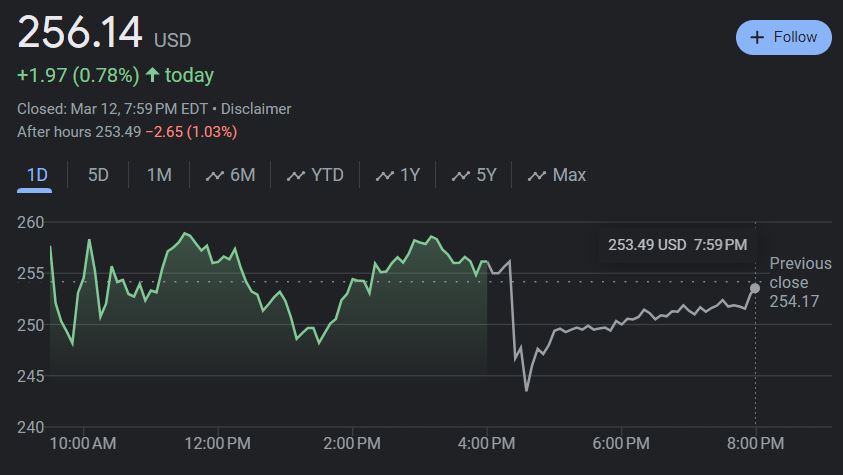
The company is avoiding the sale of its equity, which could hurt its stock prices. However, the publicly-listed stock prices of the company dropped more than 1 percent after hours following the announcement of the convertible bond issuance.
Share price movement of COIN
The exchange will sell the convertible notes through private offerings only to institutional investors. The convertible notes will have a maturity date in 2030 and will allow the investors to redeem them in cash or Class A shares of the company or in a combination of both.
Furthermore, the San Francisco-headquartered exchange expects to grant a 30-day option to purchase up to an additional $150 million notes to cover over-allotments.
The debt the exchange wants to repay with the planned convertible notes is outstanding: 0.5 percent convertible senior notes due in 2026, 3.375 percent senior notes due in 2028, and 3.625 percent senior notes due in 2031. The general corporate purpose to be fulfilled by the proceeds from the convertible notes might include “working capital and capital expenditures, and to pay the cost of the capped call transactions.”
“Coinbase may also use a portion of the net proceeds to make investments in and acquisitions of other companies, products, or technologies that Coinbase may identify from time to time,” the exchange noted.
The MicroStrategy Playbook
Coinbase’s plan to issue the convertible notes echoes a model mastered by MicroStrategy, a business analytics company known for its massive Bitcoin investment. Under the leadership of Michael Saylor, MicroStrategy purchased 205,000 Bitcoin worth around $15 billion over the years by raising about $2 billion through convertible notes. MicroStrategy sold $700 million worth of convertible notes.
Coinbase's decision came when the cryptocurrency market witnessed a massive bullish sentiment. Bitcoin is trading at an all-time-high value, nearing $73,000 a piece.
Coinbase (Nasdaq: COIN), the largest cryptocurrency exchange in the United States, is planning to raise $1 billion through the issuance of convertible senior notes. Announced yesterday (Tuesday), the proceeds will be utilized to repay debt and other general corporate purposes.
Investors React to the Bond Sale
The company is avoiding the sale of its equity, which could hurt its stock prices. However, the publicly-listed stock prices of the company dropped more than 1 percent after hours following the announcement of the convertible bond issuance.
Share price movement of COIN
The exchange will sell the convertible notes through private offerings only to institutional investors. The convertible notes will have a maturity date in 2030 and will allow the investors to redeem them in cash or Class A shares of the company or in a combination of both.
Furthermore, the San Francisco-headquartered exchange expects to grant a 30-day option to purchase up to an additional $150 million notes to cover over-allotments.
The debt the exchange wants to repay with the planned convertible notes is outstanding: 0.5 percent convertible senior notes due in 2026, 3.375 percent senior notes due in 2028, and 3.625 percent senior notes due in 2031. The general corporate purpose to be fulfilled by the proceeds from the convertible notes might include “working capital and capital expenditures, and to pay the cost of the capped call transactions.”
“Coinbase may also use a portion of the net proceeds to make investments in and acquisitions of other companies, products, or technologies that Coinbase may identify from time to time,” the exchange noted.
The MicroStrategy Playbook
Coinbase’s plan to issue the convertible notes echoes a model mastered by MicroStrategy, a business analytics company known for its massive Bitcoin investment. Under the leadership of Michael Saylor, MicroStrategy purchased 205,000 Bitcoin worth around $15 billion over the years by raising about $2 billion through convertible notes. MicroStrategy sold $700 million worth of convertible notes.
Coinbase's decision came when the cryptocurrency market witnessed a massive bullish sentiment. Bitcoin is trading at an all-time-high value, nearing $73,000 a piece.
Arnab Shome is an electronics engineer-turned-financial editor. He holds a Bachelor of Technology from the National Institute of Technology, Agartala. He entered the retail trading industry about a decade ago, covering the cryptocurrency market for Finance Magnates, and later expanded his coverage to include forex and CFDs as well.
His work at Finance Magnates includes C-level interviews, data-driven analysis, opinion pieces, and scoops of industry exclusives. He also contributes to Finance Magnates’ quarterly industry report.
Area of coverage:
1. CFD broker-related news
2. Industry-related Regulatory updates and developments
3. New retail trading trends
4. Prop trading industry updates
5. Executive interviews
Education:
Bachelor of Technology - National Institute of Technology, Agartala (India)
Kraken Steps Up Speed Race with New Equinix Colocation Service for Crypto Traders
FP Markets Winner Spotlight 🏆 | Global Broker of the Year 2025 #Trading #Broker #Innovation #Shorts
FP Markets Winner Spotlight 🏆 | Global Broker of the Year 2025 #Trading #Broker #Innovation #Shorts
FP Markets takes the spotlight as Global Broker of the Year 2025 at the Finance Magnates Awards.
Martin Stoilov, Head of Client Experience, shares that trust, innovation, and people played a key role in the company’s success, supported by a strong foundation of integrity and client-centricity.
Following this milestone, FP Markets continues to focus on growth, technology investment, and its core values of transparency and excellence.
👉 Be part of FM Awards 2026: https://awards.financemagnates.com/#nominate
FP Markets takes the spotlight as Global Broker of the Year 2025 at the Finance Magnates Awards.
Martin Stoilov, Head of Client Experience, shares that trust, innovation, and people played a key role in the company’s success, supported by a strong foundation of integrity and client-centricity.
Following this milestone, FP Markets continues to focus on growth, technology investment, and its core values of transparency and excellence.
👉 Be part of FM Awards 2026: https://awards.financemagnates.com/#nominate
In this video, we review @HolaPrimeMarketsOfficial, a multi-asset forex and CFDs broker offering different account types, trading platforms, and flexible trading conditions.
We cover the broker’s overall offering, including account options, trading environment, platforms like MT4 and MT5, and additional services such as managed accounts and fast withdrawals.
Watch the full video to see if Hola Prime Markets fits your trading needs.
📣 Stay up to date with the latest in finance and trading. Follow Finance Magnates for industry news, insights, and global event coverage.
Connect with us:
🔗 LinkedIn: /financemagnates
👍 Facebook: /financemagnates
📸 Instagram: https://www.instagram.com/financemagnates
🐦 X: https://x.com/financemagnates
🎥 TikTok: https://www.tiktok.com/tag/financemagnates
▶️ YouTube: /@financemagnates_official
#HolaPrime #ForexBroker #CFDTrading #FinanceMagnates #Trading #Forex #BrokerReview
In this video, we review @HolaPrimeMarketsOfficial, a multi-asset forex and CFDs broker offering different account types, trading platforms, and flexible trading conditions.
We cover the broker’s overall offering, including account options, trading environment, platforms like MT4 and MT5, and additional services such as managed accounts and fast withdrawals.
Watch the full video to see if Hola Prime Markets fits your trading needs.
📣 Stay up to date with the latest in finance and trading. Follow Finance Magnates for industry news, insights, and global event coverage.
Connect with us:
🔗 LinkedIn: /financemagnates
👍 Facebook: /financemagnates
📸 Instagram: https://www.instagram.com/financemagnates
🐦 X: https://x.com/financemagnates
🎥 TikTok: https://www.tiktok.com/tag/financemagnates
▶️ YouTube: /@financemagnates_official
#HolaPrime #ForexBroker #CFDTrading #FinanceMagnates #Trading #Forex #BrokerReview
Hola Prime Review: What You Need to Know | Full Breakdown by Finance Magnates
Hola Prime Review: What You Need to Know | Full Breakdown by Finance Magnates
In this video, we review @HolaPrime_Global, a proprietary trading firm offering evaluation programs and performance-based payouts in simulated market environments.
We cover how the challenge model works, including account types, profit splits (up to 95%), trading rules, and what it takes to reach a funded account. You’ll also learn about available platforms like MT4, MT5, cTrader, and more, along with insights into payouts, support, and trading conditions.
Watch the full video to see if Hola Prime fits your trading style.
📣 Stay up to date with the latest in finance and trading. Follow Finance Magnates for industry news, insights, and global event coverage.
Connect with us:
🔗 LinkedIn: /financemagnates
👍 Facebook: /financemagnates
📸 Instagram: https://www.instagram.com/financemagnates
🐦 X: https://x.com/financemagnates
🎥 TikTok: https://www.tiktok.com/tag/financemagnates
▶️ YouTube: /@financemagnates_official
#HolaPrime #PropFirm #Trading #FinanceMagnates #Forex #FuturesTrading #TradingReview #PropFirmReview
In this video, we review @HolaPrime_Global, a proprietary trading firm offering evaluation programs and performance-based payouts in simulated market environments.
We cover how the challenge model works, including account types, profit splits (up to 95%), trading rules, and what it takes to reach a funded account. You’ll also learn about available platforms like MT4, MT5, cTrader, and more, along with insights into payouts, support, and trading conditions.
Watch the full video to see if Hola Prime fits your trading style.
📣 Stay up to date with the latest in finance and trading. Follow Finance Magnates for industry news, insights, and global event coverage.
Connect with us:
🔗 LinkedIn: /financemagnates
👍 Facebook: /financemagnates
📸 Instagram: https://www.instagram.com/financemagnates
🐦 X: https://x.com/financemagnates
🎥 TikTok: https://www.tiktok.com/tag/financemagnates
▶️ YouTube: /@financemagnates_official
#HolaPrime #PropFirm #Trading #FinanceMagnates #Forex #FuturesTrading #TradingReview #PropFirmReview
Axi Winner Spotlight 🏆 | Global Most Innovative Broker 2025 #Innovation #Trading #Fintech #Broker
Axi Winner Spotlight 🏆 | Global Most Innovative Broker 2025 #Innovation #Trading #Fintech #Broker
Axi takes the spotlight at the Finance Magnates Awards, winning Global Most Innovative Broker 2025.
Olivia Xenofontos and Ivanna Openko share how the team will feel: proud, motivated, and ready to keep delivering.
They also describe the night as well-organized, focused, and enjoyable for all.
👉 Be part of FM Awards 2026.
Axi takes the spotlight at the Finance Magnates Awards, winning Global Most Innovative Broker 2025.
Olivia Xenofontos and Ivanna Openko share how the team will feel: proud, motivated, and ready to keep delivering.
They also describe the night as well-organized, focused, and enjoyable for all.
👉 Be part of FM Awards 2026.
Recognition that matters.
Built on transparency.
Driven by the industry.
The Finance Magnates Awards 2026.
Nominations are now open.
🔗 https://awards.financemagnates.com/?utm_source=SM&utm_medium=social&utm_campaign=recognition-matters
Recognition that matters.
Built on transparency.
Driven by the industry.
The Finance Magnates Awards 2026.
Nominations are now open.
🔗 https://awards.financemagnates.com/?utm_source=SM&utm_medium=social&utm_campaign=recognition-matters