HKMA’s Stablecoin Ordinance will come into effect on 1 August 2025.
Under the new rules, stablecoin issuers in the jurisdiction will be able to apply for licences.
Hong Kong skyline
The Hong Kong Monetary Authority (HKMA) has confirmed that it will implement the Stablecoin Ordinance on 1 August 2025. This law will allow fiat-pegged stablecoin issuers to apply for licences in the territory.
The confirmation followed the successful public listing of USDC issuer Circle in the United States. Its stock market debut demonstrated the potential for stablecoin adoption in traditional financial systems.
Hong Kong’s New Stablecoin Regulation
According to a report by the Fintech News Network, the Stablecoin Ordinance was passed by the city’s Legislative Council in May 2025. The framework is designed to strengthen the digital asset regulations of the jurisdiction.
It also gives legal recognition to stablecoins by formally defining them within the financial regulatory framework.
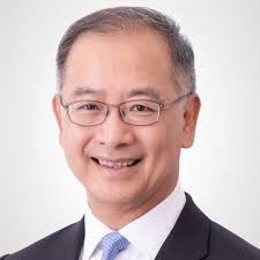
Eddie Yue, Chief Executive of the HKMA
“A stablecoin is not an investment vehicle, but rather a blockchain-based means of payment. By nature, it has no room for appreciation,” said Eddie Yue, Chief Executive of the HKMA.
The regulator is currently conducting an industry consultation on the implementation guidelines. It will begin accepting licence applications once the Ordinance comes into force. Yue confirmed that “only a handful of licences will be granted initially.”
“Applicants must demonstrate viable use cases and the ability to operate in a prudent and sustainable manner, as well as command the trust of market participants,” he added.
The HKMA noted that its approach to stablecoin regulation is in line with international standards. Its key focus is risk management—particularly in the areas of reserve asset protection, price stability, redemption processes, and anti-money laundering.
Companies must show strong governance, the ability to maintain stable value, clear use cases, secure technology, and financial and operational strength.
The move is part of a broader push to expand the range of crypto-related services in the city, first outlined earlier this year. The SFC has already authorised crypto staking services and approved two platforms to offer them.
The Hong Kong Monetary Authority (HKMA) has confirmed that it will implement the Stablecoin Ordinance on 1 August 2025. This law will allow fiat-pegged stablecoin issuers to apply for licences in the territory.
The confirmation followed the successful public listing of USDC issuer Circle in the United States. Its stock market debut demonstrated the potential for stablecoin adoption in traditional financial systems.
Hong Kong’s New Stablecoin Regulation
According to a report by the Fintech News Network, the Stablecoin Ordinance was passed by the city’s Legislative Council in May 2025. The framework is designed to strengthen the digital asset regulations of the jurisdiction.
It also gives legal recognition to stablecoins by formally defining them within the financial regulatory framework.
Eddie Yue, Chief Executive of the HKMA
“A stablecoin is not an investment vehicle, but rather a blockchain-based means of payment. By nature, it has no room for appreciation,” said Eddie Yue, Chief Executive of the HKMA.
The regulator is currently conducting an industry consultation on the implementation guidelines. It will begin accepting licence applications once the Ordinance comes into force. Yue confirmed that “only a handful of licences will be granted initially.”
“Applicants must demonstrate viable use cases and the ability to operate in a prudent and sustainable manner, as well as command the trust of market participants,” he added.
The HKMA noted that its approach to stablecoin regulation is in line with international standards. Its key focus is risk management—particularly in the areas of reserve asset protection, price stability, redemption processes, and anti-money laundering.
Companies must show strong governance, the ability to maintain stable value, clear use cases, secure technology, and financial and operational strength.
The move is part of a broader push to expand the range of crypto-related services in the city, first outlined earlier this year. The SFC has already authorised crypto staking services and approved two platforms to offer them.
Arnab Shome is an electronics engineer-turned-financial editor. He holds a Bachelor of Technology from the National Institute of Technology, Agartala. He entered the retail trading industry about a decade ago, covering the cryptocurrency market for Finance Magnates, and later expanded his coverage to include forex and CFDs as well.
His work at Finance Magnates includes C-level interviews, data-driven analysis, opinion pieces, and scoops of industry exclusives. He also contributes to Finance Magnates’ quarterly industry report.
Area of coverage:
1. CFD broker-related news
2. Industry-related Regulatory updates and developments
3. New retail trading trends
4. Prop trading industry updates
5. Executive interviews
Education:
Bachelor of Technology - National Institute of Technology, Agartala (India)
Kraken Steps Up Speed Race with New Equinix Colocation Service for Crypto Traders
FP Markets Winner Spotlight 🏆 | Global Broker of the Year 2025 #Trading #Broker #Innovation #Shorts
FP Markets Winner Spotlight 🏆 | Global Broker of the Year 2025 #Trading #Broker #Innovation #Shorts
FP Markets takes the spotlight as Global Broker of the Year 2025 at the Finance Magnates Awards.
Martin Stoilov, Head of Client Experience, shares that trust, innovation, and people played a key role in the company’s success, supported by a strong foundation of integrity and client-centricity.
Following this milestone, FP Markets continues to focus on growth, technology investment, and its core values of transparency and excellence.
👉 Be part of FM Awards 2026: https://awards.financemagnates.com/#nominate
FP Markets takes the spotlight as Global Broker of the Year 2025 at the Finance Magnates Awards.
Martin Stoilov, Head of Client Experience, shares that trust, innovation, and people played a key role in the company’s success, supported by a strong foundation of integrity and client-centricity.
Following this milestone, FP Markets continues to focus on growth, technology investment, and its core values of transparency and excellence.
👉 Be part of FM Awards 2026: https://awards.financemagnates.com/#nominate
In this video, we review @HolaPrimeMarketsOfficial, a multi-asset forex and CFDs broker offering different account types, trading platforms, and flexible trading conditions.
We cover the broker’s overall offering, including account options, trading environment, platforms like MT4 and MT5, and additional services such as managed accounts and fast withdrawals.
Watch the full video to see if Hola Prime Markets fits your trading needs.
📣 Stay up to date with the latest in finance and trading. Follow Finance Magnates for industry news, insights, and global event coverage.
Connect with us:
🔗 LinkedIn: /financemagnates
👍 Facebook: /financemagnates
📸 Instagram: https://www.instagram.com/financemagnates
🐦 X: https://x.com/financemagnates
🎥 TikTok: https://www.tiktok.com/tag/financemagnates
▶️ YouTube: /@financemagnates_official
#HolaPrime #ForexBroker #CFDTrading #FinanceMagnates #Trading #Forex #BrokerReview
In this video, we review @HolaPrimeMarketsOfficial, a multi-asset forex and CFDs broker offering different account types, trading platforms, and flexible trading conditions.
We cover the broker’s overall offering, including account options, trading environment, platforms like MT4 and MT5, and additional services such as managed accounts and fast withdrawals.
Watch the full video to see if Hola Prime Markets fits your trading needs.
📣 Stay up to date with the latest in finance and trading. Follow Finance Magnates for industry news, insights, and global event coverage.
Connect with us:
🔗 LinkedIn: /financemagnates
👍 Facebook: /financemagnates
📸 Instagram: https://www.instagram.com/financemagnates
🐦 X: https://x.com/financemagnates
🎥 TikTok: https://www.tiktok.com/tag/financemagnates
▶️ YouTube: /@financemagnates_official
#HolaPrime #ForexBroker #CFDTrading #FinanceMagnates #Trading #Forex #BrokerReview
Hola Prime Review: What You Need to Know | Full Breakdown by Finance Magnates
Hola Prime Review: What You Need to Know | Full Breakdown by Finance Magnates
In this video, we review @HolaPrime_Global, a proprietary trading firm offering evaluation programs and performance-based payouts in simulated market environments.
We cover how the challenge model works, including account types, profit splits (up to 95%), trading rules, and what it takes to reach a funded account. You’ll also learn about available platforms like MT4, MT5, cTrader, and more, along with insights into payouts, support, and trading conditions.
Watch the full video to see if Hola Prime fits your trading style.
📣 Stay up to date with the latest in finance and trading. Follow Finance Magnates for industry news, insights, and global event coverage.
Connect with us:
🔗 LinkedIn: /financemagnates
👍 Facebook: /financemagnates
📸 Instagram: https://www.instagram.com/financemagnates
🐦 X: https://x.com/financemagnates
🎥 TikTok: https://www.tiktok.com/tag/financemagnates
▶️ YouTube: /@financemagnates_official
#HolaPrime #PropFirm #Trading #FinanceMagnates #Forex #FuturesTrading #TradingReview #PropFirmReview
In this video, we review @HolaPrime_Global, a proprietary trading firm offering evaluation programs and performance-based payouts in simulated market environments.
We cover how the challenge model works, including account types, profit splits (up to 95%), trading rules, and what it takes to reach a funded account. You’ll also learn about available platforms like MT4, MT5, cTrader, and more, along with insights into payouts, support, and trading conditions.
Watch the full video to see if Hola Prime fits your trading style.
📣 Stay up to date with the latest in finance and trading. Follow Finance Magnates for industry news, insights, and global event coverage.
Connect with us:
🔗 LinkedIn: /financemagnates
👍 Facebook: /financemagnates
📸 Instagram: https://www.instagram.com/financemagnates
🐦 X: https://x.com/financemagnates
🎥 TikTok: https://www.tiktok.com/tag/financemagnates
▶️ YouTube: /@financemagnates_official
#HolaPrime #PropFirm #Trading #FinanceMagnates #Forex #FuturesTrading #TradingReview #PropFirmReview
Axi Winner Spotlight 🏆 | Global Most Innovative Broker 2025 #Innovation #Trading #Fintech #Broker
Axi Winner Spotlight 🏆 | Global Most Innovative Broker 2025 #Innovation #Trading #Fintech #Broker
Axi takes the spotlight at the Finance Magnates Awards, winning Global Most Innovative Broker 2025.
Olivia Xenofontos and Ivanna Openko share how the team will feel: proud, motivated, and ready to keep delivering.
They also describe the night as well-organized, focused, and enjoyable for all.
👉 Be part of FM Awards 2026.
Axi takes the spotlight at the Finance Magnates Awards, winning Global Most Innovative Broker 2025.
Olivia Xenofontos and Ivanna Openko share how the team will feel: proud, motivated, and ready to keep delivering.
They also describe the night as well-organized, focused, and enjoyable for all.
👉 Be part of FM Awards 2026.
Recognition that matters.
Built on transparency.
Driven by the industry.
The Finance Magnates Awards 2026.
Nominations are now open.
🔗 https://awards.financemagnates.com/?utm_source=SM&utm_medium=social&utm_campaign=recognition-matters
Recognition that matters.
Built on transparency.
Driven by the industry.
The Finance Magnates Awards 2026.
Nominations are now open.
🔗 https://awards.financemagnates.com/?utm_source=SM&utm_medium=social&utm_campaign=recognition-matters