Neuromarketing is where marketing meets brain science and when marketers learn to push consumers’ "buy button," sales skyrocketing as a result
IMAGINE that you can go on a magical journey into your consumers’ mind. You can see the way they think, their values, and beliefs; you can get a glimpse of their memories, fears and desires. As you go deeper into their subconscious mind you can even learn how they make decisions. Once you have discovered the mysteries of how they think, you can easily sell them anything you want. That would be amazing, isn't it? Neuromarketing is where marketing meets brain science and it is fast becoming one of the most fascinating tools for modern marketers. When marketers learn to push consumers’ "buy button", sales will skyrocket as a result.
I had an epiphany nine years ago while working for Google. We were hosting a remarkable event and the keynotespeaker was Marissa Mayer. Mayer, ex-Googler and current Yahoo CEO, was on a mission to create a better user experience for Google search. Her lecture was brilliant and inspirational beyond expectations - she unlocked some hidden secrets of modern technology and marketing, and then she explained how Google leverages the wisdom of the crowds, one of the most powerful forces in the world. She went on to describe how Google invests in extensive research, testing and optimization processes.
I was fascinated and became obsessed with the science of marketing. Lucky me! Working for Google means you have access to the highest quality of research and data anywhere on the planet. At Google, you can order almost any book or research study you want. I was overwhelmed by the power of this huge library that contained so many marketing materials and case studies on so many different levels. Over the years, I read hundreds of books and articles about the human brain. I wanted to learn how the brain works and how we make decisions.
The book that I loved the most is "Thinking, Fast and Slow" by Prof. Daniel Kahneman, a Nobel Prize laureate for his work on the psychology of judgment and decision-making. Prof. Kahneman presents fascinating insights that we can implement in marketing, for example the "Bananas and Vomit" effect. When people look at the words Bananas and Vomit, it could bring up unpleasant images and memories; some people might twist their faces, feel disgust and an increase of their heart rate. It's a completely automatic human reaction that is beyond control. Here we have two different words, one representing a tasty, tropical fruit that most people like, and the other representing sickness, a hangover or disgust.
Our brain is programmed to create a connection and logic between these two different words, and even associates these negative feelings towards bananas, albeit temporarily. When it comes to marketing and sales it's very important to learn how to avoid the "Bananas and Vomit" effect. The best way to achieve this is to pay attention and give serious thought on every word you use in every scenario. Steve Jobs invested long hours in tailoring every word and every message appearing in Apple marketing communications. Jobs was obsessed in finding the most influential messages, colors, images and sounds that would increase sales and revenues.
Missed Opportunities in Modern Marketing
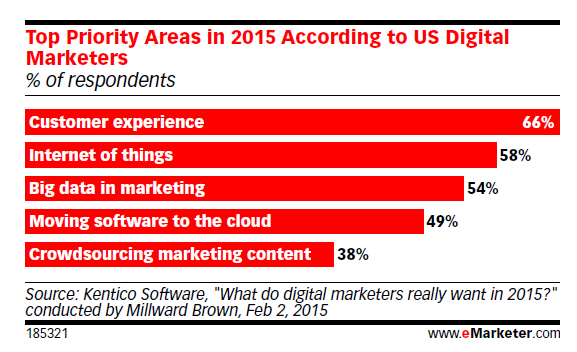
According to eMarketer, a recent study shows that customer experience and data are top priorities among US digital marketers this year.
BUT the million dollar question is: What kind of data should marketers analyze first in order to improve customer experience that will lead to higher conversion rates and sales?
Marketers are drowning in figures and statistics; there are myriad channels and tools currently available, making it extremely challenging for CMOs and CEOs to analyze what is important. Even market leaders in the Forex and binary industry often find it hard to find their way in this cacophony of findings. The key is to understand that the buying process starts and ends in the brain, and in most cases our decision-making is related to experiencing a good feeling. When we feel good about something, we will most likely move towards that direction in every aspect of our lives. Coca Cola, one of the most valuable brands in the world, champions this concept. The evolution of company slogans demonstrates how driving sales is related with making people feel good. The company started with a direct message "Drink Coca Cola" in 1896, and changed it in 2009 to "Open Happiness".
"Yes We Can"
In 2008, Obama's presidential campaign "Yes We Can" was brilliant. It proved how to push the "buy button" and how using words can increase conversion and revenues. Obama's digital team, led by ex-Googlers, contributed to Obama's outstanding historical success. In one test, they increased donations dramatically by only changing the call to action button. Five different messages were tested: "Donate now"; "Please donate"; "Why donate"; "Donate and get a gift"; and "Contribute". Before you continue reading, take a moment to think what message was most effective.
Most people might think that "Donate now" or "Donate and get a gift" created better conversion rates - but they are wrong. Results show that in this context, "Contribute" was the most influential, and it increased conversion rates by more than 18%. Why did "Contribute" work better than all the rest? There are two main reasons: The first is that it surprised people and caught their attention, and the second is that it was emotional and it made people feel good about donating money - it made people feel that they are connected, and when they donate money they became contributors. This caused them to feel they are part of something bigger, it's not just about the money; it's about their values and beliefs.
Do This Now:
Take a moment to think about your target audience, and ask yourself what kind of words you should use in every step and every marketing channel. Can you find words or phrases that might cause the "Bananas and Vomit" effect? How can you find a better, more influential way to change consumers’ perception about your brand?
IMAGINE that you can go on a magical journey into your consumers’ mind. You can see the way they think, their values, and beliefs; you can get a glimpse of their memories, fears and desires. As you go deeper into their subconscious mind you can even learn how they make decisions. Once you have discovered the mysteries of how they think, you can easily sell them anything you want. That would be amazing, isn't it? Neuromarketing is where marketing meets brain science and it is fast becoming one of the most fascinating tools for modern marketers. When marketers learn to push consumers’ "buy button", sales will skyrocket as a result.
I had an epiphany nine years ago while working for Google. We were hosting a remarkable event and the keynotespeaker was Marissa Mayer. Mayer, ex-Googler and current Yahoo CEO, was on a mission to create a better user experience for Google search. Her lecture was brilliant and inspirational beyond expectations - she unlocked some hidden secrets of modern technology and marketing, and then she explained how Google leverages the wisdom of the crowds, one of the most powerful forces in the world. She went on to describe how Google invests in extensive research, testing and optimization processes.
I was fascinated and became obsessed with the science of marketing. Lucky me! Working for Google means you have access to the highest quality of research and data anywhere on the planet. At Google, you can order almost any book or research study you want. I was overwhelmed by the power of this huge library that contained so many marketing materials and case studies on so many different levels. Over the years, I read hundreds of books and articles about the human brain. I wanted to learn how the brain works and how we make decisions.
The book that I loved the most is "Thinking, Fast and Slow" by Prof. Daniel Kahneman, a Nobel Prize laureate for his work on the psychology of judgment and decision-making. Prof. Kahneman presents fascinating insights that we can implement in marketing, for example the "Bananas and Vomit" effect. When people look at the words Bananas and Vomit, it could bring up unpleasant images and memories; some people might twist their faces, feel disgust and an increase of their heart rate. It's a completely automatic human reaction that is beyond control. Here we have two different words, one representing a tasty, tropical fruit that most people like, and the other representing sickness, a hangover or disgust.
Our brain is programmed to create a connection and logic between these two different words, and even associates these negative feelings towards bananas, albeit temporarily. When it comes to marketing and sales it's very important to learn how to avoid the "Bananas and Vomit" effect. The best way to achieve this is to pay attention and give serious thought on every word you use in every scenario. Steve Jobs invested long hours in tailoring every word and every message appearing in Apple marketing communications. Jobs was obsessed in finding the most influential messages, colors, images and sounds that would increase sales and revenues.
Missed Opportunities in Modern Marketing
According to eMarketer, a recent study shows that customer experience and data are top priorities among US digital marketers this year.
BUT the million dollar question is: What kind of data should marketers analyze first in order to improve customer experience that will lead to higher conversion rates and sales?
Marketers are drowning in figures and statistics; there are myriad channels and tools currently available, making it extremely challenging for CMOs and CEOs to analyze what is important. Even market leaders in the Forex and binary industry often find it hard to find their way in this cacophony of findings. The key is to understand that the buying process starts and ends in the brain, and in most cases our decision-making is related to experiencing a good feeling. When we feel good about something, we will most likely move towards that direction in every aspect of our lives. Coca Cola, one of the most valuable brands in the world, champions this concept. The evolution of company slogans demonstrates how driving sales is related with making people feel good. The company started with a direct message "Drink Coca Cola" in 1896, and changed it in 2009 to "Open Happiness".
"Yes We Can"
In 2008, Obama's presidential campaign "Yes We Can" was brilliant. It proved how to push the "buy button" and how using words can increase conversion and revenues. Obama's digital team, led by ex-Googlers, contributed to Obama's outstanding historical success. In one test, they increased donations dramatically by only changing the call to action button. Five different messages were tested: "Donate now"; "Please donate"; "Why donate"; "Donate and get a gift"; and "Contribute". Before you continue reading, take a moment to think what message was most effective.
Most people might think that "Donate now" or "Donate and get a gift" created better conversion rates - but they are wrong. Results show that in this context, "Contribute" was the most influential, and it increased conversion rates by more than 18%. Why did "Contribute" work better than all the rest? There are two main reasons: The first is that it surprised people and caught their attention, and the second is that it was emotional and it made people feel good about donating money - it made people feel that they are connected, and when they donate money they became contributors. This caused them to feel they are part of something bigger, it's not just about the money; it's about their values and beliefs.
Do This Now:
Take a moment to think about your target audience, and ask yourself what kind of words you should use in every step and every marketing channel. Can you find words or phrases that might cause the "Bananas and Vomit" effect? How can you find a better, more influential way to change consumers’ perception about your brand?
Court Orders $204.6 Million Penalties in CFTC Binary Options Case
Featured Videos
AvaTrade to Acquire Most of FXCM; NAGA Raises $8M
AvaTrade to Acquire Most of FXCM; NAGA Raises $8M
AvaTrade to Acquire Most of FXCM; NAGA Raises $8M
AvaTrade to Acquire Most of FXCM; NAGA Raises $8M
Today’s financial news recap covers AvaTrade agrees to acquire most of FXCM, NAGA secures eight million dollars in new financing, and Wise seeks a tax settlement in the UK.
Finance Magnates Daily Recap brings you the latest news from forex and CFD brokers, fintech, payments, cryptocurrency, digital assets, trading platforms, financial regulation and global markets.
Get the key company news, executive moves, deals, regulatory updates and market developments of the day, in just a few minutes. New episodes published every weekday.
Read more: https://www.financemagnates.com
#FinanceMagnates #ForexNews #FintechNews
Today’s financial news recap covers AvaTrade agrees to acquire most of FXCM, NAGA secures eight million dollars in new financing, and Wise seeks a tax settlement in the UK.
Finance Magnates Daily Recap brings you the latest news from forex and CFD brokers, fintech, payments, cryptocurrency, digital assets, trading platforms, financial regulation and global markets.
Get the key company news, executive moves, deals, regulatory updates and market developments of the day, in just a few minutes. New episodes published every weekday.
Read more: https://www.financemagnates.com
#FinanceMagnates #ForexNews #FintechNews
Today’s financial news recap covers AvaTrade agrees to acquire most of FXCM, NAGA secures eight million dollars in new financing, and Wise seeks a tax settlement in the UK.
Finance Magnates Daily Recap brings you the latest news from forex and CFD brokers, fintech, payments, cryptocurrency, digital assets, trading platforms, financial regulation and global markets.
Get the key company news, executive moves, deals, regulatory updates and market developments of the day, in just a few minutes. New episodes published every weekday.
Read more: https://www.financemagnates.com
#FinanceMagnates #ForexNews #FintechNews
Today’s financial news recap covers AvaTrade agrees to acquire most of FXCM, NAGA secures eight million dollars in new financing, and Wise seeks a tax settlement in the UK.
Finance Magnates Daily Recap brings you the latest news from forex and CFD brokers, fintech, payments, cryptocurrency, digital assets, trading platforms, financial regulation and global markets.
Get the key company news, executive moves, deals, regulatory updates and market developments of the day, in just a few minutes. New episodes published every weekday.
Read more: https://www.financemagnates.com
#FinanceMagnates #ForexNews #FintechNews
XTB Adds Overnight US Stock Trading; Nasdaq Ventures Invests in One Trading
XTB Adds Overnight US Stock Trading; Nasdaq Ventures Invests in One Trading
XTB Adds Overnight US Stock Trading; Nasdaq Ventures Invests in One Trading
XTB Adds Overnight US Stock Trading; Nasdaq Ventures Invests in One Trading
XTB Adds Overnight US Stock Trading; Nasdaq Ventures Invests in One Trading
XTB Adds Overnight US Stock Trading; Nasdaq Ventures Invests in One Trading
Today’s financial news recap covers XTB expands overnight US stock trading, Fortrade reports higher revenue, Nasdaq backs One Trading, and Vest Labs raises 13 million dollars.
Finance Magnates Daily Recap brings you the latest news from forex and CFD brokers, fintech, payments, cryptocurrency, digital assets, trading platforms, financial regulation and global markets.
Get the key company news, executive moves, deals, regulatory updates and market developments of the day, in just a few minutes. New episodes published every weekday.
Read more: https://www.financemagnates.com
#FinanceMagnates #ForexNews #FintechNews
Today’s financial news recap covers XTB expands overnight US stock trading, Fortrade reports higher revenue, Nasdaq backs One Trading, and Vest Labs raises 13 million dollars.
Finance Magnates Daily Recap brings you the latest news from forex and CFD brokers, fintech, payments, cryptocurrency, digital assets, trading platforms, financial regulation and global markets.
Get the key company news, executive moves, deals, regulatory updates and market developments of the day, in just a few minutes. New episodes published every weekday.
Read more: https://www.financemagnates.com
#FinanceMagnates #ForexNews #FintechNews
Today’s financial news recap covers XTB expands overnight US stock trading, Fortrade reports higher revenue, Nasdaq backs One Trading, and Vest Labs raises 13 million dollars.
Finance Magnates Daily Recap brings you the latest news from forex and CFD brokers, fintech, payments, cryptocurrency, digital assets, trading platforms, financial regulation and global markets.
Get the key company news, executive moves, deals, regulatory updates and market developments of the day, in just a few minutes. New episodes published every weekday.
Read more: https://www.financemagnates.com
#FinanceMagnates #ForexNews #FintechNews
Today’s financial news recap covers XTB expands overnight US stock trading, Fortrade reports higher revenue, Nasdaq backs One Trading, and Vest Labs raises 13 million dollars.
Finance Magnates Daily Recap brings you the latest news from forex and CFD brokers, fintech, payments, cryptocurrency, digital assets, trading platforms, financial regulation and global markets.
Get the key company news, executive moves, deals, regulatory updates and market developments of the day, in just a few minutes. New episodes published every weekday.
Read more: https://www.financemagnates.com
#FinanceMagnates #ForexNews #FintechNews
Today’s financial news recap covers XTB expands overnight US stock trading, Fortrade reports higher revenue, Nasdaq backs One Trading, and Vest Labs raises 13 million dollars.
Finance Magnates Daily Recap brings you the latest news from forex and CFD brokers, fintech, payments, cryptocurrency, digital assets, trading platforms, financial regulation and global markets.
Get the key company news, executive moves, deals, regulatory updates and market developments of the day, in just a few minutes. New episodes published every weekday.
Read more: https://www.financemagnates.com
#FinanceMagnates #ForexNews #FintechNews
Today’s financial news recap covers XTB expands overnight US stock trading, Fortrade reports higher revenue, Nasdaq backs One Trading, and Vest Labs raises 13 million dollars.
Finance Magnates Daily Recap brings you the latest news from forex and CFD brokers, fintech, payments, cryptocurrency, digital assets, trading platforms, financial regulation and global markets.
Get the key company news, executive moves, deals, regulatory updates and market developments of the day, in just a few minutes. New episodes published every weekday.
Read more: https://www.financemagnates.com
#FinanceMagnates #ForexNews #FintechNews
CMC Founder Downplays Volatility Hit; Devexperts Names CEO
CMC Founder Downplays Volatility Hit; Devexperts Names CEO
CMC Founder Downplays Volatility Hit; Devexperts Names CEO
CMC Founder Downplays Volatility Hit; Devexperts Names CEO
CMC Founder Downplays Volatility Hit; Devexperts Names CEO
CMC Founder Downplays Volatility Hit; Devexperts Names CEO
Today’s financial news recap covers low volatility pressures brokers, Devexperts names a new CEO, Saxo cuts onboarding time, and OKX reaches a 25 billion dollar valuation.
Finance Magnates Daily Recap brings you the latest news from forex and CFD brokers, fintech, payments, cryptocurrency, digital assets, trading platforms, financial regulation and global markets.
Get the key company news, executive moves, deals, regulatory updates and market developments of the day, in just a few minutes. New episodes published every weekday.
Read more: https://www.financemagnates.com
#FinanceMagnates #ForexNews #FintechNews
Today’s financial news recap covers low volatility pressures brokers, Devexperts names a new CEO, Saxo cuts onboarding time, and OKX reaches a 25 billion dollar valuation.
Finance Magnates Daily Recap brings you the latest news from forex and CFD brokers, fintech, payments, cryptocurrency, digital assets, trading platforms, financial regulation and global markets.
Get the key company news, executive moves, deals, regulatory updates and market developments of the day, in just a few minutes. New episodes published every weekday.
Read more: https://www.financemagnates.com
#FinanceMagnates #ForexNews #FintechNews
Today’s financial news recap covers low volatility pressures brokers, Devexperts names a new CEO, Saxo cuts onboarding time, and OKX reaches a 25 billion dollar valuation.
Finance Magnates Daily Recap brings you the latest news from forex and CFD brokers, fintech, payments, cryptocurrency, digital assets, trading platforms, financial regulation and global markets.
Get the key company news, executive moves, deals, regulatory updates and market developments of the day, in just a few minutes. New episodes published every weekday.
Read more: https://www.financemagnates.com
#FinanceMagnates #ForexNews #FintechNews
Today’s financial news recap covers low volatility pressures brokers, Devexperts names a new CEO, Saxo cuts onboarding time, and OKX reaches a 25 billion dollar valuation.
Finance Magnates Daily Recap brings you the latest news from forex and CFD brokers, fintech, payments, cryptocurrency, digital assets, trading platforms, financial regulation and global markets.
Get the key company news, executive moves, deals, regulatory updates and market developments of the day, in just a few minutes. New episodes published every weekday.
Read more: https://www.financemagnates.com
#FinanceMagnates #ForexNews #FintechNews
Today’s financial news recap covers low volatility pressures brokers, Devexperts names a new CEO, Saxo cuts onboarding time, and OKX reaches a 25 billion dollar valuation.
Finance Magnates Daily Recap brings you the latest news from forex and CFD brokers, fintech, payments, cryptocurrency, digital assets, trading platforms, financial regulation and global markets.
Get the key company news, executive moves, deals, regulatory updates and market developments of the day, in just a few minutes. New episodes published every weekday.
Read more: https://www.financemagnates.com
#FinanceMagnates #ForexNews #FintechNews
Today’s financial news recap covers low volatility pressures brokers, Devexperts names a new CEO, Saxo cuts onboarding time, and OKX reaches a 25 billion dollar valuation.
Finance Magnates Daily Recap brings you the latest news from forex and CFD brokers, fintech, payments, cryptocurrency, digital assets, trading platforms, financial regulation and global markets.
Get the key company news, executive moves, deals, regulatory updates and market developments of the day, in just a few minutes. New episodes published every weekday.
Read more: https://www.financemagnates.com
#FinanceMagnates #ForexNews #FintechNews
Today’s financial news recap covers Trade Nation buys FXCM's UK client book, Trading 212 reports higher revenue, the CFTC's move to allow perpetual index futures.
Finance Magnates Daily Recap brings you the latest news from forex and CFD brokers, fintech, payments, cryptocurrency, digital assets, trading platforms, financial regulation and global markets.
Get the key company news, executive moves, deals, regulatory updates and market developments of the day, in just a few minutes. New episodes published every weekday.
Read more: https://www.financemagnates.com
#FinanceMagnates #ForexNews #FintechNews
Today’s financial news recap covers Trade Nation buys FXCM's UK client book, Trading 212 reports higher revenue, the CFTC's move to allow perpetual index futures.
Finance Magnates Daily Recap brings you the latest news from forex and CFD brokers, fintech, payments, cryptocurrency, digital assets, trading platforms, financial regulation and global markets.
Get the key company news, executive moves, deals, regulatory updates and market developments of the day, in just a few minutes. New episodes published every weekday.
Read more: https://www.financemagnates.com
#FinanceMagnates #ForexNews #FintechNews
Today’s financial news recap covers Trade Nation buys FXCM's UK client book, Trading 212 reports higher revenue, the CFTC's move to allow perpetual index futures.
Finance Magnates Daily Recap brings you the latest news from forex and CFD brokers, fintech, payments, cryptocurrency, digital assets, trading platforms, financial regulation and global markets.
Get the key company news, executive moves, deals, regulatory updates and market developments of the day, in just a few minutes. New episodes published every weekday.
Read more: https://www.financemagnates.com
#FinanceMagnates #ForexNews #FintechNews
Today’s financial news recap covers Trade Nation buys FXCM's UK client book, Trading 212 reports higher revenue, the CFTC's move to allow perpetual index futures.
Finance Magnates Daily Recap brings you the latest news from forex and CFD brokers, fintech, payments, cryptocurrency, digital assets, trading platforms, financial regulation and global markets.
Get the key company news, executive moves, deals, regulatory updates and market developments of the day, in just a few minutes. New episodes published every weekday.
Read more: https://www.financemagnates.com
#FinanceMagnates #ForexNews #FintechNews
Today’s financial news recap covers Trade Nation buys FXCM's UK client book, Trading 212 reports higher revenue, the CFTC's move to allow perpetual index futures.
Finance Magnates Daily Recap brings you the latest news from forex and CFD brokers, fintech, payments, cryptocurrency, digital assets, trading platforms, financial regulation and global markets.
Get the key company news, executive moves, deals, regulatory updates and market developments of the day, in just a few minutes. New episodes published every weekday.
Read more: https://www.financemagnates.com
#FinanceMagnates #ForexNews #FintechNews
Today’s financial news recap covers Trade Nation buys FXCM's UK client book, Trading 212 reports higher revenue, the CFTC's move to allow perpetual index futures.
Finance Magnates Daily Recap brings you the latest news from forex and CFD brokers, fintech, payments, cryptocurrency, digital assets, trading platforms, financial regulation and global markets.
Get the key company news, executive moves, deals, regulatory updates and market developments of the day, in just a few minutes. New episodes published every weekday.
Read more: https://www.financemagnates.com
#FinanceMagnates #ForexNews #FintechNews
Your career isn’t a linear path.
Your career isn’t a linear path.
Your career isn’t a linear path.
Your career isn’t a linear path.
Your career isn’t a linear path.
Your career isn’t a linear path.
Roles change. Career goals change. Sometimes you want a completely new challenge.
But the skills and knowledge you build along the way can stay with you and give you something to build on.
For Jeff Patterson, that continued growth is key to long-term career development.
You bring the skills. FM Academy helps you build the knowledge.
#FMAcademy #FinanceMagnates #FinanceCareers #ProfessionalDevelopment #Fintech
Roles change. Career goals change. Sometimes you want a completely new challenge.
But the skills and knowledge you build along the way can stay with you and give you something to build on.
For Jeff Patterson, that continued growth is key to long-term career development.
You bring the skills. FM Academy helps you build the knowledge.
#FMAcademy #FinanceMagnates #FinanceCareers #ProfessionalDevelopment #Fintech
Roles change. Career goals change. Sometimes you want a completely new challenge.
But the skills and knowledge you build along the way can stay with you and give you something to build on.
For Jeff Patterson, that continued growth is key to long-term career development.
You bring the skills. FM Academy helps you build the knowledge.
#FMAcademy #FinanceMagnates #FinanceCareers #ProfessionalDevelopment #Fintech
Roles change. Career goals change. Sometimes you want a completely new challenge.
But the skills and knowledge you build along the way can stay with you and give you something to build on.
For Jeff Patterson, that continued growth is key to long-term career development.
You bring the skills. FM Academy helps you build the knowledge.
#FMAcademy #FinanceMagnates #FinanceCareers #ProfessionalDevelopment #Fintech
Roles change. Career goals change. Sometimes you want a completely new challenge.
But the skills and knowledge you build along the way can stay with you and give you something to build on.
For Jeff Patterson, that continued growth is key to long-term career development.
You bring the skills. FM Academy helps you build the knowledge.
#FMAcademy #FinanceMagnates #FinanceCareers #ProfessionalDevelopment #Fintech
Roles change. Career goals change. Sometimes you want a completely new challenge.
But the skills and knowledge you build along the way can stay with you and give you something to build on.
For Jeff Patterson, that continued growth is key to long-term career development.
You bring the skills. FM Academy helps you build the knowledge.
#FMAcademy #FinanceMagnates #FinanceCareers #ProfessionalDevelopment #Fintech