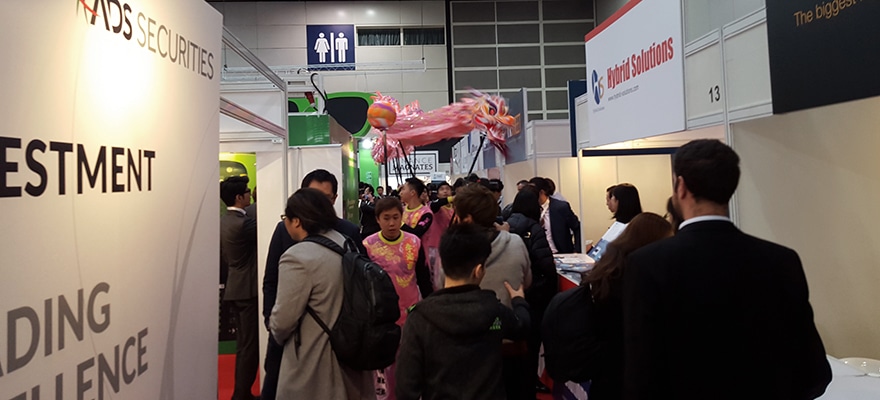
Discussions on marketing and technology take center stage as the iFX Expo in Hong Kong gets under way.
The iFX Expo in Hong Kong started out with a blast today. Highlighting the first day were panels, workshop sessions and the main event, the packed conference center. Located in the spacious Hong Kong Convention Center, this year’s iFX Expo is the largest ever. Attending the day was a large contingency of local Hong Kong finance industry professionals which composed the largest group by country of those present. Also in attendance has been a diverse base of conference goers from both nearby and from far South East Asian countries such as Singapore, Indonesia and Malaysia.
One of the themes of the annual Asia conference is the ability for exhibitors to meet potential new Asia- region customers. In this regard, the show consists of many brokers targeting the region, at the iFX Expo looking to meet introducing brokers and affiliates. As such, partnerships highlighted the message for many firms. Included were money management solutions to offer introducing brokers an easy to monetize solution. Also, technologies and brokers were stressing the simplicity of their systems for both partners and end-user traders.
Among the topics discussed was localization. According to panelists, it’s not enough to just translate your website and product into many languages, but firms should also aim to achieve regional flavor. This includes the use of geo-targeting users to have the website appear in the language of the country they are from, using color schemes that are popular in the region and videos featuring acting, voices and look of that country.
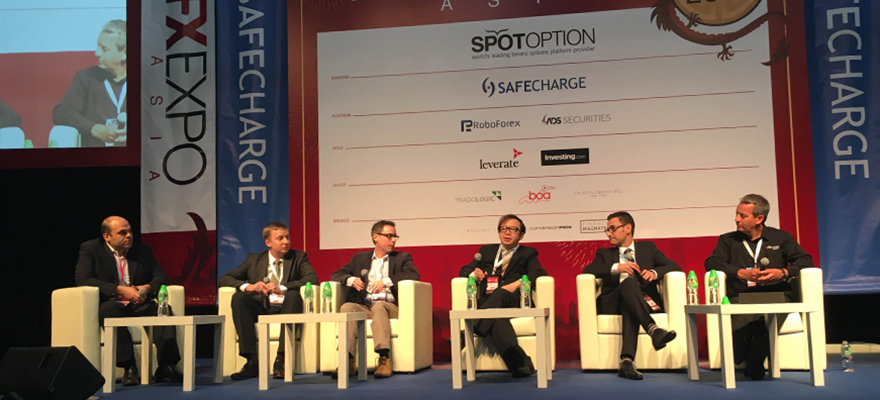
Marketing Panel, iFX Expo Hong Kong 2016
Panelists were also asked about what they believe are the key trends of marketing now. Despite the move towards automation and bringing trading online, panelists recommended that brokers remember this is a relationship based business. Therefore, knowing your customer and having a personal connection is important. Ran Cohen explained that due to this need, his firm is finding that live webinars, such as those in collaboration with a forex portal with a large email subscriber base, are providing the highest conversion rates. Cohen conceded that such webinars are limited in their audience since they are live, but are worth undertaking because of their positive results.
Dr. Avi Grushka cited behavioral economics as an important marketing trend. Grushka explained that to a broker, two customers who deposited $50 and now have $75 may look the same, but if one made well more than $75 and lost it all, that trader’s psychology is very different than someone who profited $25 and has never lost. As such, using big data technology along with behavioral economics to understand clients better can provide superior retention performance when brokers are marketing to customers based on their psychological profile.
In regard to relationships, Alexander Koshkin related the importance of similarly having strong connections with affiliate and introducing broker partners. Koshkin explained that partners provide important insight such as optimal adverts for different regions which can lead to better conversion rates.
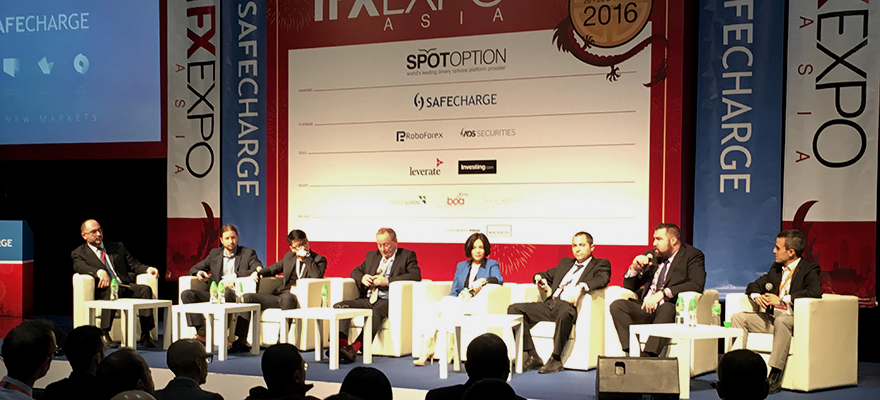
Technology Panel, iFX Expo Hong Kong 2016
Like for marketing, the technology panel focused on Asia. Participating were Eric Cui of Rise Hill Holdings Limited, Paul G. Smith of Mobile Trading Partners, Oded Shefer of CPattern, Itai Damti from Leverage, Andrew Ralich representing OneZero and Albina Zhdanova from Tools4Brokers.
One of the interesting debates was with regard to regional customizations for MetaTrader 4. The consensus was that the platform has become so synonymous with the retail trading industry that most traders are content with MT4 without requiring regional customizations. However, it was suggested that despite customer familiarity with MT4, traders are still looking for unique bolt-on products such as mobile platforms and education which need to be made available in a regional flavor.
Another topic of discussion related towards mobile trading. A portion of panelists believed we will soon see the arrival of a true mobile only broker (more on this in a follow-up article). However, the clear consensus is that mobile trading still hasn’t surpassed the desktop experience with the vast majority of customers limiting their use of mobile apps to monitor the market.
Nonetheless, panelists highlighted the growth in mobile only users and the importance of realizing that they exist. As such, brokers need to be sensitive to satisfying this growing client base. Possible solutions include the integrations of payment and compliance processes on mobile and creating apps that learn about the user and adapt the interface to meet their profile.
The iFX Expo in Hong Kong started out with a blast today. Highlighting the first day were panels, workshop sessions and the main event, the packed conference center. Located in the spacious Hong Kong Convention Center, this year’s iFX Expo is the largest ever. Attending the day was a large contingency of local Hong Kong finance industry professionals which composed the largest group by country of those present. Also in attendance has been a diverse base of conference goers from both nearby and from far South East Asian countries such as Singapore, Indonesia and Malaysia.
One of the themes of the annual Asia conference is the ability for exhibitors to meet potential new Asia- region customers. In this regard, the show consists of many brokers targeting the region, at the iFX Expo looking to meet introducing brokers and affiliates. As such, partnerships highlighted the message for many firms. Included were money management solutions to offer introducing brokers an easy to monetize solution. Also, technologies and brokers were stressing the simplicity of their systems for both partners and end-user traders.
Among the topics discussed was localization. According to panelists, it’s not enough to just translate your website and product into many languages, but firms should also aim to achieve regional flavor. This includes the use of geo-targeting users to have the website appear in the language of the country they are from, using color schemes that are popular in the region and videos featuring acting, voices and look of that country.
Marketing Panel, iFX Expo Hong Kong 2016
Panelists were also asked about what they believe are the key trends of marketing now. Despite the move towards automation and bringing trading online, panelists recommended that brokers remember this is a relationship based business. Therefore, knowing your customer and having a personal connection is important. Ran Cohen explained that due to this need, his firm is finding that live webinars, such as those in collaboration with a forex portal with a large email subscriber base, are providing the highest conversion rates. Cohen conceded that such webinars are limited in their audience since they are live, but are worth undertaking because of their positive results.
Dr. Avi Grushka cited behavioral economics as an important marketing trend. Grushka explained that to a broker, two customers who deposited $50 and now have $75 may look the same, but if one made well more than $75 and lost it all, that trader’s psychology is very different than someone who profited $25 and has never lost. As such, using big data technology along with behavioral economics to understand clients better can provide superior retention performance when brokers are marketing to customers based on their psychological profile.
In regard to relationships, Alexander Koshkin related the importance of similarly having strong connections with affiliate and introducing broker partners. Koshkin explained that partners provide important insight such as optimal adverts for different regions which can lead to better conversion rates.
Technology Panel, iFX Expo Hong Kong 2016
Like for marketing, the technology panel focused on Asia. Participating were Eric Cui of Rise Hill Holdings Limited, Paul G. Smith of Mobile Trading Partners, Oded Shefer of CPattern, Itai Damti from Leverage, Andrew Ralich representing OneZero and Albina Zhdanova from Tools4Brokers.
One of the interesting debates was with regard to regional customizations for MetaTrader 4. The consensus was that the platform has become so synonymous with the retail trading industry that most traders are content with MT4 without requiring regional customizations. However, it was suggested that despite customer familiarity with MT4, traders are still looking for unique bolt-on products such as mobile platforms and education which need to be made available in a regional flavor.
Another topic of discussion related towards mobile trading. A portion of panelists believed we will soon see the arrival of a true mobile only broker (more on this in a follow-up article). However, the clear consensus is that mobile trading still hasn’t surpassed the desktop experience with the vast majority of customers limiting their use of mobile apps to monitor the market.
Nonetheless, panelists highlighted the growth in mobile only users and the importance of realizing that they exist. As such, brokers need to be sensitive to satisfying this growing client base. Possible solutions include the integrations of payment and compliance processes on mobile and creating apps that learn about the user and adapt the interface to meet their profile.
iFOREX Adds Saudi and South Korean Equity CFDs as IPO Is Delayed
Featured Videos
Executive Interview | Charlotte Bullock | Chief Product Officer, Bank of London | FMLS:25
In this interview, we sat down with Charlotte Bullock, Head of Product at The Bank of London, previously at SAP and now shaping product at one of the sector’s most ambitious new banking players.
Charlotte reflects on the Summit so far and talks about the culture inside fintech banks today. We look at the pressures that come with scaling, and how firms can hold onto the nimble approach that made them stand out early on.
We also cover the state of payments ahead of her appearance on the payments roundtable: the blockages financial firms face, the areas that still need fixing, and what a realistic solution looks like in 2026.
In this interview, we sat down with Charlotte Bullock, Head of Product at The Bank of London, previously at SAP and now shaping product at one of the sector’s most ambitious new banking players.
Charlotte reflects on the Summit so far and talks about the culture inside fintech banks today. We look at the pressures that come with scaling, and how firms can hold onto the nimble approach that made them stand out early on.
We also cover the state of payments ahead of her appearance on the payments roundtable: the blockages financial firms face, the areas that still need fixing, and what a realistic solution looks like in 2026.
In this interview, we sat down with Charlotte Bullock, Head of Product at The Bank of London, previously at SAP and now shaping product at one of the sector’s most ambitious new banking players.
Charlotte reflects on the Summit so far and talks about the culture inside fintech banks today. We look at the pressures that come with scaling, and how firms can hold onto the nimble approach that made them stand out early on.
We also cover the state of payments ahead of her appearance on the payments roundtable: the blockages financial firms face, the areas that still need fixing, and what a realistic solution looks like in 2026.
In this interview, we sat down with Charlotte Bullock, Head of Product at The Bank of London, previously at SAP and now shaping product at one of the sector’s most ambitious new banking players.
Charlotte reflects on the Summit so far and talks about the culture inside fintech banks today. We look at the pressures that come with scaling, and how firms can hold onto the nimble approach that made them stand out early on.
We also cover the state of payments ahead of her appearance on the payments roundtable: the blockages financial firms face, the areas that still need fixing, and what a realistic solution looks like in 2026.
In this conversation, we sit down with Drew Niv, CSO at ATFX Connect and one of the most influential figures in modern FX.
We speak about market structure, the institutional view on liquidity, and the sharp rise of prop trading, a sector Drew has been commenting on in recent months. Drew explains why he once dismissed prop trading, why his view changed, and what he now thinks the model means for brokers, clients and risk managers.
We explore subscription-fee dependency, the high reneging rate, and the long-term challenge: how brokers can build a more stable and honest version of the model. Drew also talks about the traffic advantage standalone prop firms have built and why brokers may still win in the long run if they take the right approach.
In this conversation, we sit down with Drew Niv, CSO at ATFX Connect and one of the most influential figures in modern FX.
We speak about market structure, the institutional view on liquidity, and the sharp rise of prop trading, a sector Drew has been commenting on in recent months. Drew explains why he once dismissed prop trading, why his view changed, and what he now thinks the model means for brokers, clients and risk managers.
We explore subscription-fee dependency, the high reneging rate, and the long-term challenge: how brokers can build a more stable and honest version of the model. Drew also talks about the traffic advantage standalone prop firms have built and why brokers may still win in the long run if they take the right approach.
In this conversation, we sit down with Drew Niv, CSO at ATFX Connect and one of the most influential figures in modern FX.
We speak about market structure, the institutional view on liquidity, and the sharp rise of prop trading, a sector Drew has been commenting on in recent months. Drew explains why he once dismissed prop trading, why his view changed, and what he now thinks the model means for brokers, clients and risk managers.
We explore subscription-fee dependency, the high reneging rate, and the long-term challenge: how brokers can build a more stable and honest version of the model. Drew also talks about the traffic advantage standalone prop firms have built and why brokers may still win in the long run if they take the right approach.
In this conversation, we sit down with Drew Niv, CSO at ATFX Connect and one of the most influential figures in modern FX.
We speak about market structure, the institutional view on liquidity, and the sharp rise of prop trading, a sector Drew has been commenting on in recent months. Drew explains why he once dismissed prop trading, why his view changed, and what he now thinks the model means for brokers, clients and risk managers.
We explore subscription-fee dependency, the high reneging rate, and the long-term challenge: how brokers can build a more stable and honest version of the model. Drew also talks about the traffic advantage standalone prop firms have built and why brokers may still win in the long run if they take the right approach.
In this conversation, we sit down with Drew Niv, CSO at ATFX Connect and one of the most influential figures in modern FX.
We speak about market structure, the institutional view on liquidity, and the sharp rise of prop trading, a sector Drew has been commenting on in recent months. Drew explains why he once dismissed prop trading, why his view changed, and what he now thinks the model means for brokers, clients and risk managers.
We explore subscription-fee dependency, the high reneging rate, and the long-term challenge: how brokers can build a more stable and honest version of the model. Drew also talks about the traffic advantage standalone prop firms have built and why brokers may still win in the long run if they take the right approach.
In this conversation, we sit down with Drew Niv, CSO at ATFX Connect and one of the most influential figures in modern FX.
We speak about market structure, the institutional view on liquidity, and the sharp rise of prop trading, a sector Drew has been commenting on in recent months. Drew explains why he once dismissed prop trading, why his view changed, and what he now thinks the model means for brokers, clients and risk managers.
We explore subscription-fee dependency, the high reneging rate, and the long-term challenge: how brokers can build a more stable and honest version of the model. Drew also talks about the traffic advantage standalone prop firms have built and why brokers may still win in the long run if they take the right approach.
Executive Interview | Remonda Z. Kirketerp Møller| CEO & Founder Muinmos | FMLS:25
In this interview, Remonda Z. Kirketerp Møller, founder of Muinmos, breaks down the state of AI in regtech and what responsible adoption really looks like for brokers. We talk about rising fragmentation, the pressures around compliance accuracy, and why most firms are still in the early stages of AI maturity.
Ramanda also shares insights on regulator sandboxes, shifting expectations around accountability, and the current reality of MiCA licensing and passporting in Europe.
A concise look at where compliance, onboarding, and AI-driven processes are heading next.
In this interview, Remonda Z. Kirketerp Møller, founder of Muinmos, breaks down the state of AI in regtech and what responsible adoption really looks like for brokers. We talk about rising fragmentation, the pressures around compliance accuracy, and why most firms are still in the early stages of AI maturity.
Ramanda also shares insights on regulator sandboxes, shifting expectations around accountability, and the current reality of MiCA licensing and passporting in Europe.
A concise look at where compliance, onboarding, and AI-driven processes are heading next.
In this interview, Remonda Z. Kirketerp Møller, founder of Muinmos, breaks down the state of AI in regtech and what responsible adoption really looks like for brokers. We talk about rising fragmentation, the pressures around compliance accuracy, and why most firms are still in the early stages of AI maturity.
Ramanda also shares insights on regulator sandboxes, shifting expectations around accountability, and the current reality of MiCA licensing and passporting in Europe.
A concise look at where compliance, onboarding, and AI-driven processes are heading next.
In this interview, Remonda Z. Kirketerp Møller, founder of Muinmos, breaks down the state of AI in regtech and what responsible adoption really looks like for brokers. We talk about rising fragmentation, the pressures around compliance accuracy, and why most firms are still in the early stages of AI maturity.
Ramanda also shares insights on regulator sandboxes, shifting expectations around accountability, and the current reality of MiCA licensing and passporting in Europe.
A concise look at where compliance, onboarding, and AI-driven processes are heading next.
In this interview, Remonda Z. Kirketerp Møller, founder of Muinmos, breaks down the state of AI in regtech and what responsible adoption really looks like for brokers. We talk about rising fragmentation, the pressures around compliance accuracy, and why most firms are still in the early stages of AI maturity.
Ramanda also shares insights on regulator sandboxes, shifting expectations around accountability, and the current reality of MiCA licensing and passporting in Europe.
A concise look at where compliance, onboarding, and AI-driven processes are heading next.
In this interview, Remonda Z. Kirketerp Møller, founder of Muinmos, breaks down the state of AI in regtech and what responsible adoption really looks like for brokers. We talk about rising fragmentation, the pressures around compliance accuracy, and why most firms are still in the early stages of AI maturity.
Ramanda also shares insights on regulator sandboxes, shifting expectations around accountability, and the current reality of MiCA licensing and passporting in Europe.
A concise look at where compliance, onboarding, and AI-driven processes are heading next.
In this conversation, we speak with Aydin Bonabi, CEO and co-founder of Surveill, a firm focused on fraud detection and AI-driven compliance tools for financial institutions.
We start with Aydin’s view of the Summit and the challenges brokers face as fraud tactics grow more complex. He explains how firms can stay ahead through real-time signals, data patterns, and early-stage detection.
We also talk about AI training and why compliance teams often struggle to keep models accurate, fair, and aligned with regulatory expectations. Aydin breaks down what “good” AI training looks like inside a financial environment, including the importance of clean data, domain expertise, and human oversight.
He closes with a clear message: fraud is scaling, and so must the tools that stop it.
In this conversation, we speak with Aydin Bonabi, CEO and co-founder of Surveill, a firm focused on fraud detection and AI-driven compliance tools for financial institutions.
We start with Aydin’s view of the Summit and the challenges brokers face as fraud tactics grow more complex. He explains how firms can stay ahead through real-time signals, data patterns, and early-stage detection.
We also talk about AI training and why compliance teams often struggle to keep models accurate, fair, and aligned with regulatory expectations. Aydin breaks down what “good” AI training looks like inside a financial environment, including the importance of clean data, domain expertise, and human oversight.
He closes with a clear message: fraud is scaling, and so must the tools that stop it.
In this conversation, we speak with Aydin Bonabi, CEO and co-founder of Surveill, a firm focused on fraud detection and AI-driven compliance tools for financial institutions.
We start with Aydin’s view of the Summit and the challenges brokers face as fraud tactics grow more complex. He explains how firms can stay ahead through real-time signals, data patterns, and early-stage detection.
We also talk about AI training and why compliance teams often struggle to keep models accurate, fair, and aligned with regulatory expectations. Aydin breaks down what “good” AI training looks like inside a financial environment, including the importance of clean data, domain expertise, and human oversight.
He closes with a clear message: fraud is scaling, and so must the tools that stop it.
In this conversation, we speak with Aydin Bonabi, CEO and co-founder of Surveill, a firm focused on fraud detection and AI-driven compliance tools for financial institutions.
We start with Aydin’s view of the Summit and the challenges brokers face as fraud tactics grow more complex. He explains how firms can stay ahead through real-time signals, data patterns, and early-stage detection.
We also talk about AI training and why compliance teams often struggle to keep models accurate, fair, and aligned with regulatory expectations. Aydin breaks down what “good” AI training looks like inside a financial environment, including the importance of clean data, domain expertise, and human oversight.
He closes with a clear message: fraud is scaling, and so must the tools that stop it.
In this conversation, we speak with Aydin Bonabi, CEO and co-founder of Surveill, a firm focused on fraud detection and AI-driven compliance tools for financial institutions.
We start with Aydin’s view of the Summit and the challenges brokers face as fraud tactics grow more complex. He explains how firms can stay ahead through real-time signals, data patterns, and early-stage detection.
We also talk about AI training and why compliance teams often struggle to keep models accurate, fair, and aligned with regulatory expectations. Aydin breaks down what “good” AI training looks like inside a financial environment, including the importance of clean data, domain expertise, and human oversight.
He closes with a clear message: fraud is scaling, and so must the tools that stop it.
In this conversation, we speak with Aydin Bonabi, CEO and co-founder of Surveill, a firm focused on fraud detection and AI-driven compliance tools for financial institutions.
We start with Aydin’s view of the Summit and the challenges brokers face as fraud tactics grow more complex. He explains how firms can stay ahead through real-time signals, data patterns, and early-stage detection.
We also talk about AI training and why compliance teams often struggle to keep models accurate, fair, and aligned with regulatory expectations. Aydin breaks down what “good” AI training looks like inside a financial environment, including the importance of clean data, domain expertise, and human oversight.
He closes with a clear message: fraud is scaling, and so must the tools that stop it.
Exness expands its presence in Africa: Inside our interview with Paul Margarites in Cape Town
Finance Magnates met with Paul Margarites, Exness regional commercial director for Sub-Saharan Africa, during a visit to the firm’s office opening in Cape Town. In this talk, led by Andrea Badiola Mateos, Co-CEO at Finance Magnates, Paul shares views on the South African trading space, local user behavior, mobile trends, regulation, team growth, and how Exness plans to grow in more markets across the region. @Exness
Read the article at: https://www.financemagnates.com/thought-leadership/exness-expands-its-presence-in-africa-inside-our-interview-with-paul-margarites/
#exness #financemagnates #exnesstrading #CFDtrading #tradeonline #africanews #capetown
Finance Magnates met with Paul Margarites, Exness regional commercial director for Sub-Saharan Africa, during a visit to the firm’s office opening in Cape Town. In this talk, led by Andrea Badiola Mateos, Co-CEO at Finance Magnates, Paul shares views on the South African trading space, local user behavior, mobile trends, regulation, team growth, and how Exness plans to grow in more markets across the region. @Exness
Read the article at: https://www.financemagnates.com/thought-leadership/exness-expands-its-presence-in-africa-inside-our-interview-with-paul-margarites/
#exness #financemagnates #exnesstrading #CFDtrading #tradeonline #africanews #capetown
Finance Magnates met with Paul Margarites, Exness regional commercial director for Sub-Saharan Africa, during a visit to the firm’s office opening in Cape Town. In this talk, led by Andrea Badiola Mateos, Co-CEO at Finance Magnates, Paul shares views on the South African trading space, local user behavior, mobile trends, regulation, team growth, and how Exness plans to grow in more markets across the region. @Exness
Read the article at: https://www.financemagnates.com/thought-leadership/exness-expands-its-presence-in-africa-inside-our-interview-with-paul-margarites/
#exness #financemagnates #exnesstrading #CFDtrading #tradeonline #africanews #capetown
Finance Magnates met with Paul Margarites, Exness regional commercial director for Sub-Saharan Africa, during a visit to the firm’s office opening in Cape Town. In this talk, led by Andrea Badiola Mateos, Co-CEO at Finance Magnates, Paul shares views on the South African trading space, local user behavior, mobile trends, regulation, team growth, and how Exness plans to grow in more markets across the region. @Exness
Read the article at: https://www.financemagnates.com/thought-leadership/exness-expands-its-presence-in-africa-inside-our-interview-with-paul-margarites/
#exness #financemagnates #exnesstrading #CFDtrading #tradeonline #africanews #capetown
Finance Magnates met with Paul Margarites, Exness regional commercial director for Sub-Saharan Africa, during a visit to the firm’s office opening in Cape Town. In this talk, led by Andrea Badiola Mateos, Co-CEO at Finance Magnates, Paul shares views on the South African trading space, local user behavior, mobile trends, regulation, team growth, and how Exness plans to grow in more markets across the region. @Exness
Read the article at: https://www.financemagnates.com/thought-leadership/exness-expands-its-presence-in-africa-inside-our-interview-with-paul-margarites/
#exness #financemagnates #exnesstrading #CFDtrading #tradeonline #africanews #capetown
Finance Magnates met with Paul Margarites, Exness regional commercial director for Sub-Saharan Africa, during a visit to the firm’s office opening in Cape Town. In this talk, led by Andrea Badiola Mateos, Co-CEO at Finance Magnates, Paul shares views on the South African trading space, local user behavior, mobile trends, regulation, team growth, and how Exness plans to grow in more markets across the region. @Exness
Read the article at: https://www.financemagnates.com/thought-leadership/exness-expands-its-presence-in-africa-inside-our-interview-with-paul-margarites/
#exness #financemagnates #exnesstrading #CFDtrading #tradeonline #africanews #capetown