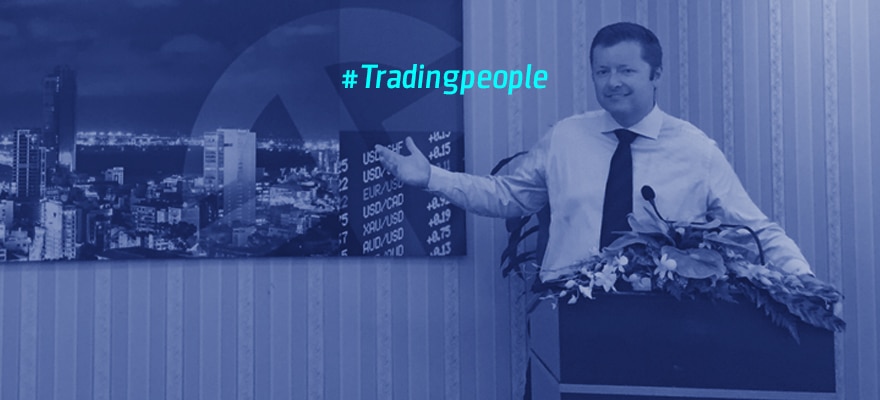
My day is spent connecting and maintaining relationships with interested parties in the Institutional or Wholesale clientele space. I gather information regarding their business models and needs and then structure an offering that is the best route for them to meet their needs in the Forex industry. I do spend a percentage of my time flying around the globe meeting clients or vendors face to face to ensure the relationship is on solid ground. Some of the cities I traveled to in the past 2 months are New York, Toronto, Chicago and now London. I do get to enjoy some perks of the industry, such as expos, nice dinners, golf tournaments and entertaining clients.
How is what you do important for the trading industry?
My role is split into 2 parts. One side is to find new clientele with whom to form mutually beneficial relationships to provide FX, CFDs and Metals liquidity. The second side is to understand the technology aspect of a potential client and offer them superior products to enhance their functionality. I also need to maintain open dialog with the present clients to continue improving our service to them. So, my role brings in new revenues while preserving the current base.
What do you love about your work?
The ever-changing currency market, which provides new opportunities each day is something I have always been interested in. Another aspect of my position is to assist clients in growing their business with superior industry products whether it is liquidity or our technology.
What is the quintessential experience of working in the trading industry?
The size and scope of the currency market and the fundamentals that dictate the direction. I have also come to welcome meeting people from around the world with different points of view from mine so I can learn to look at things differently.
How old were you when you had your first paying job?
I believe I was 13 when I took a job working in a restaurant. My first position in the FX industry was at 21. I was a Financial Analyst at Citibank, NYC, on the FX trading floor while working part time as Assistant Trader for the NY night desk.
Who do you admire?
Jim Rogers, I like and agree with most his ideas. Jim insisted in the early 2000’s that commodities across the board should increase in value. Soon enough we saw those trades paid off in a big way, so I have made an effort to give an ear when he makes a prediction. Jim Rodgers always says he is not good at timing the market, but eventually fundamentals will take over.
Please share an anecdote that is unique to our industry.
An old market phrase has always stuck in my head throughout my career. “The market can be irrational, longer than you can be liquid.” As we saw in the FX carry trade phase in 2006-08, the market had irrational exuberance and currency markets were greatly overvalued. The following market collapse was something I was waiting on for a long time, but, eventually, fundamentals took over.
What advice would you like to share here that has been important to you?
The most important thing I have learned in 16 years in the FX industry is to only work with highly regulated and capitalized firms that can weather the inevitable storms that also have excellent technology. If you try to find the cheaper option, you will pay for it in the long run.
Who are you and what do you do as VP of Institutional FX?
My day is spent connecting and maintaining relationships with interested parties in the Institutional or Wholesale clientele space. I gather information regarding their business models and needs and then structure an offering that is the best route for them to meet their needs in the Forex industry. I do spend a percentage of my time flying around the globe meeting clients or vendors face to face to ensure the relationship is on solid ground. Some of the cities I traveled to in the past 2 months are New York, Toronto, Chicago and now London. I do get to enjoy some perks of the industry, such as expos, nice dinners, golf tournaments and entertaining clients.
How is what you do important for the trading industry?
My role is split into 2 parts. One side is to find new clientele with whom to form mutually beneficial relationships to provide FX, CFDs and Metals liquidity. The second side is to understand the technology aspect of a potential client and offer them superior products to enhance their functionality. I also need to maintain open dialog with the present clients to continue improving our service to them. So, my role brings in new revenues while preserving the current base.
What do you love about your work?
The ever-changing currency market, which provides new opportunities each day is something I have always been interested in. Another aspect of my position is to assist clients in growing their business with superior industry products whether it is liquidity or our technology.
What is the quintessential experience of working in the trading industry?
The size and scope of the currency market and the fundamentals that dictate the direction. I have also come to welcome meeting people from around the world with different points of view from mine so I can learn to look at things differently.
How old were you when you had your first paying job?
I believe I was 13 when I took a job working in a restaurant. My first position in the FX industry was at 21. I was a Financial Analyst at Citibank, NYC, on the FX trading floor while working part time as Assistant Trader for the NY night desk.
Who do you admire?
Jim Rogers, I like and agree with most his ideas. Jim insisted in the early 2000’s that commodities across the board should increase in value. Soon enough we saw those trades paid off in a big way, so I have made an effort to give an ear when he makes a prediction. Jim Rodgers always says he is not good at timing the market, but eventually fundamentals will take over.
Please share an anecdote that is unique to our industry.
An old market phrase has always stuck in my head throughout my career. “The market can be irrational, longer than you can be liquid.” As we saw in the FX carry trade phase in 2006-08, the market had irrational exuberance and currency markets were greatly overvalued. The following market collapse was something I was waiting on for a long time, but, eventually, fundamentals took over.
What advice would you like to share here that has been important to you?
The most important thing I have learned in 16 years in the FX industry is to only work with highly regulated and capitalized firms that can weather the inevitable storms that also have excellent technology. If you try to find the cheaper option, you will pay for it in the long run.
My name is Leah Grantz and I am the UGC Editor at Finance Magnates - which basically means that I work with guest bloggers. If you want to become a guest blogger, contact me! UGC Editor & Community Manager
In this video, we review @AxiOfficialChannel , a multi-asset broker offering access to forex and CFD markets through MetaTrader 4, MetaTrader 5, the Axi Trading App, and copy trading solutions.
We examine the broker’s regulatory framework, platform offering, market coverage, and customer support structure. We also explore key features such as available trading instruments, swap-free account options, funding considerations, and multilingual support.
Watch the full video for a clear, fact-based overview of Axi’s products, trading tools, and overall broker offering.
#Axi #ForexBroker #CFDTrading #FinanceMagnates #Trading #BrokerReview #OnlineTrading
In this video, we review @AxiOfficialChannel , a multi-asset broker offering access to forex and CFD markets through MetaTrader 4, MetaTrader 5, the Axi Trading App, and copy trading solutions.
We examine the broker’s regulatory framework, platform offering, market coverage, and customer support structure. We also explore key features such as available trading instruments, swap-free account options, funding considerations, and multilingual support.
Watch the full video for a clear, fact-based overview of Axi’s products, trading tools, and overall broker offering.
#Axi #ForexBroker #CFDTrading #FinanceMagnates #Trading #BrokerReview #OnlineTrading
In this video, we review @AxiOfficialChannel , a multi-asset broker offering access to forex and CFD markets through MetaTrader 4, MetaTrader 5, the Axi Trading App, and copy trading solutions.
We examine the broker’s regulatory framework, platform offering, market coverage, and customer support structure. We also explore key features such as available trading instruments, swap-free account options, funding considerations, and multilingual support.
Watch the full video for a clear, fact-based overview of Axi’s products, trading tools, and overall broker offering.
#Axi #ForexBroker #CFDTrading #FinanceMagnates #Trading #BrokerReview #OnlineTrading
In this video, we review @AxiOfficialChannel , a multi-asset broker offering access to forex and CFD markets through MetaTrader 4, MetaTrader 5, the Axi Trading App, and copy trading solutions.
We examine the broker’s regulatory framework, platform offering, market coverage, and customer support structure. We also explore key features such as available trading instruments, swap-free account options, funding considerations, and multilingual support.
Watch the full video for a clear, fact-based overview of Axi’s products, trading tools, and overall broker offering.
#Axi #ForexBroker #CFDTrading #FinanceMagnates #Trading #BrokerReview #OnlineTrading
In this video, we review @AxiOfficialChannel , a multi-asset broker offering access to forex and CFD markets through MetaTrader 4, MetaTrader 5, the Axi Trading App, and copy trading solutions.
We examine the broker’s regulatory framework, platform offering, market coverage, and customer support structure. We also explore key features such as available trading instruments, swap-free account options, funding considerations, and multilingual support.
Watch the full video for a clear, fact-based overview of Axi’s products, trading tools, and overall broker offering.
#Axi #ForexBroker #CFDTrading #FinanceMagnates #Trading #BrokerReview #OnlineTrading
In this video, we review @AxiOfficialChannel , a multi-asset broker offering access to forex and CFD markets through MetaTrader 4, MetaTrader 5, the Axi Trading App, and copy trading solutions.
We examine the broker’s regulatory framework, platform offering, market coverage, and customer support structure. We also explore key features such as available trading instruments, swap-free account options, funding considerations, and multilingual support.
Watch the full video for a clear, fact-based overview of Axi’s products, trading tools, and overall broker offering.
#Axi #ForexBroker #CFDTrading #FinanceMagnates #Trading #BrokerReview #OnlineTrading
Multi-Asset or Die: The New Brokerage Playbook
This panel will explore how firms are moving beyond CFDs into crypto, perpetuals, equities, and multi‑asset offerings, and the challenges they face across regulation, technology, liquidity, and risk management. It examines what is driving the shift, what it takes to execute it successfully, and how brokers can position themselves for the next phase of growth.
Beyond Reach? Retail Investor Acquisition Across APAC
APAC accounts for two-thirds of global retail trading traffic, but with differences of language, regulation, and trader profile, the region's growth is ag great as complexity.
This session gathers CMOs, heads of acquisition, and IB relationship managers to examine what actually works, channel by channel, market by market.
Attendees will walk away with:
A clear view of which channels deliver funded, retained traders across Singapore, Japan, and Southeast Asia
Understanding of how to structure IB partnerships for LTV, not first deposit
Insight into what localization actually costs beyond the translation budget
Perspective on how ad restrictions, crypto promotion limits, and bundling rules differ across APAC jurisdictions
A read on whether the super-app model changes acquisition economics for retail investing platforms
APAC accounts for two-thirds of global retail trading traffic, but with differences of language, regulation, and trader profile, the region's growth is ag great as complexity.
This session gathers CMOs, heads of acquisition, and IB relationship managers to examine what actually works, channel by channel, market by market.
Attendees will walk away with:
A clear view of which channels deliver funded, retained traders across Singapore, Japan, and Southeast Asia
Understanding of how to structure IB partnerships for LTV, not first deposit
Insight into what localization actually costs beyond the translation budget
Perspective on how ad restrictions, crypto promotion limits, and bundling rules differ across APAC jurisdictions
A read on whether the super-app model changes acquisition economics for retail investing platforms
APAC accounts for two-thirds of global retail trading traffic, but with differences of language, regulation, and trader profile, the region's growth is ag great as complexity.
This session gathers CMOs, heads of acquisition, and IB relationship managers to examine what actually works, channel by channel, market by market.
Attendees will walk away with:
A clear view of which channels deliver funded, retained traders across Singapore, Japan, and Southeast Asia
Understanding of how to structure IB partnerships for LTV, not first deposit
Insight into what localization actually costs beyond the translation budget
Perspective on how ad restrictions, crypto promotion limits, and bundling rules differ across APAC jurisdictions
A read on whether the super-app model changes acquisition economics for retail investing platforms
APAC accounts for two-thirds of global retail trading traffic, but with differences of language, regulation, and trader profile, the region's growth is ag great as complexity.
This session gathers CMOs, heads of acquisition, and IB relationship managers to examine what actually works, channel by channel, market by market.
Attendees will walk away with:
A clear view of which channels deliver funded, retained traders across Singapore, Japan, and Southeast Asia
Understanding of how to structure IB partnerships for LTV, not first deposit
Insight into what localization actually costs beyond the translation budget
Perspective on how ad restrictions, crypto promotion limits, and bundling rules differ across APAC jurisdictions
A read on whether the super-app model changes acquisition economics for retail investing platforms
APAC accounts for two-thirds of global retail trading traffic, but with differences of language, regulation, and trader profile, the region's growth is ag great as complexity.
This session gathers CMOs, heads of acquisition, and IB relationship managers to examine what actually works, channel by channel, market by market.
Attendees will walk away with:
A clear view of which channels deliver funded, retained traders across Singapore, Japan, and Southeast Asia
Understanding of how to structure IB partnerships for LTV, not first deposit
Insight into what localization actually costs beyond the translation budget
Perspective on how ad restrictions, crypto promotion limits, and bundling rules differ across APAC jurisdictions
A read on whether the super-app model changes acquisition economics for retail investing platforms
APAC accounts for two-thirds of global retail trading traffic, but with differences of language, regulation, and trader profile, the region's growth is ag great as complexity.
This session gathers CMOs, heads of acquisition, and IB relationship managers to examine what actually works, channel by channel, market by market.
Attendees will walk away with:
A clear view of which channels deliver funded, retained traders across Singapore, Japan, and Southeast Asia
Understanding of how to structure IB partnerships for LTV, not first deposit
Insight into what localization actually costs beyond the translation budget
Perspective on how ad restrictions, crypto promotion limits, and bundling rules differ across APAC jurisdictions
A read on whether the super-app model changes acquisition economics for retail investing platforms
Buy, Build or Both? Trading Tech for Brokers, Banks & Beyond
For every feature and product, someone has to decide: build it in-house or buy from a vendor. In Singapore and across APAC, local banks and global players face the same question with very different constraints.
This session gathers heads of technology and e-trading to compare how client demand and cost structures shape their choices, and how long it actually takes to ship in each.
Attendees will walk away with:
First-hand view of how client feedback informs decision-making across different market participants.
Understanding pain points and benefits of working with 3rd party integrations at scale.
Insight into products and innovation banks’ retail and trading heads will look for in 2026.
For every feature and product, someone has to decide: build it in-house or buy from a vendor. In Singapore and across APAC, local banks and global players face the same question with very different constraints.
This session gathers heads of technology and e-trading to compare how client demand and cost structures shape their choices, and how long it actually takes to ship in each.
Attendees will walk away with:
First-hand view of how client feedback informs decision-making across different market participants.
Understanding pain points and benefits of working with 3rd party integrations at scale.
Insight into products and innovation banks’ retail and trading heads will look for in 2026.
For every feature and product, someone has to decide: build it in-house or buy from a vendor. In Singapore and across APAC, local banks and global players face the same question with very different constraints.
This session gathers heads of technology and e-trading to compare how client demand and cost structures shape their choices, and how long it actually takes to ship in each.
Attendees will walk away with:
First-hand view of how client feedback informs decision-making across different market participants.
Understanding pain points and benefits of working with 3rd party integrations at scale.
Insight into products and innovation banks’ retail and trading heads will look for in 2026.
For every feature and product, someone has to decide: build it in-house or buy from a vendor. In Singapore and across APAC, local banks and global players face the same question with very different constraints.
This session gathers heads of technology and e-trading to compare how client demand and cost structures shape their choices, and how long it actually takes to ship in each.
Attendees will walk away with:
First-hand view of how client feedback informs decision-making across different market participants.
Understanding pain points and benefits of working with 3rd party integrations at scale.
Insight into products and innovation banks’ retail and trading heads will look for in 2026.
For every feature and product, someone has to decide: build it in-house or buy from a vendor. In Singapore and across APAC, local banks and global players face the same question with very different constraints.
This session gathers heads of technology and e-trading to compare how client demand and cost structures shape their choices, and how long it actually takes to ship in each.
Attendees will walk away with:
First-hand view of how client feedback informs decision-making across different market participants.
Understanding pain points and benefits of working with 3rd party integrations at scale.
Insight into products and innovation banks’ retail and trading heads will look for in 2026.
For every feature and product, someone has to decide: build it in-house or buy from a vendor. In Singapore and across APAC, local banks and global players face the same question with very different constraints.
This session gathers heads of technology and e-trading to compare how client demand and cost structures shape their choices, and how long it actually takes to ship in each.
Attendees will walk away with:
First-hand view of how client feedback informs decision-making across different market participants.
Understanding pain points and benefits of working with 3rd party integrations at scale.
Insight into products and innovation banks’ retail and trading heads will look for in 2026.